image

AeroGenie — Seu copiloto inteligente.

Pergunte qualquer coisa. Analise tudo. Aja imediatamente.

Tendências

Categories

Air Serbia Prepares to Receive Third E195 Aircraft
September 22, 2025By ePlane AI
Air Serbia Prepares to Receive Third E195 Aircraft
0
0
Air Serbia
Embraer E195
Fleet Expansion

Air Serbia to Expand Fleet with Third Embraer E195 Aircraft

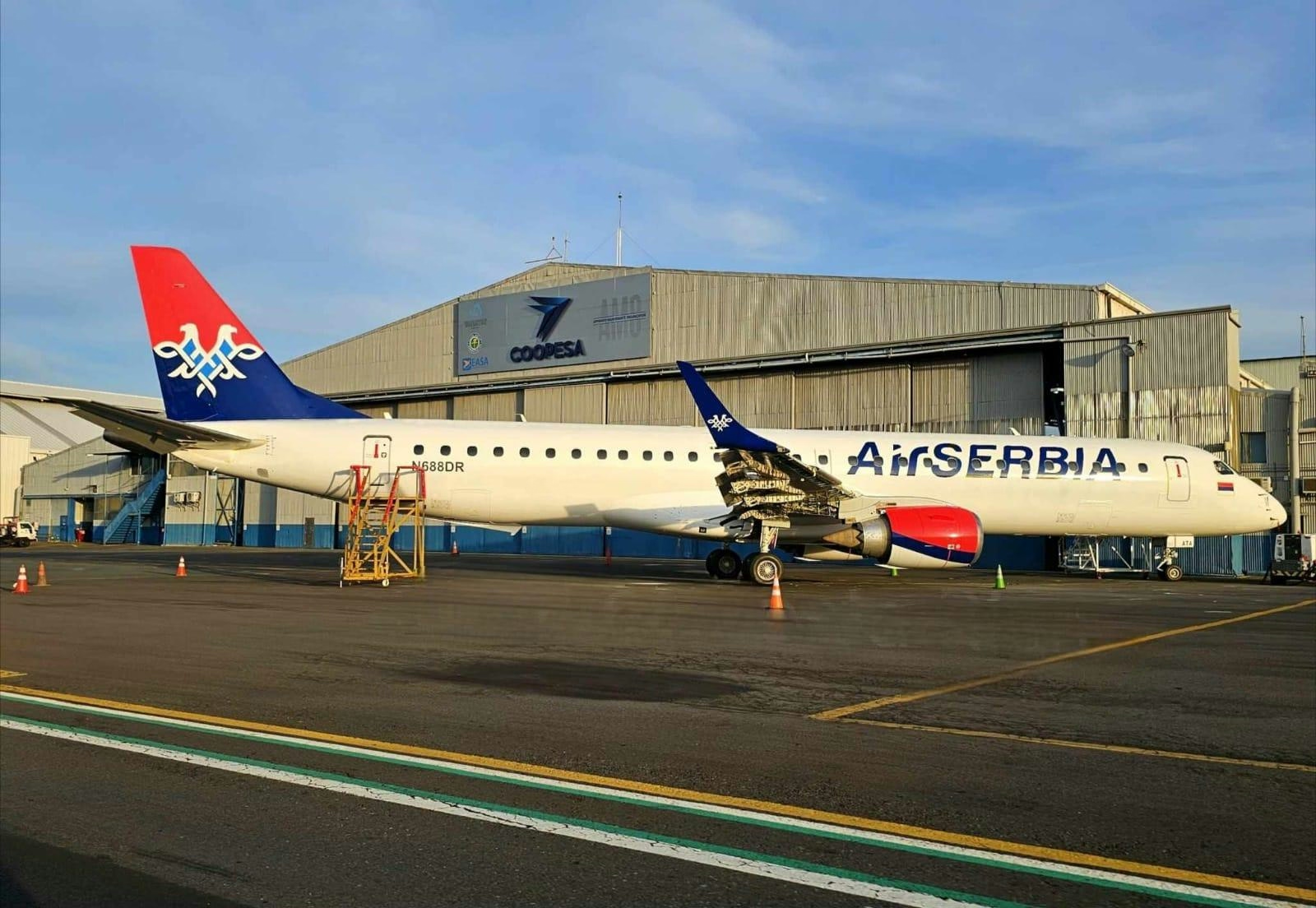
Air Serbia is set to receive its third Embraer E195 aircraft, recently repainted in the airline’s corporate livery in San Jose, Costa Rica. The ten-year-old jet, formerly registered as PR-AUJ with Brazil’s Azul Airlines, was initially delivered new to Azul before being transferred to leasing company Azzora and re-registered as N688DR. Upon arrival in Serbia, the aircraft is expected to enter service under the registration YU-ATA.

This acquisition continues Air Serbia’s strategy of fleet renewal and expansion, following the recent addition of two ATR72-600s sourced from Azul. Both the third and forthcoming fourth E195s are former Azul units, reflecting the airline’s preference for integrating proven regional jets into its operations.

Fleet Renewal and Operational Plans

Air Serbia’s CEO, Jiri Marek, indicated earlier this summer that the two E195 aircraft are scheduled for delivery in November or December, though he emphasized that timelines remain tentative due to dependencies on maintenance availability and lessor commitments. Marek noted, “We’ve structured our winter schedule so that we’re not reliant on those aircraft during that period. Whenever they do arrive, they’ll be more than welcome additions to the fleet.”

In addition to the Embraer jets, Air Serbia plans to take delivery of three Airbus A320s this winter while initiating the retirement of its older A319 fleet. The first A319 is expected to complete its final flight for the airline shortly, marking the beginning of a gradual phase-out of the type.

The airline intends to deploy the Embraer aircraft primarily on thinner routes during the winter season to mitigate seasonality and enhance operational efficiency. The E195s are slated to replace the A319 on the Belgrade–Tbilisi route, which has traditionally been served by the older aircraft during summer months. Furthermore, the E195s will operate select flights to Lisbon and Valencia in February, a period typically characterized by lower demand. Alongside its own Embraer jets, Air Serbia will continue to operate four wet-leased E190s from Bulgaria Air throughout the winter.

Market Context and Strategic Positioning

Air Serbia’s fleet developments occur amid evolving dynamics in the regional jet market. Airlines such as Avelo have recently placed substantial orders for the new-generation Embraer E195-E2, reflecting a broader industry shift toward more fuel-efficient aircraft. Conversely, carriers like JetBlue are transitioning away from Embraer models in favor of Airbus aircraft, further influencing market trends.

The increasing adoption of the E2 series by various airlines may affect Air Serbia’s market positioning and operational strategies as it modernizes its fleet and expands its network. By integrating additional Embraer jets, the airline aims to enhance flexibility and efficiency on regional routes, adapting to shifting industry demands and competitive pressures.

More news
Airline to Operate Fastest-Growing Airbus A350 Fleet in 2025

Airline to Operate Fastest-Growing Airbus A350 Fleet in 2025

Emirates to Operate Fastest-Growing Airbus A350 Fleet in 2025 Emirates is set to become the leading operator of the Airbus A350 “extra widebody” aircraft in 2025, with plans to take delivery of 13 new A350-900 jets this year. This figure more than doubles the number received by its nearest competitor, Turkish Airlines, which added six aircraft, while Air France followed with five deliveries. According to Airbus data, Emirates’ new acquisitions account for a quarter of all A350s delivered globally in 2025, highlighting the Dubai-based carrier’s growing dominance in the widebody market. Expanding the A350-900 Fleet All of Emirates’ recent deliveries are of the A350-900 variant, with no larger A350-1000 models yet incorporated into its fleet. The airline currently has 73 A350-900s on order, including the 13 already delivered and 60 more scheduled for future delivery. Although Turkish Airlines holds the largest overall A350 order book with 110 aircraft, Emirates is poised to surpass Singapore Airlines as the world’s leading A350-900 operator once its backlog is fulfilled, a process expected to continue through 2031. The A350 represents only the third aircraft type in Emirates’ fleet, alongside the Airbus A380 “Superjumbo” and the Boeing 777. As the smallest of the three, the A350 offers significant advantages, including long-range capability and a 25% reduction in fuel burn compared to older models. This efficiency enables Emirates to serve thinner, long-haul routes that are less economically viable for its larger jets, thereby expanding its network with greater flexibility. Strategic Implications Amid Industry Challenges Emirates’ accelerated acquisition of the A350 comes amid ongoing delays to Boeing’s 777X program, which is now more than five years behind schedule, with deliveries unlikely before 2027. The A350 thus fills a critical gap in Emirates’ fleet, providing passengers with a modern cabin experience while allowing the airline to maintain growth momentum as it awaits the next-generation 777X. However, the rapid expansion of Emirates’ A350 fleet is not without challenges. The global aviation industry continues to grapple with supply-chain disruptions, exemplified by Air Canada’s recent difficulties with its Airbus A220 fleet due to Pratt & Whitney engine issues. Such disruptions could potentially affect Emirates’ delivery schedules and operational reliability. The volatile operating environment, underscored by leadership challenges at other carriers, adds further complexity to fleet management and scheduling. Market observers have closely monitored Emirates’ commitment to Airbus amid Boeing’s setbacks. Competitors are responding accordingly; FlyDubai has announced ambitious growth plans, while American Airlines has taken swift action to address Airbus recalls, aiming to reassure both investors and passengers. Since its 2014 debut, the A350—developed by Airbus as a clean-sheet competitor to Boeing’s 787 Dreamliner—has seen increasing demand, particularly for ultra-long-haul routes in the post-pandemic era. Its spacious cabin, high ceilings, and advanced fuel efficiency have made it a cornerstone of Emirates’ fleet modernization strategy, positioning the airline at the forefront of widebody renewal despite ongoing industry headwinds.
Largest Aircraft Orders Worldwide in 2025

Largest Aircraft Orders Worldwide in 2025

Largest Aircraft Orders Worldwide in 2025 The year 2025 marked a significant milestone for the global aviation industry, characterized by some of the largest aircraft orders ever recorded. These transactions extended beyond mere fleet expansion, reflecting airlines’ enduring confidence in the demand for air travel, the resilience of their networks, and a strategic pivot toward more fuel-efficient aircraft. The scale and variety of orders—from record-breaking widebody commitments to ambitious single-aisle expansions and next-generation aircraft concepts—highlight how carriers are positioning themselves for growth and sustainability in the coming decade. This surge in orders was driven by a diverse group of buyers, including both established global carriers and rapidly expanding low-cost airlines. However, the year’s activity unfolded amid notable supply-chain challenges, particularly for Airbus. The manufacturer encountered quality issues with metal fuselage panels on its A320 family, resulting in delivery delays and a 4% reduction in its annual delivery target. These setbacks triggered a sharp decline in Airbus’s share price and raised questions about competitive dynamics within the industry. Despite these disruptions, the airline sector as a whole is projected to achieve record profits in 2025, underscoring its resilience and the robust demand for air travel. Major Aircraft Orders of 2025 Among the largest orders announced in 2025, Qatar Airways led with a landmark agreement with Boeing for up to 210 widebody jets. This deal, comprising a mix of 787 Dreamliners and the new 777-9 aircraft, not only reshaped Boeing’s long-term production outlook but also reaffirmed Qatar Airways’ commitment to expanding its long-haul network and premium international connectivity. The order, which includes both firm commitments and options, stands as the largest widebody transaction of the year. Strategically, it positions Qatar Airways to operate ultra-long-haul routes with reduced emissions, future-proofing its fleet with fuel-efficient aircraft. The 787 Dreamliner enhances medium-to-long-range flexibility, while the 777-9 supports high-density trunk routes from Doha, solidifying Qatar’s status as a leading global widebody operator. In the single-aisle segment, flydubai made a significant move by ordering approximately 150 Airbus A321neo jets, marking one of the largest commitments of the year in this category. This order signals a dramatic expansion of the airline’s medium-haul ambitions, enabling deeper penetration into markets across Europe, Asia, and Africa while maintaining its low-cost business model. The A321neo’s improved fuel efficiency, extended range, and higher capacity are central to flydubai’s evolving international strategy. Nevertheless, Airbus’s ongoing quality issues and delivery delays have introduced uncertainty regarding the timeline for these aircraft, potentially affecting flydubai’s growth trajectory. Similarly, VietJet reinforced its rapid growth with an order for 100 Airbus A321neo aircraft, further establishing itself as one of Asia’s fastest-growing low-cost carriers. This acquisition supports both domestic expansion and increased international services throughout the Asia-Pacific region. The A321neo enables VietJet to efficiently serve high-demand routes and open longer international sectors. However, like other Airbus customers, VietJet faces potential delivery delays due to the manufacturer’s production challenges. Despite these obstacles, the record-setting aircraft orders of 2025 reflect a strong sense of optimism and adaptability within the airline industry. As manufacturers work to resolve supply-chain issues, the sector’s robust profitability and sustained demand suggest that momentum behind fleet renewal and expansion will continue well into the future.
Adani Group to Enter Engine Maintenance and Aircraft Conversion Sectors

Adani Group to Enter Engine Maintenance and Aircraft Conversion Sectors

Adani Group Expands into Engine Maintenance and Aircraft Conversion Adani Group is set to broaden its presence in the aviation sector by entering the engine maintenance and passenger-to-freighter aircraft conversion markets. This strategic expansion aims to enhance the conglomerate’s aviation services portfolio, complementing its existing investments in airport infrastructure and pilot training programs. Strengthening Training and Maintenance Capabilities In line with the anticipated growth of India’s aviation industry, Adani plans to significantly increase its simulator capacity nationwide. By bolstering its training infrastructure, the group seeks to meet the rising demand for skilled aviation professionals, thereby supporting the sector’s projected expansion. The move into engine maintenance and aircraft conversion represents a natural extension of these efforts, positioning Adani to offer a more comprehensive range of aviation services. Competitive Landscape and Market Challenges Adani’s entry into the maintenance, repair, and overhaul (MRO) space places it in direct competition with established players such as Ontic, PAG, and PrimeFlight. These incumbents have long-standing experience and well-established client relationships, creating a challenging environment for new entrants. Market responses to Adani’s expansion have been cautious, with some investors concerned about the substantial capital investment required to develop advanced maintenance facilities. The technical complexities and high operational costs associated with MRO activities may affect the group’s short-term financial results, even as it pursues long-term strategic benefits. Industry Response and Future Prospects Competitors are expected to respond assertively to Adani’s move into these sectors. Recent industry developments, including DAS Aviation’s acquisition of AQRD to enhance engineering and composites capabilities, illustrate a broader trend of established firms strengthening their service offerings to protect market share. Despite these challenges, Adani Group remains committed to its aviation growth strategy, leveraging India’s expanding air travel market and the increasing demand for integrated aviation services. The group’s investments across infrastructure, training, and now maintenance and conversion services underscore its ambition to become a significant player in the country’s evolving aviation landscape.
Joby Aviation Positioned to Lead Air Taxi Market by 2026

Joby Aviation Positioned to Lead Air Taxi Market by 2026

Joby Aviation Positioned to Lead Air Taxi Market by 2026 Strategic Partnerships and Technological Advancements Joby Aviation (NYSE: JOBY) is rapidly establishing itself as a leading contender in the emerging air taxi industry, driven by a combination of global partnerships and government backing. Central to its vision is the development of electric vertical take-off and landing (eVTOL) aircraft, which is gaining momentum through high-profile agreements and public demonstrations. A significant milestone was achieved with an exclusive agreement with Dubai’s Road and Transport Authority, granting Joby the rights to operate air taxis in the city beginning in 2026. This partnership was underscored by the public unveiling of Joby’s S4 eVTOL aircraft at the Dubai Airshow, signaling both technological readiness and growing international interest. These developments have generated optimism among investors and analysts, many of whom anticipate substantial growth as Joby expands its global presence. Business Model and Operational Initiatives Joby’s vertically integrated business model aims to streamline operations by controlling key aspects of the air taxi value chain. This approach is exemplified by strategic acquisitions such as Blade Air Mobility, which enhance Joby’s operational capabilities. The company is also making significant investments in pilot training programs to ensure a skilled workforce is prepared for the commercial launch of its services. These initiatives are considered essential for scaling operations and maintaining a competitive advantage as the eVTOL market evolves. Regulatory and Market Challenges Despite its progress, Joby faces considerable challenges. The company must navigate a complex regulatory environment, with the U.S. Federal Aviation Administration (FAA) scheduled to begin certification tests for Joby’s aircraft in 2026. Certification is a critical prerequisite for commercial operations, and any delays or complications could affect Joby’s timeline and investor confidence. Furthermore, the demands of extensive pilot training and the integration of advanced technologies introduce operational risks that require careful management. Market responses to Joby’s advancements have been mixed. While some analysts emphasize the company’s strong positioning and potential for significant returns, others warn that regulatory and technological obstacles may limit near-term gains. The air taxi sector is also attracting increased competition, with rivals expected to intensify their efforts as the eVTOL market develops. As of December 15, 2025, Joby’s stock reflected cautious optimism, buoyed by recent achievements but tempered by the inherent risks of pioneering a new mode of urban transportation. The upcoming year will be critical as Joby seeks to secure certification, broaden its operational footprint, and address mounting competitive pressures. Joby Aviation remains at the forefront of the air taxi revolution, with its global partnerships and technological progress positioning it for potential market leadership by 2026. Nonetheless, the company must overcome significant regulatory, operational, and competitive challenges to realize its ambitious vision.
Adani Group Expands into Aircraft Maintenance and Conversion

Adani Group Expands into Aircraft Maintenance and Conversion

Adani Group Expands into Aircraft Maintenance and Conversion The Adani Group is poised to significantly broaden its presence in India’s aviation sector by entering the engine maintenance, repair, and overhaul (MRO) market, alongside passenger aircraft-to-freighter (P2F) conversions. This strategic move reflects the conglomerate’s confidence in the domestic aviation industry’s growth prospects, despite facing intense competition from established global players. Strategic Consolidation and Expansion in MRO Jeet Adani, Director of Adani Airport Holdings Ltd (AAHL), recently detailed the group’s approach, emphasizing the separation of its aviation interests into two core segments: airport infrastructure and aircraft services, the latter covering both civilian and defence applications. He highlighted the integration of platforms such as Indamer and Air Works into a unified, large-scale MRO entity. This consolidation follows the group’s acquisition of Air Works in December for an enterprise value of ₹400 crore, which notably enhanced its footprint in the defence MRO sector. Further strengthening its capabilities, Adani Defence Systems and Technologies Ltd (ADSTL), through its venture Horizon Aero Solutions Ltd and in partnership with Prime Aero Services LLP, finalized an agreement to acquire full ownership of Indamer Technics Pvt Ltd (ITPL). This acquisition marks a significant step in consolidating the group’s MRO operations. Expansion into Pilot Training and New Facilities In addition to MRO services, Adani is expanding into pilot training. ADSTL recently acquired a 72.8% stake in Flight Simulation Technique Centre (FSTC) for ₹820 crore. Currently operating 15 simulators, FSTC is expected to scale up to 45-50 simulators nationwide within the next two to three years, reflecting the anticipated demand for pilot training in India. Jeet Adani noted that the country could absorb 40-50 simulators if the expansion is executed effectively. This growth aligns with projections from Union Civil Aviation Minister K Ram Mohan Naidu, who anticipates Indian carriers will induct approximately 1,700 new aircraft, creating demand for an additional 30,000 pilots. Adani is also extending its MRO infrastructure to new locations such as Ahmedabad, Guwahati, and Bhubaneswar, regions currently without Air Works facilities. Jeet Adani confirmed that expansion plans are underway, although investment details remain under consideration as the group finalizes its long-term strategy. Competitive Landscape and Industry Challenges Adani’s entry into the MRO and P2F conversion markets places it in direct competition with established international operators, including Air France-KLM, which employs 13,500 specialists in maintenance, and Korean Air, which is expanding its hangar capacity. The sector is witnessing strategic moves from competitors as well, such as DAS Aviation’s recent acquisition aimed at enhancing engineering and composites capabilities. Industry experts caution that Adani’s expansion will be closely scrutinized for adherence to quality and safety standards, especially in light of rising aviation insurance rates projected for 2026 following a forecasted increase in major losses in 2025. Maintaining rigorous standards will be essential for the group to secure the confidence of airlines and regulatory authorities. As the Indian aviation sector prepares for rapid growth, Adani’s aggressive expansion into aircraft maintenance, conversion, and pilot training underscores its ambition to become a key player in these critical areas of the industry.
FAA Investigates Shutdowns of Lycoming IO-360 Engines

FAA Investigates Shutdowns of Lycoming IO-360 Engines

FAA Investigates Shutdowns of Lycoming IO-360 Engines The Federal Aviation Administration (FAA) has initiated an investigation into a series of engine shutdowns, commonly known as rollbacks, occurring during throttle reductions to idle in aircraft powered by Lycoming IO-360 engines. To address the issue, the agency recently issued an Airworthiness Concern Sheet (ACS) aimed at alerting aircraft owners and maintenance personnel while gathering additional data on these incidents. Scope and Industry Response The Experimental Aircraft Association (EAA) reports that the ACS was prompted by multiple accounts of uncommanded engine shutdowns involving IO-360 engines equipped with AVStar-manufactured fuel servos, both vertically and horizontally mounted. These events have been recorded across various aircraft models, including the Cessna 172S, Cessna 172R, Piper Archer III, Piper Pilot 100i, and Piper Seminole. The FAA is calling on operators, maintainers, and owners of aircraft with IO-360 engines to report any rollback occurrences, irrespective of the fuel servo manufacturer or installation orientation. The ACS functions as a proactive communication tool, enabling the FAA to collaborate with the aviation community and collect critical information on emerging safety concerns before they necessitate mandatory airworthiness directives. Implications for Operators and the Industry Industry experts caution that the ongoing investigation may pose considerable challenges for operators. Potential consequences include increased maintenance expenses and operational disruptions as the FAA seeks to determine and rectify the root cause of the shutdowns. The heightened regulatory scrutiny has also attracted the attention of insurance providers, potentially leading to elevated premiums for affected operators. In response, some may explore transitioning to alternative engine manufacturers, a shift that could influence market dynamics and pricing within the general aviation sector. This investigation unfolds amid broader concerns regarding air traffic control staffing shortages. Although unrelated to the engine issues, these staffing challenges could indirectly affect overall aviation operations if left unresolved. Collaborative Efforts and Next Steps The EAA, alongside other aviation associations and type clubs, is supporting the FAA by distributing the ACS and encouraging voluntary incident reporting. This cooperative approach aims to enhance regulators’ understanding of the circumstances surrounding each engine rollback and to identify any mitigating factors. Owners and operators are urged to review the Airworthiness Concern Sheet carefully and submit detailed reports of any engine rollback events to assist the FAA’s ongoing investigation.
Airbus A350 Freighter Receives Certification

Airbus A350 Freighter Receives Certification

Airbus A350 Freighter Achieves Certification Milestone The Airbus A350F is rapidly establishing itself as a prominent contender in the next generation of widebody freighters, presenting a contemporary alternative to the aging fleet of cargo aircraft currently in operation. Although not a clean-sheet design, the A350F is purpose-built, drawing on the proven Airbus A350 passenger platform rather than modifying an existing cargo model. This strategic approach mitigates development risks, enhances operational commonality for airlines, and aligns with increasingly stringent regulatory and efficiency standards. Compliance with Environmental Standards and Certification Challenges A defining feature of the A350F is its adherence to the latest International Civil Aviation Organization (ICAO) carbon dioxide emissions requirements, which will become mandatory for all new aircraft deliveries starting in 2028. As environmental regulations tighten and older, less efficient freighters incur rising operational costs, the A350F stands out as the only large freighter specifically designed to meet these forthcoming standards. The certification process for the A350F has proven complex and closely monitored by the aviation industry. Airbus aims to conduct the aircraft’s first test flight in the third quarter of 2026, with certification and entry into service anticipated in the latter half of 2027. These timelines have experienced delays, primarily due to supply chain disruptions affecting the broader A350 family. The regulatory environment remains a significant factor influencing both Airbus’s progress and the competitive dynamics with Boeing. Market Dynamics and Strategic Positioning Industry reactions to the A350F’s development have been mixed. While demand for new freighters remains strong, the timing of certification is critical to market confidence. Boeing, Airbus’s principal competitor, has highlighted a positive cash-flow outlook for 2026, even as Airbus has adjusted its delivery targets in response to technical challenges. The interplay between regulatory approvals and delivery schedules is central to the financial forecasts and strategic positioning of both manufacturers. The A350 family itself is Airbus’s flagship long-haul platform, renowned for its composite-rich construction and fuel efficiency. The main passenger variants—the A350-900 and A350-1000—serve diverse long-range missions, with the ultra-long-range A350-900ULR capable of nonstop flights up to 9,700 nautical miles (18,000 km). The airframe’s extensive use of advanced materials, accounting for approximately 70% of its structure, combined with operational versatility, has made it a preferred choice for airlines seeking to upgrade from smaller widebodies or replace older four-engine jets, while offering enhanced passenger comfort and reduced cabin noise. By extending the A350 platform into the freighter segment, Airbus aims to leverage its existing customer base, shared pilot and maintenance training, and established supply chains. The A350F provides cargo operators with a modern, efficient alternative to both aging dedicated freighters and passenger-to-freighter conversions, which often face structural and efficiency constraints. As the A350F advances toward certification, its ultimate success will depend not only on sustained market demand but also on navigating the intricate regulatory landscape that will shape the future of global air cargo.
Investigators Examine Theory That Cockpit Sun Visor Caused Boeing 737 Engine Shutdown After Takeoff

Investigators Examine Theory That Cockpit Sun Visor Caused Boeing 737 Engine Shutdown After Takeoff

Investigation into Boeing 737 Engine Shutdown Focuses on Cockpit Sun Visor Theory Aircraft accident investigators have initiated a detailed inquiry into a serious incident involving a Boeing 737 MAX, after one of its two engines unexpectedly shut down shortly after takeoff. The flight, carrying up to 197 passengers, experienced the engine failure at approximately 8,000 feet. Central to the investigation is an unusual hypothesis: that a malfunctioning cockpit sun visor may have become dislodged and struck the engine shut-off switch, leading to the loss of power. Incident Details and Preliminary Findings The event occurred on December 8 during Ryanair flight FR-3505, operating from Krakow, Poland, to Milan, Italy. The aircraft involved was a Malta Air Boeing 737 MAX 8200 (registration 9H-VUE), a high-capacity variant of the 737 MAX-8. Shortly after departure from Krakow Airport at around 1:10 pm, the pilots declared a PAN PAN emergency, signaling an urgent but non-life-threatening situation, after one engine suddenly shut down during the initial climb. Preliminary investigations suggest that the cockpit sun visor may have torn loose during takeoff and inadvertently activated one of the engine start levers, also known as fuel cut-off switches. These switches, standard across Boeing aircraft, control the fuel supply to each engine. If triggered, they can cause an engine to lose power. The flight crew successfully restarted the affected engine, allowing the aircraft to continue safely to Milan, where it landed without further incident. The plane was subsequently grounded for two days for precautionary inspections before being cleared to resume service. Ongoing Investigation and Industry Implications The investigation faces significant technical challenges, particularly in confirming whether the sun visor was indeed responsible for activating the fuel cut-off switch. Regulatory authorities are closely overseeing the inquiry, while Boeing has expressed a “significant interest” in the outcome. Should the theory be validated, the manufacturer may encounter increased scrutiny regarding potential design vulnerabilities in cockpit components. The incident has already influenced market sentiment, with Boeing’s stock experiencing a temporary decline amid heightened safety concerns. Competitors have seized the opportunity to highlight their own safety records and cockpit design features. As the investigation remains active, no definitive conclusions have yet been reached. This event highlights the critical importance of stringent safety protocols and thorough design evaluations in commercial aviation. Regulators and manufacturers alike are expected to carefully review the findings to determine whether further measures or design modifications are necessary to prevent similar incidents in the future.
Comparing the Fuselage Lengths of the Airbus A350-1000 and Boeing 787-10

Comparing the Fuselage Lengths of the Airbus A350-1000 and Boeing 787-10

Comparing the Fuselage Lengths of the Airbus A350-1000 and Boeing 787-10 Overview of Aircraft Dimensions In the ongoing discourse surrounding modern widebody aircraft, discussions frequently emphasize fuel efficiency, passenger comfort, or airline preferences. However, a fundamental yet often overlooked question concerns the comparative fuselage lengths of the Airbus A350-1000 and the Boeing 787-10 Dreamliner. While seemingly straightforward, fuselage length is a critical factor influencing passenger capacity, cabin layout flexibility, and the operational roles for which each aircraft is designed. Even minor variations in overall length can significantly impact these aspects. Both the A350-1000 and 787-10 represent the largest variants within their respective families, tailored for high-capacity, long-haul operations. This analysis draws on technical data and operational insights to clarify which aircraft possesses the longer fuselage and explores the implications of this difference within the broader context of Airbus and Boeing’s design philosophies. Fuselage Length Comparison The Airbus A350-1000 features a notably longer fuselage than the Boeing 787-10, a distinction that may not be immediately apparent when viewing the aircraft side by side. The A350-1000 measures approximately 73.8 meters from nose to tail, surpassing the 787-10’s length of about 68.3 meters by more than five meters. This length advantage allows the A350-1000 to accommodate a greater number of passengers, increase cargo volume, and offer enhanced cabin flexibility. In practical terms, this translates to higher seating capacities and improved performance on premium-heavy or ultra-long-haul routes where space and payload are critical. These factors often influence airline decisions when evaluating these two aircraft types for their fleets. The difference in length is a deliberate design choice: Airbus extended the A350 platform to compete more directly with Boeing’s larger widebodies, whereas the 787-10 represents the maximum stretch Boeing could achieve without compromising the Dreamliner’s range or performance. This contrast highlights the distinct approaches each manufacturer has taken in addressing the large twin-engine market. Operational and Design Implications Fuselage length is determined by more than just aesthetic considerations. Aircraft manufacturers must carefully balance aerodynamics, structural integrity, engine capabilities, and intended route profiles when deciding how far to stretch an airframe. Each additional meter affects weight distribution, landing gear stress, and fuel consumption patterns. Airlines continuously evaluate these parameters to optimize fleet performance, particularly as fluctuating fuel prices place a premium on minimizing fuel burn. The A350-1000 was engineered with a reinforced wing structure, higher-thrust engines, and an extended fuselage from the outset, specifically to support high-capacity, long-range missions. This design reflects Airbus’s strategic focus on serving markets traditionally dominated by larger quadjet aircraft, offering a modern, efficient alternative. Conversely, Boeing’s 787-10 represents a balance between increased capacity and maintaining the Dreamliner’s hallmark range and efficiency, illustrating a different philosophy in widebody aircraft development.
Thailand Establishes U-Tapao Aircraft MRO Center Contract for January 2026

Thailand Establishes U-Tapao Aircraft MRO Center Contract for January 2026

Thailand to Establish U-Tapao Aircraft MRO Center with Contract Signing in January 2026 BANGKOK — Thailand is advancing its strategic initiative to develop a major aircraft maintenance, repair, and overhaul (MRO) center at U-Tapao Airport, with a contract signing scheduled for January 7, 2026. This announcement was made by Chula Sukmanop, secretary-general of the Eastern Economic Corridor (EEC) Policy Committee, underscoring the government’s commitment to positioning the country as a key aviation hub in the region. Project Overview and Strategic Importance The MRO facility, which will occupy approximately 210 rai (84 acres) within the EEC—a vital economic development zone on Thailand’s eastern seaboard—is set to be submitted for approval to the EEC board in December 2025. Currently, large-scale MRO centers in Asia are predominantly operated by Singapore and China, highlighting the strategic significance of Thailand’s entry into this market. The new center aims to enhance the country’s aviation infrastructure and attract regional airline clients seeking comprehensive and cost-effective maintenance services. Under the proposed framework, Thai Airways International will be granted operating rights for the entire site and is expected to establish a subsidiary to oversee the center’s operations. The airline may choose to operate the facilities directly, enter joint ventures with specialized partners, or lease space to private operators. The center will be equipped to service a broad range of aircraft, including models from Airbus and Boeing, ensuring operational flexibility and wide market appeal. Financial and Operational Framework The land lease for the MRO center will span 50 years, with rental rates structured to encourage early investment. Revenue sharing with the state is planned to begin in the fifth year of operations, starting at 3% for years five through ten, increasing to 5% for years ten to fifteen, and reaching 7% thereafter. This phased approach aims to balance initial development incentives with long-term fiscal contributions. Following the contract signing, the project will proceed to detailed design and an environmental impact assessment (EIA), which will be expedited under EEC regulations. The EIA is expected to be completed within 180 days after submission of the full design documents. Construction is scheduled to commence in early 2027, with a projected duration of approximately three years. This timeline aligns with the completion of U-Tapao Airport’s second runway, which is currently under construction and anticipated to be finished within four years. Meanwhile, the passenger terminal development will continue as planned, unaffected by the high-speed rail project, thereby enabling the airport to accommodate increased passenger volumes once the new runway becomes operational. Regional Context and Market Implications The establishment of the U-Tapao MRO Center occurs amid intensifying competition in the regional MRO market. Neighboring countries may respond by upgrading their own facilities to attract airline clients, while airlines across Asia are expected to show growing interest in cost-effective maintenance solutions. The project’s long-term viability will also be influenced by factors such as the economic stability of the Thai Baht and broader trends in trade and tourism, which affect the region’s attractiveness as an aviation hub. As Thailand advances this significant infrastructure project, the U-Tapao MRO Center is poised to play a pivotal role in shaping the country’s aviation industry and enhancing its competitive position within the regional market.
Ask AeroGenie










