Imagem

Orquestre insights de IA em ações

Entre na lista de espera da AeroGenie hoje mesmo!

Tendências

Categories

Air Transat Partners with StratosX to Address Flight Disruptions Using AI

August 20, 2026By ePlane AI
Air Transat Partners with StratosX to Address Flight Disruptions Using AI
0
0
Air Transat
StratosX
Flight Disruption Management

Air Transat Partners with StratosX to Address Flight Disruptions Using AI

Montréal-based startup StratosX has entered into a strategic partnership with Air Transat to deploy artificial intelligence technology aimed at managing flight disruptions more effectively. This collaboration, announced on Thursday, will see Air Transat implement StratosX’s X360 recovery platform, designed to optimize the rerouting of aircraft, crews, and passengers when unforeseen events disrupt schedules. The initiative comes amid escalating operational challenges and volatility within the airline industry.

Leveraging AI to Enhance Operational Resilience

StratosX’s X360 platform utilizes predictive modeling and generative AI, integrating seamlessly with an airline’s internal operations data to recommend the most efficient solutions for minimizing delays and associated costs. Joshua Goring, StratosX’s chief commercial officer, explained that the system moves beyond traditional reactive approaches, which often involve selecting the first workable solution during disruptions. Instead, the platform proactively identifies potential issues and suggests the quickest recovery paths, whether through rebooking passengers or reallocating crews.

The aviation sector has recently faced significant turbulence due to unpredictable weather patterns, geopolitical tensions, and labor disputes. In the summer of 2025 alone, over 8.7 million Canadian passengers experienced flight disruptions, with a nationwide Air Canada strike cited as a major contributing factor, according to travel technology firm AirHelp. These disruptions have created a $60-billion USD challenge for airlines worldwide, further exacerbated by soaring fuel prices and rising operating costs.

Air Transat’s Strategic Response to Industry Pressures

Air Transat, which operates a fleet of more than 40 aircraft serving over 70 destinations, has not been immune to these pressures. The airline reported a net loss of $79 million in its most recent quarter, attributing the downturn to an “unprecedented industry-wide fuel crisis.” In response, Air Transat is actively seeking innovative solutions to maintain operational stability, manage elevated costs, and ensure compliance with regulatory requirements.

According to Air Transat spokesperson Stéphanie Dussault, the X360 platform is being “codeveloped” with StratosX, allowing the airline to monitor aircraft, crew, and passenger experience simultaneously. Dussault emphasized the significance of collaborating with a Canadian company, highlighting the value of homegrown innovation within the aviation sector.

Founded in 2023 by CEO Ghislain Gagné and COO Kaitlin Guarino, a former operations director at Southwest Airlines, StratosX has rapidly expanded to a team of approximately ten employees. The system is engineered to detect operational stress points—such as staffing shortages or adverse weather conditions—before they escalate into major disruptions. Feedback from Air Transat is expected to play a crucial role in refining the platform’s capabilities.

Industry Implications and Future Outlook

This partnership emerges at a time when airlines face heightened scrutiny from competitors and stakeholders alike. Rival carriers may respond by intensifying recruitment efforts for industry veterans or pursuing new technology collaborations. Meanwhile, aircraft leasing companies might adjust fleet strategies or pricing models to maintain competitiveness. These evolving market dynamics, coupled with investor confidence in StratosX’s potential to deliver operational improvements and financial returns, could influence both the startup’s growth trajectory and broader industry trends.

As Air Transat and StratosX advance their collaboration, their efforts underscore the increasing importance of AI-driven innovation in enabling airlines to navigate an increasingly complex and competitive landscape.
More news
Oneworld on Digital Transformation and Passenger Experience in Airport Technology
Oneworld on Digital Transformation and Passenger Experience in Airport Technology

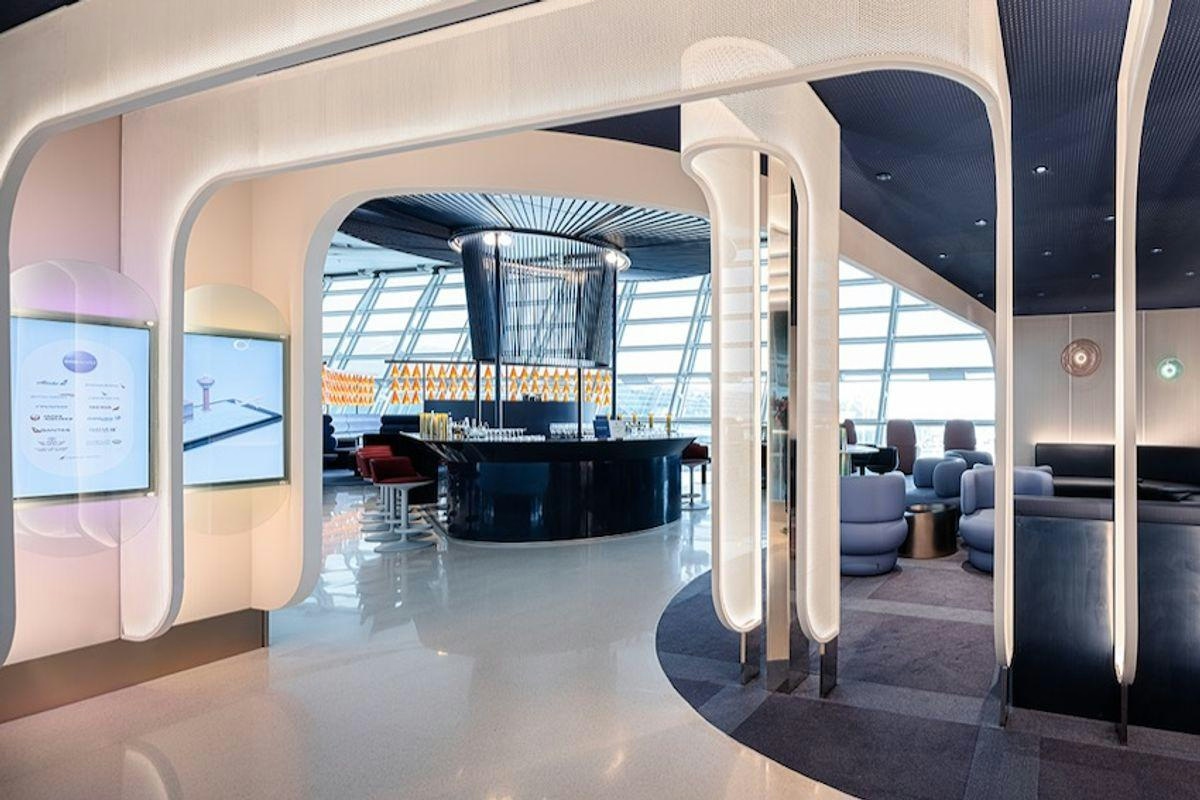
Oneworld Advances Digital Transformation to Enhance Passenger Experience in Airport Technology As airports and airlines accelerate the modernization of their technology infrastructure, collaboration and interoperability have become essential to delivering a seamless passenger experience. The aviation industry is increasingly integrating real-time data, digital services, artificial intelligence (AI), and cloud technologies to reduce friction, improve operational efficiency, and provide more personalized support—particularly for journeys involving multiple carriers and airports. In anticipation of the 20th anniversary FTE Global event in Dallas (September 8–10, 2026), Chris Gilliland, Director of Airport Experience at oneworld Alliance, alongside Jaron Millner, Senior Director of Digital and Innovation, shared insights on overcoming technology silos, enhancing cooperation between airports and airlines, and leveraging digital innovation to create a more connected passenger journey. Breaking Down Silos for a Connected Journey Gilliland is set to participate in a session titled “The airport tech stack of the future—transitioning away from legacy systems,” which will explore the evolution of airport technology architectures and strategies for modernizing infrastructure to achieve greater efficiency. The discussion will address the limitations of legacy systems, the decision to replace or integrate existing infrastructure, and the introduction of new solutions without increasing complexity or operational risk. It will also emphasize the importance of organizational change, skills development, and stakeholder alignment to ensure successful technology transformation while maintaining operational continuity. Many airports face the challenge of balancing modernization efforts with the constraints imposed by long-standing legacy systems. Gilliland highlights the passenger perspective, stating, “Customers want their journey to feel as smooth as if it were operated by a single airline—even if they are flying on two or three carriers.” Access to real-time data enables alliance members to identify potential risks to customer connections proactively, allowing them to mitigate disruptions and ensure passengers reach their destinations more efficiently. Aligning Stakeholders and Embracing Interoperability Oneworld, which unites airlines operating across hundreds of airports worldwide, recognizes that interoperability and common technology standards are critical to delivering a seamless passenger experience. Millner explains, “Our role is to facilitate seamless information exchange among members, so customers can enjoy consistent recognition, services, and benefits, as well as a smoother travel experience.” The alliance’s digital technology is designed to enable this unified digital experience for its members. Despite these efforts, aligning the diverse needs of stakeholders and integrating new technologies smoothly remain significant challenges. Maintaining operational efficiency amid rapid technological advancements requires clear business strategies and strong organizational alignment. Ram Kumar Narasimhan of EY underscores that successful digital transformation depends on well-defined strategies and effective collaboration. Competitive Landscape and Strategic Partnerships The ongoing digital transformation is reshaping the competitive landscape within the aviation sector. As oneworld and its members advance their digital initiatives, other alliances and independent airports are responding with accelerated investments in AI-driven solutions and enhanced passenger engagement strategies. Strategic partnerships, such as the recent collaboration between Tata Consultancy Services (TCS) and Vodafone, highlight the growing importance of alliances in driving AI-led digital transformation across the industry. As the aviation sector continues to evolve, oneworld’s commitment to dismantling technology silos, fostering collaboration, and embracing digital innovation positions the alliance to deliver a more connected and seamless passenger journey, setting new benchmarks for airport technology and customer experience.
CALC and HAECO Establish Aircraft Engine Maintenance Center in Hong Kong

CALC and HAECO Establish Aircraft Engine Maintenance Center in Hong Kong

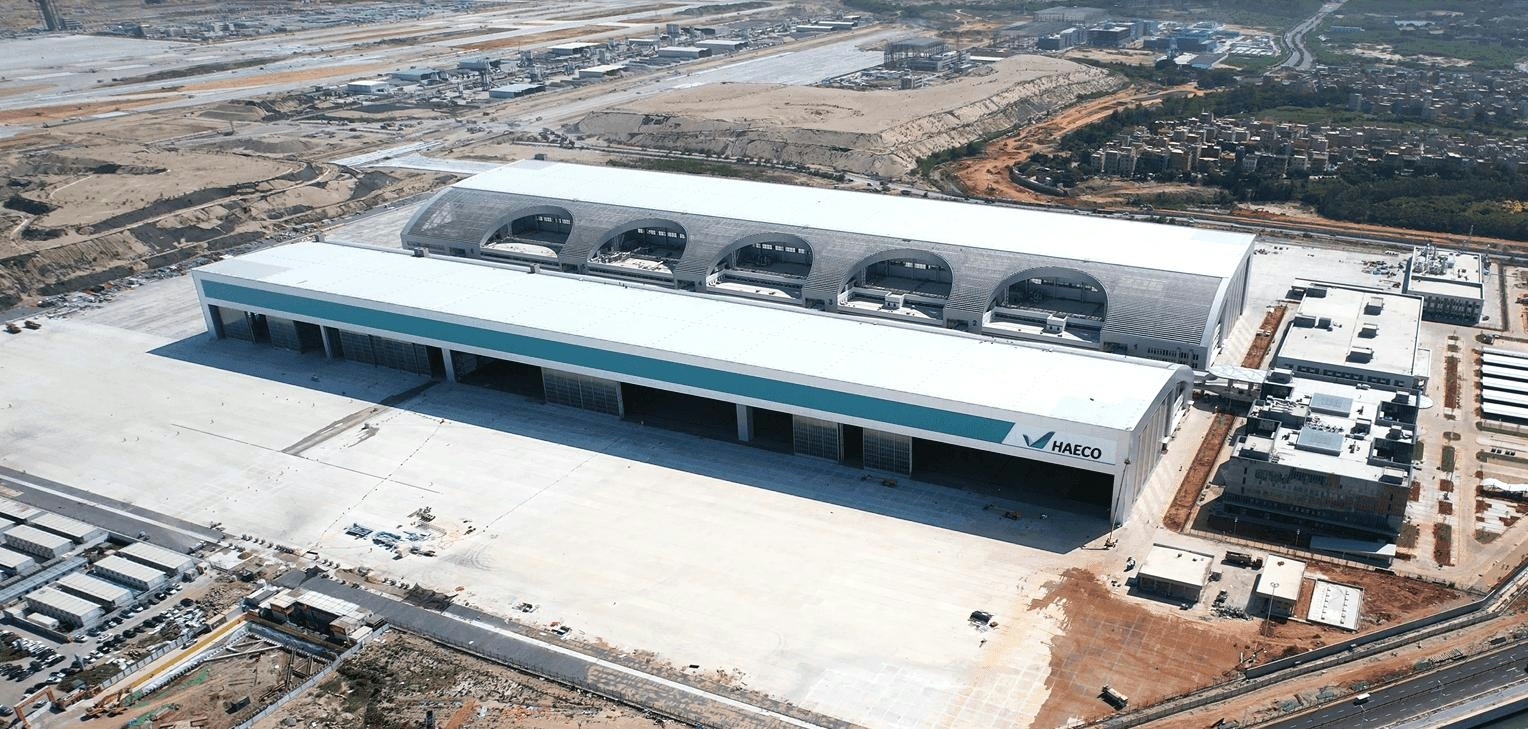
CALC and HAECO to Establish Aircraft Engine Maintenance Center in Hong Kong China Aircraft Leasing Group Holdings Limited (CALC) and Hong Kong Aircraft Engineering Company Limited (HAECO) have formalized plans to create an aircraft engine quick-turn maintenance center in Hong Kong through a recently signed memorandum of understanding. This initiative represents a significant advancement for the city’s aviation industry, reinforcing its position as a key international aviation hub. Strategic Partnership and Industry Implications The collaboration brings together CALC, China’s largest independent aircraft operating lessor, and HAECO, a company with over five decades of engineering expertise in Hong Kong. CALC will contribute its comprehensive lifecycle service capabilities and a diverse fleet, providing a robust operational foundation for the new facility. HAECO’s globally recognized engineering proficiency and advanced maintenance infrastructure complement this, creating a partnership that leverages the strengths of both entities. Secretary for Transport and Logistics Mable Chan welcomed the announcement, emphasizing that the joint venture aligns with broader national strategies. The Transport and Logistics Bureau highlighted that the partnership supports the development of “new quality productive forces” as outlined in China’s 15th Five-Year Plan, injecting renewed momentum into Hong Kong’s aviation sector. The Bureau reaffirmed its commitment to fostering innovative projects that enhance the city’s competitiveness and facilitate expansion into international markets. Challenges Amid Global Supply Constraints The launch of the maintenance center occurs against a backdrop of ongoing challenges within the global aviation industry, particularly concerning the constrained supply of aircraft parts. Recent shortages, including those affecting critical components such as aircraft windows, have disrupted operations for manufacturers, repair facilities, and private jet operators alike. These supply chain difficulties underscore the complexities involved in servicing modern aircraft fleets and may intensify competition among maintenance providers. In this context, industry participants are likely to respond by bolstering their maintenance capabilities or securing exclusive supply agreements to safeguard their market positions. Furthermore, recent data indicating increased engine orders for CFM International suggests growing demand for reliable and timely engine servicing, which could further shape the competitive landscape. As CALC and HAECO advance their joint venture, their capacity to manage supply chain challenges and adapt to shifting market dynamics will be pivotal. The success of the new maintenance center will not only influence their operational outcomes but also contribute significantly to Hong Kong’s broader aviation ambitions.
Discover Airlines Introduces AI-Driven Storytelling for Families

Discover Airlines Introduces AI-Driven Storytelling for Families

Discover Airlines Introduces AI-Driven Storytelling Platform for Families Discover Airlines, in collaboration with Spafax, has launched StoryWonder, an innovative AI-powered storytelling platform aimed at enriching the travel experience for families. This new service, now accessible to Discover Airlines passengers, enables children to create personalized travel stories that accompany them throughout their journey, spanning over 50 global destinations. Enhancing Family Travel Through Personalization Families receive a link during online check-in, allowing them to begin crafting stories before departure. The platform is designed for children aged three to thirteen, with parents and children selecting characters, themes, languages, and travel destinations through a straightforward setup process. StoryWonder’s AI engine then generates a unique narrative featuring the child as the protagonist. These stories are available in three formats: audio, independent reading, or bedtime story. The interface supports five languages—German, English, Spanish, French, and Italian—while stories can be produced in eleven languages, catering to a diverse international audience. Sebastian Kaiser, Head of Product at Discover Airlines, highlighted the airline’s dedication to family-friendly innovation, stating, “We are delighted to offer an innovative digital product from Spafax and StoryWonder, especially for families and children flying with Discover Airlines, to enjoy destination-based stories before or during the flight as well as during their vacation.” Integration and Industry Context StoryWonder is fully integrated into Discover Airlines’ Customer Experience Platforms and Entertainment Guide. On long-haul A330 aircraft equipped with FlyNet connectivity, passengers can generate new stories during the flight. An integrated audio player with download functionality ensures that stories remain accessible offline throughout the journey. Developed by KB&B Family Marketing Experts, this marks the platform’s first comprehensive deployment with an airline. The launch arrives amid broader challenges within the travel industry regarding the adoption and scaling of AI technologies. The iTnews *State of Data & AI 2026* report identifies effective AI scaling as a significant obstacle for many organizations, including those in travel. Additionally, industry analyses by Skift point to ongoing structural power struggles, suggesting that established players may face competitive pressures as they seek to differentiate their offerings through AI-driven entertainment. Competitors are expected to respond with their own innovations as AI’s role in travel services continues to evolve. Investor sentiment toward AI in travel remains cautious, as reflected in the muted market response to Anthropic’s recent IPO. This reaction underscores the uncertainties and challenges confronting AI companies, even as demand for personalized digital experiences grows. Dimitrios Tsirangelos, Vice President of Business Development IFE Technology and Innovation at Spafax, remarked, “Every airline talks about improving the family travel experience, and with Discover Airlines we are actually doing it end to end. A child can create a story at home, listen to it onboard without a connection, and finish the adventure at their destination.” As Discover Airlines pioneers AI-powered storytelling for families, this initiative underscores both the opportunities and complexities involved in integrating advanced technology into the travel experience, potentially setting a new standard for the industry amid ongoing transformation.
Axinom Develops On-Board Cloud to Connect All Cabin Devices

Axinom Develops On-Board Cloud to Connect All Cabin Devices

Axinom Advances On-Board Cloud to Integrate All Aircraft Cabin Devices Fürth-based software developer Axinom has announced a major expansion of its On-Board Cloud platform, designed to unify cloud-managed services across the full spectrum of connected cabin devices. This includes everything from seatback screens and crew tablets to passengers’ personal electronic devices. The upgraded platform employs open standards such as ARINC 853 Cabin Secure Media-Independent Messaging (CSMIM), enabling seamless data exchange between devices from multiple manufacturers. Unifying Cabin Systems Through Open Standards As airlines increasingly demand greater control over digital passenger services, operational applications, and onboard data management, Axinom’s enhanced platform addresses a growing industry trend toward connected, software-defined cabins. The system supports a variety of applications, including predictive maintenance alerts for galley equipment, synchronized flight information across both passenger and crew devices, and cloud-based deployment of entertainment and retail services. Ralph Wagner, CEO of Axinom, emphasized the importance of a unified yet open platform. He noted, “A seatback screen, a crew tablet, the oven in the galley: these are all just devices running services, and there is no reason for each of them to sit in a separate system. But a unified platform is not enough by itself. It has to be open, so that devices from any manufacturer work together and any application can run, whether the airline built it or a third party did. That is how an airline takes back the decisions about what happens in its cabin.” Technical Challenges and Market Implications Integrating a diverse range of cabin devices while ensuring reliable connectivity across cellular, Wi-Fi, satellite, and ambient networks presents significant technical challenges. As airlines and cargo operators strive to deliver superior connectivity experiences, competition in the market is expected to intensify. Industry players are likely to enhance their own connectivity solutions in response, particularly as “always-on” connectivity becomes a critical differentiator in the passenger experience. The strategic importance of advanced connectivity in aviation is further highlighted by projections for the global cloud computing market, which is anticipated to grow from $905.33 billion in 2026 to $2.9 trillion by 2034. This rapid expansion underscores the pivotal role platforms like Axinom’s On-Board Cloud will play in shaping the future of in-flight digital services. Axinom plans to demonstrate its enhanced platform at the upcoming World Aviation Festival in Lisbon and the APEX FTE Expo Asia later this year, positioning itself at the forefront of the evolving connected cabin ecosystem.
Pem-Air Partners with Ramco to Digitalize Engine MRO Operations

Pem-Air Partners with Ramco to Digitalize Engine MRO Operations

Pem-Air Partners with Ramco to Digitalize Engine MRO Operations Pem-Air, a certified FAA and EASA maintenance, repair, and overhaul (MRO) provider, has selected Ramco Aviation Software to spearhead the digital transformation of its engine MRO and accessory repair operations. The company will implement Ramco’s integrated platform to unify all phases of the engine shop visit, encompassing maintenance planning, engine servicing, supply chain management, quality assurance, compliance, engineering, and financial processes. Expanding Capabilities Amid Market Challenges This strategic initiative coincides with Pem-Air’s expansion into servicing larger and next-generation engine platforms, including the GE90, Trent 700, and notably the CFM LEAP engine. The LEAP engine segment is currently experiencing high demand and capacity constraints, a challenge highlighted by other industry players such as IAG Engine Tech struggling to enter this market. By adopting advanced digital tools, Pem-Air aims to streamline its operations and strengthen its competitive position in a demanding environment. Ramco’s platform will facilitate Pem-Air’s transition to paperless workflows, providing technicians with mobile applications for digital task cards and electronic sign-offs. The software will also oversee contracting, configuration management, work scoping, production planning, marshalling and kitting, technical documentation, and resource optimization, thereby enhancing operational efficiency across the board. Leveraging Artificial Intelligence for Enhanced Maintenance Artificial intelligence forms a core component of the deployment. Ramco’s Service Bulletin Agent utilizes data from service bulletins and airworthiness directives to assist in generating engineering orders. Additionally, generative AI-based assistants will enable users to review predefined reports and monitor operational status in real time. The platform is also capable of recommending corrective actions for maintenance discrepancies by analyzing historical resolution data, thereby supporting more informed decision-making. Virgil Pizer, Chief Executive of Pem-Air, emphasized the importance of selecting a platform aligned with the company’s growth ambitions. He stated, “Ramco stood out in our evaluation for its end-to-end lifecycle coverage, deep engine MRO expertise, and strong credibility in the US market. We built our name on quality and reliability, and we are confident that Ramco Aviation Software will enable us to continue exceeding what our customers expect from every repair.” Positioning Within a Competitive and Digitally Evolving Sector The partnership reflects broader industry trends where engine MRO providers increasingly adopt digital technologies to improve efficiency and meet rising competitive pressures. Recent developments, such as GE Aerospace and Kratos assuming second-source roles for critical engines like the JASSM, illustrate the intensifying competition Pem-Air faces. As digital transformation accelerates across the sector, Pem-Air’s collaboration with Ramco positions the company to effectively address operational challenges and evolving customer demands. Manoj Kumar Singh, Chief Customer Officer for Aviation, Aerospace, and Defence at Ramco Systems, highlighted the role of AI in the solution, noting, “We’ve built Ramco Aviation Software to meet the segment’s evolving demands, and AI sits at the centre of that work, helping Pem-Air continue adding value to its customers by, for example, reducing turnaround times.”
Improved Data Speeds Enhance Decision-Making

Improved Data Speeds Enhance Decision-Making

Improved Data Speeds Enhance Decision-Making The Evolving Challenge in Aviation Data Management The aviation industry has long prioritized the collection of flight data, investing substantially in upgrading flight recorders, expanding Flight Operational Quality Assurance (FOQA) programs, and enhancing aircraft connectivity. Despite these advancements, a persistent challenge remains: converting the vast volumes of data generated on every flight into timely and actionable insights. The issue is no longer the quantity of data but the speed at which it reaches the appropriate decision-makers. This shift in focus is crucial because the operational value of data diminishes rapidly over time. Detecting a maintenance trend two weeks after a flight may provide useful information, but identifying the same trend before the aircraft’s next departure can prevent costly delays, optimize maintenance schedules, and reduce unnecessary troubleshooting. In this context, speed transforms data from a mere historical record into a vital tactical tool for daily operations. Beyond Analytics: The Importance of Data Infrastructure Industry conversations often emphasize analytics platforms and artificial intelligence (AI) as solutions. While these technologies are important, they cannot overcome challenges related to inconsistent data capture, delayed retrieval, or fragmented workflows. Even the most advanced analytics tools are limited if they rely on incomplete or outdated information, potentially exacerbating delays rather than resolving them. Operators who derive the greatest value from flight data treat it as an essential operational infrastructure rather than a byproduct of engineering. This approach requires consistent data capture, automatic delivery, rigorous quality validation, and seamless integration into daily decision-making processes across maintenance, flight operations, safety, and engineering departments. The benefits extend well beyond regulatory compliance. Faster access to reliable data enables more precise maintenance planning, supports fuel efficiency initiatives, reduces repetitive troubleshooting, and allows teams to address issues proactively before they escalate into costly disruptions. Importantly, it also fosters a unified operational perspective, enabling departments to collaborate based on shared facts rather than isolated assumptions. Challenges and Industry-Wide Implications Achieving these improvements demands significant investment in infrastructure to support faster data processing and transmission. As companies strive to leverage real-time data for enhanced decision-making, competition within the market intensifies, driving innovation in data analytics tools. The adoption of advanced AI solutions is becoming increasingly prevalent as organizations seek competitive advantages. This trend is not confined to aviation; sectors such as energy, industrials, and technology are also experiencing shifts in market leadership by harnessing real-time data to optimize operations and accelerate decision-making. As aircraft connectivity continues to advance, the industry dialogue must move beyond the sheer volume of data collected to focus on the effectiveness of its use. Connectivity alone is insufficient; the true competitive edge lies in minimizing the time between an event occurring onboard and an informed decision being made on the ground. The next generation of high-performing flight data programs will be defined not by the amount of information stored but by how swiftly that information drives operational action. In an industry where every minute counts, reducing decision latency may emerge as one of the most valuable improvements airlines and other data-driven sectors can achieve.
Sri Lanka Advances Commercial Use of Pilotless Air Taxis

Sri Lanka Advances Commercial Use of Pilotless Air Taxis

Sri Lanka Advances Commercial Use of Pilotless Air Taxis As the global race to commercialize electric air taxis intensifies, Sri Lanka is emerging as a pioneer by adopting EHang’s Global Fast Track Program. This initiative is designed to expedite the regulatory process, enabling aviation authorities to transition from initial evaluations to commercial operations of pilotless aircraft within months rather than years. EHang’s Fast Track Program and Sri Lanka’s Regulatory Approach EHang, a China-based advanced air mobility company, leverages its extensive experience with certifications and commercial operations in China, alongside flight demonstrations in 23 countries, to streamline the approval process for its pilotless electric vertical takeoff and landing (eVTOL) aircraft. The Fast Track Program provides a structured and adaptable framework for governments, allowing them to build upon EHang’s existing certifications instead of starting anew. The program unfolds in four critical phases: harmonizing regulatory requirements, establishing an operational sandbox and necessary infrastructure, conducting validation flights under stringent safety protocols, and ultimately launching commercial passenger services once all approvals are secured. Sri Lanka is the first country to implement this program, with officials aiming to establish a regulatory sandbox for commercial operations within four months, contingent upon the successful completion of all safety, technical, operational, and regulatory prerequisites. Recent consultations between EHang and Sri Lankan authorities—including the Ministry of Ports and Civil Aviation and the Civil Aviation Authority of Sri Lanka (CAASL)—have concentrated on certification processes, airspace management, maintenance protocols, infrastructure development, and personnel training. Initial Operations and Future Prospects The initial phase of operations is expected to focus on Colombo’s Port City, where regulators plan to create an eVTOL sandbox for demonstration and trial services. Should these trials prove successful, the project may expand to include scenic sightseeing flights over iconic landmarks such as Sigiriya and Pidurangala, as well as shuttle services connecting Katunayake International Airport with central Colombo. Authorities are also exploring the potential for unmanned cargo flights to support maritime logistics, indicating ambitions that extend beyond passenger transport. Challenges and Market Context Sri Lanka’s advancement in commercial pilotless air taxis occurs amid significant challenges that are common globally. Regulatory approval, infrastructure development, and safety concerns remain formidable obstacles. While companies like Joby Aviation and Archer Aviation are progressing with pilot projects in the United States, they face hurdles such as the need to establish new landing zones beyond existing airports. The sector is also characterized by intense competition and legal disputes, including ongoing litigation between Joby and Archer, alongside strategic partnerships like the joint venture between Anduril and Archer to develop attack drones. Despite these challenges, the broader market maintains cautious optimism regarding the transformative potential of urban air mobility. Sri Lanka’s Minister of Ports and Civil Aviation, Anura Karunathilaka, highlighted that advanced air mobility could bolster tourism, enhance emergency response capabilities, and support maritime logistics. CAASL Director General and CEO Capt. Daminda Rambukwella acknowledged the ambitious nature of the four-month timeline, emphasizing that commercial operations will depend on meeting all regulatory and technical standards. Collaboration and Global Implications Under the agreement, EHang will supply aircraft, operating systems, technical support, and training, working closely with Sri Lankan regulators to ensure adherence to international aviation safety standards. As Sri Lanka becomes the first real-world test case for EHang’s Fast Track Program, the outcome may significantly influence the pace at which pilotless air taxis are introduced in other markets worldwide.
Jet Engines Perform Equally on Coconut-Blend and Conventional Jet Fuel, but Environmental Impact Differs
Jet Engines Perform Equally on Coconut-Blend and Conventional Jet Fuel, but Environmental Impact Differs

Jet Engines Perform Equally on Coconut-Blend and Conventional Jet Fuel, but Environmental Impact Differs Promising Advances in Sustainable Aviation Fuel The aviation industry’s substantial contribution to global carbon emissions has intensified the search for sustainable alternatives to conventional jet fuel. Researchers at Osaka Metropolitan University have recently demonstrated that a biofuel derived from coconut oil can be blended with standard Jet A-1 fuel without compromising engine performance. In controlled tests using a small turbojet engine, the coconut-based fuel exhibited thermal efficiency on par with traditional aviation fuel while achieving a notable reduction in hydrocarbon emissions, underscoring its potential environmental benefits. Production and Properties of Coconut-Derived Biofuel The study emphasizes the viability of utilizing discarded or substandard coconuts—abundant in Southeast Asia due to stringent commercial grading—as a sustainable feedstock for aviation biofuel. The fuel was synthesized through a co-solvent process combining coconut oil extracts with acetone and an alcohol at ambient temperature and pressure. This method contrasts with conventional biofuel production techniques that often require elevated temperatures, high pressure, or extensive purification, thereby potentially reducing energy consumption and preserving fuel quality. Two variants of coconut-derived aviation biofuel were produced: fatty acid methyl ester (FAME), synthesized with methanol, and fatty acid ethyl ester (FAEE), synthesized with ethanol. Both belong to the fatty acid ester family commonly associated with biodiesel, but their chemical properties can be adjusted to meet aviation fuel standards. Coconut oil’s fatty acids, characterized by shorter carbon chains, are chemically closer to the hydrocarbons found in Jet A-1 than many other vegetable oils, making it particularly suitable for this application. Engine Performance and Emissions Testing Raw coconut oil is unsuitable for turbine engines due to its high viscosity and chemical composition differing significantly from aviation kerosene. Conversion into FAME or FAEE modifies these properties, producing a fuel compatible with conventional jet fuel blends. The research team prepared blends with varying ratios of FAME or FAEE mixed with Jet A-1 and evaluated them in a turbojet engine, measuring fuel consumption, thermal efficiency, and emissions. Results indicated that thermal efficiency remained stable across all blends. However, fuel consumption increased with higher proportions of biofuel, attributed primarily to the lower heating value of the coconut-derived blends rather than any decline in engine performance. Importantly, the coconut-blend fuels demonstrated reduced hydrocarbon emissions compared to conventional jet fuel, highlighting a significant environmental advantage. Challenges and Future Prospects Despite these encouraging findings, several obstacles must be addressed before coconut-blend fuels can be widely adopted in commercial aviation. Infrastructure modifications may be necessary to accommodate the new fuel, and regulatory approval processes will be essential to ensure safety and validate environmental claims. While airlines may view coconut-blend fuels as a means to reduce their carbon footprint, concerns regarding supply consistency and cost competitiveness could influence their willingness to adopt the technology. Additionally, competition from other sustainable fuel developments and improvements in conventional jet fuel efficiency may impact market dynamics. The reduced hydrocarbon emissions associated with coconut-blend fuels position them as a promising option in the aviation sector’s pursuit of sustainability. As the industry continues to balance operational demands with environmental imperatives, such biofuels could play a critical role in shaping the future of air travel.
Queensland Funds Wide-Body Aircraft Paint and Refinishing Facility in Toowoomba

Queensland Funds Wide-Body Aircraft Paint and Refinishing Facility in Toowoomba

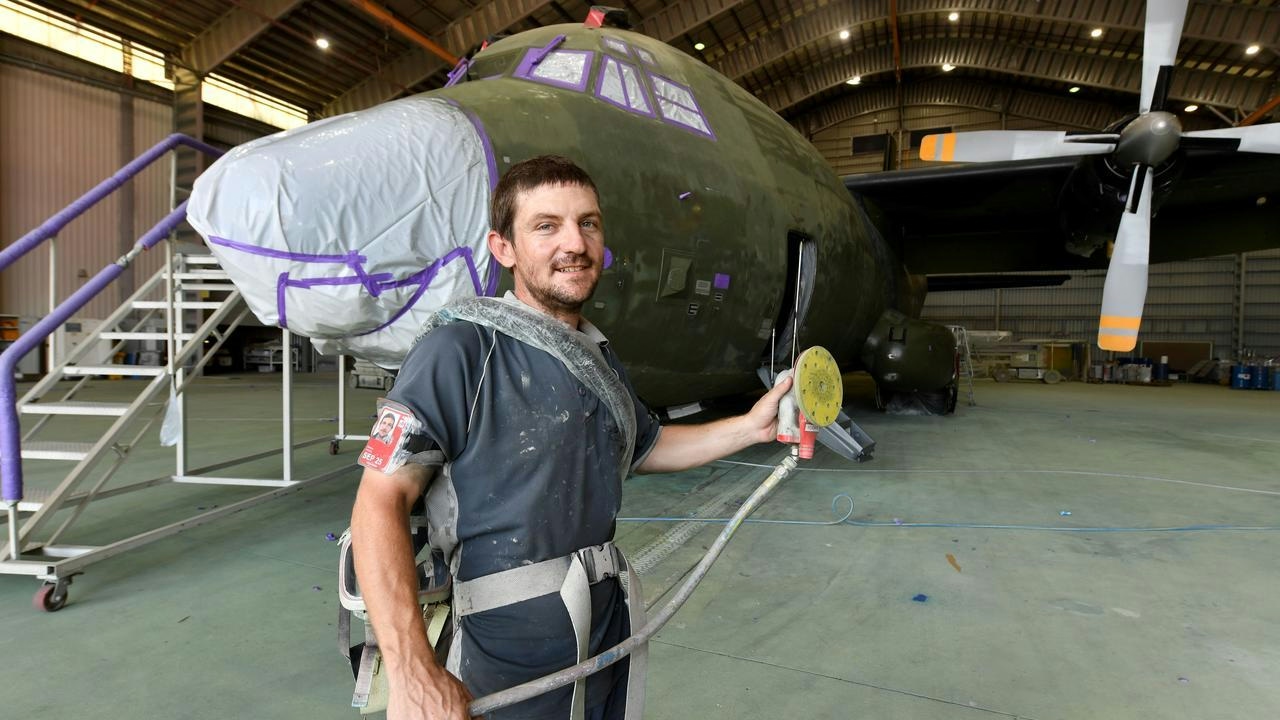
Queensland Funds Wide-Body Aircraft Paint and Refinishing Facility in Toowoomba A Strategic Investment in Sovereign Aviation Capability The Queensland Government has announced a $12 million investment to establish Australia’s first sovereign wide-body aircraft paint and refinishing facility at Wellcamp Airport in Toowoomba. This funding, drawn from the $180.6 million Sovereign Industry Development Fund, is intended to enhance local defence and aviation capabilities while reducing the nation’s reliance on overseas providers for critical aircraft maintenance services. The facility will be developed by Landlocked Aviation, a US-based company with established operations in the United States. Construction is projected to generate more than 750 jobs in the Toowoomba region, with the facility expected to be operational by early 2028. Upon completion, it will support over 150 highly skilled positions and create up to 600 jobs during the construction phase. Deputy Premier and Minister for State Development, Infrastructure and Planning, Jarrod Bleijie, highlighted the strategic significance of the project. He described the investment as a means to establish a vital and unique defence and aviation capability in Toowoomba, which will create employment opportunities, strengthen local supply chains, and reduce Australia’s dependence on offshore providers. Bleijie further noted that securing Landlocked Aviation’s commitment to Queensland underscores the state’s dedication to bolstering the defence supply chain and delivering tangible economic benefits. Facility Capabilities and Industry Implications The purpose-built facility will encompass 7,685 square metres of aviation-grade paint and refinishing infrastructure, capable of servicing both wide-body and narrow-body aircraft. Its services will include full aircraft strip and repaint, partial repaints, blending work, and corrosion protection. This development is expected to position Toowoomba as a nationally significant hub for both defence and commercial aircraft maintenance. Industry analysts caution that the facility’s long-term success will depend on maintaining stable demand within the business aircraft sector, which has remained resilient despite ongoing geopolitical uncertainties. The broader momentum of the business aviation market will likely influence the facility’s market reception. Additionally, existing competitors in the aircraft paint and refinishing industry may respond with strategic measures such as competitive pricing or technological innovation to protect their market share. Adapting to evolving industry standards and customer preferences will be essential for the facility’s sustained competitiveness. The Queensland Government’s investment aims to support projects that are ready to proceed and capable of delivering sovereign capability, economic value, and secure employment for Queenslanders. Bleijie emphasized the broader vision behind the initiative, stating, “This is about rebuilding Queensland’s sovereign industries like defence and backing home-grown innovation that will secure our state’s future.” He reaffirmed Queensland’s critical role in supporting Australia’s defence capability through the Sovereign Industry Development Fund. By fostering local expertise and reducing dependence on offshore maintenance, the new Toowoomba facility marks a significant advancement for Australia’s aviation and defence sectors, even as it navigates the challenges of a dynamic and competitive global market.
Gulf Airlines Turn to India for AI and Digital Transformation

Gulf Airlines Turn to India for AI and Digital Transformation

Gulf Airlines Turn to India for AI and Digital Transformation Rising Demand for Technology-Driven Solutions Gulf airlines are increasingly turning to India as a strategic hub for artificial intelligence, data analytics, software development, and other technology-driven functions. This shift aims to accelerate digital transformation efforts while managing operational costs and leveraging India’s vast pool of skilled professionals. The move reflects a broader global trend among airlines investing in AI to enhance operational efficiency, improve customer experience, enable predictive maintenance, optimize revenue management, and streamline back-office operations. The recent decision by Australia’s Qantas to consider relocating up to 1,000 roles to India through an outsourcing partnership with Accenture has drawn attention within the industry, serving as a potential model for Gulf carriers seeking similar efficiencies and innovation. India’s Expanding Role in Aviation Technology Gulf airlines already maintain robust digital transformation initiatives, making India an attractive destination for select technology and shared-services roles. Qatar Airways, for example, has expanded its use of data analytics and AI through collaborations with Google Cloud and operates a Combined Delivery Center in Ahmedabad focused on digital transformation and AI development. According to a Doha-based aviation expert, broader utilization of Indian technology centers could enable Gulf airlines to build specialized teams in AI development, data science, cybersecurity, software engineering, fintech, and automation without the need to base every expert in high-cost aviation hubs such as Doha, Dubai, Abu Dhabi, or Riyadh. India’s growing Global Capability Centre (GCC) ecosystem further reinforces its appeal. Projections from ET Insights estimate that Indian offshore technology centers will generate $98.4 billion in revenue by fiscal 2026, with over 2,100 GCCs employing approximately 2.36 million professionals. These centers are evolving beyond traditional back-office functions to encompass advanced fields including AI, engineering, software development, finance, and research. Strategic Benefits and Operational Challenges Outsourcing technology functions to India offers Gulf carriers several strategic advantages. These include access to a large talent pool of engineers and AI specialists, the ability to provide round-the-clock technology support, lower operating costs, and rapid scalability to accommodate emerging AI applications. Cost savings are particularly significant for roles that do not require physical presence at airline headquarters or airports, such as data processing, software development, application maintenance, AI model development, customer analytics, finance support, and certain human resources activities. Nonetheless, this approach presents challenges. Managing elevated operating costs, ensuring regulatory compliance, and balancing innovation with operational stability remain critical concerns. Core aviation functions—such as safety-critical operations, flight operations, and regulatory coordination—will continue to demand strong local oversight and specialized teams. Market responses may include increased scrutiny from competitors and stakeholders, with rival airlines potentially intensifying recruitment of industry veterans or establishing new technology partnerships. While the Indian aviation sector faces financial pressures and operational disruptions, it retains strategic advantages such as access to Russian airspace and a growing long-haul market in Europe. Deepening Partnerships and Future Outlook Gulf carriers are actively expanding their AI initiatives. Etihad Airways, for instance, has launched an AI Academy in collaboration with Microsoft to train staff and identify opportunities for AI-driven improvements. Saudi Arabia is also broadening its technology partnership ecosystem with India, recently signing a memorandum of cooperation covering digitization, electronic manufacturing, and emerging technologies including AI, cloud computing, robotics, and the Internet of Things. As Gulf airlines navigate the complexities of digital transformation, India’s technology sector is positioned to play a pivotal role in shaping the future of aviation in the region.
line