
Orquestre insights de IA em ações

Tendências
Categories
Airbus A340 Pricing Outlook for 2026
Airbus A340 Pricing Outlook for 2026
Shifting Market Dynamics and Operational Roles
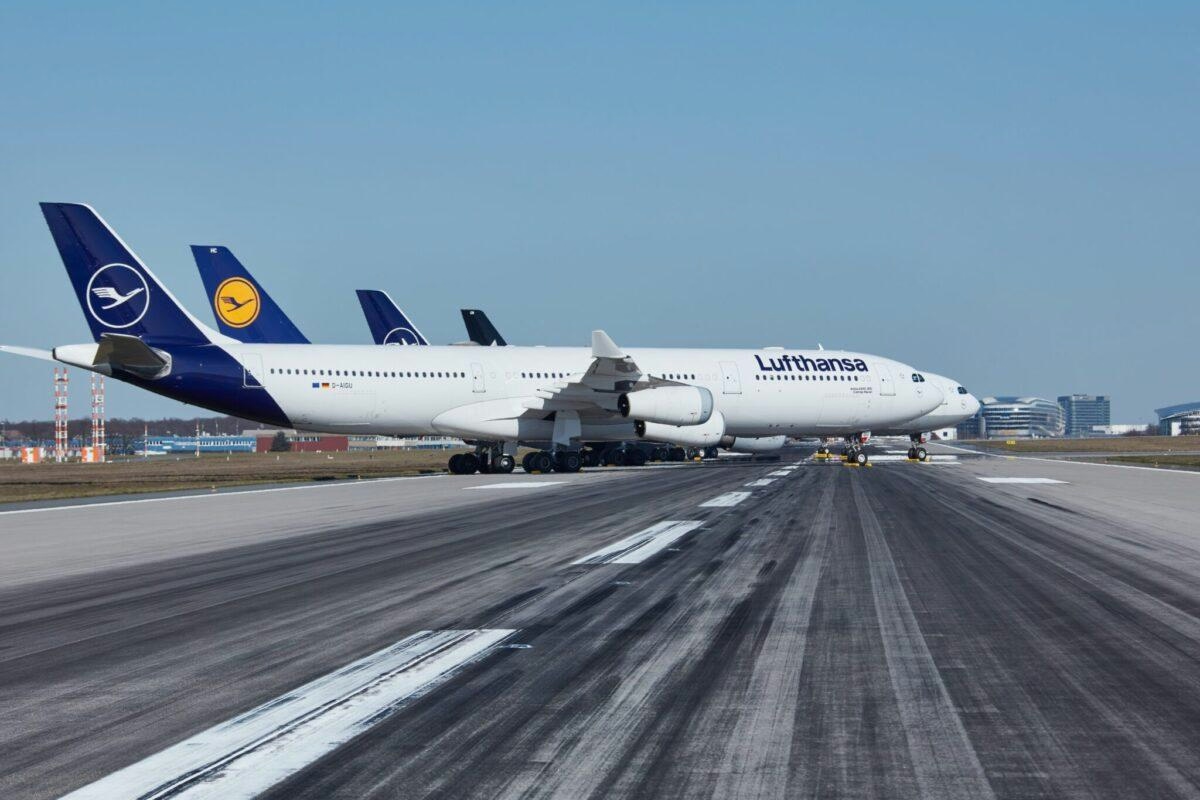
Once emblematic of long-haul international travel, the Airbus A340 quadjet now confronts a markedly challenging market environment. Airlines are increasingly favoring more fuel-efficient twin-engine aircraft, driven by rising fuel costs and the superior operational efficiency of modern models such as the Airbus A350 and Boeing 787 Dreamliner. Consequently, most original operators have retired their A340 fleets, with only a few carriers—including Lufthansa, Swiss International Air Lines, and Edelweiss—maintaining limited numbers of the aircraft, many of which are scheduled for imminent retirement.
Despite its waning appeal among passenger airlines, the A340 continues to hold value in specialized sectors. Its four-engine configuration offers distinct advantages for air cargo, VIP transport, and government missions, where enhanced thrust, electrical power, and engine redundancy are critical. This technical edge has also sustained the use of other quadjets, such as the Boeing 747, in comparable roles.
Pricing Variability and Market Influences
The pricing of the Airbus A340 varies significantly depending on the model, age, and configuration. Industry data from Axon Aviation indicates that the A340-300 averages around $219 million, while the larger A340-600 commands an average price near $275 million. On the secondary market, prices range broadly—from approximately $15 million for older airframes to over $200 million for newer or specially configured variants—with rare examples reaching close to $300 million.
These pricing dynamics are further complicated by broader industry trends. Airbus’s production rates and strategic decisions regarding future aircraft development continue to influence market conditions. Meanwhile, Boeing faces its own challenges, including recent orders from smaller carriers for models such as the 737-10 and A220-300. The duopoly of Airbus and Boeing remains unchallenged in the global airliner market, limiting alternatives for airlines as they plan their future fleets.
Impact of the COVID-19 Pandemic and Future Outlook
The COVID-19 pandemic introduced a temporary production bottleneck that extended the operational lifespan of some four-engine aircraft, including the A340. Delays in new widebody deliveries have compelled airlines to continue deploying these jets on high-demand routes requiring either luxury cabins or high-capacity seating. The relatively low acquisition cost of secondhand A340s has also provided a cost-effective solution for carriers navigating the industry’s recovery phase.
Swiss International Air Lines, for example, is reportedly considering extending the use of its A340-300s to accommodate ground times needed for A330 reconfiguration. This development underscores the ongoing need for operational flexibility as airlines adapt to evolving fleet requirements and market conditions.
Looking ahead to 2026, the pricing outlook for the Airbus A340 will be shaped by the interplay of these factors: the sustained dominance of Airbus and Boeing, shifting airline strategies, and the specialized operational niches where quadjets continue to offer unique advantages. While the A340’s role as a mainstream passenger aircraft is diminishing, its value persists in targeted applications and as a pragmatic option within a constrained market.

Etihad Airways Suspends Airbus A380 Flights on Key Route

Aditya Birla Group Seeks Approval for Aircraft Leasing in GIFT City

Qatar Airways Highlights Innovation and Connectivity at Arabian Travel Market 2026

Hong Kong's Five-Year Plan Includes Andrew Fan's Aircraft Parts Processing Hub Proposal

ACIA Aero Leasing Delivers ATR72-600 to Air Nostrum

RTX Appoints Jill Albertelli as Head of Pratt & Whitney

TAT Technologies Joins Beyond Aero Hydrogen Aircraft Program

AURAK Study Highlights Barriers to Air Taxi Adoption in Emerging Economies

Xiamen Air Selects Altitude for 787 Maintenance at Heathrow

Etihad and Swissport Extend Global Partnership
