
Orquestre insights de IA em ações

Tendências
Categories
Airbus Balances SAF Expansion and A350 Orders Amid Counterfeit Parts Concerns
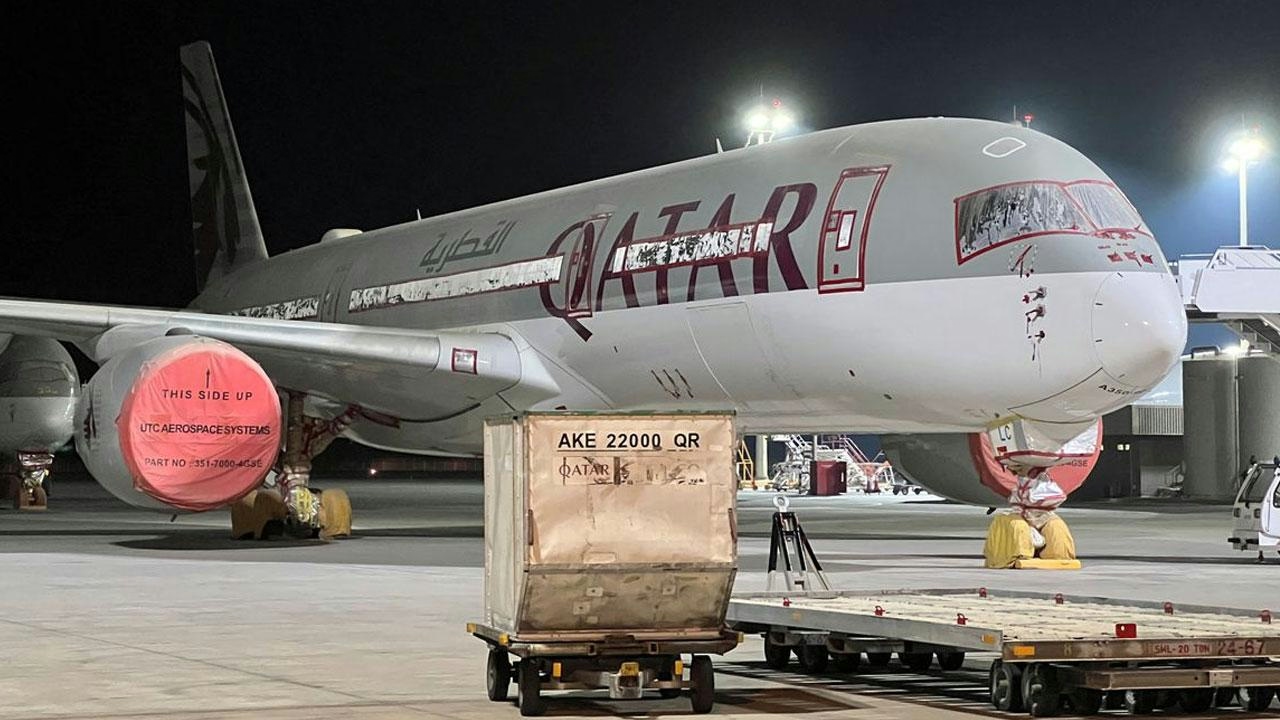
Airbus Balances SAF Expansion and A350 Orders Amid Counterfeit Parts Concerns
Advancing Sustainable Aviation Fuel and Fleet Renewal
Airbus is currently navigating a multifaceted challenge as it pushes forward with its sustainable aviation fuel (SAF) initiatives while securing significant aircraft orders. The company recently entered into a multi-year agreement with Air bp to supply SAF and related services across Germany and Spain, underscoring its commitment to reducing emissions and supporting the aviation industry's broader decarbonization goals. Concurrently, Air Canada has placed a substantial order for the A350-1000, reinforcing Airbus’s strong position in the widebody aircraft market and aiding the airline’s long-haul fleet renewal strategy.
Counterfeit Engine Parts Raise Operational Concerns
Despite these positive developments, Airbus faces mounting concerns over counterfeit engine parts discovered in components used on some of its aircraft. This issue has prompted regulators and airlines to conduct thorough safety assessments, leading to industry-wide inspections and, in certain cases, temporary groundings of affected aircraft. The situation highlights the vulnerabilities inherent in Airbus’s extensive supplier and maintenance network, which can impact operational integrity and the company’s reputation, even when Airbus itself is not directly implicated in the fraudulent activities.
Market Impact and Competitive Landscape
These challenges arrive at a critical juncture for Airbus. The company’s share price (ENXTPA:AIR) currently stands at €182.84, reflecting a 13.9% increase over the past year and a near doubling over five years. However, recent market sentiment has turned cautious, with the stock declining 7.0% in the past week, 11.6% over the last month, and 10.2% year to date. Investors are closely monitoring how Airbus manages the balance between growth opportunities—such as expanding SAF production and fulfilling A350 orders—and the operational risks posed by supply chain vulnerabilities.
The market’s reaction may intensify scrutiny of Airbus’s capacity to meet ambitious production targets and deliver on its SAF commitments. The company’s efforts to integrate SAF align with broader airline decarbonization strategies, positioning Airbus in direct competition with Boeing and, increasingly, Embraer on shorter routes. Meanwhile, competitors may seek to capitalize on Airbus’s current difficulties by highlighting their own progress in SAF adoption and aircraft reliability.
Adding further complexity, Asia-Pacific airlines continue to drive global growth despite ongoing supply chain constraints. This regional momentum could influence Airbus’s market position as it strives to maintain its competitive edge while managing both production challenges and reputational risks.
As Airbus advances, the interplay between sustainable growth, operational integrity, and market perception will be pivotal. Regulatory responses, airline procurement decisions, and competitor strategies will collectively shape how investors and industry stakeholders assess Airbus’s ability to fulfill its commitments in an evolving aviation landscape.

Etihad Airways Suspends Airbus A380 Flights on Key Route

Aditya Birla Group Seeks Approval for Aircraft Leasing in GIFT City

Qatar Airways Highlights Innovation and Connectivity at Arabian Travel Market 2026

Hong Kong's Five-Year Plan Includes Andrew Fan's Aircraft Parts Processing Hub Proposal

ACIA Aero Leasing Delivers ATR72-600 to Air Nostrum

RTX Appoints Jill Albertelli as Head of Pratt & Whitney

TAT Technologies Joins Beyond Aero Hydrogen Aircraft Program

AURAK Study Highlights Barriers to Air Taxi Adoption in Emerging Economies

Xiamen Air Selects Altitude for 787 Maintenance at Heathrow

Etihad and Swissport Extend Global Partnership
