
Orquestre insights de IA em ações

Tendências
Categories
Airbus Confronts Engine Shortages Jeopardizing Aircraft Deliveries
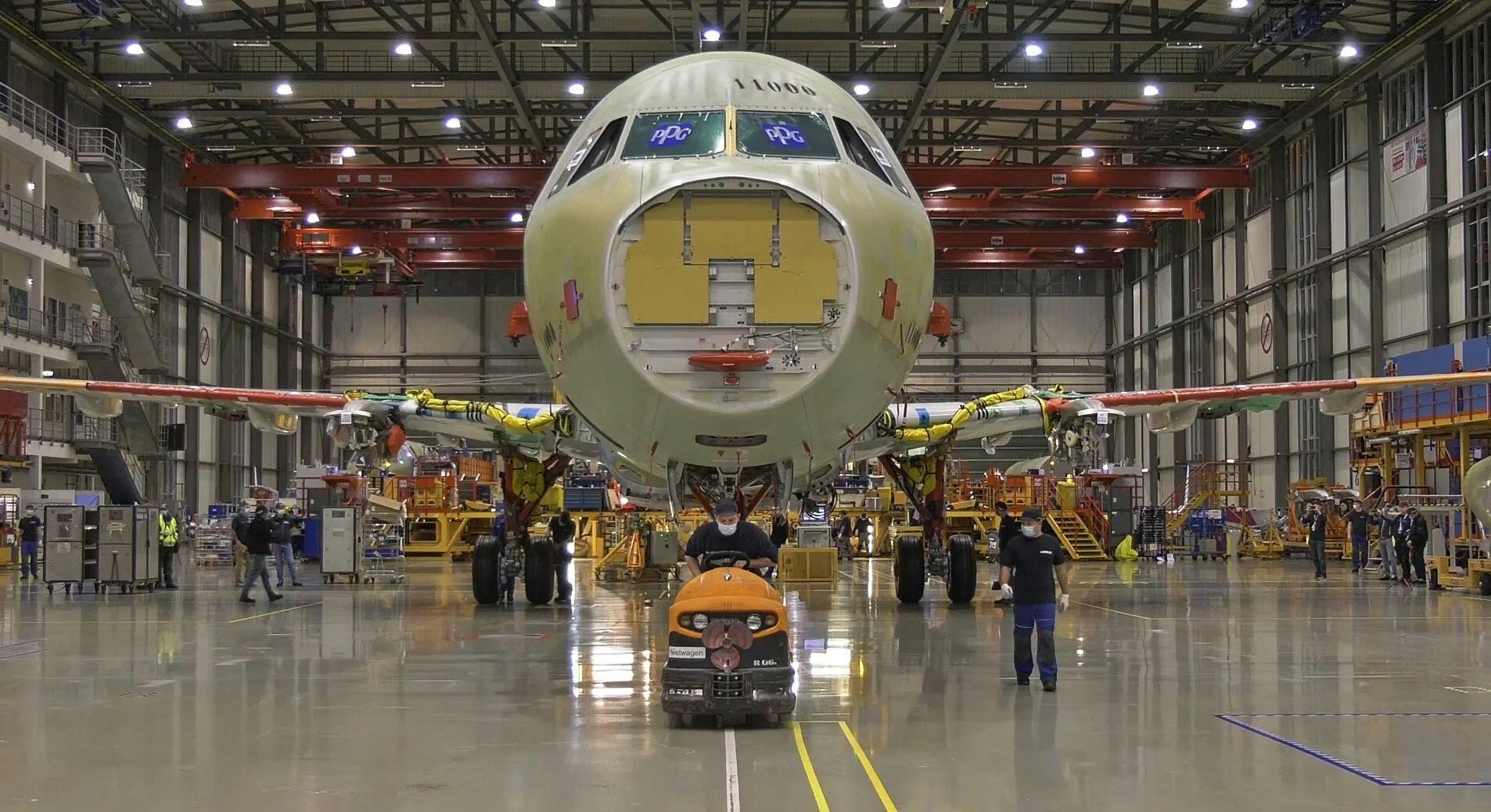
Airbus Confronts Engine Shortages Jeopardizing Aircraft Deliveries
Persistent Engine Supply Challenges
With its 2026 Annual General Meeting imminent in Amsterdam, Airbus is confronting significant operational hurdles, primarily stemming from ongoing engine shortages that threaten its aircraft delivery schedules. Central to this predicament is a protracted dispute with Pratt & Whitney, the US-based manufacturer of the Geared Turbofan (GTF) engines. These engines have been beset by reliability issues, including vibration and corrosion problems, which have necessitated extensive recalls and unscheduled maintenance. The resulting disruptions have severely impacted production and delivery timelines for Airbus’s critical narrowbody aircraft.
The A220 and A320neo families, which constitute a substantial portion of Airbus’s portfolio, depend heavily on Pratt & Whitney’s PW1000G engine series. The A220 exclusively utilizes the PW1500G, while the A320neo offers the PW1100G alongside CFM International’s LEAP-1A as engine options. The shortage of reliable engines has forced Airbus to miss multiple delivery targets, contributing to a decline in its stock price and raising concerns among investors.
Industry-Wide Implications and Production Targets
The repercussions of these engine supply constraints extend beyond Airbus, affecting airlines worldwide. For instance, Air Baltic has experienced fleet groundings due to engine maintenance issues and now expects to have its full fleet operational only by 2026. Similarly, Aegean Airlines has abandoned plans to initiate flights to India, attributing the decision to delays in receiving Airbus A321XLR aircraft caused by engine shortages.
Airbus’s ambitious goal to increase production of the A320neo family to 75 jets per month by 2027 faces significant risks amid these ongoing challenges. While routine engine maintenance is a standard industry practice, the current surge in unscheduled repairs has strained the availability of engines, compelling both manufacturers and airlines to make last-minute operational adjustments.
Pratt & Whitney has responded by emphasizing its commitment to expanding production capacity. A company spokesperson highlighted that GTF engine deliveries in 2025 rose by more than 50% compared to 2019 levels, with expectations for further increases in 2026. Despite these assurances, Airbus continues to demand a more dependable engine supply to fulfill its production objectives.
Technological Innovation and Future Outlook
In response to the current crisis, the broader aviation industry is accelerating efforts to develop alternative propulsion technologies. Advances in hybrid-electric and fully electric engines are gaining traction, presenting potential solutions that could alter future delivery schedules and market dynamics. As manufacturers and airlines navigate the immediate challenges posed by engine shortages, these innovations may prove instrumental in reducing similar risks over the long term.
As Airbus approaches its annual meeting, the company faces mounting pressure to resolve engine supply issues, restore delivery commitments, and reassure shareholders amid a rapidly shifting market environment.

Etihad Airways Suspends Airbus A380 Flights on Key Route

Aditya Birla Group Seeks Approval for Aircraft Leasing in GIFT City

Qatar Airways Highlights Innovation and Connectivity at Arabian Travel Market 2026

Hong Kong's Five-Year Plan Includes Andrew Fan's Aircraft Parts Processing Hub Proposal

ACIA Aero Leasing Delivers ATR72-600 to Air Nostrum

RTX Appoints Jill Albertelli as Head of Pratt & Whitney

TAT Technologies Joins Beyond Aero Hydrogen Aircraft Program

AURAK Study Highlights Barriers to Air Taxi Adoption in Emerging Economies

Xiamen Air Selects Altitude for 787 Maintenance at Heathrow

Etihad and Swissport Extend Global Partnership
