
Orquestre insights de IA em ações

Tendências
Categories
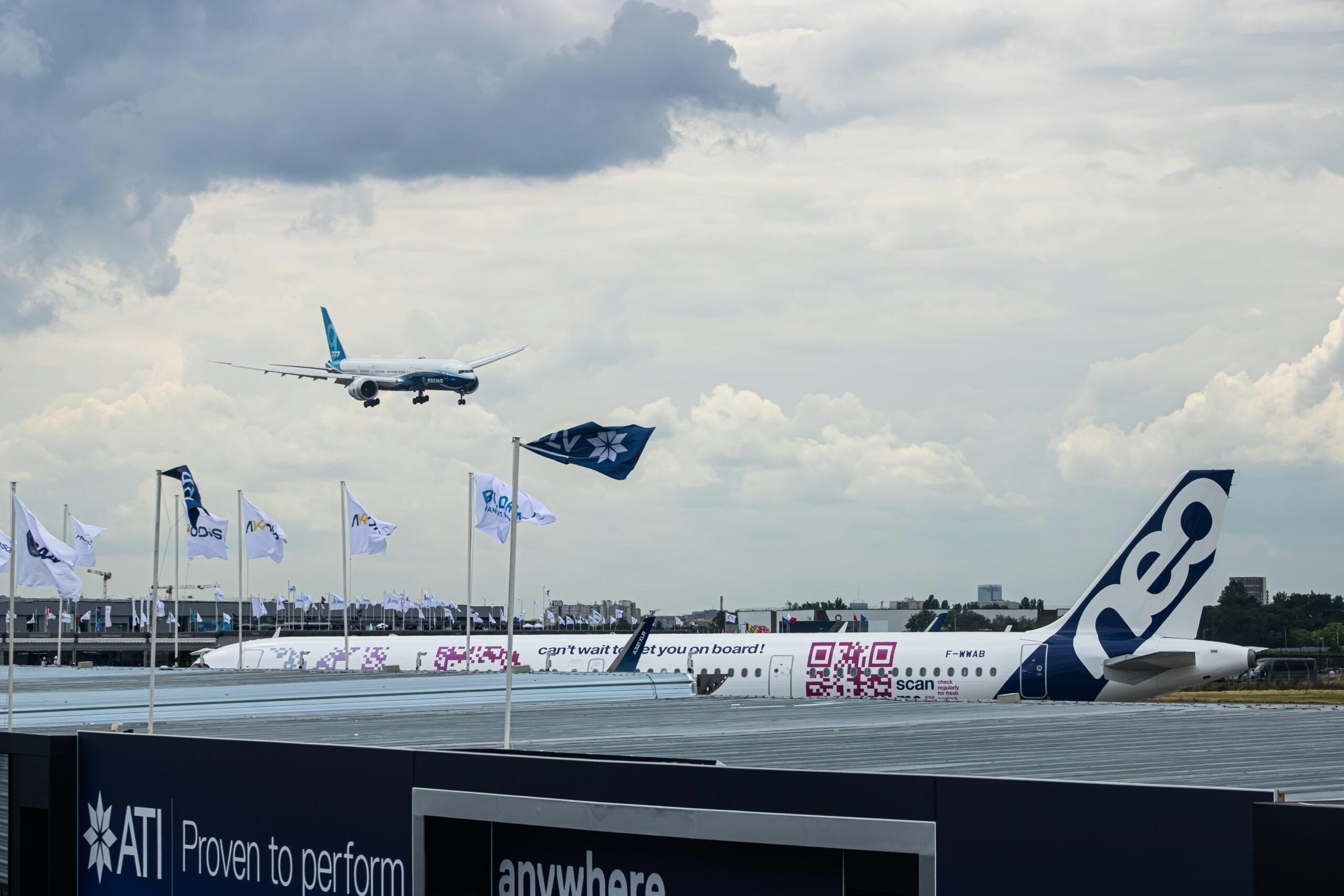
Airbus vs Boeing in 2025: A Long-Term Strategic Duel
Airbus vs Boeing in 2025: A Long-Term Strategic Duel
Contrasting Recoveries in 2025
The year 2025 marked a significant turning point for both Airbus and Boeing, highlighting divergent trajectories in their post-pandemic recoveries. Boeing experienced a strong commercial rebound, securing approximately 1,173 net orders—surpassing Airbus for the first time since 2018. This resurgence was driven primarily by sustained demand for the 737 MAX and 787 Dreamliner models, bolstered by substantial political support from the United States in securing major international contracts. The market responded favorably to Boeing’s performance, with its stock rising 2.7% following the announcement of its annual results and several analysts upgrading their ratings to buy. Despite this positive momentum, Boeing remains in a phase of consolidation, grappling with the lingering effects of recent crises, including ongoing safety concerns, production quality challenges, and Federal Aviation Administration (FAA) restrictions on production rates. In terms of deliveries, Boeing maintained a competitive stance by handing over 600 aircraft through November, balancing output across both narrowbody and widebody segments.
In contrast, Airbus reinforced its leadership in aircraft deliveries, completing 793 handovers in 2025—slightly exceeding its revised target but still falling short of its 2019 record of 863. The company secured 1,000 gross orders (889 net) and closed the year with a record backlog nearing 8,754 aircraft. Airbus’s global reach was further underscored by a significant contract signed with two Chinese airlines. Nevertheless, the manufacturer continues to face considerable challenges, including a stretched supply chain, delivery delays, and saturated production capacity, all of which have constrained output below pre-pandemic levels. Despite these operational hurdles, Airbus delivered strong financial results, supported by a favorable product mix, disciplined cost management, and the high value embedded in its backlog.
Airbus: Navigating Post-Pandemic Challenges and Strategic Priorities
Since the onset of the COVID-19 pandemic, Airbus has steadily regained momentum, though industrial and strategic challenges persist. The delivery figure of 793 aircraft in 2025 represents progress compared to 2024 but remains below the peak achieved in 2019. This shortfall is not attributable to a lack of manufacturing capacity but rather to the enduring impact of pandemic-era supply chain disruptions, quality control adjustments, and a deliberate approach to managing deliveries. Financially, Airbus has benefited from a strong product mix and rigorous cost discipline, resulting in increased revenue per aircraft delivered.
Strategically, Airbus has prioritized short-term profitability and financial stability by temporarily pausing certain research and development initiatives. This decision reflects a calculated response to managing high demand amid a complex post-crisis environment rather than a retreat from innovation. While some R&D activities have become less visible in the near term, Airbus continues to invest in technological advancement, focusing on fulfilling existing orders and optimizing operational efficiency.
Assessing the 2025 Competitive Landscape
Evaluating which manufacturer “won” 2025 oversimplifies the nuanced and multifaceted rivalry between Airbus and Boeing. Boeing’s lead in net orders and positive market reception contrast with Airbus’s dominance in deliveries and strategic global partnerships. A comprehensive assessment must extend beyond annual figures to encompass factors such as technological innovation, adaptability to evolving market conditions, crisis management capabilities, and long-term strategic positioning. Throughout 2025, both companies demonstrated resilience and competitiveness, reinforcing the ongoing nature of their strategic duel as they prepare for future challenges and opportunities.

Etihad Airways Suspends Airbus A380 Flights on Key Route

Aditya Birla Group Seeks Approval for Aircraft Leasing in GIFT City

Qatar Airways Highlights Innovation and Connectivity at Arabian Travel Market 2026

Hong Kong's Five-Year Plan Includes Andrew Fan's Aircraft Parts Processing Hub Proposal

ACIA Aero Leasing Delivers ATR72-600 to Air Nostrum

RTX Appoints Jill Albertelli as Head of Pratt & Whitney

TAT Technologies Joins Beyond Aero Hydrogen Aircraft Program

AURAK Study Highlights Barriers to Air Taxi Adoption in Emerging Economies

Xiamen Air Selects Altitude for 787 Maintenance at Heathrow

Etihad and Swissport Extend Global Partnership
