
image

AeroGenie — Seu copiloto inteligente.

Pergunte qualquer coisa. Analise tudo. Aja imediatamente.

Tendências

Categories

AI's Impact on Travel Industry Jobs
December 8, 2025By ePlane AI
AI's Impact on Travel Industry Jobs
0
0
Artificial Intelligence
Travel Industry Workforce
Automation In Aviation

AI’s Impact on Travel Industry Jobs

Workforce Reductions Amid AI Adoption

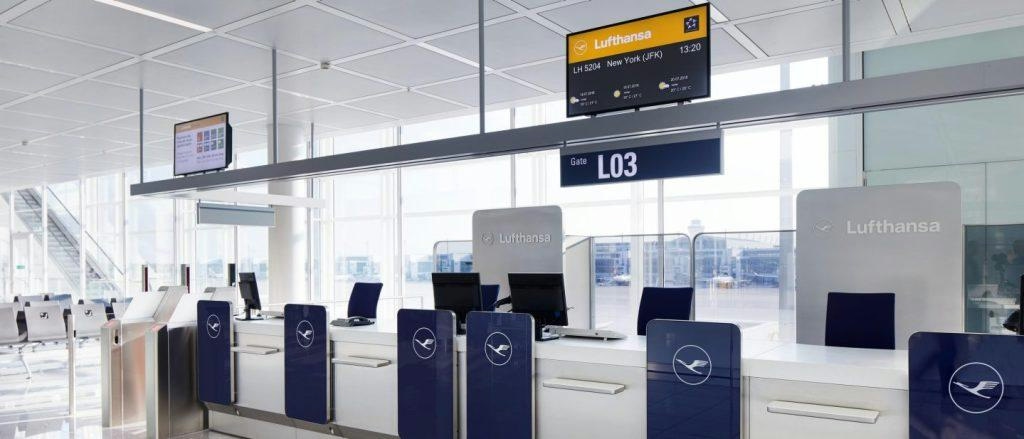
Artificial intelligence is rapidly transforming the travel industry, with its disruptive effects becoming increasingly apparent through significant workforce reductions. The swift integration of AI technologies has not only escalated corporate investment but also led to the displacement of thousands of employees. According to data from Challenger, Gray & Christmas, company executives have attributed over 48,000 job cuts in the United States this year directly to AI.

Within the travel sector, the influence of AI on employment manifests in diverse ways. Prominent companies such as Lufthansa Group, United Airlines, and Tripadvisor have explicitly identified AI or automation as the primary reasons behind recent layoffs. Meanwhile, other major players including Booking.com, Expedia, and American Airlines have cited terms like “efficiency,” “streamlining,” and “restructuring” in their announcements—phrases that often imply a strategic shift toward automation and AI-driven processes. These organizations are not only reducing their workforce but are also channeling the resulting cost savings into expanding AI capabilities, including the deployment of conversational bots and intelligent agents.

Industry Implications and Strategic Responses

The ramifications for the travel workforce are profound. Industry analysts forecast that as AI increasingly augments human roles and automates operational tasks, the hospitality sector could experience workforce reductions ranging from 20 to 30 percent in the coming years. This trend has generated skepticism regarding the long-term viability of jobs within the travel industry, as companies prioritize automation to enhance productivity and reduce expenses.

In response, competitors are accelerating their own AI initiatives. Early adopters like Expedia have begun utilizing AI to integrate call-center data and provide more comprehensive traveler insights, resulting in double-digit improvements in first-call resolution rates and upselling performance. These strategic shifts highlight a broader industry movement toward leveraging AI not only to streamline operations but also to elevate customer service and secure a competitive advantage.

The travel industry currently faces a pivotal moment. While AI offers the promise of increased efficiency and innovation, it also necessitates difficult decisions concerning workforce size and organizational structure. The ongoing wave of layoffs—whether explicitly linked to AI or framed as restructuring—signals a fundamental transformation in how travel companies operate and engage with their customers. As automation becomes more deeply embedded in the sector, balancing technological progress with the human element that has traditionally defined travel experiences remains a critical challenge.
More news
China Unveils E20 Hybrid Electric Air Taxi with Rapid Charging

China Unveils E20 Hybrid Electric Air Taxi with Rapid Charging

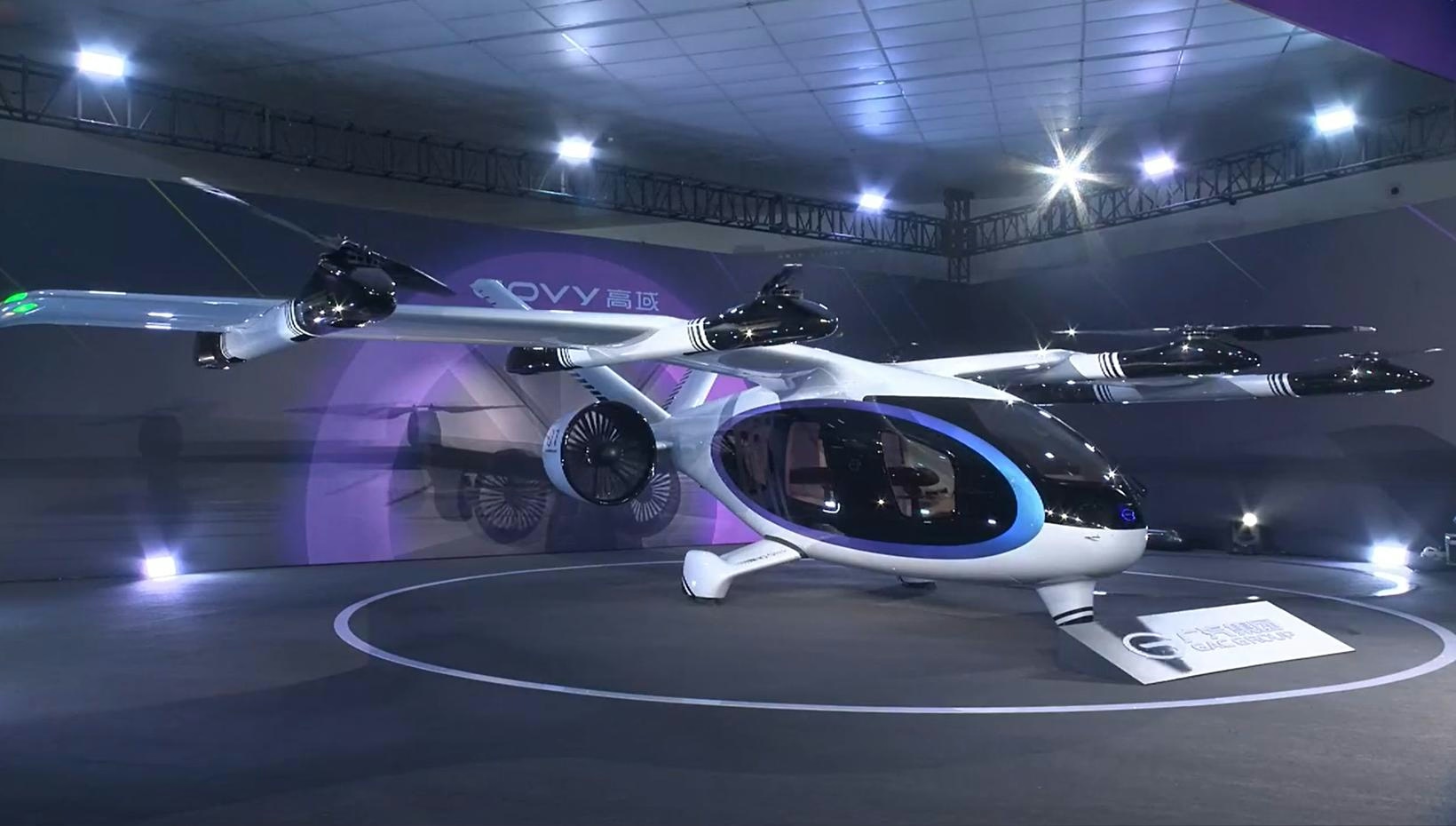
China Unveils E20 Hybrid Electric Air Taxi with Rapid Charging A Milestone in Urban Air Mobility Shanghai-based TCab Tech has achieved a significant breakthrough with the successful completion of the "transition flight" for its full-scale E20 hybrid electric air taxi demonstrator. This milestone represents a critical advancement in urban air mobility, demonstrating the aircraft’s ability to shift seamlessly from vertical take-off and landing (VTOL) mode to conventional airplane flight. The transition flight, a complex maneuver where the vehicle moves from hovering like a drone to flying efficiently using its wings, marks a pivotal moment in the development of electric vertical take-off and landing (eVTOL) technology. TCab Tech’s accomplishment underscores the engineering prowess behind the E20, which also boasts rapid charging capabilities designed to enhance operational efficiency. Challenges on the Path to Commercialization Despite this technical success, the journey toward commercial deployment of the E20 remains fraught with challenges. Regulatory frameworks for eVTOL aircraft are still in their infancy, requiring authorities to establish comprehensive safety standards and airspace management protocols. The development of supporting infrastructure is equally critical; rapid charging stations and mobile landing platforms, such as those proposed by companies like AutoFlight, will be essential to facilitate widespread adoption and operational viability. The competitive landscape further complicates the E20’s prospects. TCab Tech faces formidable rivals, including established players like Joby Aviation in the United States and innovators in the electric vehicle sector such as Tesla. These competitors are not only advancing their own air mobility technologies but are also forging strategic partnerships with technology firms to develop integrated services, intensifying the race to bring urban air taxis to market. Market Reception and Future Outlook Reactions to the E20’s debut have been mixed. While some investors are optimistic about the potential for rapid, environmentally friendly urban transportation and the innovation embodied by hybrid electric flight, others remain cautious. Concerns persist regarding passenger safety, regulatory uncertainties, and the environmental implications of scaling up eVTOL fleets. The successful transition flight of the E20 is a noteworthy achievement, yet it represents only the initial step in a complex process. The future of urban air taxis in China and globally will depend on overcoming regulatory obstacles, establishing robust infrastructure, and maintaining a competitive edge amid intense international rivalry. Beyond rapid charging technology, the E20’s continued progress will require coordinated efforts across technological innovation, policy development, and market acceptance to realize its full potential.
Five Jet Aircraft That Changed Aviation
Five Jet Aircraft That Changed Aviation

Five Jet Aircraft That Changed Aviation The history of commercial aviation has been profoundly shaped by a select group of jet aircraft that revolutionized air travel and industry standards. Focusing exclusively on commercial passenger jets, this analysis highlights five models whose impact has been particularly transformative: the Boeing 707, 737, 747, 787, and the Airbus A300. While other aircraft such as the de Havilland Comet, Douglas DC-8, Boeing 727, 777, McDonnell Douglas DC-10, Airbus A320, and A350 have contributed to the evolution of aviation, these five stand out for their enduring influence on the market and technology. Boeing 707: Ushering in the Jet Age Although the de Havilland Comet was the first commercial jet airliner to enter service, its early promise was overshadowed by fatal design flaws, notably its square windows, which led to catastrophic structural failures. In the wake of the Comet’s grounding, Boeing introduced the 707 in 1958, which became the first truly successful jet airliner. The 707 dramatically reduced transatlantic flight times and established a new standard for commercial aviation. With 820 units produced, it not only secured Boeing’s dominance but also transformed air travel into a mass-market industry, effectively ushering in the Jet Age. Boeing 737: The Workhorse of Commercial Aviation Entering service in 1967, the Boeing 737 marked a significant milestone in commercial aviation due to its versatility and reliability. It remains the longest-running commercial aircraft still in production, evolving through multiple generations including the Classic, Next Generation, and MAX series. The 737’s modular design allowed it to adapt to shifting market demands, particularly benefiting low-cost carriers by offering low operating costs. Despite ongoing debates about whether Boeing should have developed a clean-sheet replacement instead of the MAX, the 737 held the record as the most produced commercial passenger aircraft until mid-2025, underscoring its central role in democratizing air travel worldwide. Boeing 747: The Queen of the Skies The introduction of the Boeing 747 in 1970 revolutionized long-haul air travel with its unprecedented passenger capacity and extended range. Known as the “Queen of the Skies,” the 747 made international air travel accessible to millions, fundamentally altering global connectivity and the economics of the airline industry. Its widebody design and scale set new benchmarks for efficiency and comfort, influencing the development of subsequent large aircraft. Airbus A300: Pioneering Twin-Engine Widebody Jets The Airbus A300, which entered service in 1974, was the world’s first twin-engine widebody jet. It introduced new standards in fuel efficiency and operational reliability, marking Airbus’s significant entry into the commercial aviation market. The A300 challenged Boeing’s longstanding dominance and fostered increased competition, paving the way for Airbus’s future innovations and expansion in the industry. Boeing 787 Dreamliner: A Technological Leap Forward The Boeing 787 Dreamliner, first delivered in 2011, represents a major technological advancement in commercial aviation. Incorporating advanced composite materials, improved aerodynamics, and next-generation engines, the 787 achieved significant fuel savings and enhanced passenger comfort. Its innovations have influenced the design philosophy of subsequent aircraft from both Boeing and Airbus, setting new expectations for efficiency and sustainability in the industry. Ongoing Evolution and Future Challenges As the commercial aviation industry continues to evolve, new aircraft such as the Boeing 777X face rigorous regulatory scrutiny and certification challenges due to their advanced technologies. Market observers are closely monitoring the 777X’s fuel efficiency and range, especially in comparison to competitors like the Airbus A350, which offers improved aerodynamics and cabin comfort. Additionally, emerging models such as the Airbus A321XLR and the potential development of electric or hybrid aircraft signal ongoing shifts in market dynamics and technological innovation. These developments underscore the dynamic nature of the aviation sector, building upon the legacy established by these five transformative jet aircraft.
Pegasus Airlines Acquires Czech Airlines and Smartwings

Pegasus Airlines Acquires Czech Airlines and Smartwings

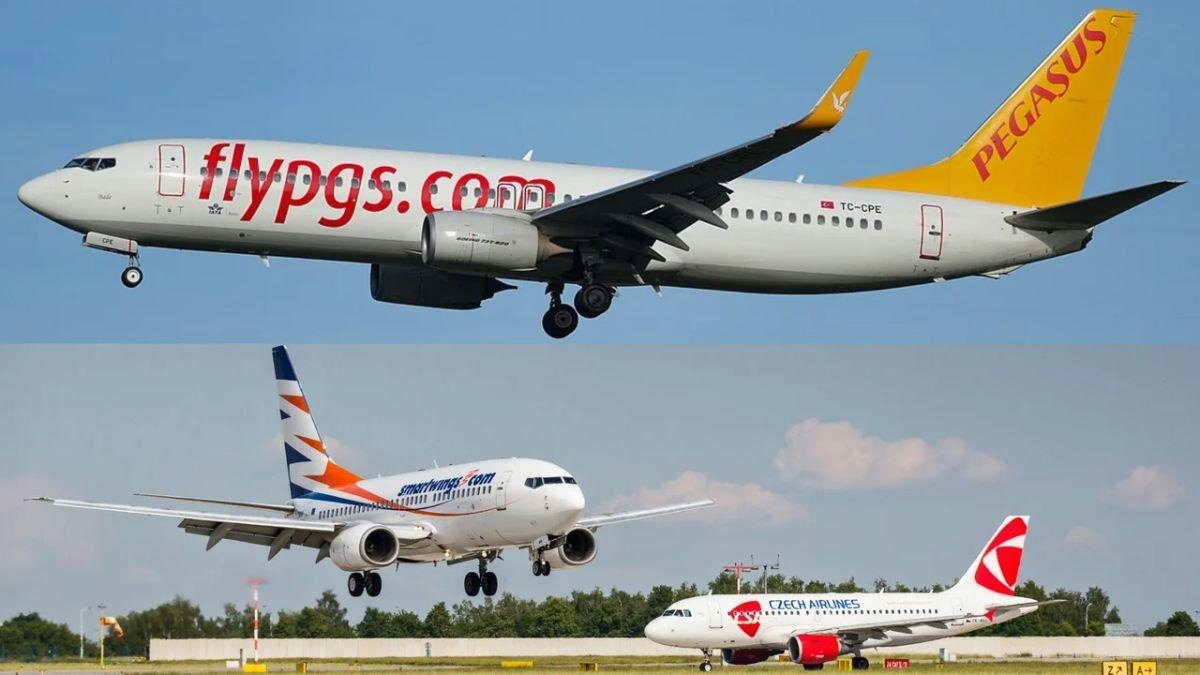
Pegasus Airlines Acquires Czech Airlines and Smartwings in €154 Million Deal Pegasus Airlines has reached an agreement to acquire Czech Airlines and its subsidiary Smartwings in a transaction valued at €154 million ($180 million). This acquisition represents a significant milestone in the Turkish carrier’s strategy to expand its footprint across Europe and beyond. The deal encompasses both airlines and their associated liabilities. Pending regulatory approval, the merger will maintain the Pegasus and Smartwings brands, while the historic Czech Airlines (CSA) name, which was retired following the carrier’s cessation of operations in October 2024, will not be revived. Strategic Expansion and Fleet Integration The acquisition is poised to strengthen Pegasus Airlines’ network by incorporating Smartwings’ established routes and fleet, thereby enhancing the carrier’s reach throughout Europe. Pegasus currently operates a fleet of 127 aircraft, predominantly Airbus A320neo and A321neo models, serving 158 destinations in 55 countries. Smartwings operates mainly Boeing 737 aircraft, flying to 80 destinations across 20 countries. The combined operations will add 47 aircraft to Pegasus’s portfolio, significantly expanding its capacity and market presence. Güliz Öztürk, CEO of Pegasus Airlines, emphasized the company’s growth trajectory since its founding in 2005. She highlighted the airline’s evolution from a modest fleet of fourteen aircraft to one of the most efficient and profitable carriers globally. Öztürk described the acquisition as the opening of a new chapter in Pegasus’s expansion, underscoring the strategic importance of joining forces with Czech Airlines and Smartwings. Shareholders of Czech Airlines and the founders of Smartwings expressed confidence in Pegasus’s ability to further develop and strengthen the combined operations. They acknowledged Pegasus’s potential and resources as key factors in driving future growth. Challenges and Market Implications Despite the promising outlook, the acquisition faces several challenges. Regulatory authorities are expected to conduct thorough reviews, particularly concerning antitrust issues, given Pegasus’s increased market share in the European low-cost carrier sector. The integration of operations, fleets, and corporate cultures also presents complex hurdles that will require careful management. Market reactions to the deal have been mixed. Some analysts view the acquisition as a strategic move that will accelerate Pegasus’s international expansion and enhance its competitive position. Others caution about the difficulties inherent in merging two distinct airline operations and the potential for intensified competition from rival carriers. Competitors in the European low-cost market are anticipated to respond with increased activity as Pegasus leverages Smartwings’ established network and customer base. This acquisition aligns with Pegasus Airlines’ broader ambition to grow its global footprint and solidify its standing among Europe’s leading airlines. The transaction remains subject to final approval by relevant regulatory bodies and the successful integration of the airlines’ operations.
Boeing Deliveries Drop 17% in November, Lagging Behind Airbus
Boeing Deliveries Drop 17% in November, Lagging Behind Airbus

Boeing Deliveries Decline in November Amidst Intensifying Competition from Airbus Boeing reported a significant drop in aircraft deliveries in November, delivering 44 jets compared to 53 in October, representing a 17% decline. This decrease places the U.S. manufacturer notably behind its European rival Airbus, which delivered 72 aircraft during the same period. The downturn highlights persistent challenges for Boeing as it strives to meet quarterly targets amid a year-end delivery push. Breakdown of November Deliveries and Orders In November, Boeing delivered 32 of its widely used single-aisle 737 Max jets, including five units to Southwest Airlines. The company also handed over six 787 Dreamliners, two of which were delivered to TAAG Angola Airlines as part of the carrier’s expansion strategy. Additionally, Boeing supplied two 777 freighters to Turkish Airlines and Moldova-based Aerotranscargo, alongside four 767 aircraft. Despite the slowdown in deliveries, Boeing secured 164 new orders in November, offset by 38 cancellations, resulting in a net gain of 126 orders. A significant portion of these orders—74 in total—were for the long-delayed 777X wide-body jet, now projected to enter service in 2027, seven years behind the original schedule. Emirates, the launch customer for the 777X, placed an additional order for 65 jets during the Dubai Airshow, increasing its total 777X orders to 270. Taiwan’s China Airlines also expanded its commitment with nine new 777X orders, following a previous order for 14 aircraft earlier this year. Boeing also received 30 orders for the 787 Dreamliner, including 15 from Gulf Air, eight from Uzbekistan Airways, six from Etihad Airways, and one from an undisclosed customer. The 737 Max program garnered 43 orders from unidentified buyers. Furthermore, Boeing booked 15 KC-46 tanker orders for the U.S. Air Force and two 777 freighter orders. However, the company faced cancellations as well, with Etihad withdrawing 15 777X orders, Air Canada canceling four 787s, and South Africa’s Comair canceling five 737 Max orders. Industry Context and Outlook While Airbus outperformed Boeing in November deliveries, the European manufacturer recently reduced its full-year delivery target by 4% to 790 jets, citing industrial quality concerns. Boeing continues to contend with delays in its 777X and 737 Max programs, fueling investor apprehension. Following the November delivery report, Boeing’s stock experienced a slight decline despite recent defense contract successes and strong 737 deliveries. Year-to-date through November 30, Boeing has delivered a total of 537 jets, including 396 737 Maxs, 74 787s, 33 777s, and 28 767s. The company recorded 1,000 new orders for the year, or a net 908 after cancellations and conversions, maintaining an order backlog of 6,019 aircraft at the end of November. Looking forward, Boeing Chief Financial Officer Jay Malave indicated last week that the company anticipates achieving positive cash flow in 2026, driven by expected increases in jet deliveries. Nonetheless, the recent delivery slowdown and ongoing program delays underscore the significant challenges Boeing faces in regaining momentum and narrowing the gap with Airbus.
Global Airlines Project $41 Billion Net Profit in 2024
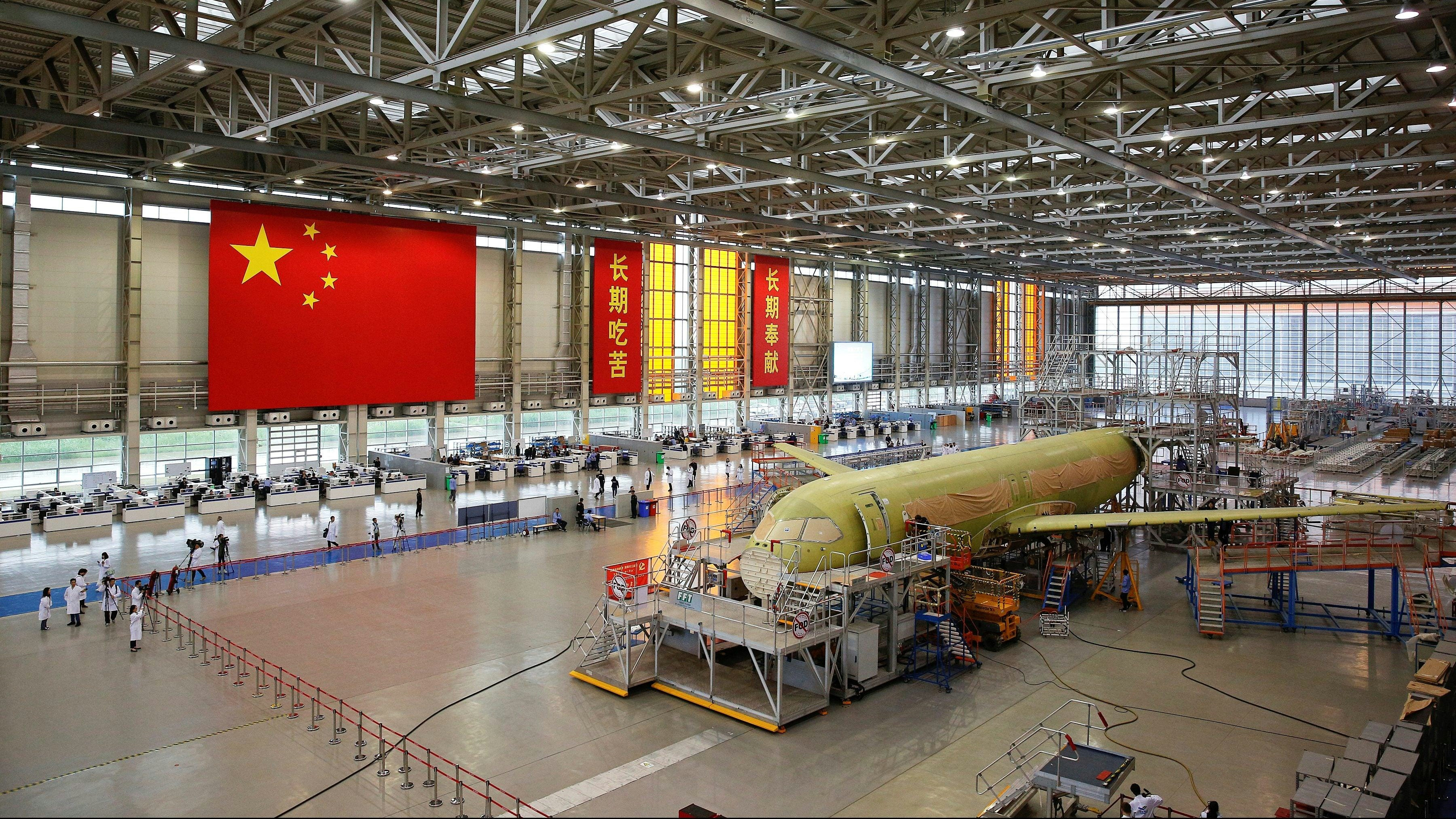
Global Airlines Project $41 Billion Net Profit in 2024

Global Airlines Project $41 Billion Net Profit in 2026 Despite Persistent Challenges The global airline industry is poised to achieve a record net profit of $41 billion in 2026, according to the latest forecast from the International Air Transport Association (IATA). This optimistic projection emerges despite ongoing obstacles such as supply chain disruptions, slower aircraft deliveries, and delays in the rollout of more fuel-efficient jets. Regional Profit Contributions and Market Dynamics IATA’s outlook underscores strong performance in air cargo operations and the advantageous impact of a weaker US dollar, which has helped many carriers reduce operational costs. European airlines are expected to lead the profit contributions with an estimated $14 billion, surpassing North American carriers, who are projected to generate $11.3 billion. Meanwhile, Middle Eastern airlines are anticipated to achieve the highest profitability per passenger, with forecasts indicating $28.6 per traveler in 2026. Nevertheless, the industry continues to confront significant challenges. Both Airbus and Boeing have experienced delivery delays in recent years. Airbus recently reduced its 2025 delivery target by 4% after uncovering quality issues with metal fuselage panels on its A320 series, confirming that deliveries had already slowed as of November. This setback followed a recall of 6,000 A320-series aircraft due to a software glitch linked to cosmic radiation. Although the A320 family, including the popular A321 model, has now surpassed Boeing’s 737 MAX as the most-delivered passenger jet in history, confidence in Airbus has diminished. In contrast, IATA Director General Willie Walsh noted improvements in Boeing’s performance, with airlines expressing increased confidence in the manufacturer’s ability to meet its commitments. Walsh highlighted that engine manufacturers remain a critical bottleneck, as they have lagged behind airframe producers in delivering new and repaired engines. This has forced companies like Airbus to delay delivery schedules. The high costs associated with maintaining commercial fleets, coupled with intense competition among engine makers to develop sustainable propulsion technologies, further complicate the industry’s outlook. Operational and Environmental Challenges Despite the strong profit forecast, airlines are contending with softening yields and load factors, particularly on transatlantic routes. This trend was evident in the negative market reaction to British Airways’ third-quarter earnings. In Asia, Singapore Airlines’ financial results were adversely affected by losses at its associate Air India, which is facing mounting competition and financial difficulties. The sector’s transition to greener operations also faces significant hurdles. IATA warned that the industry is likely to miss its targets for sustainable aviation fuel (SAF) usage in the coming years, attributing slow progress to fuel producers and regulatory delays. SAF, primarily derived from waste or used cooking oil, can substantially reduce emissions but remains two to five times more expensive than conventional jet fuel. IATA estimates that only 2.4 million metric tonnes of SAF will be available in 2026, covering a mere 0.8% of total fuel consumption. While the aviation sector remains committed to achieving net-zero emissions by 2050, progress depends heavily on scaling up SAF production and adoption. “Airlines have successfully built shock-absorbing resilience into their businesses that is delivering stable profitability,” Walsh stated. However, he cautioned that regulatory costs, geopolitical uncertainty, and operational challenges continue to constrain the industry’s potential for even greater gains.
Airbus Approved to Deliver Jets in China, Awaits New Orders
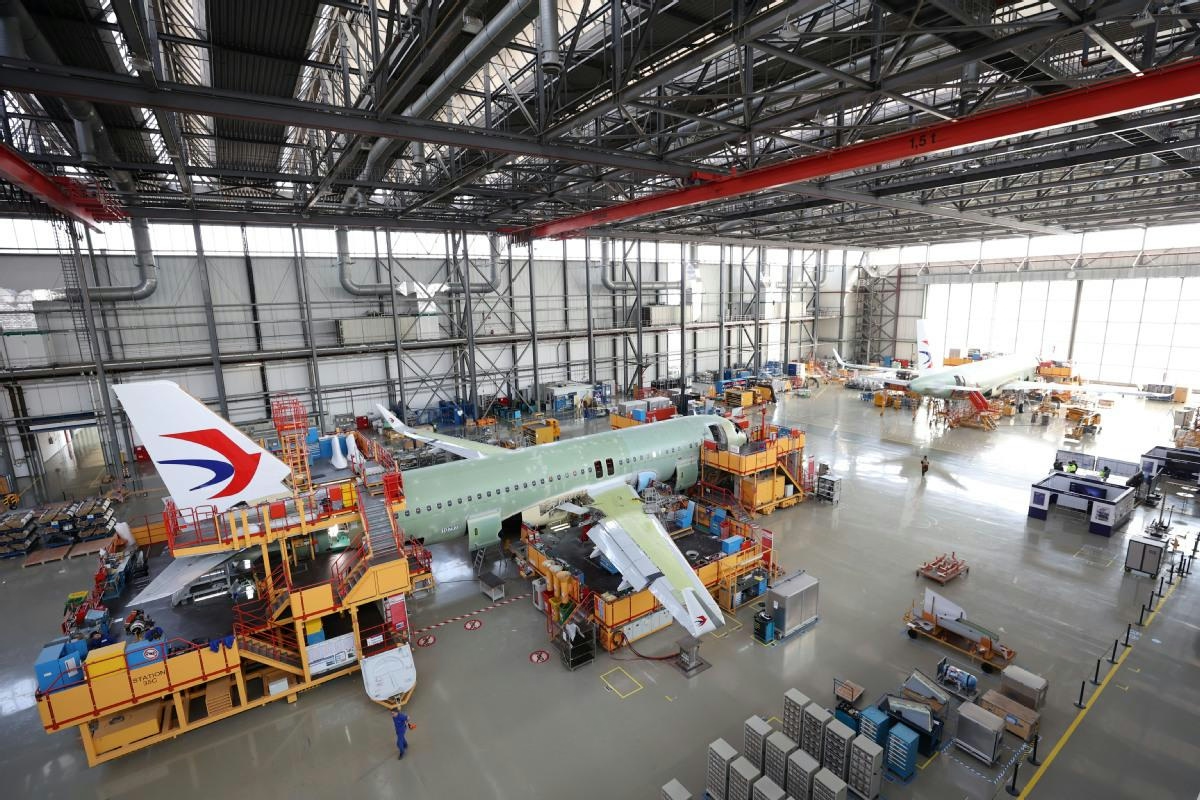
Airbus Approved to Deliver Jets in China, Awaits New Orders

Airbus Receives Approval to Deliver Jets in China Amid Uncertainty Over New Orders Airbus has secured official approval from Chinese authorities to proceed with the delivery of 120 aircraft previously ordered, the European aerospace manufacturer confirmed. This development allows the company to fulfill existing commitments but does not extend to new large-scale orders, which remain elusive amid ongoing geopolitical tensions. Delivery Authorization and Geopolitical Context The agreement, signed in Beijing, permits Airbus to deliver jets already recorded in its order book, a standard procedure for transactions involving Chinese customers, according to an Airbus spokesperson. China’s state purchasing agency has not issued any comment on the matter. This approval follows French President Emmanuel Macron’s recent visit to China, where discussions centered on geopolitics and trade. Despite high expectations, the visit did not result in announcements regarding the anticipated order for 500 new aircraft that Airbus has been pursuing for over a year. While some French media speculated about the possibility of 120 new orders, Airbus clarified that the current agreement pertains solely to existing orders. Both Airbus and its American rival Boeing have been awaiting progress on significant Chinese orders, which have been delayed amid the broader geopolitical climate. Industry insiders note that China typically exercises caution with major purchases during periods of uncertainty, and there is little indication that either manufacturer will secure a substantial new order from Beijing within the current year. Market Position and Operational Challenges Airbus has engaged in intermittent negotiations since early 2024 to secure a 500-jet order, aiming to narrow the gap with Boeing in the annual order tally and to meet its internal target of approximately 1,200 aircraft deliveries. Through the first eleven months of the year, Airbus reported 700 net orders after cancellations, compared to Boeing’s 782 net orders by the end of October. However, Airbus faces additional hurdles. The company recently identified a quality issue involving metal panels on certain A320 aircraft already in service, leading to a downward revision of its delivery forecasts and a notable decline in its share price. In contrast, Boeing’s stock rose following the company’s pledge of positive cash flow for 2026, despite a 17% month-on-month drop in November deliveries, with Boeing handing over 44 jets compared to Airbus’ 72. Both manufacturers continue to grapple with supply chain disruptions. The head of the International Air Transport Association (IATA) remarked in Geneva that confidence in Airbus meeting its delivery targets has diminished, while Boeing’s performance has shown signs of improvement. Outlook for Airbus Looking forward, Airbus’ defense division remains optimistic, anticipating further sales of its A330 tanker and exploring the potential development of an A321-based airborne early warning and control (AEW&C) aircraft. Nevertheless, the commercial division’s wait for new Chinese orders persists, with no immediate breakthrough expected.
Tianjin Receives Largest Single Shipment of Airbus Components

Tianjin Receives Largest Single Shipment of Airbus Components

Tianjin Receives Record Shipment of Airbus Components Amid Industry Expansion Tianjin port recently received its largest single shipment of Airbus aircraft components, marking a significant milestone in the city’s role within the global aviation supply chain. On Tuesday morning, twelve large parts arrived aboard the container ship OOCL Denmark, transported from Hamburg, Germany. This shipment set a new record for the highest volume of Airbus components entering Tianjin in a single consignment, underscoring the growing importance of the port as a hub for aerospace manufacturing. Expansion of Airbus Operations in Tianjin The surge in shipments coincides with the accelerated pace of Airbus component deliveries to North China, particularly following the inauguration of a new Final Assembly Line (FAL) for the A320 family in Tianjin last October. Spanning approximately 300,000 square meters and comprising thirteen buildings—including assembly workshops and painting hangars—the facility effectively doubles Airbus’ final assembly capacity in China. The Tianjin FAL produces the A319, A320, and A321 models, reflecting Airbus’ strategic confidence in China’s robust civil aviation market and resilient supply chain infrastructure. Airbus CEO Guillaume Faury has highlighted the critical role of the Tianjin facility in achieving the company’s ambitious goal of producing 75 A320 aircraft per month by 2027. The assembly line is equipped to handle large components such as fuselage sections and wings, which are assembled, painted, tested, and delivered to customers both within China and internationally. The increased volume of deliveries has intensified the need for efficient maritime import routes from Europe, reinforcing China’s stable and pivotal position in the global aviation industry. Industry analyst Qi Qi remarked that the smooth operation of this maritime route not only demonstrates efficient transportation links between Europe and China but also underscores China’s central role in the international aviation sector. Challenges Amid Growth and Market Competition Despite these advancements, Airbus faces notable challenges. The company recently encountered a quality control issue involving metal panels on certain A320 aircraft, which triggered a sharp decline in its share price—dropping as much as 10%. This development has raised concerns about Airbus’ ability to meet its delivery targets, drawing close scrutiny from the aviation industry. The issue is particularly sensitive given the ongoing competition between Airbus and Boeing, as both manufacturers vie for market share in a sector where the global commercial fleet is projected to double by 2044. Over the past four decades, Airbus has steadily expanded its presence in China. George Xu, CEO of Airbus China, noted that the company’s market share in the country has grown from less than 10 percent in 1995 to more than half today. Xu emphasized that Airbus’ growth has not only enhanced its competitiveness and industrial resilience but also contributed significantly to the development of China’s aviation sector and the broader global supply chain. The record shipment to Tianjin thus reflects the deepening economic ties between China and Europe, as well as the evolving dynamics of the global aviation industry. Manufacturers continue to navigate a complex landscape of opportunities and challenges amid a rapidly expanding market.
New Partnership Launches Leasing Program for Flight Schools

New Partnership Launches Leasing Program for Flight Schools

New Partnership Launches Leasing Program for Flight Schools Premier Aircraft, the longest-standing Diamond Aircraft dealer in the United States, has announced a strategic partnership with Wings Leasing to introduce the Premier Advantage Flight School Leasing Program. This initiative is designed to assist colleges and independent flight schools in modernizing their training fleets by providing access to new Diamond Aircraft models and simulators through fixed monthly leasing costs. Company representatives emphasize that these costs are comparable to purchasing pre-owned aircraft, offering a financially viable alternative for institutions seeking fleet upgrades. Addressing Industry Financing Challenges Travis Peffer, CEO of Premier Aircraft, highlighted the growing demand among flight students for training on the newest and most advanced aircraft. He noted that many active flight training programs face growth limitations due to financing institutions that lack a comprehensive understanding of the aviation training sector’s unique requirements. The Premier Advantage program aims to bridge this gap by offering tailored financial solutions that accommodate the specific needs of flight schools. The leasing program includes financing options for new Diamond DA20-C1, DA40NG, and DA42-VI aircraft, as well as Diamond simulators. It features zero-down or low-down payment plans and provides turn-key fleet upgrade solutions customized for universities and flight schools. Additionally, the program offers sale-leaseback options, enabling operators to unlock capital from their existing fleets without relinquishing access to their aircraft. Comprehensive Support and Market Implications Beyond fleet acquisition, Premier Aircraft commits to delivering ongoing technical and operational support through Diamond Factory Trained experts. The company maintains an extensive inventory of spare parts with guaranteed overnight shipping for all in-stock items. Optional extended warranties for airframe and avionics systems are also available, ensuring sustained operational reliability for participating flight schools. While the program is intended to reduce barriers for institutions seeking to modernize their fleets, it introduces potential challenges. Schools may encounter financial pressures related to adopting cutting-edge technology, and the initial investment required could pose difficulties for some. Furthermore, as more training providers upgrade their equipment, competition within the flight training market is expected to intensify. Industry analysts suggest that leasing programs of this nature could alter market dynamics by granting early adopters a competitive advantage in attracting students who prioritize training on state-of-the-art aircraft. This development may prompt other leasing companies to introduce similar offerings in an effort to expand their presence in the growing flight training sector. For further details, visit PremierAircraft.com or WingsLeasing.com.
4AIR Launches Flight Management Software to Streamline Sustainability and Regulatory Reporting
4AIR Launches Flight Management Software to Streamline Sustainability and Regulatory Reporting

4AIR Launches Flight Management Software to Streamline Sustainability and Regulatory Reporting CLEVELAND, Dec. 9, 2025 — 4AIR, a global leader in business aviation sustainability, has introduced a new flight management software platform aimed at simplifying sustainability tracking and regulatory reporting for aircraft operators. The software integrates with leading flight planning providers such as AirNav, FlightAware, FL3XX, MyAirOps, TripPlanning.biz, Leon, and ForeFlight, facilitating seamless data exchange and automating sustainability workflows. Enhancing Automation and Integration Through these API integrations, flight departments and operators can automatically transmit flight activity data directly to 4AIR, eliminating the need for manual uploads and minimizing the risk of errors. This automation embeds sustainability reporting into daily operations, making compliance and environmental stewardship more accessible and efficient. Kennedy Ricci, President of 4AIR, emphasized the company’s commitment to accessibility, stating, “By integrating with flight management software, we’re able to further our white glove service through automation, easing reporting burdens and better embedding sustainability into an operation.” Stefan Oberender, CEO of FL3XX, highlighted the growing importance of sustainability tools in aviation, noting, “As environmental awareness among passengers continues to grow and operators place increasing focus on sustainability, tools that make responsible choices straightforward are more important than ever. With the new 4AIR and FL3XX integration, customers can stay aligned with their sustainability goals with ease, without any extra steps.” Addressing Regulatory Challenges and Market Competition The software’s automated data flows support timely emissions calculations, sustainable aviation fuel (SAF) tracking, and compliance monitoring, which are critical as the aviation industry navigates an evolving regulatory environment. New mandates such as ReFuelEU and the EU Emissions Trading System (ETS) require precise monitoring and reporting, and 4AIR’s platform aims to help operators manage these complex, regionally varied regulations with greater confidence and efficiency. The launch arrives amid intensifying competition in the aviation sustainability sector. As regulatory demands increase, other industry players may respond by developing proprietary technologies or enhancing existing systems to maintain a competitive advantage. The integration of advanced Environmental, Social, and Governance (ESG) reporting tools, exemplified by recent partnerships between Thomson Reuters and SAP, may prompt 4AIR to pursue similar collaborations to ensure its platform remains comprehensive and competitive in meeting operators’ compliance and sustainability requirements. For operators, 4AIR’s solution offers the potential to simplify regulatory compliance while enhancing transparency and accountability across corporate flight departments, charter operators, and fractional providers. By automating sustainability and compliance reporting, 4AIR positions itself as a vital partner for aviation businesses striving to meet both current and future environmental standards. About 4AIR 4AIR is an aviation industry pioneer providing sustainability solutions that extend beyond carbon neutrality. Its framework includes turnkey voluntary sustainability programs and a full-service compliance program designed to automate environmental regulatory obligations. Supporting all pillars of aviation sustainability, 4AIR’s offerings encompass verified carbon offsets and removals, sustainable aviation fuel, contrail mitigation, and emerging technologies. For more information, visit www.4air.aero.
Aviation Supply Chain Issues Pose Risks to Global Tourism Growth

Aviation Supply Chain Issues Pose Risks to Global Tourism Growth

Aviation Supply Chain Issues Pose Risks to Global Tourism Growth The global air travel industry is poised for a significant resurgence, with projections estimating that airlines will carry 5.2 billion passengers by 2026. This anticipated increase represents a critical juncture for the tourism sector, offering renewed opportunities for destinations worldwide as travelers return following years of disruption. For countries and cities heavily dependent on tourism, the expected rise in passenger traffic promises to revitalize local economies, bolster hospitality industries, and support cultural heritage sectors. Supply Chain Challenges Threaten Aviation Capacity Despite this optimistic forecast, the industry faces considerable challenges stemming from persistent supply chain bottlenecks. Experts caution that ongoing disruptions in the availability of aircraft parts, maintenance services, and new technological components could undermine the sector’s capacity to meet growing demand. These issues risk reducing flight availability, driving up operational costs, and potentially restricting access to key tourist destinations. In response, organizations such as Taiwan’s Aerospace Industrial Development Corporation (AIDC) are adopting innovative solutions. By integrating advanced thermoplastic composites into aircraft manufacturing, AIDC aims to address both the surging market demand and the aviation industry’s commitment to achieving net-zero carbon emissions. Such technological advancements are essential for airlines striving to maintain stable route networks and avoid disruptions that could adversely affect international tourism flows. Regional Outlook and Industry Adaptation The Asia–Pacific region is expected to be a major engine of growth, driven by an expanding middle class and robust economic performance. Airlines in this region are projected to reach seat occupancy rates as high as 83.8% by 2026, translating into increased traveler numbers and enhanced business opportunities for hotels, travel agencies, and local operators. Countries including India, China, and those in Southeast Asia are preparing for a substantial influx of visitors, while cities such as Singapore, Bangkok, and Tokyo anticipate significant economic benefits from sustained airline capacity. In Europe, established tourism destinations like Italy, Spain, and France are also positioned to benefit. The region’s dense flight networks and the popularity of low-cost carriers are expected to attract international tourists seeking affordable travel options. Cities such as Paris, Barcelona, and Rome are already intensifying preparations for higher visitor volumes, with local businesses ranging from restaurants to museums poised to gain from increased foot traffic. Nevertheless, the risks associated with supply chain disruptions remain considerable. Constraints on accessibility could limit the growth of tourist attractions and raise safety concerns if essential maintenance or upgrades are delayed. Reflecting the industry’s need for agile leadership amid these challenges, Marriott Vacations Worldwide recently appointed Matthew E. Avril as Interim President and CEO, highlighting the importance of strategic management in navigating global supply chain uncertainties and macroeconomic fluctuations. As the aviation and tourism sectors look ahead to 2026, their capacity to adapt to supply chain challenges will be pivotal. Continued innovation, strategic planning, and collaboration across the industry will determine whether the projected surge in global tourism can be fully realized or if persistent bottlenecks will impede the sector’s recovery and growth.
Ask AeroGenie