
Orquestre insights de IA em ações

Tendências
Categories
American Airlines donates APU to AIM Chicago for student training
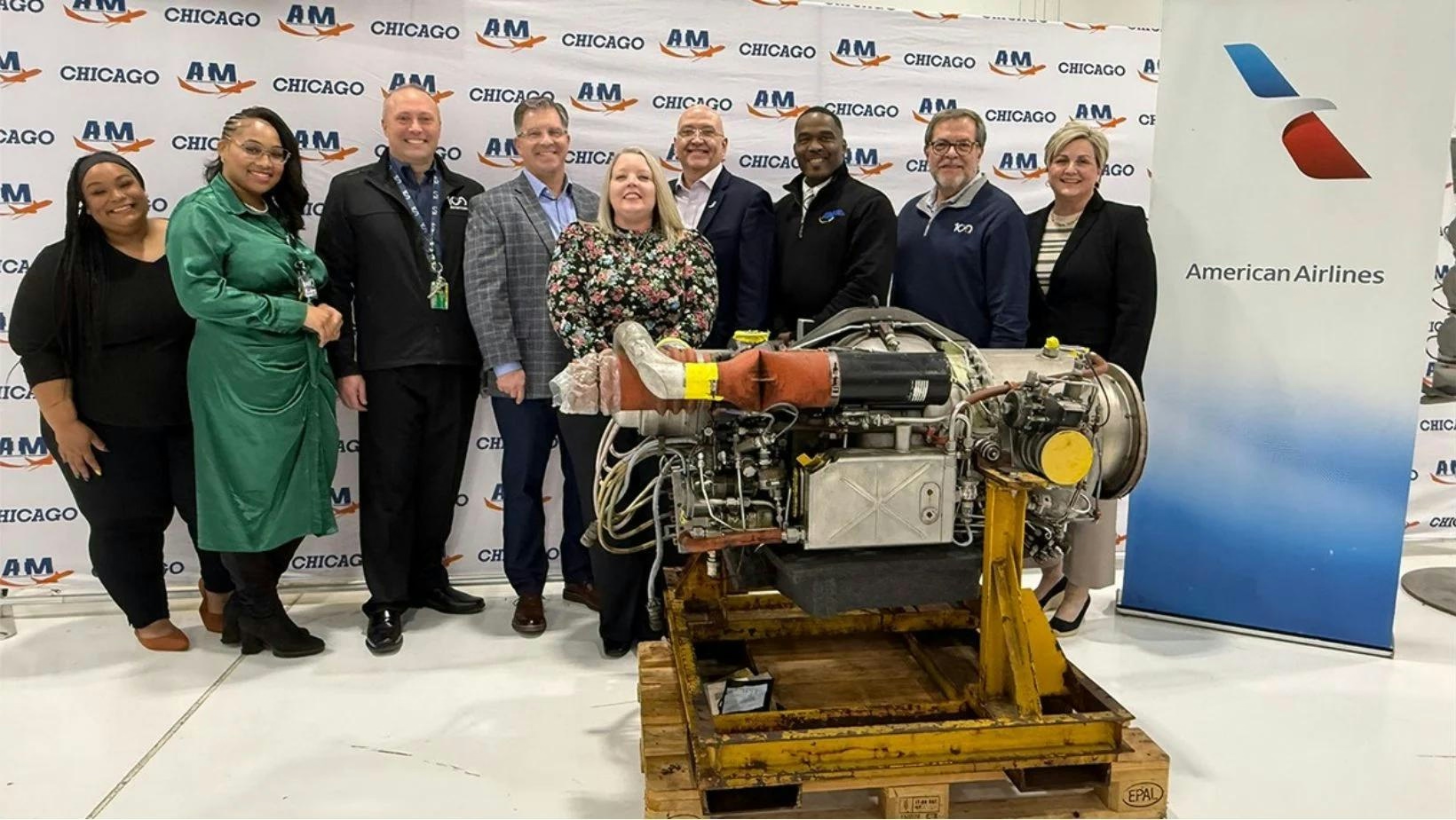
American Airlines Donates APU to AIM Chicago to Enhance Student Training
American Airlines has donated an auxiliary power unit (APU) to the Aviation Institute of Maintenance (AIM) in Chicago, offering students critical hands-on experience with authentic aircraft equipment. The APU, which powered American’s McDonnell Douglas MD-80 fleet for 29 years and supported over 74,000 take-offs and landings, will serve as a vital training tool for AIM’s more than 400 students. Many of these students aspire to become aviation maintenance technicians and will benefit from working on the same systems they are likely to encounter in their professional careers.
Mark Miner, American Airlines’ vice president of technical services, highlighted the significance of the donation, stating, “This APU served American and our customers well over the years and we know it will serve students just as well for many more years to come.” He emphasized the airline’s role as Chicago’s leading global carrier and expressed pride in supporting local students on their path to becoming aviation maintenance professionals.
Strengthening Industry Partnerships and Workforce Development
The APU donation builds on an ongoing partnership between American Airlines and AIM Chicago, which began in 2022. Previously, the airline contributed a Pratt & Whitney JT8D engine and has supported AIM students at annual Aerospace Maintenance Council Competitions. Several American Airlines frontline employees are currently enrolled at AIM Chicago, pursuing their FAA Airframe and Powerplant licenses, further illustrating the airline’s commitment to workforce development.
Jason Pfaff, chief executive of Cotulla, AIM’s parent company, underscored the value of such collaborations. He noted that training on industry-standard equipment enhances student confidence, deepens learning, and bridges the gap between education and employment. Pfaff expressed gratitude for American Airlines’ continued investment in both the students and the future of Chicago’s aviation workforce.
Challenges Amidst Competitive and Internal Pressures
American Airlines’ investment in local workforce development occurs against a backdrop of intensified competition and internal challenges. United Airlines, a key competitor, has been expanding aggressively at Chicago O’Hare International Airport. United’s CEO recently reported earnings of approximately $500 million in Chicago for 2025, while American Airlines posted a comparable loss, with projections indicating losses could reach $1 billion this year. This competitive pressure is straining American’s market position and financial performance in the region.
Internally, American Airlines faces turbulence, including a recent no-confidence vote by its flight attendants against CEO Robert Isom. Such developments may impact operational stability and employee morale, potentially influencing perceptions of the airline’s community initiatives, including the APU donation.
Despite these challenges, American Airlines continues to invest in Chicago’s aviation workforce. The airline recently hired over 100 aviation maintenance technicians for its ORD Line Maintenance organization, contributing to more than 10,000 jobs in the Chicagoland area. Its ongoing support for AIM Chicago reflects a sustained commitment to cultivating the next generation of aviation professionals amid a competitive and evolving industry landscape.

Etihad Airways Suspends Airbus A380 Flights on Key Route

Aditya Birla Group Seeks Approval for Aircraft Leasing in GIFT City

Qatar Airways Highlights Innovation and Connectivity at Arabian Travel Market 2026

Hong Kong's Five-Year Plan Includes Andrew Fan's Aircraft Parts Processing Hub Proposal

ACIA Aero Leasing Delivers ATR72-600 to Air Nostrum

RTX Appoints Jill Albertelli as Head of Pratt & Whitney

TAT Technologies Joins Beyond Aero Hydrogen Aircraft Program

AURAK Study Highlights Barriers to Air Taxi Adoption in Emerging Economies

Xiamen Air Selects Altitude for 787 Maintenance at Heathrow

Etihad and Swissport Extend Global Partnership
