
Orquestre insights de IA em ações

Tendências
Categories
American Airlines Reduces Airbus A321XLR Order, Issues $1 Billion in Bonds for New Aircraft
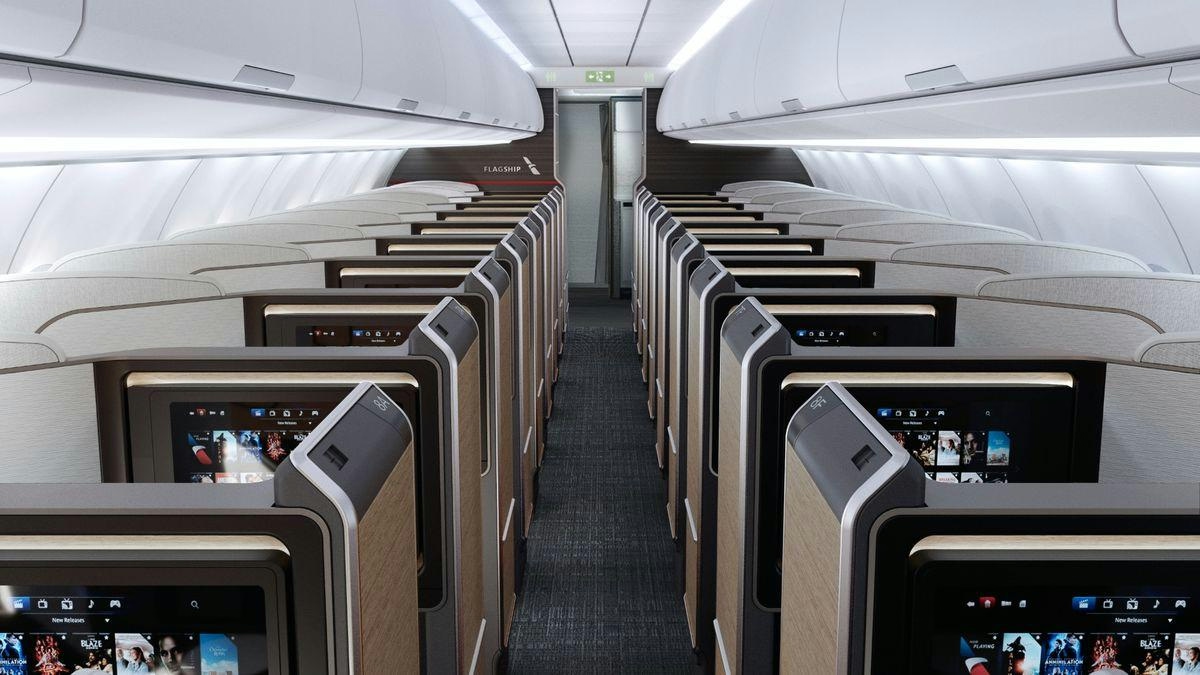
American Airlines Adjusts Fleet Strategy Amid Market Pressures
American Airlines has announced a recalibration of its fleet expansion plans, reflecting a more measured approach to growth in a competitive and capital-intensive environment. The carrier has issued $1.14 billion in aircraft-backed bonds to finance the acquisition of 17 new aircraft, refinance existing loans on 15 jets, and strengthen its overall liquidity position. Concurrently, American has reduced its Airbus A321XLR order from 50 to 40 units, even as deliveries of the long-range narrowbody accelerate.
Strategic Shift in Fleet Composition
The decision to scale back the A321XLR order signals a cautious stance toward expanding the long-range narrowbody segment. The A321XLR remains integral to American’s network strategy, particularly for thinner transatlantic routes and extended domestic services. However, the airline appears to be aligning its fleet size more closely with evolving route economics, delivery timelines, and capital constraints. With a mainline fleet exceeding 1,000 aircraft and over 100 Boeing 737 MAX 8s already delivered, reducing the XLR order helps mitigate risks of overcapacity and preserves operational flexibility.
This adjustment contrasts with the aggressive widebody expansion strategies pursued by rivals such as Delta Air Lines and United Airlines, both of which have more than 100 widebody aircraft on order. American’s decision to temper its narrowbody growth may limit its ability to compete in lucrative long-haul markets, where widebody jets dominate. Instead, the airline is increasingly relying on partnerships and the versatility of narrowbody aircraft to drive international growth. This strategic divergence raises questions about American’s long-term competitiveness and its capacity to keep pace with industry peers investing heavily in widebody fleets.
Financing Fleet Modernization Through Bond Issuance
The $1.14 billion bond issuance underscores American Airlines’ effort to modernize its fleet while managing cash flow prudently. By issuing aircraft-backed bonds secured by new and recently delivered jets, the airline can spread the costs of fleet renewal over time, preserving liquidity for ongoing operations and strategic initiatives. For investors, aircraft-backed debt offers the security of tangible assets with strong resale value, particularly when linked to newer, more fuel-efficient models. Nonetheless, the airline industry’s inherent volatility—including exposure to fuel price fluctuations and demand shocks—remains a concern, especially given American’s relatively high leverage compared to competitors like Delta.
For shareholders, the bond sale presents a nuanced picture. While it facilitates fleet modernization and supports growth, it also involves refinancing or adding debt rather than reducing financial risk. Market observers may question whether American’s strategy of cautious fleet expansion combined with increased debt reliance will enable it to compete effectively over the long term, particularly as competitors continue to invest heavily in widebody capacity.
American Airlines’ recent actions reflect a complex balancing act between fleet renewal and financial discipline, as the carrier seeks to adapt its aircraft portfolio amid intensifying industry competition and evolving investor expectations.

Etihad Airways Suspends Airbus A380 Flights on Key Route

Aditya Birla Group Seeks Approval for Aircraft Leasing in GIFT City

Qatar Airways Highlights Innovation and Connectivity at Arabian Travel Market 2026

Hong Kong's Five-Year Plan Includes Andrew Fan's Aircraft Parts Processing Hub Proposal

ACIA Aero Leasing Delivers ATR72-600 to Air Nostrum

RTX Appoints Jill Albertelli as Head of Pratt & Whitney

TAT Technologies Joins Beyond Aero Hydrogen Aircraft Program

AURAK Study Highlights Barriers to Air Taxi Adoption in Emerging Economies

Xiamen Air Selects Altitude for 787 Maintenance at Heathrow

Etihad and Swissport Extend Global Partnership
