Imagem

Orquestre insights de IA em ações

Entre na lista de espera da AeroGenie hoje mesmo!

Tendências

Categories

AMTRA Aero Acquires A330-200 for Dismantling
June 25, 2026By ePlane AI
AMTRA Aero Acquires A330-200 for Dismantling
0
0
AMTRA Aero
Airbus A330-200
Aircraft Dismantling

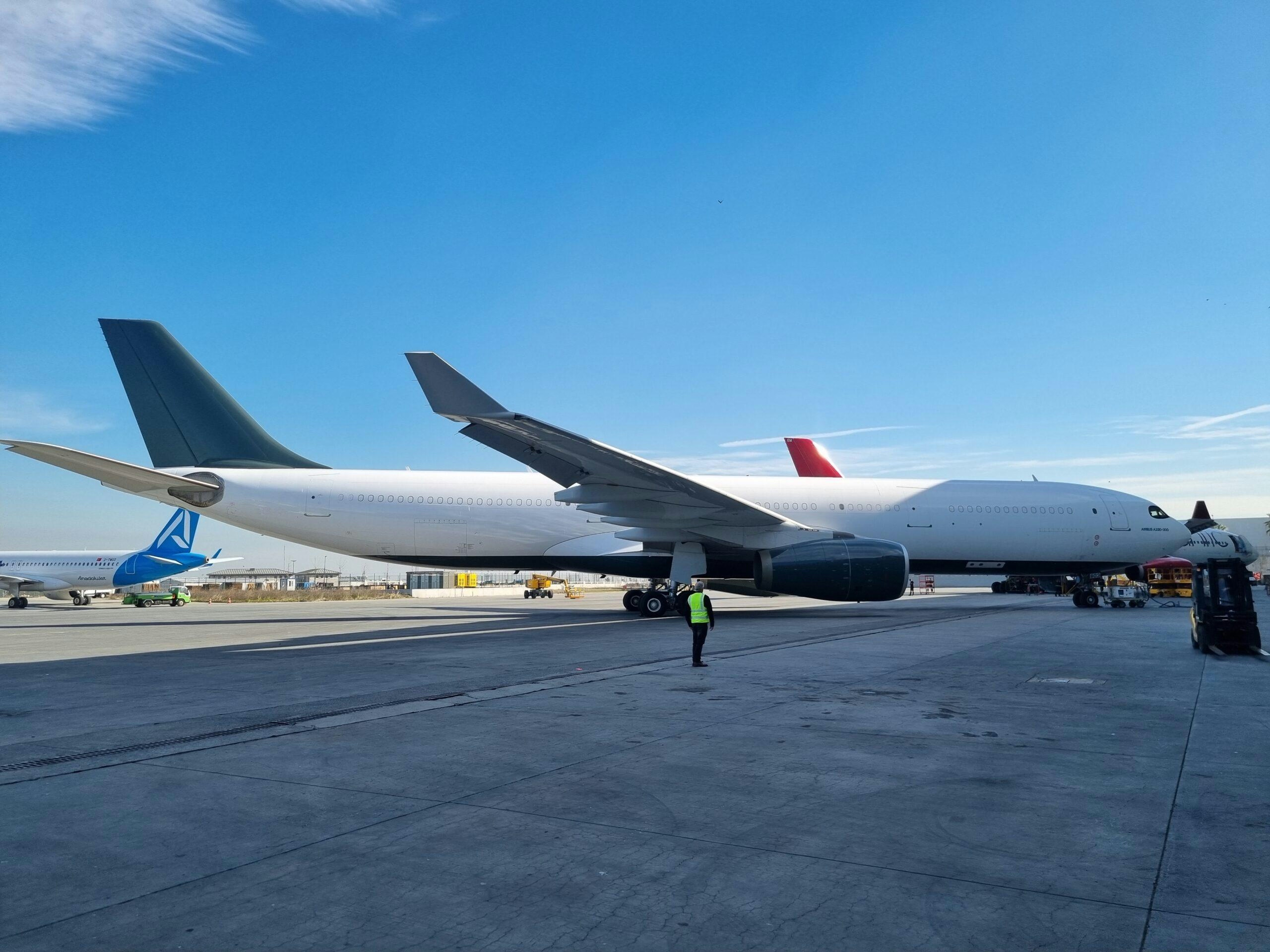
AMTRA Aero Acquires Airbus A330-200 for Dismantling Amid Market Shifts

AMTRA Aero Component Solutions, affiliated with the US-based lessor AMTRA Aero, has recently acquired a former Azul Linhas Aéreas Brasileiras Airbus A330-200 for dismantling purposes. The 23.4-year-old aircraft, registered as N529CG (msn 529), was last owned by Cargo Aircraft Management, according to ch-aviation data. Throughout its operational history, the aircraft has been operated by several carriers, including Turkish Airlines, Gulf Air, and notably Middle East Airlines (MEA), which was the launch customer and took delivery of the aircraft in May 2003. The A330-200 is equipped with Rolls-Royce RB211 Trent 772B-60 engines.

Market Dynamics and Fleet Transitions

This acquisition occurs amid significant changes in the A330 market. Airlines such as KLM are actively phasing out their A330-200 fleets, influenced partly by delays in the delivery of newer Airbus A350 freighters and a broader industry trend favoring more modern, fuel-efficient aircraft. These developments are reshaping demand for older A330 models and their components, creating a complex environment for aircraft asset management.

Industry analysts have highlighted the potential impact on the engine trading market, which is already experiencing volatility. Lee Whitehurst, an industry expert, has warned that an influx of A330 aircraft entering the aftermarket could lead to a sharp correction in engine values and spare parts pricing. As AMTRA Aero moves forward with dismantling the A330-200, these market forces are likely to influence both the valuation of salvaged components and the overall economics of aircraft recycling.

Strategic Positioning in Used Serviceable Material Supply

Despite the challenges posed by shifting market conditions, AMTRA Aero Component Solutions aims to capitalize on the ongoing demand for Used Serviceable Material (USM). By harvesting parts from the retired A330-200, the company seeks to support airlines, maintenance organizations, and aviation asset owners as they navigate the current transition in fleet composition. This strategic move underscores the growing importance of sustainable asset management and component reuse in the evolving aviation landscape.

More news
Groundbreaking for FAA Air Taxi Testing Facility in Oklahoma City

Groundbreaking for FAA Air Taxi Testing Facility in Oklahoma City

FAA Breaks Ground on Air Taxi Testing Facility in Oklahoma City Oklahoma City is set to become a pivotal hub in the advancement of urban air mobility following the Federal Aviation Administration’s (FAA) groundbreaking ceremony for its new Vertical Procedures and Analysis Range (V-PAR) facility. Valued at $8 million, the V-PAR will function as a dedicated testing ground for air taxi technologies, focusing on the safe integration of vertical takeoff and landing (VTOL) aircraft into the national airspace system. Advancing Aviation Innovation and Safety At the ceremony, Steven Bradbury, U.S. Deputy Secretary of Transportation, underscored the significance of the project as a major step forward in aviation innovation. He emphasized that the facility will play a critical role in incorporating VTOL aircraft into the air traffic control system, ensuring their safe operation within the increasingly complex airspace. Bradbury highlighted the paramount importance of safety, noting that without secure integration, air taxis would fail to serve their intended purpose, whether transporting passengers across metropolitan areas or delivering vital medical supplies. The V-PAR facility aims to address the operational and safety challenges unique to air taxis, which represent a transformative shift in urban transportation. The project has received widespread support from a diverse coalition of stakeholders, including state and local governments as well as tribal nations such as the Choctaw and Cherokee. Bradbury remarked on the collaborative nature of the initiative, pointing to the involvement of multiple states and local authorities. Challenges Facing Air Taxi Adoption Despite the enthusiasm surrounding the V-PAR, significant obstacles remain on the path to widespread air taxi deployment. Regulatory challenges continue to impede progress, as illustrated by the FAA’s recent approval of Honda’s all-electric air taxi, which currently faces limitations such as a 15-minute flight endurance due to persistent battery storage constraints across the industry. Additionally, ongoing legal disputes among leading manufacturers—including Joby, Archer, and Vertical—threaten to delay certification processes and undermine investor confidence. A recent report from the Government Accountability Office (GAO) further highlights the uncertainty surrounding the commercial introduction of electric aircraft. The report points to regulatory, commercial, and operational barriers that persist despite initiatives like the Trump administration’s eVTOL Integration Pilot Program, which has provided some momentum. The business model for air taxis remains largely unproven, and airports nationwide have expressed concerns about safely integrating these new aircraft alongside conventional planes. Industry Optimism and Local Commitment Nonetheless, industry leaders maintain a cautiously optimistic outlook. Archer Aviation, for instance, cites its designation as the official air taxi provider for the 2028 Los Angeles Olympics and continued backing from the White House’s eVTOL Integration Pilot Program as indicators of progress. The company aims for broad adoption of its technology by 2026. Local officials in Oklahoma City view the FAA’s new testing facility as a vital component in overcoming existing challenges and advancing the technology. Bradbury described the project as modest in scale but significant in its potential impact on the future of aviation. Construction of the V-PAR facility is scheduled for completion by June next year, marking a critical milestone in the United States’ efforts to transition air taxis from conceptual innovation to operational reality.
Final A-10 Engine Completed After 50 Years, Marking End of an Era in Military Aviation

Final A-10 Engine Completed After 50 Years, Marking End of an Era in Military Aviation

Final A-10 Engine Completed After 50 Years, Marking End of an Era in Military Aviation The completion of the final General Electric TF34 engine for the A-10 Thunderbolt II, known affectionately as the “Warthog,” at Davis-Monthan Air Force Base represents a significant milestone in the aircraft’s storied history. After nearly five decades of continuous support, this event signals the gradual winding down of the maintenance operations, expertise, and infrastructure that have sustained one of the United States’ most iconic close air support platforms. A Milestone at Davis-Monthan Air Force Base On May 21, 2026, personnel from the 355th Component Maintenance Squadron (CMS), alongside base leadership, gathered to mark the completion of the last A-10 engine build at Davis-Monthan. The engine had successfully passed its final test cell run on April 30, meeting the stringent standards required for operational readiness. The assembly of an A-10 engine is a painstaking process that typically spans a month, with each phase governed by exacting technical protocols, underscoring the critical nature of maintaining combat aircraft. Master Sgt. Eugene Rich III, propulsion flight chief for the 355th CMS, emphasized the collective effort behind this final build, noting that the entire maintenance shop contributed rather than the usual smaller team. He highlighted the life-saving impact of these engines, reflecting on the vital role maintainers have played throughout the A-10’s operational tenure. Davis-Monthan’s association with the A-10 dates back to the 1970s, establishing the base as a central hub for the aircraft’s daily operations. For decades, maintainers at the base have supported deployments, training exercises, and routine missions—work that, while often unseen, has been indispensable to both pilots and ground forces. The A-10 was the first Air Force aircraft specifically engineered for close air support, a mission that requires flying low and slow in proximity to ground troops engaged in combat. The Warthog’s Legacy and the Future of Close Air Support The A-10’s distinctive capabilities have long fueled debate regarding its retirement. Its ability to loiter over battlefields, operate from austere environments, and deliver a combination of precision-guided and unguided munitions has made it a uniquely effective platform. The aircraft’s signature GAU-8/A Gatling gun, capable of firing 3,900 rounds per minute, alongside its capacity to carry up to 16,000 pounds of ordnance, established the Warthog as a formidable ground-attack asset. However, the completion of the final engine also symbolizes a broader transition within military aviation. The U.S. Air Force is moving toward replacing the A-10 with newer platforms such as the F-35 and F-15, which are expected to assume its close air support and combat search-and-rescue roles. Although the A-10’s retirement has been postponed amid ongoing discussions in Congress and the Pentagon, the shift toward next-generation aircraft is underway. This transition is prompting strategic adjustments across the defense industry. Companies like MTU are pursuing new partnerships, including collaborations with AeroDesignWorks, to realign their military engine development strategies toward future combat aircraft. Meanwhile, Europe’s ambitions for a sixth-generation fighter have encountered setbacks, with France and Germany dissolving their joint program, reflecting evolving alliances and priorities in global military aviation. As the last A-10 engine leaves the assembly line, it not only closes a chapter for Davis-Monthan Air Force Base but also marks the end of an era for the Warthog and the generations of Airmen who have maintained its mission readiness over the past fifty years.
Government Considers Ending Aircraft Leasing Tax by 2030

Government Considers Ending Aircraft Leasing Tax by 2030

Government Proposes Phasing Out Aircraft Leasing Tax by 2030 The Lula administration is preparing a proposal to gradually eliminate the withholding income tax on aircraft leasing contracts by 2030, aiming to alleviate financial pressures on Brazil’s airline industry. This initiative, currently being developed by the Ministry of Ports and Airports in collaboration with the Finance Ministry’s economic team, will require congressional approval before implementation. Current Tax Framework and Proposed Changes At present, airlines are subject to a 3% income tax on leasing contracts, which allow carriers to rent aircraft from foreign owners. Under existing tax regulations, this rate is scheduled to increase incrementally, returning to its original 15% by 2027. Government officials have expressed concern that such a rise would significantly increase operational costs for airlines, potentially resulting in higher airfares and diminished demand for air travel. The draft proposal maintains the 3% tax rate through 2027, followed by a gradual reduction of one percentage point annually until the tax is fully eliminated in 2030. This plan has garnered support within the Finance Ministry’s economic team and has been under internal discussion since the previous year. Initial reports of the negotiations appeared in Folha de S.Paulo and were subsequently confirmed by Valor. Some government representatives contend that the current tax is based on a misinterpretation, as payments for leased aircraft are made to foreign owners and do not constitute income remitted abroad by Brazilian airlines. However, the administration has yet to determine whether to present the proposal to Congress as a formal bill or through a provisional presidential decree, both of which would necessitate amendments to existing legislation. Government and Industry Perspectives Ports and Airports Minister Tomé Franca has publicly underscored the importance of maintaining and gradually reducing the tax rate to support the aviation sector. In an interview with Valor, Franca emphasized that such measures ultimately benefit Brazilian travelers by facilitating more accessible air travel. The government’s proposal emerges amid growing pressure from airlines, which cite rising costs—including those driven by increased international oil prices and jet fuel expenses—as factors that could compel fare hikes or service reductions. In response to these challenges, the government has introduced several initiatives to ease the sector’s financial burden, including federal credit lines and exemptions from PIS/Cofins taxes on aviation kerosene (QAV). Market Implications and Industry Outlook Industry analysts suggest that the potential phase-out of the leasing tax could significantly alter competitive dynamics within Brazil’s aviation market. Airlines that have benefited from favorable tax conditions may need to adjust pricing strategies and enhance operational efficiency to mitigate cost increases. Meanwhile, competitors might explore alternative financing arrangements or seek new cost advantages, potentially leading to short-term market volatility as stakeholders adapt to the anticipated policy changes. As the government finalizes its proposal, the aviation sector and its competitors remain attentive to developments, recognizing that the outcome could have far-reaching effects on ticket pricing, market share, and the broader travel industry in Brazil.
Forum Highlights Emerging Technologies in Aviation

Forum Highlights Emerging Technologies in Aviation

Forum Highlights Emerging Technologies in Aviation The Civil Aviation Authority (CAA) convened the Advanced Air Mobility (AAM) Forum on Thursday, centering the discussion on the theme “From Vision to Safe and Sustainable Operations within the National Aviation Strategy 2040.” The event attracted over 150 participants representing more than 40 organizations, including government agencies, military and security bodies, aviation industry stakeholders, technology providers, Omani enterprises, investors, academic institutions, and youth engaged in emerging technologies. Advancing Oman’s Aviation Vision This forum forms a critical component of the CAA’s broader strategy to realize the ambitions of Oman Vision 2040 and the National Aviation Strategy 2040. The initiative seeks to position the Sultanate at the forefront of the rapidly evolving global aviation landscape by fostering an AAM ecosystem that prioritizes innovation, sustainability, and economic diversification. In his opening address, Eng Nayef bin Ali al Abri, Chairman of the CAA, underscored that Advanced Air Mobility has transitioned from a conceptual idea to a defined national priority and a burgeoning economic sector. He reaffirmed Oman’s dedication to leading global aviation transformation in alignment with the objectives of Oman Vision 2040. Al Abri detailed the CAA’s central role in crafting regulatory and legislative frameworks, enhancing safety and security standards, and nurturing an environment conducive to innovation and investment. Oman’s strategy for AAM is deliberate and phased, beginning with establishing regulatory foundations, progressing to the development of unmanned air traffic management systems, and ultimately advancing toward the safe and sustainable deployment of advanced aerial technologies. Strategic Partnerships and Industry Challenges A significant highlight of the forum was the signing of multiple agreements and Memoranda of Cooperation (MoC) designed to strengthen the AAM ecosystem and prepare the sector for future technological advancements. Among these, a MoC was formalized between the CAA, the Ministry of Transport, Communications and Information Technology, and the Ibn Firnas Center for Unmanned Aircraft. This collaboration aims to enhance institutional coordination in the development of drone and AAM systems, support innovation, facilitate operational trials, and build national expertise in unmanned aircraft systems. These efforts are expected to contribute to a more efficient and sustainable digital and logistics economy. Furthermore, the Foundational Charter for the Advanced Air Mobility System in Oman was signed, establishing a unified framework that integrates government entities, private sector participants, and strategic partners. The charter delineates shared principles, partner responsibilities, and governance mechanisms to ensure the sector’s safe, regulated, and sustainable growth, thereby enabling innovation in aviation and smart mobility. Despite these advances, industry leaders have identified challenges that could impact the sector’s growth. Tony Lefebvre, CEO of Signature Aviation, emphasized infrastructure capacity as a critical constraint, especially as emerging technologies such as Honda’s electric vertical takeoff and landing (eVTOL) aircraft and Vaeridion’s electric Microliner garner increasing market attention. The Aviation Cleantech Coalition has also advocated for comprehensive policy frameworks to support research and development in zero-emission and hybrid-powered aircraft, highlighting the necessity of robust regulatory backing. On the global stage, competition is intensifying. European companies are actively developing next-generation disruptive aircraft technologies, while the European Union is establishing support mechanisms to sustain the competitiveness of clean, European-made aircraft. These international developments underscore the importance of Oman’s proactive and strategic approach in cultivating a resilient and innovative aviation sector capable of meeting future demands.
Etihad Airways Responds Calmly to Boeing 777X Delays

Etihad Airways Responds Calmly to Boeing 777X Delays

Etihad Airways Responds Calmly to Boeing 777X Delays The ongoing industrial challenges affecting Boeing’s assembly lines have introduced significant uncertainty across the Persian Gulf’s aviation sector. However, Abu Dhabi-based Etihad Airways has maintained a notably composed stance amid the turmoil. While many regional carriers confront multi-year delivery delays and scramble to revise their fleet strategies, Etihad has effectively insulated its global capacity plans from the disruption, avoiding the widespread panic that has unsettled much of the industry. Strategic Fleet Planning and Timelines Etihad’s resilience stems from a deliberately cautious approach to aircraft procurement. Unlike several regional competitors who have placed large, speculative orders to secure market dominance, Etihad has avoided overexposure to manufacturer setbacks. The extensive delays in Boeing’s 777X program have disrupted long-term fleet renewal plans across the sector, compelling many legacy operators to extend the operational life of aging aircraft at considerable expense. In contrast, Etihad’s forward-looking strategy, established years ago, has created a structural buffer that shields its network ambitions from production setbacks in Seattle. Central to this composure is Etihad’s carefully structured order book. Under CEO Antonoaldo Neves, the airline has scheduled its first Boeing 777X delivery for 2031, well beyond the current crisis horizon. This back-loaded timeline transforms what is an immediate operational emergency for others into a distant concern for Etihad, allowing the carrier to concentrate on its Journey 2030 transformation program supported by a stable and active fleet. Despite Boeing’s 777X program lagging seven years behind its original schedule, Etihad has met its near-term capacity needs with reliable, already-certified twin-aisle aircraft. Neves characterizes the manufacturing environment as a “mixed bag” but emphasizes, “It’s a big problem, but we don’t face that problem,” referring to the certification bottlenecks that have ensnared competitors. Etihad plans to add an average of 20 aircraft annually over the next five years, relying on predictable deliveries to satisfy growing premium travel demand. This measured approach protects the airline from the financial strain associated with emergency leases or unplanned maintenance. It has contributed to a robust post-tax profit of $698 million last year and a 21 percent increase in passenger numbers, reaching 22.4 million. The carrier’s 90 percent load factor reflects a fleet precisely aligned with its current route structure rather than one dependent on delayed capacity. Competitive Dynamics and Emerging Risks Nonetheless, Etihad’s calm may face challenges as competitors adjust their strategies. Emirates anticipates receiving its first Boeing 777X by June next year but remains cautious, citing ongoing concerns over Rolls-Royce engine improvements for the rival Airbus A350-1000. Meanwhile, Japan’s ANA expects to take delivery of Boeing 777-9s starting in 2027 but has contingency plans should further delays occur. These developments underscore persistent uncertainty in the market and suggest that Etihad’s confidence in its recovery and expansion plans could be tested if supply chain disruptions continue or if competitors’ contingency measures prove more effective. Diversification as a Pillar of Stability Etihad has further mitigated risk by diversifying its fleet investments, finalizing a significant order for 32 Airbus widebody aircraft, including long-range A350-1000s. This balanced procurement strategy across multiple manufacturers ensures that the airline is not overly dependent on a single supplier, reinforcing its capacity to navigate ongoing industry disruptions. In a region where many airlines remain vulnerable to the volatility of aircraft manufacturing, Etihad’s measured and strategic approach stands out. However, as the competitive landscape evolves and supply chain uncertainties persist, the airline’s resilience will continue to be tested in the years ahead.
Sora Completes Critical VTOL Tests for 30-Seat Electric Aircraft

Sora Completes Critical VTOL Tests for 30-Seat Electric Aircraft

Sora Advances VTOL Flight Testing for 30-Seat Electric Aircraft Sora Aviation has reached a pivotal milestone in the development of its 30-seat electric vertical take-off and landing (eVTOL) aircraft by successfully completing a critical phase of VTOL flight testing. This achievement marks a significant step forward in the company’s ambition to introduce larger-scale electric aviation solutions, diverging from the prevailing industry focus on smaller air taxis designed for four to five passengers. The British firm’s S-1 project aims to redefine advanced air mobility by targeting a higher passenger capacity. Subscale Demonstrator Validates Design and Performance The recent test campaign took place over several months at the Snowdonia Aerospace Centre in Wales, employing a subscale demonstrator to assess flight characteristics, stability, and control during repeated VTOL operations. Although considerably smaller than the intended full-scale S-1 aircraft, the demonstrator was meticulously engineered to replicate essential aerodynamic features such as configuration, center of gravity, and rotor arrangement. This methodology enables Sora’s engineering team to validate computational models and refine the aircraft’s design before progressing to a full-scale prototype, which the company plans to fly by 2028. Furqan Afzal, CEO of Sora Aviation, emphasized the significance of this phase, stating, “This milestone demonstrates the maturity of our development approach and the strength of the engineering foundations underpinning the S-1 programme. We’ve deliberately invested in a rigorous test and validation strategy that combines simulation, laboratory testing, wind tunnel campaigns, and representative flight demonstrators. The results we’re seeing continue to reinforce our confidence that the S-1 can deliver the performance, safety, and economics required to transform advanced air mobility at scale.” Navigating Industry Challenges and Market Competition Sora’s focus on a 30-seat eVTOL aircraft distinguishes it within a rapidly evolving market where most competitors concentrate on smaller, urban-centric vehicles. The advanced air mobility sector has witnessed accelerated progress, with companies such as Honda and Textron making notable strides—Honda recently completed its first full-scale eVTOL flight, while Textron’s CJ4 Gen3 approaches certification. Nonetheless, the industry continues to grapple with significant challenges, including regulatory uncertainty, commercial viability, and market adoption. A recent report from the US government highlighted these ongoing obstacles, underscoring the complexity of regulatory, operational, and commercial factors that delay the entry of electric aircraft into service. As manufacturers intensify efforts to secure Federal Aviation Administration (FAA) certification and gain market acceptance, Sora’s larger aircraft concept introduces additional engineering and certification complexities. These include more stringent requirements for flight control systems, structural integrity under increased loads, and propulsion integration. Despite these challenges, Sora’s use of scaled demonstrators aligns with established aerospace development practices. Employing subscale models allows manufacturers to validate aerodynamic performance and flight control systems early in the design process, mitigating risks before committing to costly full-scale prototypes. Dr. Luke Bowen, Chief Technology Officer at Sora Aviation, noted, “Flight testing is one of several complementary tools we use to build confidence in the aircraft design.” As competition intensifies with players like Eve Air Mobility entering the market, Sora’s ability to differentiate its product and successfully navigate regulatory hurdles will be critical as it advances toward the next phase of development.
Airbus and Leading Aviation Companies to Participate in Farnborough International Airshow 2026

Airbus and Leading Aviation Companies to Participate in Farnborough International Airshow 2026

Airbus and Leading Aviation Companies to Participate in Farnborough International Airshow 2026 Airbus will join prominent industry players such as Boeing, Rolls-Royce, Leonardo, Embraer, and Honeywell at the Farnborough International Airshow 2026, one of the foremost events in the global aviation calendar. Scheduled to take place from 20 to 24 July at the Farnborough International Exhibition & Conference Centre in Hampshire, United Kingdom, the biennial exhibition is expected to attract over 1,400 exhibitors and more than 100,000 visitors representing upwards of 100 countries. A Global Platform for Innovation and Collaboration The airshow will convene leaders from diverse sectors including airlines, aerospace, defence, space, maintenance, repair and overhaul (MRO), and commercial aviation. It serves as a critical platform for unveiling cutting-edge technological advancements, securing commercial agreements, and fostering international partnerships. The anticipated attendance of over 400 government and military delegations underscores the United Kingdom’s continued prominence as a centre for aerospace collaboration. Farnborough’s reputation as a launchpad for industry breakthroughs remains well established. The 2026 edition is expected to highlight next-generation aircraft, sustainable aviation technologies, advanced defence systems, and innovative space solutions. Unlike consumer-focused airshows, Farnborough emphasizes business development and innovation, providing exhibitors with direct access to key decision-makers and investors across the aviation ecosystem. Industry Challenges Amidst Growth Despite the event’s scale and significance, participating companies face ongoing challenges. Infrastructure capacity has emerged as a pressing concern, with Signature Aviation CEO Tony Lefebvre highlighting the need for expanded facilities to accommodate the increasing number of participants and visitors. Additionally, scaling up production to meet rising demand presents a complex challenge. Airbus CEO Guillaume Faury has acknowledged the difficulties involved in ramping up manufacturing operations, particularly as the company continues to secure substantial commercial orders. Recent market dynamics further illustrate the competitive environment. In May 2026, Airbus reported 379 firm orders, significantly surpassing Boeing’s 13 orders during the same period. Delivery figures also indicate robust activity, with Boeing’s deliveries increasing by 13% and Airbus’s by 7.82% year-on-year for May. These figures are expected to influence strategic decisions and competitive responses as companies adapt to evolving market conditions. As the aviation industry confronts these challenges and opportunities, the Farnborough International Airshow 2026 is set to remain a pivotal event for innovation, investment, and global partnership. Its capacity to bring together senior executives, government officials, manufacturers, and technology providers ensures its ongoing role in shaping the future of aerospace and aviation.
Electric Air Taxis Confront Challenge of Gaining Public Trust

Electric Air Taxis Confront Challenge of Gaining Public Trust

Electric Air Taxis Confront Challenge of Gaining Public Trust Electric air taxis are rapidly approaching commercial viability as manufacturers advance certification processes, build production facilities, and establish partnerships with major airlines. Companies such as Joby Aviation and Archer Aviation have made significant strides toward launching electric vertical takeoff and landing (eVTOL) aircraft for passenger service. The U.S. Federal Aviation Administration (FAA) has introduced a dedicated certification framework for these aircraft, marking the first major update to civil aviation regulations since the advent of helicopters. This development underscores the growing momentum within the sector. Safety Concerns and Industry Setbacks Despite these technological advances, industry experts emphasize that the most formidable challenge may not be engineering but rather securing public trust. Aviation analysts highlight that the commercial success of electric air taxis will depend as much on public perception as on technical readiness. Historical precedents illustrate how new transportation technologies often face critical turning points following high-profile accidents. The autonomous vehicle industry, for example, experienced a significant setback in 2018 when a self-driving Uber vehicle fatally struck a pedestrian in Arizona, leading to suspended testing and diminished public confidence. Similarly, the Boeing 737 MAX crisis, triggered by two fatal crashes, resulted in a global grounding of the aircraft, substantial financial losses, and enduring reputational damage. Electric air taxi manufacturers are keenly aware of these risks and are pursuing rigorous testing and certification to avoid similar setbacks. Nonetheless, incidents have already occurred. In 2022, a Joby Aviation prototype crashed during an unmanned flight test in California due to a propeller blade failure. Although no injuries were reported, the incident prompted design revisions before testing resumed. Legal, Regulatory, and Market Challenges Beyond safety, the industry faces a range of challenges that could delay progress and undermine investor confidence. Leading companies Joby and Archer are currently involved in legal disputes that may slow certification efforts and unsettle stakeholders. Despite earlier federal initiatives, such as the Trump administration’s eVTOL Integration Pilot Program aimed at accelerating development, investor enthusiasm has cooled. Archer’s stock, for instance, has declined by 9% this year and lost over a third of its value in the past twelve months. Regulatory, commercial, and operational obstacles further complicate the path to market. A recent report by the U.S. Government Accountability Office highlighted uncertainties surrounding the timeline for electric aircraft entering service. The business model for air taxis remains unproven, and airports have expressed concerns about safely integrating these new vehicles alongside traditional aircraft. Public Acceptance and Future Prospects Public acceptance remains a significant barrier to widespread adoption. Surveys consistently identify safety concerns as the primary obstacle to consumer confidence in advanced air mobility technologies. While many express enthusiasm for the convenience offered by electric air taxis, confidence often diminishes when considering boarding such vehicles or their operation over densely populated areas. Even industry proponents urge caution. United Airlines CEO Scott Kirby, whose airline has placed conditional orders for electric air taxis, recently voiced reservations about operating these aircraft near major hub airports due to the complexities of air traffic integration. Most aviation experts agree that electric air taxis have the potential to become a viable transportation option in the future. However, the industry’s ability to withstand the reputational impact of its first major commercial accident—and to maintain public trust through transparent safety standards, rigorous certification, and continuous improvement—will likely be decisive in shaping its trajectory.
Azul Introduces Embraer 195-E2 at Confins Airport, Marking Fleet Renewal and Regional Expansion

Azul Introduces Embraer 195-E2 at Confins Airport, Marking Fleet Renewal and Regional Expansion

Azul Introduces Embraer 195-E2 at Confins Airport, Marking Fleet Renewal and Regional Expansion Azul has reached a pivotal moment in Brazilian aviation with the introduction of the Embraer 195-E2, christened *Felicidade é Voar* (“Happiness is Flying”), at Confins Airport. This delivery inaugurates a new phase for the airline, accelerating its strategy of fleet renewal and regional expansion through the deployment of next-generation aircraft designed to enhance efficiency, passenger comfort, and sustainability. Advanced Technology and Passenger Experience The Embraer 195-E2, developed by Brazil’s premier aerospace manufacturer, embodies the most sophisticated commercial aviation technology produced domestically. Configured to seat up to 136 passengers, the aircraft is optimized for high-frequency domestic and regional routes. Passengers will experience improved comfort through individual seatback screens, high-speed onboard Wi-Fi, reduced cabin noise, and carefully calibrated lighting, all intended to enhance connectivity and reduce travel fatigue. Market Context and Competitive Landscape Azul’s leadership has highlighted the substantial growth potential within Brazil’s domestic aviation market, where the airline aims to consolidate its position amid intense competition. The sector is currently dominated by three major carriers, each holding market shares within a narrow margin of ten percentage points. This competitive environment presents both opportunities and challenges as Azul seeks to expand its regional presence. While Azul advances its fleet modernization, the broader industry dynamics remain complex. LATAM Airlines Group, a principal competitor, has yet to decide on exercising options for additional E2 aircraft, signaling a cautious approach to market expansion. Conversely, leasing company Azorra’s recent order for 15 more E195-E2s reflects robust industry demand. Nevertheless, ongoing supply chain constraints may affect production rates, despite Embraer executives reporting an acceleration in E2 output. Significance for Brazilian Aerospace and Sustainability The arrival of the Embraer 195-E2 at Confins Airport represents more than a routine fleet upgrade; it underscores Brazil’s emerging leadership in sustainable aerospace manufacturing and innovative air transport solutions. The aircraft’s advanced engineering delivers enhanced fuel efficiency and reduced emissions, aligning with global efforts to promote greener aviation. As Azul prepares *Felicidade é Voar* for commercial operations, the airline is not only elevating the passenger experience but also reinforcing Brazil’s status as a global hub for regional aircraft manufacturing. The integration of the Embraer 195-E2 into Azul’s fleet will be closely observed, as competitive pressures, market decisions, and supply chain realities continue to influence the trajectory of regional aviation in Brazil.
Texas DPS Receives Airbus H125 Equipped with Satellite Communications

Texas DPS Receives Airbus H125 Equipped with Satellite Communications

Texas Department of Public Safety Enhances Airborne Operations with Advanced Airbus H125 Helicopter The Texas Department of Public Safety (TxDPS) has taken a significant step forward in its airborne law enforcement and public safety operations with the acquisition of a specially outfitted Airbus H125 helicopter. Completed through a collaboration between Metro Aviation and Tejas Advanced Solutions, the aircraft is equipped with a comprehensive suite of advanced communications, surveillance, and operational systems designed to meet the demanding requirements of statewide law enforcement, search and rescue (SAR), and emergency response missions. Cutting-Edge Communications and Surveillance Capabilities A defining feature of the new H125 is its permanently mounted, hardwired Starlink satellite antenna integrated with an onboard Teradek system. This innovative configuration establishes a resilient communications network that seamlessly combines satellite and cellular connectivity. Such integration ensures uninterrupted data transmission even in remote or infrastructure-poor regions, a critical advantage for TxDPS operations. Flight testing has confirmed the system’s high network availability under challenging conditions, reinforcing the helicopter’s role as a reliable asset in critical missions. In addition to its advanced communications suite, the helicopter is outfitted with a Shotover ARS-750 airborne mapping system, a WESCAM MX-10 electro-optical and infrared sensor, and a TrakkaBeam TL-360 searchlight. These technologies collectively enhance aerial surveillance and search capabilities. The aircraft also features custom crew workstations, a digital audio management system, an Axnes wireless intercom, multiple internal and external cameras, and upgraded lighting systems to improve situational awareness during complex operations. Marcus Tomerlin, Assistant Chief Pilot of the Texas DPS Airborne Law Enforcement Division, emphasized the significance of the upgrade, stating, “This aircraft represents a significant investment in public safety and will enhance our ability to support law enforcement operations, search and rescue missions, and critical response efforts across Texas.” Integration Challenges and Industry Implications Despite the advanced capabilities of the new H125, TxDPS faces several challenges in integrating the aircraft into its existing operational framework. Ensuring compatibility with current communication systems, maintaining the reliability of satellite links in areas susceptible to signal interference, and providing specialized training for personnel to operate and maintain the sophisticated technology are essential considerations. Successfully addressing these factors will be vital to fully realizing the helicopter’s operational potential. The Airbus H125 is globally recognized for its versatility in law enforcement, utility, firefighting, and SAR missions, particularly valued for its performance in demanding environments and ability to operate from confined spaces. The integration of satellite-based connectivity and real-time data sharing in this platform reflects a broader industry trend toward enhancing mission aircraft with advanced communication architectures, especially for operations beyond conventional network coverage. TxDPS’s adoption of this technology has attracted attention within the market, with expectations that other law enforcement agencies may follow suit in pursuing similar advanced communication solutions. This development is likely to stimulate competition among manufacturers, driving innovation, competitive pricing, and feature enhancements across the sector. Shawn Bruton, Metro Aviation’s Part 145 Director of Maintenance, remarked on the partnership, “Texas DPS is always on the cutting edge of aviation innovation and equipment. They consistently challenge our team to push the envelope, allowing us to deliver first-of-its-kind law enforcement configurations.” In a related advancement, Metro Aviation is progressing with its Airbus H160 EMS certification program, aiming to expand long-range critical care transport capabilities for air medical operators, further underscoring the company’s commitment to innovation in mission-critical aviation solutions.
line