Imagem

Orquestre insights de IA em ações

Entre na lista de espera da AeroGenie hoje mesmo!

Tendências

Categories

ANA and Neste Announce Strategic Partnership
May 7, 2026By ePlane AI
ANA and Neste Announce Strategic Partnership
0
0
All Nippon Airways
Sustainable Aviation Fuel
Neste

ANA and Neste Announce Strategic Partnership to Advance Sustainable Aviation

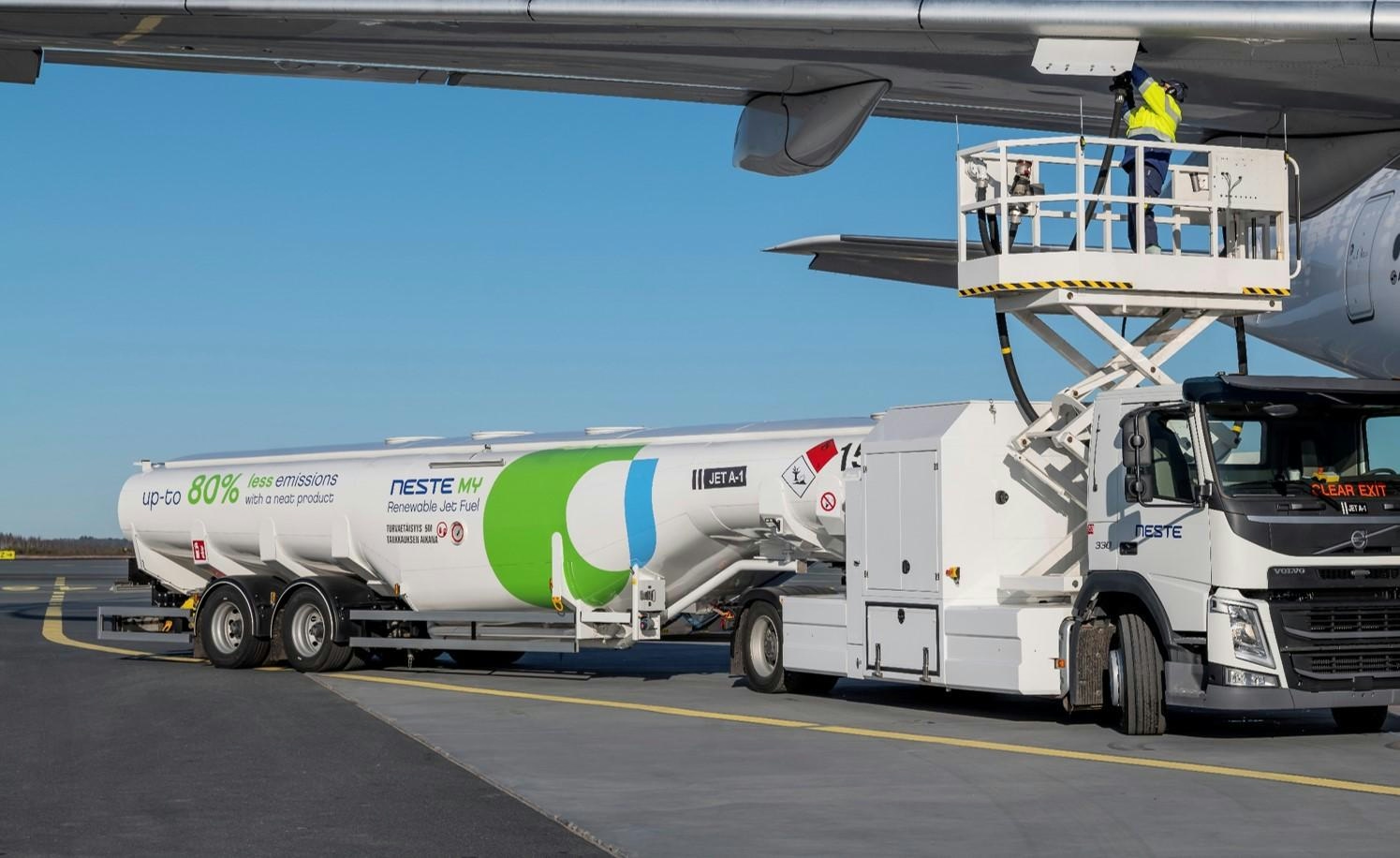
All Nippon Airways (ANA) has reaffirmed its leadership in the pursuit of decarbonizing the aviation sector by entering into a strategic partnership with Neste, a global leader in renewable fuels. This collaboration aims to accelerate the adoption of sustainable aviation fuel (SAF) and support the broader industry objective of achieving net-zero carbon emissions by 2050.

Commitment to Sustainability and Industry Leadership

ANA’s dedication to sustainability is deeply embedded in its operational history. Since its establishment in 1952, the airline has consistently pioneered innovations, including launching Japan’s first SAF-powered cargo flight in 2020 and becoming the world’s first commercial operator of the fuel-efficient Boeing 787 in 2011. The airline has set an ambitious target to reach net-zero carbon emissions by 2050, with an interim goal of incorporating 10% SAF into its fuel mix by 2030. This target positions ANA as a benchmark for sustainability efforts within the Asia-Pacific aviation market.

Kohei Yoshikawa, Senior Director of Decarbonization at ANA Group, highlighted the critical role SAF is expected to play in reducing the sector’s carbon footprint. This perspective is shared by Alexander Kueper, Vice President of Renewable Aviation Business at Neste, who referenced the International Air Transport Association’s (IATA) Net Zero Roadmaps. These projections estimate that 65% of aviation emission reductions by 2050 will be achieved through the use of SAF. As the industry aligns with the Paris Agreement’s goal of limiting global warming to 1.5°C, decarbonization remains a central priority.

Challenges and Market Dynamics

Despite the promising outlook, the partnership between ANA and Neste faces significant challenges. Navigating an increasingly complex regulatory environment is essential, particularly as global policies evolve. For example, recent legislative actions in the United States aimed at expanding fossil fuel production through wartime powers may affect the availability of funding and policy support for renewable energy initiatives. Such developments could influence investor confidence and introduce uncertainties for companies investing in sustainable alternatives.

Market conditions are also shifting rapidly. As ANA and Neste advance their SAF initiatives, competition is expected to intensify, with other industry players seeking to secure sustainable fuel supplies and forge new alliances. This competitive environment may accelerate innovation but also heighten pressure on supply chains. Furthermore, international agreements such as the EU-U.S. critical minerals partnership could impact the availability of essential raw materials required for renewable fuel production, potentially affecting Neste’s operations and the broader SAF market.

A Model for Sustainable Progress

Despite these obstacles, ANA remains resolute in its commitment to addressing climate change. Yoshikawa emphasized the necessity for the airline industry to confront climate change as a global issue and implement effective measures to ensure its continued contribution to global prosperity.

As global air travel continues to connect people and economies, the partnership between ANA and Neste exemplifies a proactive approach to sustainable progress. Their collaboration not only advances decarbonization efforts within the Asia-Pacific region but also serves as an inspiration for the wider aviation industry’s transition toward a more sustainable future.

More news
Honeywell Aerospace Chief Says AI Won’t Be Used in Cockpits for Now

Honeywell Aerospace Chief Says AI Won’t Be Used in Cockpits for Now

Honeywell Aerospace Chief Affirms Delay in AI Integration for Cockpits Honeywell Aerospace’s CEO has confirmed that artificial intelligence (AI) will not be introduced into aircraft cockpits in the near term, reflecting a cautious stance on incorporating advanced technologies into aviation’s most critical operational environments. This announcement comes amid Honeywell’s ongoing transition into an independent company, with a strategic emphasis on enhancing operational efficiency and focusing investments on select product areas. Safety and Regulatory Challenges in Cockpit AI Adoption While AI continues to revolutionize numerous industries, Honeywell’s leadership highlighted the unique challenges associated with integrating such technology into cockpits, particularly concerning safety and regulatory compliance. The company’s decision underscores the aviation sector’s traditionally conservative approach to technological innovation, especially where passenger and crew safety is paramount. Market responses to Honeywell’s position have been varied. Some industry stakeholders commend the decision as a prudent prioritization of safety, aligning with established regulatory frameworks and risk management practices. Conversely, others perceive it as a missed opportunity to leverage AI for operational improvements and innovation within cockpit systems. Industry Implications and Future Prospects Competitors in the aerospace sector may adopt contrasting strategies, with some accelerating AI integration efforts to secure a technological advantage. This divergence could significantly influence the competitive dynamics as companies balance the potential benefits of AI against the inherent risks of deploying it in mission-critical aviation systems. Despite the cautious approach to cockpit AI, Honeywell reaffirmed its commitment to applying AI and other advanced technologies in other facets of its operations. The company is actively enhancing overall operational performance and product capabilities outside the cockpit environment. It continues to monitor technological advancements and evolving regulatory guidance, leaving open the possibility of future AI adoption in cockpits once safety and compliance concerns are adequately addressed. Honeywell’s measured strategy highlights the complexities involved in harmonizing innovation with stringent safety and regulatory demands. Industry observers and investors alike will be closely monitoring how this approach affects Honeywell’s competitive positioning and how rival firms respond in the ongoing effort to modernize aviation technology.
NCAA Creates Service Innovation Division to Improve Regulatory Efficiency

NCAA Creates Service Innovation Division to Improve Regulatory Efficiency

NCAA Establishes Service Innovation Division to Enhance Regulatory Efficiency LAGOS – The Nigeria Civil Aviation Authority (NCAA) has officially launched a Service Innovation Division at its Abuja headquarters, marking a pivotal advancement in its efforts to institutionalise innovation and improve public service delivery within the aviation sector. This development aligns with the Federal Government’s wider public service reform agenda, which calls on Ministries, Departments, and Agencies (MDAs) to adopt innovative, transparent, and citizen-centric approaches to governance. A Strategic Move Towards Modernisation and Efficiency At the inauguration ceremony, Director-General of Civil Aviation, Capt. Chris Najomo, described the creation of the Service Innovation Division as a landmark achievement in the Authority’s ongoing transformation. He underscored the critical role of innovation in ensuring effective regulation amid the dynamic and rapidly evolving aviation industry in Nigeria. As the nation’s primary aviation regulator responsible for safety, security, and economic oversight, the NCAA must continuously adapt to global trends and emerging challenges. Capt. Najomo explained that the new division will function as a dedicated hub for developing creative solutions to operational challenges, streamlining internal processes, and fostering a culture of continuous improvement. It is expected to spearhead reforms that enhance institutional performance, improve service delivery to stakeholders, and position the NCAA as a more agile and performance-driven regulator. Navigating Complex Regulatory Challenges The NCAA’s innovation drive comes at a time when regulatory bodies face increasing complexities. The Authority contends with legislative changes, judicial rulings, and evolving sectoral issues that test the resilience of existing frameworks. Recent court decisions, such as the Brendan Sorsby ruling, have exposed vulnerabilities in regulatory oversight, prompting calls for legislative reforms to address systemic gaps. Additionally, ongoing debates surrounding the Protect College Sports Act, particularly concerning Name, Image, and Likeness (NIL) agreements, illustrate the intricate balance regulators must maintain between athlete compensation and compliance. Market responses to these reforms have been varied, reflecting uncertainty over the impact of proposed rule changes on specific programmes and stakeholders. Competitors may adjust their strategies in response to new regulations or seek to exploit regulatory loopholes, further complicating the regulatory environment. Commitment to Reform and Service Excellence Representing the Director of Reform Coordination and Service Improvement, Mrs. Francisca Adediji, Mr. Femi Ogedengbe praised the NCAA for its prompt compliance with the Federal Government’s directive mandating the establishment of Service Innovation Units across all MDAs. He highlighted the Authority’s proactive stance as a testament to its dedication to governance reforms, operational excellence, and accountability. Mrs. Faderera Bassey, General Manager of SERVICOM at the NCAA, expressed gratitude for the management’s unwavering support in fostering innovation and enhancing service delivery. She emphasised that sustained leadership commitment will be essential to the division’s success and to realising the NCAA’s vision of efficient, transparent, and customer-focused regulatory services. The inauguration of the Service Innovation Division represents a significant milestone in the NCAA’s broader strategy to modernise its operations, boost organisational effectiveness, and strengthen public confidence in Nigeria’s aviation regulatory framework amid ongoing sector-wide reforms.
Aircraft Delivery Delays Challenge Aviation’s 2050 Net-Zero Goal

Aircraft Delivery Delays Challenge Aviation’s 2050 Net-Zero Goal

Aircraft Delivery Delays Challenge Aviation’s 2050 Net-Zero Goal The Aviation Sector’s Climate Commitment Aviation, responsible for approximately 2.5% to 2.8% of global carbon emissions annually, faces increasing scrutiny as it strives to meet its ambitious target of net-zero carbon emissions by 2050. When accounting for non-CO₂ effects such as contrails and other greenhouse gases, the sector’s total climate impact may reach as high as 5%. In response, the International Air Transport Association (IATA) and its member airlines pledged in 2021 to achieve net-zero emissions by mid-century, setting a precedent for the industry’s environmental responsibility. IATA’s strategy to reach this goal involves a multifaceted approach. Central to the plan is the widespread adoption of sustainable aviation fuels (SAF), alongside technological advancements in aircraft and engine design, operational efficiencies, and the eventual integration of hydrogen and electric propulsion systems. For emissions that cannot be eliminated directly, the roadmap includes carbon capture, storage, and offsetting mechanisms. Willie Walsh, the outgoing Director General of IATA, outlined the envisioned breakdown: 65% of emissions reductions through SAF, 13% via new propulsion technologies such as hydrogen, 3% from efficiency improvements, and the remaining 19% addressed through carbon capture and offsets. However, he emphasized that the actual distribution will depend on the cost-effectiveness of these solutions over time. Obstacles to Progress: Delivery Delays and Fuel Adoption Despite the clear framework, the aviation industry’s trajectory toward net-zero is increasingly uncertain. At IATA’s 82nd Annual General Meeting in Rio de Janeiro, Walsh acknowledged that while the 2050 target remains achievable, the sector is “clearly off track.” Two primary challenges are impeding progress: persistent delays in aircraft deliveries and the slow uptake of sustainable aviation fuels. Fleet renewal is a critical component in reducing emissions, as newer aircraft models offer significantly improved fuel efficiency. For instance, the Airbus A320neo family consumes approximately 15% less fuel than its predecessors. However, ongoing delays in the delivery of new aircraft are hindering airlines’ efforts to modernize their fleets, forcing continued reliance on older, less efficient planes that contribute disproportionately to emissions. Simultaneously, the global market for sustainable aviation fuel remains nascent and limited in scale. Projections indicate that SAF will constitute only 0.8% of global jet fuel consumption by 2026, with production estimated at 2.4 million tonnes—far below the volume required to meet net-zero targets. Walsh has cautioned that the sluggish pace of the global energy transition, coupled with the “teeny, tiny and embryonic” state of the SAF market, casts doubt on the feasibility of achieving the 2050 goal under current conditions. Uncertain Path Forward Faced with these significant hurdles, industry leaders are increasingly contemplating whether a revised, more attainable timeline for net-zero emissions is necessary. As the aviation sector contends with supply chain bottlenecks and the slow scaling of alternative fuel production, the journey toward a sustainable future remains fraught with uncertainty. The coming years will be critical in determining whether the industry can accelerate its transformation or must recalibrate its environmental ambitions.
Airbus Surpasses 800 Orders in 2026 Amid Middle East Tensions

Airbus Surpasses 800 Orders in 2026 Amid Middle East Tensions

Airbus Surpasses 800 Orders in 2026 Amid Middle East Tensions Airbus has achieved a significant milestone in 2026, surpassing 800 aircraft orders despite ongoing geopolitical tensions in the Middle East. The European aerospace giant recorded 379 firm orders in May alone, bringing its total to 815 gross orders for the year. This robust performance stands in stark contrast to Boeing’s 13 orders during the same period, underscoring Airbus’s dominant position in the global market. Resilient Demand Amid Rising Costs The surge in orders reflects continued expansion by airlines worldwide, even as the Middle East conflict exerts upward pressure on oil prices and security expenditures. Arturo Barreira, President of Airbus Latin America and the Caribbean, acknowledged the impact of rising fuel costs but emphasized that demand for new aircraft remains strong. He stated, “Yes, the conflict in the Middle East has caused oil prices to increase. Even so, demand remains strong across many market segments. We continue to see airlines wanting to acquire and order more aircraft. We have not seen a global slowdown.” The conflict has also affected operational capacity, with Middle Eastern carriers reporting a nearly 35% reduction in available seat capacity by May. Nevertheless, Airbus’s substantial order book signals enduring confidence among airlines, which are preparing for sustained growth in passenger traffic over the long term. Long-Term Growth and Production Challenges The International Air Transport Association (IATA) projects global passenger traffic to grow at an average annual rate of 3.6% over the next two decades. This expansion will necessitate the delivery of approximately 43,420 new passenger and freighter aircraft by 2044, including 34,250 single-aisle and 9,170 widebody models. The global fleet is expected to nearly double from 24,730 aircraft at the end of 2024 to 49,210 by 2044, with around 18,930 older aircraft slated for retirement. Barreira noted that Latin America has not experienced operational disruptions related to the Middle East conflict and highlighted a recent easing of oil prices following a provisional ceasefire. Airbus remains committed to its ambitious production target of delivering 870 commercial aircraft in 2026. By the end of May, the company had delivered 262 aircraft, representing 30.1% of its annual goal. To meet this target, Airbus must sustain an average delivery rate of 87 aircraft per month for the remainder of the year. “As we expected at the beginning of the year, the second half will carry a heavier workload. We had a very good May with 81 aircraft delivered, and if we want to reach 870 deliveries, we will need to maintain that pace,” Barreira explained. Achieving this would surpass Airbus’s pre-pandemic record of 863 deliveries in 2019. Deliveries had declined sharply to 566 in 2020 before rebounding to 793 last year. Navigating Supply Chain Constraints Despite ongoing supply chain disruptions, particularly affecting the A320 program, Airbus continues to adapt its production strategy. Earlier this year, CEO Guillaume Faury acknowledged the need to moderate production plans and financial expectations after engine supplier Pratt & Whitney reduced delivery volumes. To mitigate these challenges, Airbus has intensified direct support for its suppliers, providing financial assistance, engineering resources, and enhanced operational oversight. The company has deployed more personnel to supplier facilities than ever before to ensure continuity and efficiency. In the face of persistent global uncertainties, Airbus’s strong order intake and delivery performance demonstrate its capacity to navigate a complex environment while meeting sustained demand from airlines worldwide.
British Airways Reduces Business Class Seats in Boeing 747 Replacement

British Airways Reduces Business Class Seats in Boeing 747 Replacement

British Airways Reduces Business Class Seats in Boeing 747 Replacement Transition from the Boeing 747 to the Airbus A350-1000 British Airways’ decision to retire its iconic Boeing 747 fleet in favor of smaller, more fuel-efficient twin-engine aircraft has led to a notable reduction in business class seating capacity. The Boeing 747-400, a long-standing fixture in the airline’s fleet, accommodated 86 business class seats. Its replacement, the Airbus A350-1000, configured in a three-class layout with a total of 331 seats, offers only 56 business class seats. This decrease reflects the A350-1000’s overall lower passenger capacity compared to the 747-400. Maintaining the previous number of business class seats on the A350-1000 would necessitate significant reductions in economy and premium economy cabins, a trade-off that British Airways has deemed impractical given the need to balance demand across all travel classes. The shift to the A350-1000 aligns with broader industry trends favoring more efficient aircraft amid rising operational costs and evolving market dynamics. Impact of the COVID-19 Pandemic and Fleet Disposition The COVID-19 pandemic accelerated British Airways’ retirement of its 31 Boeing 747-400s, a process that might otherwise have spanned several years. The airline announced in July that all remaining 747s had completed their final commercial flights, citing the pandemic’s devastating impact on the aviation sector. This rapid fleet transition was facilitated by the sharp decline in travel demand during the crisis. Following retirement, the 747s have been dispersed across various locations in Europe. Some aircraft have been preserved for display, including two at Dunsfold, England, and one retaining the historic BOAC livery, honoring British Airways’ heritage. Others have been scrapped or stored at sites in England, Spain, and Wales, with some aircraft facing damage such as fire incidents during dismantling. Legacy of the Boeing 747 and Business Class Innovation The Boeing 747 holds a distinguished place in British Airways’ history, particularly as the platform for the airline’s pioneering introduction of the world’s first lie-flat business class seat. In collaboration with London-based design firm Tangerine, British Airways developed the innovative yin-yang seat layout, which maximized cabin space by alternating forward and rear-facing seats. This product launched in March 2000 on the London–New York route, offering an unprecedented 96 business class seats—significantly more than the current A350-1000 configuration. Industry Context and Passenger Implications British Airways’ reduction in business class capacity occurs amid rising operating costs and increasing geopolitical uncertainties that are prompting consolidation within European aviation. This strategic adjustment may lead to dissatisfaction among passengers, particularly families and frequent business travelers who prioritize comfort and space. At the same time, competitors may capitalize on this opportunity to enhance their premium offerings, potentially widening the gap between airlines with strong business class products and those with more limited services—a trend already visible among U.S. carriers. As British Airways navigates these challenges and adapts to a transforming aviation landscape, the legacy of the 747 and its groundbreaking business class service continues to serve as a benchmark for premium travel.
NASA Introduces New Wind Tunnel Technology

NASA Introduces New Wind Tunnel Technology

NASA Unveils Advanced Wind Tunnel Technology at Langley Research Center NASA has inaugurated its first major wind tunnel facility in over forty years at the Langley Research Center in Hampton, Virginia, marking a significant advancement in aeronautics research. The newly established Flight Dynamics Research Facility (FDRF) is designed to replace two of NASA’s longest-serving wind tunnels—the 12-Foot Low-Speed Tunnel and the 20-Foot Vertical Spin Tunnel—signaling a new chapter in flight dynamics testing. Innovative Capabilities and Research Potential The FDRF boasts a combination of features unparalleled by any other single facility worldwide. According to Mike Fremaux, retired chief engineer for NASA Langley’s Intelligent Flight Systems division, the facility’s high-performance vertical wind tunnel and expansive test section will enable a broad spectrum of experiments. These range from spin testing of aircraft to free-flight evaluations of vehicles intended for atmospheric re-entry. Scheduled to become operational later this year, the FDRF’s design allows models to be dropped into a rising vertical airflow, effectively simulating real-world flight conditions. This capability is expected to support critical research across NASA’s aeronautics, science, and space exploration missions. Context Within the Evolving Aerospace Sector The introduction of the FDRF arrives at a pivotal moment for the aerospace industry. As private companies such as SpaceX prepare for high-profile initial public offerings, NASA’s technological advancements may influence market dynamics and competitive strategies. The anticipated success of SpaceX’s IPO could establish benchmarks for other technology-driven public offerings, including those from firms like Anthropic and OpenAI, potentially shaping investor sentiment and valuations throughout the sector. Furthermore, NASA’s shifting role in space exploration is highlighted by its planned transition from the International Space Station to commercial successors by 2030, as noted by the Government Accountability Office. This transition is expected to affect funding priorities and operational strategies, further intertwining public and private interests in space research and technology development. Legacy and Future Prospects The FDRF’s debut is deeply rooted in Langley’s longstanding tradition of innovation. Since 1939, the 12-Foot Low-Speed Tunnel has been instrumental in advancing aviation, contributing to studies on aircraft controllability and supporting the evolution from biplanes to supersonic jets. Its distinctive spherical design provided exceptional flexibility for testing free-flying models. Similarly, the 20-Foot Vertical Spin Tunnel has contributed decades of research on aircraft stability and control. As NASA retires these historic facilities, the FDRF is positioned to drive the next generation of aerospace breakthroughs. Its state-of-the-art capabilities reaffirm NASA’s commitment to scientific excellence and reinforce the agency’s role as a key player in an increasingly competitive and commercially driven space industry.
Why Airlines Are Unable to Sue Engine Manufacturers Over Failures

Why Airlines Are Unable to Sue Engine Manufacturers Over Failures

Why Airlines Are Unable to Sue Engine Manufacturers Over Failures The outgoing director of the International Air Transport Association (IATA), Willie Walsh, delivered a pointed critique of the ongoing engine reliability challenges confronting the aviation sector. Speaking at the June 2026 IATA Annual General Meeting in Rio de Janeiro, Walsh highlighted the persistent disruptions caused by engine failures, maintenance-related groundings, and production delays. These issues have severely impacted airline operations, while engine manufacturers continue to report robust profits. Walsh emphasized the disparity in accountability, noting that if airlines failed to meet their commitments to passengers, such lapses would be intolerable. However, when engine manufacturers fall short, airlines find themselves with limited avenues for recourse. He attributed this imbalance primarily to the lack of competition among original equipment manufacturers (OEMs). “We’ve got very little competition when it comes to engine suppliers, so you could argue they can get away with it,” Walsh remarked. A Monopolized Market and Limited Legal Options This problem is particularly evident in the case of Pratt & Whitney’s PW1100G geared turbofan engines, which power widely used aircraft such as the Airbus A320neo, A220, and Embraer E-Jet series. Following the discovery of defects in turbine blades that risk premature or catastrophic engine failure, airlines have faced extensive groundings and operational disruptions. Pratt & Whitney has struggled to resolve the backlog, with some aircraft expected to remain grounded until late 2027 or beyond. For certain aircraft models, including the Airbus A220 and Embraer E2, Pratt & Whitney holds exclusive engine supply contracts. Such exclusivity is common in the industry and is often reinforced by complex contractual agreements that severely restrict airlines’ options. These contracts typically contain clauses that prevent airlines from seeking alternative suppliers or pursuing legal action for compensation, even in the face of significant engine failures. Industry-Wide Impact and Executive Frustration The scarcity of alternatives leaves airlines with minimal leverage. United Airlines CEO Scott Kirby has publicly identified engine shortages as a critical constraint on airline operations, echoing Walsh’s concerns. While some airlines have attempted to renegotiate terms or explore alternative suppliers—as demonstrated by United’s dispute with Rolls-Royce over alleged contract breaches—such efforts are infrequent and challenging due to the binding nature of exclusivity agreements. The operational and financial consequences for airlines are substantial, manifesting in grounded aircraft, delayed flights, and dissatisfied customers. Despite these setbacks, major engine manufacturers including Pratt & Whitney, General Electric, CFM International, and Rolls-Royce continue to generate strong profits. Although all have faced recalls and quality control issues, the latest generation of engines has yet to deliver significant improvements in reliability. A Dysfunctional Dynamic The current structure of the jet engine market exposes airlines to risks they are ill-equipped to manage. With a limited number of suppliers and restrictive contractual frameworks, airlines lack effective legal mechanisms to hold engine manufacturers accountable, even when failures have widespread operational and financial repercussions. As Walsh and other industry leaders have underscored, until competition intensifies or contractual practices evolve, airlines will remain vulnerable to the performance and decisions of engine manufacturers.
Inside an ACMI Operator’s Long-Term Fleet Strategy

Inside an ACMI Operator’s Long-Term Fleet Strategy

Inside an ACMI Operator’s Long-Term Fleet Strategy Navigating Expansion in the ACMI Market At the recent IATA Annual General Meeting in Rio de Janeiro, euroAtlantic Airways CEO Pauls Calitis shared insights into the Portuguese carrier’s evolving fleet strategy and his transition into leadership. Having joined euroAtlantic after a lengthy tenure at AirBaltic, Calitis assumes command as the airline seeks to expand amid intensifying competition within the widebody ACMI (Aircraft, Crew, Maintenance, and Insurance) sector. EuroAtlantic Airways has carved out a niche as a specialist in ACMI and charter operations, providing vital capacity and operational support to airlines around the globe. Unlike traditional passenger carriers that focus on ticket sales and brand loyalty, euroAtlantic operates predominantly behind the scenes, enabling partner airlines to manage fluctuating demand. The airline’s emphasis on widebody aircraft—primarily Boeing 767s and 777s, alongside a growing Airbus A330 fleet—distinguishes it in a market where many ACMI providers rely heavily on narrowbody aircraft. Strategic Vision and Industry Challenges Calitis outlined a strategy focused on sustainable growth, underscoring that expansion will not come at the expense of operational discipline. He explained, “We’re moving beyond simply filling short-term gaps and toward building structural, long-term partnerships with our clients.” This approach aligns with broader industry trends, as airlines increasingly seek stable and predictable ACMI providers to support their long-term capacity requirements. However, implementing a long-term fleet strategy in the ACMI sector involves considerable challenges. Securing multi-year contracts is crucial for stability but demands a careful balance between the financial risks associated with fleet expansion and modernization. Maintaining operational efficiency is essential, as any lapse can undermine the trust of partner airlines. The competitive landscape is evolving accordingly, with rivals enhancing service offerings and expanding fleet capabilities to secure lucrative long-term agreements. Recent industry developments, such as USC Aero’s investment in retired Lufthansa A340-600s and Flexjet’s acquisition of The Jet Business, highlight a growing emphasis on strategic fleet control and modernization. EuroAtlantic’s approach involves diversifying its fleet by expanding its Airbus presence while sustaining its established Boeing operations. The airline is also exploring opportunities to introduce next-generation aircraft, positioning itself to meet evolving customer demands and increasingly stringent environmental standards. Leadership and Future Outlook Calitis brings a distinctive perspective to euroAtlantic’s leadership, shaped by over three decades at AirBaltic in roles spanning flight operations, executive management, and fleet strategy. His experience as both a pilot and senior executive, including oversight of AirBaltic’s own ACMI growth, equips him with a comprehensive understanding of the operational and commercial dynamics inherent in the sector. Reflecting on his initial period at euroAtlantic, Calitis acknowledged the learning curve but expressed confidence in the airline’s trajectory. “This is my first month with euroAtlantic, so definitely fresh,” he remarked, noting that lessons drawn from AirBaltic’s fleet modernization and operational development are informing his approach. As euroAtlantic positions itself for long-term growth, its commitment to operational excellence, strategic fleet expansion, and the cultivation of enduring client relationships will be pivotal in navigating the complexities and opportunities of the evolving ACMI market.
Elevate Jet Receives Extension Amid B757 Engine Delays

Elevate Jet Receives Extension Amid B757 Engine Delays

Elevate Jet Granted Extension Amid Boeing 757 Engine Delays The United States Department of Transportation has approved a six-month extension for Elevate Jet (LVT, Bedford, MA) to commence operations under its certificate of public convenience, originally issued on July 2, 2025. This extension extends the deadline to January 4, 2027, allowing the company additional time to address delays in receiving engines for its VIP-configured Boeing 757-200, registration N107TV (msn 24527), acquired in early 2026. Regulatory and Operational Challenges Federal regulations require Elevate Jet to begin interstate charter services within one year of the certificate’s issuance. The granted extension provides crucial additional time for the company to complete Federal Aviation Administration (FAA) certification processes for the B757-200 before entering service. However, the delay in engine delivery poses significant operational challenges, including increased costs and potential setbacks in fleet expansion. These issues could affect Elevate Jet’s growth trajectory and raise concerns among customers about service reliability and the risk of disruptions. Market Response and Strategic Adjustments Competitors have already begun to respond to the evolving market conditions. Flexjet has moved to acquire The Jet Business, while Wheels Up is intensifying efforts to expand its fleet. These strategic moves are widely interpreted as attempts to capitalize on Elevate Jet’s operational delays by attracting customers seeking immediate charter solutions. In an effort to remain competitive amid these pressures, Elevate Jet has introduced an AI-driven pricing engine for its charter services. This technology aims to optimize pricing strategies and sustain customer appeal despite the uncertainties caused by the engine delays. With the extension secured, Elevate Jet now has a renewed opportunity to finalize certification and prepare for launch. Nevertheless, the company faces increased scrutiny from both customers and competitors as it works to bring its flagship VIP-configured Boeing 757-200 into service.
WSIB Invests $1.3 Billion in Energy Transition and Aircraft Leasing

WSIB Invests $1.3 Billion in Energy Transition and Aircraft Leasing

WSIB Commits $1.3 Billion to Energy Transition and Aircraft Leasing The Washington State Investment Board (WSIB) has approved over $1.3 billion in new private market commitments, reinforcing its strategic emphasis on real assets and private equity to enhance returns from illiquid investments. Managing a $192 billion pension fund, WSIB continues to benefit from strong performance in these sectors, with tangible assets delivering an 8.5% return and private equity achieving 9.7% for the year ending March 31. The overall fund recorded a gain of 10.88% during the same period. Focus on Real Assets and Energy Transition Within the real assets category, WSIB allocated $550 million, guided by consultant Meketa. A significant portion of this, $300 million, was committed to LS Power Equity Partners VI, an infrastructure fund targeting North American energy projects spanning generation, transmission, and storage. LS Power aims to raise $4 billion for this fund, which has attracted investments from other major institutional investors such as Pennsylvania’s Public School Employees’ Retirement System (PSERS) and the Virginia Retirement System. The energy transition sector remains highly dynamic, with industry leaders like Legal & General Group Plc emphasizing the rapid pace of change and the strong demand for sustainable investment opportunities. WSIB also dedicated $250 million to Babcock & Brown Aircraft Management Incline III Aviation Limited Partnership, one of the world’s largest aircraft lessors, managing a fleet of over 500 aircraft valued at $21 billion. The aircraft leasing market is undergoing significant transformation, marked by increased private equity interest, exemplified by KKR’s recent $1.4 billion commitment to Altavair. This heightened competition is expected to influence future returns and deal flow. Ryanair Group CEO Michael O’Leary has highlighted that while there may be an oversupply of secondhand jets, engine availability could become the primary constraint. Additionally, Germany’s USC Aero’s investment in retiring Lufthansa A340-600s reflects evolving dynamics in aircraft retirement and leasing, factors that may impact the market environment WSIB is entering. Private Equity Commitments and Portfolio Overview In private equity, WSIB reaffirmed its longstanding commitment despite recent returns trailing its custom benchmark. The largest single allocation was $400 million to KKR Asian Fund V, a pan-Asian buyout fund targeting 20 to 30 deals across Australia, Greater China, India, Japan, South Korea, and Southeast Asia. The board also committed $200 million to PSG Europe III, which focuses on lower mid-market software and tech-enabled services, including payments, enterprise resource planning (ERP), cybersecurity, and artificial intelligence. Another $200 million was allocated to Endeavour Capital Fund IX, which invests in lower middle-market companies in the Western United States across consumer, industrial, business services, and healthcare sectors—a partnership WSIB has maintained since 2003. As of March 31, WSIB’s portfolio comprised $53 billion in private equity, $34 billion in real estate, and $13 billion in tangible assets such as infrastructure. These recent commitments follow more than $1.8 billion in private equity and credit allocations made in April, underscoring WSIB’s conviction in private markets as a fundamental driver of long-term returns. Nevertheless, evolving market conditions and intensifying competition in both the energy transition and aircraft leasing sectors may present new challenges and opportunities as the fund pursues its ambitious investment strategy.
line









