
Orquestre insights de IA em ações

Tendências
Categories
Arizona Develops Infrastructure to Support Flying Cars
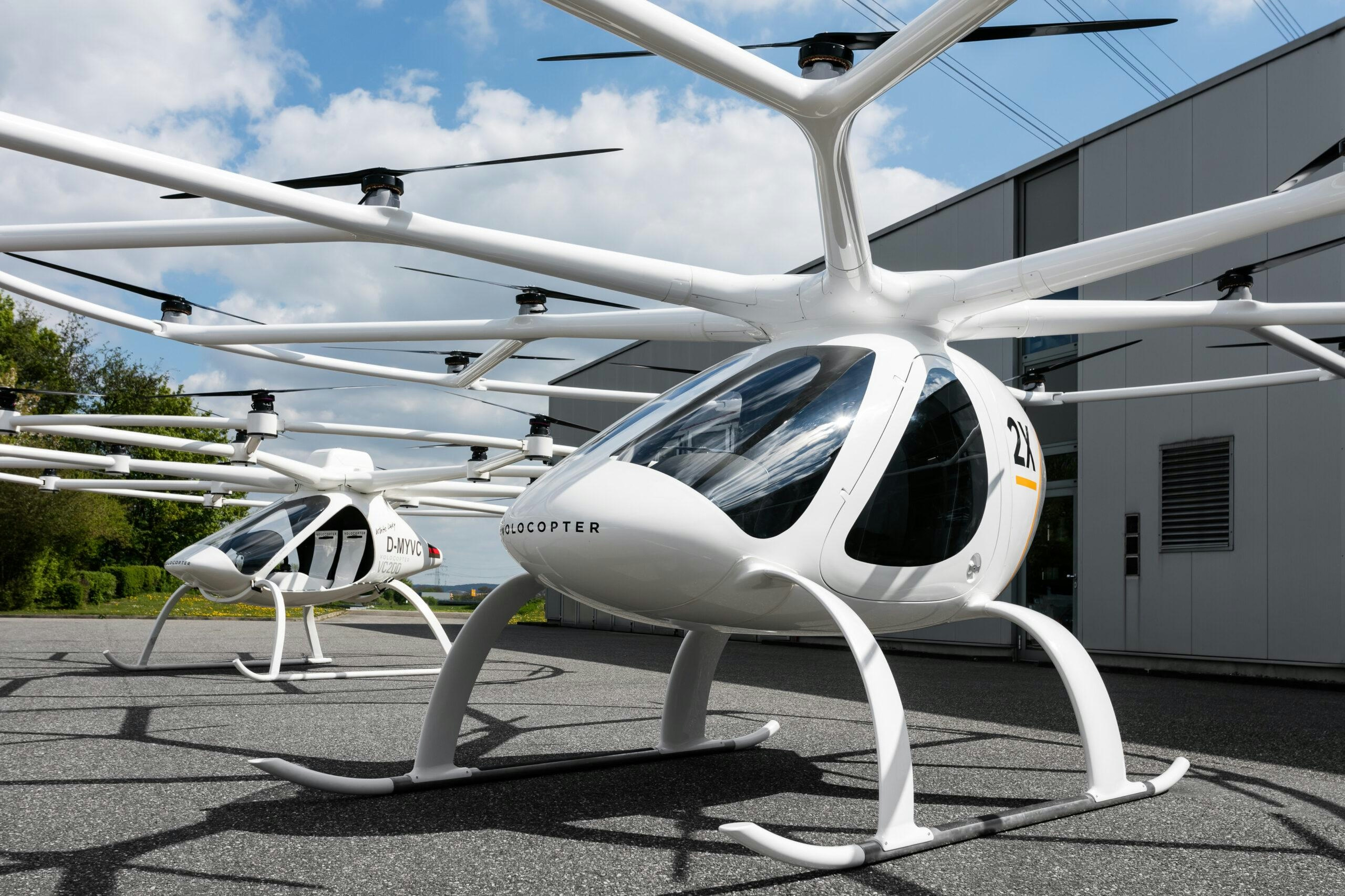
Arizona Advances Infrastructure to Support Flying Cars
Arizona is making concerted efforts to establish itself as a frontrunner in the emerging field of Advanced Air Mobility (AAM), preparing for the integration of air taxis and electric aircraft into its transportation network. State officials and lawmakers are actively collaborating with industry leaders to develop the necessary infrastructure and regulatory framework to accommodate this new mode of travel.
Legislative and Budgetary Initiatives
Senator David Farnsworth, a Republican from Mesa and chair of the Senate Appropriations and Transportation Committee, has played a pivotal role in these initiatives. As part of the Air Mobility Senate Advisory team, Farnsworth has engaged with industry stakeholders to explore innovations and potential legislative measures. Emphasizing the importance of proactive investment, he remarked, “If you build it, they will come,” underscoring the need to establish infrastructure ahead of widespread adoption.
The state’s 2024 budget reflects this commitment, allocating $2 million to create an Advanced Air Mobility Fund. This fund is intended to support the development of vertiports—specialized hubs designed for electric vertical takeoff and landing (eVTOL) vehicles—and other critical infrastructure such as electric aircraft charging stations. In May, Governor Katie Hobbs signed Senate Bill 1307 into law, mandating the Arizona Department of Transportation to update the state’s aviation plan to incorporate these new facilities. The legislation, sponsored by Senator Frank Carroll of Sun City West, also directs the Arizona Commerce Authority to educate local governments on the benefits and opportunities presented by AAM.
Industry Momentum and Challenges
Nationally, the AAM sector is gaining traction, with companies like Archer Aviation, recently designated as the official air taxi provider for the 2028 Los Angeles Olympics, and Boeing subsidiary Wisk, which is developing autonomous four-passenger electric air taxis, driving technological progress. Mark Gaspers, Boeing’s director of government operations, highlighted the growing demand for innovative transportation solutions amid increasing urbanization, population growth, and aging infrastructure during a recent House Transportation and Infrastructure Committee hearing.
Despite this enthusiasm, significant obstacles remain. Regulatory complexities, safety concerns, and the challenges of constructing new infrastructure pose potential delays. Skepticism persists among traditional automotive industries and regulatory agencies regarding the readiness and practicality of widespread air taxi deployment. In response, industry competitors are forming strategic partnerships, investing heavily in research, and accelerating technological development to maintain a competitive advantage in the rapidly evolving eVTOL market.
Arizona’s leadership acknowledges that while prototype vehicles and supporting technologies are advancing, considerable work is still required to define optimal applications for air taxis and to ensure public safety. Nevertheless, with strong legislative backing and active collaboration with industry, Arizona is positioning itself to be among the first states prepared to integrate flying cars into its transportation ecosystem.

Etihad Airways Suspends Airbus A380 Flights on Key Route

Aditya Birla Group Seeks Approval for Aircraft Leasing in GIFT City

Qatar Airways Highlights Innovation and Connectivity at Arabian Travel Market 2026

Hong Kong's Five-Year Plan Includes Andrew Fan's Aircraft Parts Processing Hub Proposal

ACIA Aero Leasing Delivers ATR72-600 to Air Nostrum

RTX Appoints Jill Albertelli as Head of Pratt & Whitney

TAT Technologies Joins Beyond Aero Hydrogen Aircraft Program

AURAK Study Highlights Barriers to Air Taxi Adoption in Emerging Economies

Xiamen Air Selects Altitude for 787 Maintenance at Heathrow

Etihad and Swissport Extend Global Partnership
