image

AeroGenie — Seu copiloto inteligente.

Pergunte qualquer coisa. Analise tudo. Aja imediatamente.

Tendências

Categories

Autonomous Flying Taxis Prepare to Enter U.S. Airspace
December 24, 2025By ePlane AI
Autonomous Flying Taxis Prepare to Enter U.S. Airspace
0
0
Advanced Air Mobility
Autonomous Aircraft
Beta Technologies

Autonomous Flying Taxis Set to Enter U.S. Airspace

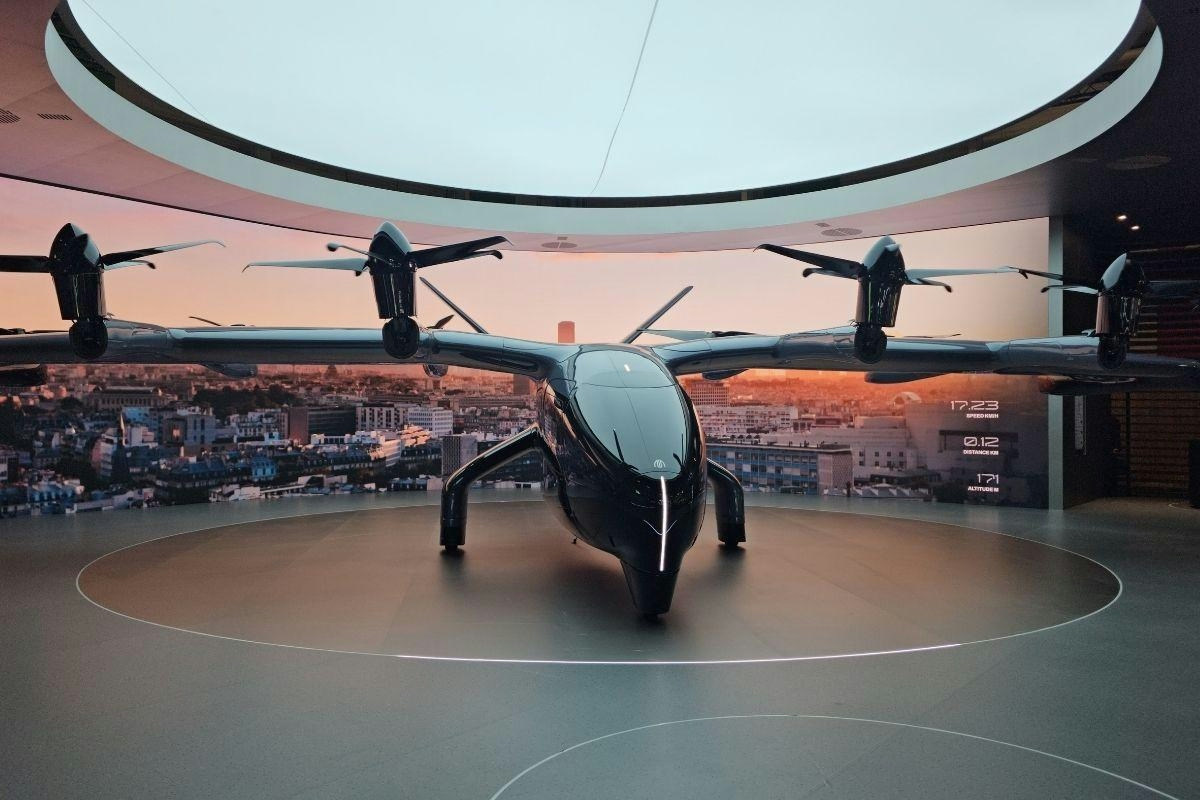
Electric, autonomous flying taxis are on the verge of revolutionizing transportation across the United States. Industry leaders anticipate that these quiet, pilotless aircraft will soon ferry passengers and cargo through both urban centers and rural areas. Known as advanced air mobility (AAM) vehicles, these aircraft are capable of vertical takeoff and landing, and are rapidly transitioning from conceptual designs to operational models as companies and regulators work to integrate them into the national airspace system.

Industry Developments and Global Competition

Kyle Clark, CEO of Vermont-based Beta Technologies, emphasized the reality of this technological shift during a recent congressional hearing, stating, “Aviation is moving to all-electric, advanced air mobility.” Beta Technologies is among numerous U.S. firms, including Archer and Joby, competing to develop and deploy electric, self-flying vehicles. This domestic competition is further intensified by international players such as China’s EHang, highlighting a global race to dominate the emerging AAM market.

Wisk Aero, a Boeing subsidiary headquartered in California, is positioning itself to be the first company to design and manufacture FAA-certified, pilotless passenger air taxis. Tyler Painter, Wisk’s Chief Financial Officer, described autonomy not as a radical innovation but as a natural evolution of existing aviation technologies during the same congressional session.

Regulatory Support and Safety Innovations

The Federal Aviation Administration (FAA) and Congress have demonstrated strong support for the advancement of AAM technology. In September, the FAA initiated a pilot program aimed at integrating vertical takeoff and landing aircraft—including unmanned models—into the National Airspace System. This program will oversee the introduction of passenger air taxis, short-runway electric flights, and advanced aircraft designed for medical transport and cargo delivery. The FAA has characterized this initiative as ushering in a “new era of aviation,” introducing “powered lift” as the first new civil aircraft category in nearly five decades.

AAM vehicles are typically highly automated and electrically powered, designed specifically for vertical takeoff and landing. The FAA’s pilot program will also assess the enhanced safety features of these aircraft, which utilize advanced sensors, automation, and detect-and-avoid technologies to minimize human error and prevent collisions.

Industry experts contend that automation significantly improves safety compared to traditional crewed aircraft. Reliable Robotics, a California-based company, has developed flight control systems that fully automate taxiing, takeoff, flight, and landing procedures. CEO Robert W. Rose highlighted that these technologies aim to eliminate the most common causes of fatal aviation accidents and save lives, with plans to expand remotely piloted air cargo operations to small towns and rural communities.

Challenges and Market Outlook

Despite rapid advancements, several challenges remain before autonomous flying taxis can achieve widespread adoption. Regulatory complexities, safety concerns, and technological limitations must be addressed. The previous administration introduced a new regulatory framework designed to accelerate the integration of flying taxis, emphasizing the importance of maintaining competitiveness with China’s progress in this sector.

Market reactions to these developments are mixed. While some investors express optimism due to strong government support and high-profile industry partnerships, others remain cautious, pointing to the difficulties of certification processes and public acceptance. As competition intensifies, the effort to bring autonomous flying taxis into U.S. airspace is entering a pivotal stage that could fundamentally reshape the future of transportation.

More news
Why Aircraft Engines Lack Screens or Grills

Why Aircraft Engines Lack Screens or Grills

Why Aircraft Engines Lack Screens or Grills The absence of protective screens or grills on commercial aircraft engines may appear counterintuitive given the clear risks posed by birds, debris, and other foreign objects. However, this design choice is the result of careful consideration of safety, aerodynamic efficiency, and operational practicality within the aviation industry. Prioritizing Airflow Efficiency and Engine Safety Modern jet engines, especially high-bypass turbofans, are meticulously engineered to draw in vast quantities of air—often hundreds of kilograms per second—with minimal disruption. Any obstruction, including a seemingly minor grill or screen, would interfere with this delicate airflow, potentially reducing engine efficiency and increasing fuel consumption. More critically, such interference could induce compressor stalls or surges, jeopardizing engine performance and safety. Maintaining unobstructed, laminar airflow is therefore paramount. While foreign object damage (FOD) remains a recognized hazard, jet engines are rigorously certified to withstand bird strikes and small debris without catastrophic failure. Introducing a screen or grill could paradoxically increase risk: upon impact, fragments of the protective structure might break off and be ingested by the engine, causing more severe damage than the original object. This potential for secondary damage has led manufacturers to avoid such protective barriers. Operational and Maintenance Considerations Although permanent screens are absent, temporary protective measures are employed in specific contexts. During ground testing, engines may be fitted with screens, and intake covers are commonly used when aircraft are parked to prevent the ingress of ice, snow, or debris. In environments with high dust or sand concentrations, such as desert operations, helicopters often utilize screens or air particle separators to safeguard their turbines. Weight considerations also play a significant role. Even lightweight protective structures add mass, which negatively impacts fuel efficiency, range, and payload capacity. Over the lifespan of an aircraft, these incremental increases in fuel consumption translate into substantial operational costs and elevated emissions—factors the industry actively seeks to minimize. Maintenance challenges further discourage the use of grills. Jet engines operate under extreme conditions, including rapid temperature fluctuations and exposure to moisture and contaminants. A screen would require frequent inspection and cleaning to prevent blockages caused by ice, dust, or residue. Ice accumulation, in particular, could obstruct airflow or create dangerous imbalances, compromising engine reliability and safety. Industry Challenges and Mitigation Efforts The aviation sector continues to grapple with technical and operational challenges that underscore the importance of design decisions prioritizing efficiency and reliability. Airbus, for instance, is currently managing a software recall affecting approximately 6,000 A320 family aircraft alongside a quality issue involving metal panels on certain models. These developments have prompted notable market reactions, including a decline in Airbus’s stock value. The company is collaborating closely with airline customers and engine supplier Pratt & Whitney to address cold-weather takeoff restrictions. The heavy dependence on the A320 model has also been identified as a risk factor amid fluctuating delivery targets and financial forecasts. Airports contribute significantly to mitigating foreign object damage risks through rigorous runway inspections, debris removal protocols, and comprehensive staff training. These measures help maintain clear runways and taxiways, reducing the likelihood of engine ingestion incidents. The deliberate omission of screens or grills on commercial jet engines reflects a nuanced balance of aerodynamic performance, safety imperatives, weight management, and maintenance practicality. This design philosophy remains integral to the continued pursuit of safe and efficient air travel.
How Aircraft Engines Use Reverse Thrust During Landing

How Aircraft Engines Use Reverse Thrust During Landing

How Aircraft Engines Use Reverse Thrust During Landing From the moment an aircraft’s wheels touch down, passengers often witness a distinctive change: engine nacelles slide open, and the engines emit a deeper roar as the plane decelerates rapidly. This marks the activation of thrust reversers, a crucial system that enhances safety and efficiency during landing. The Role of Reverse Thrust in Safe Deceleration Jet engines are designed to deliver optimal power and efficiency throughout all flight phases, including the critical moments after touchdown. At landing speeds typically ranging from 125 to 145 knots, aircraft rely on multiple systems to slow down. While spoilers deploy and wheel brakes engage, reverse thrust provides a significant portion of the deceleration force in the initial seconds after landing. At higher speeds, thrust reversers can contribute up to 40% of the total braking effort, which helps conserve runway length and reduces brake wear. Pilots generally disengage reverse thrust once the aircraft slows to around 60 to 70 knots, although in emergency situations or rejected takeoffs, full reverse thrust is essential to prevent runway overruns. Mechanisms Behind Thrust Reversers The visible opening of engine panels during landing is more than a dramatic spectacle. Most modern jet engines employ a cascade thrust reverser system. In this design, the outer engine cowl slides backward to reveal cascade vanes, while blocker doors pivot into the bypass duct to redirect airflow forward. This process channels the cool bypass air in the opposite direction of travel, generating a powerful braking force. Importantly, only the bypass airflow is reversed; the hot core exhaust continues to flow rearward. This characteristic makes high-bypass engines—those with bypass ratios between 5:1 and 12:1—particularly effective at producing reverse thrust without risking engine damage. Different aircraft utilize alternative systems. Turboprop planes, such as the ATR series, reverse thrust by twisting their propeller blades to redirect airflow, providing strong braking without moving engine nacelles. Older jet models sometimes use clamshell doors at the rear of the engine to redirect exhaust forward, though this method has largely been supplanted by more efficient cascade systems. Technological Challenges and Industry Innovations The use of reverse thrust demands precise control to avoid structural damage and passenger discomfort. This requirement has driven significant advancements in engine design and thrust reverser technology. Leading manufacturers like Honeywell and GE Aerospace have introduced innovative systems that enhance both safety and operational efficiency. The positive reception of these innovations has intensified competition within the aerospace industry. Rolls-Royce is advancing its AE 110F engine for the U.S. Future Long-Range Assault Aircraft (FLRAA) program, while Pratt & Whitney is developing new engine designs focused on improved performance and sustainability. As the global commercial fleet grows and the industry increasingly prioritizes greener propulsion technologies, reverse thrust systems continue to evolve, balancing operational demands with environmental considerations. Importance in Challenging Landing Conditions Reverse thrust is particularly valuable in demanding environments, such as the United Kingdom’s frequently damp, short, and crosswind-affected runways. Depending on the aircraft type, the use of reverse thrust can reduce landing distances by 300 to 700 meters, a critical advantage at airports like London City where runway length and weather conditions pose operational challenges. Reverse thrust remains a sophisticated and evolving technology that plays an indispensable role in modern aviation, ensuring safe landings, enhancing operational efficiency, and driving continuous innovation in aircraft engine design.
AI-Powered Air Traffic Control Integrated into Home Flight Simulators

AI-Powered Air Traffic Control Integrated into Home Flight Simulators

AI-Powered Air Traffic Control Integrated into Home Flight Simulators Last year, Microsoft unveiled its latest iteration of the renowned flight simulation software, Microsoft Flight Simulator 2024 (MSFS2024), at a media event near the Grand Canyon National Park Airport (KGCN) in Arizona. Building on the success of Microsoft Flight Simulator 2020, which attracted over 15 million unique users within five years, MSFS2024 arrives with considerable anticipation from the global flight simulation community. Immersive Launch Experience and Technological Advancements The launch event brought together a diverse assembly of content creators, journalists, and industry experts from around the world. Microsoft curated a series of immersive activities, including a sunrise tour along the Grand Canyon’s southern rim and a helicopter flight over the iconic landscape. These experiences allowed attendees to directly compare the real-world environment with its digital recreation in MSFS2024. Cirrus Aircraft contributed to the event by providing flights in the Vision Jet G2+, lending further authenticity and industry relevance. A standout feature of MSFS2024 is the integration of an advanced AI-powered air traffic control (ATC) system. Utilizing satellite data, high-resolution aerial imagery, photogrammetry, and machine learning, the development team has achieved an unprecedented level of detail in replicating complex terrains such as the Grand Canyon. The AI-driven ATC system is designed to simulate real-world airspace management and communication, significantly enhancing the realism of home flight simulation. Challenges and Industry Implications Despite its promise, the incorporation of AI-powered ATC into consumer flight simulators presents significant challenges. Ensuring the system’s reliability and safety is critical, as users demand seamless and accurate air traffic management. Regulatory compliance remains a complex issue, with aviation authorities closely scrutinizing the deployment of AI technologies in both simulated and operational contexts. Additionally, concerns have been raised about the potential impact on traditional air traffic controllers, especially amid ongoing staffing shortages and the Federal Aviation Administration’s recent admission of difficulties in maintaining full staffing levels under current frameworks. Reactions within the market have been mixed. While many flight simulation enthusiasts embrace the innovation, some traditional aviation sectors and regulatory bodies remain cautious about the technology’s maturity and its long-term effects. Competitors in the simulation and aviation technology space are responding by developing their own AI-driven solutions or forming strategic partnerships with specialized firms to remain competitive with Microsoft’s advancements. Following the launch, the opportunity to replicate a flight between Flagstaff (KFLG) and Grand Canyon Airport (KGCN) from a home simulator underscored the transformative potential of AI-enhanced ATC. Although updates to the software have been awaited, the promise of a more immersive and authentic air traffic control experience highlights a significant evolution for both flight simulation enthusiasts and the broader aviation industry. As MSFS2024 approaches its official release, its AI-powered air traffic control system stands as a notable technical achievement and a catalyst for ongoing discussions about the future of air traffic management in both virtual and real-world skies.
Aviation Ministry Approves Two New Indian Airlines Following IndiGo Crisis

Aviation Ministry Approves Two New Indian Airlines Following IndiGo Crisis

Aviation Ministry Approves Two New Indian Airlines Following IndiGo Crisis Government Endorses New Carriers to Enhance Competition India’s Ministry of Civil Aviation has granted initial approval to two new airlines, Al Hind Air and Fly Express, in a strategic move to strengthen competition within the domestic aviation sector. This decision follows a recent operational crisis at IndiGo, the country’s dominant carrier, which exposed vulnerabilities in the market due to its overwhelming share and operational challenges. Minister Ram Mohan Naidu announced that both airlines received their “no-objection certificates” (NOCs) this week, signaling the government’s intent to diversify the aviation landscape. The announcement came amid widespread disruptions caused by IndiGo’s cancellation of approximately 4,500 flights earlier this month, an event that left thousands of passengers stranded and intensified scrutiny over the risks associated with limited competition in one of the world’s fastest-growing aviation markets. Naidu also noted that Uttar Pradesh-based Shankh Air, which had previously secured its NOC, is expected to commence operations in 2026. New Entrants and Market Dynamics Al Hind Air, backed by the Kerala-based alhind Group, plans to focus on regional operations in southern India, deploying a fleet of ATR turboprop aircraft while currently pursuing its Air Operator Certificate. Fly Express is anticipated to target underserved routes, aiming to fill gaps left by existing carriers. These new entrants are poised to challenge the market dominance of IndiGo, which currently controls around 65% of domestic air travel. The Indian aviation sector is already competitive, with established players such as the Air India Group holding a 27% market share, alongside Akasa Air, SpiceJet, Star Air, Fly91, and IndiaOne Air. Industry experts caution that while the arrival of new airlines may drive down fares and improve service quality, these carriers will face significant challenges. Operational complexities, regulatory compliance, and the need to build brand recognition in a crowded market will test their resilience. Established competitors are likely to respond with aggressive pricing strategies and enhanced customer service to maintain their market positions. Challenges Highlighted by the IndiGo Crisis The recent IndiGo disruptions brought to light critical issues such as pilot fatigue and the necessity for stringent regulatory oversight. These challenges underscore the importance of robust operational management, which new entrants must prioritize to avoid similar setbacks. The crisis has also intensified calls for regulatory reforms to ensure greater stability and reliability across the sector. Since 2020, India has issued permits to six new air operators, including several regional carriers, as part of a broader effort to diversify and strengthen the aviation industry. The Directorate General of Civil Aviation (DGCA) currently oversees a range of scheduled carriers, including Air India, Air India Express, IndiGo, and the state-owned Alliance Air. As Al Hind Air, Fly Express, and Shankh Air prepare to enter the market, the industry will closely monitor whether increased competition translates into improved service and operational stability or introduces further volatility into India’s dynamic aviation environment.
Is the Boeing 787-10 a Viable Option for Delta Air Lines?

Is the Boeing 787-10 a Viable Option for Delta Air Lines?

Is the Boeing 787-10 a Viable Option for Delta Air Lines? Delta Air Lines has traditionally maintained a cautious and strategic approach to expanding its fleet, with a clear preference for Airbus widebody aircraft. The airline’s existing commitment to 20 Airbus A350-1000s, scheduled for delivery starting in 2026, underscores its focus on acquiring modern, fuel-efficient jets. Despite the Boeing 787 Dreamliner’s reputation as one of the most advanced long-haul aircraft, Delta has thus far excluded it from its fleet plans. However, recent industry analysis indicates that Delta may be reconsidering this stance, showing particular interest in the Boeing 787-10 variant. Such a shift would represent a significant departure from Delta’s Airbus-centric strategy and prompt questions about the airline’s evolving network and fleet priorities. The Boeing 787-10: Features and Capabilities The Boeing 787-10 is the largest model in the Dreamliner family, engineered primarily for high-density, medium-to-long-haul routes. It incorporates a composite fuselage, advanced aerodynamic design, and next-generation engines, resulting in substantial fuel efficiency improvements compared to older widebodies such as the Boeing 767-300ER and early Airbus A330 models. With a typical seating capacity of 320 to 340 passengers, the 787-10 offers highly competitive unit costs, making it particularly attractive for busy routes where maximizing revenue per departure is essential. Passenger comfort is a notable strength of the 787-10, featuring larger windows, increased cabin humidity, and a lower cabin altitude, all of which contribute to reducing passenger fatigue on long flights. However, the aircraft sacrifices some range in favor of capacity, offering less reach than the 787-9. While this limits its suitability for ultra-long-haul missions, the 787-10 remains well-suited for transatlantic flights, intra-Asia routes, and connections between North America and regions such as northern South America or the Middle East. Challenges and Market Dynamics Despite its technical advantages, the 787-10’s potential adoption by Delta faces several challenges. Boeing has recently come under heightened scrutiny from the Federal Aviation Administration (FAA), particularly concerning the 737 MAX 10, and has encountered delays in high-profile programs like Air Force One. These issues have negatively impacted Boeing’s stock performance and may influence Delta’s investment decisions. Operational reliability also remains a concern. The Dreamliner family has experienced issues, most notably highlighted by the Air India 787 crash linked to electrical faults. Such incidents have led airlines and regulators to closely monitor the aircraft’s performance and safety record. At the same time, market dynamics continue to evolve. Airbus maintains robust demand for its aircraft, potentially outpacing Boeing in annual orders. Delta itself has faced operational disruptions, including recent computer outages at Detroit Metro Airport, emphasizing the critical importance of reliability in fleet decisions. Additionally, competitors are intensifying the competitive landscape; for example, Air India has recently unveiled a new business class product for its 787 fleet, raising the bar for passenger experience. Conclusion While the Boeing 787-10 presents compelling advantages in terms of efficiency and passenger comfort, its integration into Delta Air Lines’ fleet remains uncertain. Ongoing challenges faced by Boeing, concerns over operational reliability, and a competitive market environment all weigh heavily on Delta’s decision-making process. The airline’s ultimate choice will likely depend on balancing the goals of fleet modernization with considerations of reliability, cost, and strategic alignment within its global network.
Boeing Wins $2 Billion Contract to Upgrade B-52 Engines

Boeing Wins $2 Billion Contract to Upgrade B-52 Engines

Boeing Awarded $2 Billion Contract to Upgrade B-52 Bomber Engines Boeing has secured a $2.04 billion contract to advance the U.S. Air Force’s B-52H Commercial Engine Replacement Program (CERP), a pivotal initiative aimed at modernizing the venerable bomber fleet. The contract encompasses the integration, modification, and testing of two B-52 aircraft equipped with new Rolls-Royce F130 engines and related subsystems. Work is scheduled to continue through May 2033, reflecting the long-term commitment to extending the operational life of the B-52H Stratofortress. Scope and Execution of the Program The task order, awarded to Boeing Defense Systems in Oklahoma City, follows the program’s Critical Design Review and will focus on completing system integration, aircraft modification, and comprehensive testing. Activities will be conducted across multiple locations, including Oklahoma City; San Antonio, Texas; Seattle, Washington; and Indianapolis, Indiana. An initial funding tranche of $35.8 million has been obligated, with further allocations anticipated beginning in Fiscal Year 2026 under research, development, test, and evaluation budgets. Oversight of the contracting process is managed by Tinker Air Force Base in Oklahoma. The B-52H CERP is currently executed as a Middle Tier of Acquisition rapid prototyping program, with plans to transition into a Major Capability Acquisition effort. The Air Force is employing a digital Virtual System Prototype tool to facilitate early performance analysis, production planning, system support, and initial training. This engine replacement represents the final phase of a broader modernization campaign, replacing the aging TF33 engines with more efficient and reliable Rolls-Royce F130 commercial derivative engines. Anticipated Benefits and Challenges According to program documentation, the new engines are expected to enhance system reliability, reduce long-term sustainment costs, and improve fuel efficiency. Additional advantages include increased onboard electrical power generation, modern digital engine controls, and upgraded cockpit displays. These improvements will support the integration of future avionics, sensors, and weapons systems planned for the aircraft. Despite the contract’s significance, Boeing faces considerable challenges in executing this complex engine replacement program. The company must navigate the technical complexities of integrating new engines into legacy airframes, ensure the reliability and performance of the F130 engines, and maintain close coordination with the Pentagon and other stakeholders to meet critical program milestones. Success in these areas is essential as the Air Force seeks to keep the B-52H operational into the 2050s, making propulsion modernization vital for extending the aircraft’s service life and operational flexibility. The market has responded positively to Boeing’s contract award, potentially bolstering investor confidence in the company’s long-term prospects. Meanwhile, competitors such as Lockheed Martin and other aerospace firms may intensify efforts to secure similar contracts or accelerate the development of competing technologies in response to Boeing’s latest achievement. The B-52H remains a cornerstone of U.S. long-range strike capability, supporting a diverse range of missions from strategic attack and nuclear deterrence to maritime mining and close air support. The current phase of the CERP program advances beyond design validation to hands-on aircraft modification and testing, enabling engineers to verify integration and performance before broader fleet implementation.
Do Aircraft Engines Require Antifreeze in Winter?

Do Aircraft Engines Require Antifreeze in Winter?

Do Aircraft Engines Require Antifreeze in Winter? Modern jet engines are designed to endure extreme cold, but a comprehensive understanding of the interplay between fuel, oil, and temperature is essential for safe winter operations. While the notion of adding antifreeze to aircraft engines may appear reasonable, the reality is considerably more complex. Fuel Characteristics and Cold-Weather Operations The primary concern during cold-weather operations is the behavior of aviation fuel. Jet-A fuel, the standard for turbine engines, has a freezing point near -40°C, which generally suffices for most winter environments. Many commercial operators prefer Jet-A1, a variant enhanced with additives that lower the freezing point to approximately -47°C, offering additional safety margins for high-altitude or polar flights. Although the likelihood of fuel solidification within the tank is low at these temperatures, flight crews must remain vigilant when operating close to these thresholds. Thermal Management Within the Engine A vital component in many turbine engines is the Fuel Oil Heat Exchanger (FOHE), which exploits the temperature differential between hot engine oil and cold fuel. As fuel travels toward the combustion chamber, it passes through the FOHE, where it is warmed by the engine oil. This process maintains fuel fluidity while simultaneously cooling the oil, thereby optimizing engine performance. Crucially, the FOHE relies on the engine’s own thermal energy, obviating the need for chemical antifreeze additives. Challenges of Cold Soak and Operational Procedures Aircraft exposed to prolonged cold conditions experience a "cold soak," during which fuel, oil, hydraulic fluids, and metal components equilibrate to ambient temperatures. Under these circumstances, oil viscosity increases, potentially causing elevated oil pressures during engine start. Fuel may approach its freezing point or develop wax crystals that risk clogging filters. Hydraulic systems may respond sluggishly, and batteries or auxiliary power units can underperform. To mitigate these risks, flight crews undertake several precautionary measures. They monitor fuel and oil temperatures prior to engine start, employ preheating methods such as heaters or external power units when available, and initiate slow, controlled engine starts while closely observing oil and hydraulic pressures. Engines are gradually warmed during taxi to prevent undue stress on cold components, and control surfaces are carefully inspected for stiffness. Adherence to detailed documentation, winter checklists, and manufacturer cold-soak limitations is critical to ensuring safe operations and preventing mechanical damage. Industry Responses to Extreme Cold Conditions Despite advanced engineering, extreme cold continues to pose operational challenges. Recently, Airbus imposed restrictions on cold-weather takeoffs for certain aircraft equipped with Pratt & Whitney engines, following difficulties encountered in severe conditions characterized by freezing fog and visibility below 150 meters. This development highlights the ongoing imperative for engine reliability and adaptability in harsh winter environments. Pratt & Whitney is actively pursuing solutions to these issues, underscoring that even with sophisticated systems like the FOHE and specialized fuels, winter operations demand continuous vigilance and adaptation. Conclusion Modern turbine engines do not require traditional antifreeze additives, owing to advanced fuel formulations and integrated thermal management systems. Nonetheless, extreme cold conditions can still challenge engine performance, as evidenced by recent operational limitations. Through rigorous procedures and ongoing technological advancements, aircraft engines continue to operate safely and efficiently amid the most demanding winter conditions.
Biman Faces Worsening Fleet Shortage Amid Leasing Challenges

Biman Faces Worsening Fleet Shortage Amid Leasing Challenges

Biman Faces Worsening Fleet Shortage Amid Leasing Challenges Biman Bangladesh Airlines is confronting a deepening fleet shortage as rising passenger demand clashes with ongoing difficulties in securing leased aircraft. The national carrier’s operational fleet has contracted to 19 planes, down from 21 last year, following the return of two leased aircraft upon the expiration of their contracts. Despite conducting five rounds of tenders, Biman has been unable to acquire replacement planes, with international lessors showing little interest in engaging with the airline. Procurement Hurdles and Operational Impact Industry insiders and officials point to Biman’s slow response under stringent government procurement regulations as a key factor behind the leasing impasse. In a global market where aircraft leasing agreements are often concluded within days, the airline’s protracted procedures have placed it at a significant disadvantage amid a tight worldwide supply of aircraft. The shortage is already affecting Biman’s operations. The airline is preparing to reduce flights on several routes ahead of the Hajj season commencing in April, even as it plans to inaugurate a new Dhaka-Karachi service later this month under a bilateral agreement. A spokesperson for Biman, Boshra Islam, confirmed that a draft plan to cut flights during the Hajj season due to aircraft scarcity is ready and will be announced once finalized. She acknowledged that government procurement rules slow the leasing process, hindering the airline’s ability to respond swiftly to market opportunities. Currently, Biman’s fleet consists of four Boeing 777-300ERs, four Boeing 787-8s, two Boeing 787-9s, four Boeing 737s, and five Dash-8 Q400s, with the most recent addition being a Dash-8 Q400 delivered in March 2021. The airline operates 22 international routes and has ambitions to expand into East Asia, Europe, and the United States. Under a 10-year plan approved by its board in 2024, Biman aims to increase its fleet to 47 aircraft by 2034, acquiring at least 26 new planes. Uncertain Expansion and Industry Criticism However, these expansion targets face growing uncertainty. Procurement negotiations with both Boeing and Airbus remain unresolved, and any major aircraft purchase requires cabinet-level approval, with delivery timelines typically extending five to six years after contract signing. Biman’s managing director, Md Shafiqur Rahman, recently emphasized the urgency of acquiring aircraft to meet current passenger demand, stating that the airline has decided to engage directly with aircraft lessors. Despite this, the ongoing shortage has stalled plans for new routes and left the airline vulnerable in a competitive market. Former Biman board member and aviation analyst Kazi Wahidul Alam criticized the airline’s indecisiveness, asserting that the problem lies not in the availability of leased aircraft but in the failure to adopt realistic, practical, and internationally accepted procurement policies. He noted that international lessors are reluctant to respond because the government’s lengthy processes contrast sharply with the rapid timelines—often hours or days—on which lessors operate. Broader Repercussions for Biman The fleet shortage is expected to have wider implications for Biman’s operational stability and financial health. Disruptions and increased costs could undermine the airline’s market position, while regulators may intensify scrutiny. Passenger preferences may shift toward more reliable carriers, and competitors are likely to capitalize on Biman’s difficulties through aggressive marketing and strategic partnerships with leasing companies, further intensifying pressure on the national airline. With no immediate resolution in sight and new aircraft deliveries still several years away, Biman faces mounting challenges in sustaining its operations and competitiveness within a rapidly evolving global aviation landscape.
South Korea’s Eastar Jet Plans to Acquire Boeing 787s by 2027

South Korea’s Eastar Jet Plans to Acquire Boeing 787s by 2027

South Korea’s Eastar Jet Plans to Acquire Boeing 787s by 2027 Eastar Jet, a South Korean low-cost carrier based at Seoul Gimpo Airport, is preparing to enter the widebody aircraft market with plans to acquire Boeing 787s by 2027, according to reports from Yonhap News Agency. The airline has established a dedicated task force to assess the introduction of widebody jets and is currently engaged in discussions with Boeing regarding supply options. While the specific variant of the 787 has not been disclosed, Eastar Jet has confirmed it will make an official announcement once the details are finalized. Strategic Shift Towards Long-Haul Operations Since its founding in 2007, Eastar Jet has operated exclusively narrowbody aircraft. Its current fleet consists of ten Boeing 737-800s and ten Boeing 737-8s, with two additional 737-8s scheduled for delivery, according to ch-aviation data. The acquisition of Boeing 787s would mark a significant strategic shift, enabling the airline to launch long-haul routes. Initial destinations under consideration reportedly include Los Angeles International Airport and Sydney Kingsford Smith Airport, signaling Eastar Jet’s ambitions to expand its international footprint. The task force dedicated to this initiative was formed in September, with initial inquiries to Boeing made in early December. A company representative confirmed the ongoing evaluation, stating, “It is true that a new aircraft introduction task force has been formed, and we are checking the supply status of widebody aircraft with the manufacturer.” Boeing’s Challenges and Industry Context Eastar Jet’s plans come amid a challenging period for Boeing. The U.S. manufacturer has recently faced delivery delays and quality control issues. In November, Boeing delivered 44 aircraft, representing a 17% decrease from the previous month, while its main competitor, Airbus, delivered 72 planes during the same period. Despite these setbacks, Boeing’s Chief Financial Officer has projected increased deliveries of both the 737 and 787 models in the coming year, which could improve market sentiment. To address production and supply chain challenges, Boeing announced a $4.7 billion acquisition of Spirit AeroSystems, a key supplier. This strategic move aims to strengthen quality control and supply chain resilience, potentially mitigating some of the issues that could affect Eastar Jet’s acquisition timeline. Nevertheless, Boeing’s stock has remained volatile, influenced by delivery figures and cash-flow updates. Eastar Jet’s potential expansion into long-haul operations with the Boeing 787 represents a major milestone for the airline. However, the realization of these plans will depend on both the carrier’s internal preparations and the evolving situation at Boeing. The airline has indicated it will provide further details once its evaluation process is complete.
Clay Lacy Honored for Lifetime Achievement at Pearl Harbor Aviation Museum

Clay Lacy Honored for Lifetime Achievement at Pearl Harbor Aviation Museum

Clay Lacy Honored for Lifetime Achievement at Pearl Harbor Aviation Museum Aviation icon Clay Lacy has been bestowed with the Spirit of Aviation Award by the Pearl Harbor Aviation Museum, recognizing his profound and enduring contributions to the field. The award was presented during the museum’s 2025 For Love of Country Gala on December 6, highlighting Lacy’s remarkable career and his unwavering commitment to preserving the legacy of aviation. This accolade affirms his role as a pioneering figure whose influence extends well beyond the cockpit to the broader preservation and celebration of aviation history. Established in 2023, the Spirit of Aviation Award honors individuals whose leadership, vision, and passion have significantly shaped and inspired the aviation industry. Lacy’s selection not only acknowledges his personal milestones but also his dedication to advancing aviation and nurturing future generations of pilots and enthusiasts. A Legacy of Innovation Clay Lacy’s aviation career began at the age of 12 in Wichita, Kansas, and has since encompassed more than 50,000 flight hours across over 300 different aircraft types. He holds 29 world speed records and is widely regarded as a trailblazer in the industry. In 1968, Lacy founded Clay Lacy Aviation, a company that revolutionized private jet charter services on the West Coast and grew to operate the largest diversified charter fleet in the United States. His early adoption of innovations such as Blended Winglet technology further solidified his reputation as an industry leader, expanding the possibilities for both business and leisure air travel. Shaping Aviation History and Culture Beyond his extensive flying achievements, Lacy made significant contributions to air-to-air cinematography. He developed the Learjet Astrovision system, which transformed aerial filming techniques for movies and commercials. His involvement in iconic films such as *Top Gun* and *The Right Stuff* played a crucial role in shaping public perceptions of aviation and its cultural significance. Lacy’s humanitarian efforts have also been noteworthy. Through high-profile charity flights like Friendship One and UNICEF ONE, he helped raise millions of dollars for children’s charities, demonstrating aviation’s potential to serve global humanitarian causes and extending its impact beyond commercial and personal accomplishments. Honoring Heritage and Inspiring Dialogue The recognition of Clay Lacy at the Pearl Harbor Aviation Museum not only celebrates his individual achievements but also underscores the enduring importance of Pearl Harbor in military and aviation history. The award serves as a powerful reminder of the need to preserve aviation heritage, encouraging renewed public interest in the stories and lessons of the past. This prestigious honor is likely to stimulate greater public engagement with aviation history and Pearl Harbor-related events, potentially increasing museum attendance and awareness. It may also inspire other aviation museums and organizations to emphasize their own efforts in safeguarding the legacy of flight, fostering a wider conversation about the value of historical preservation within the industry. As Clay Lacy joins the distinguished group of Spirit of Aviation Award recipients, his career stands as a testament to innovation, leadership, and the lasting influence of those who dedicate their lives to flight and the preservation of its history for future generations.
Ask AeroGenie










