
Orquestre insights de IA em ações

Tendências
Categories
Boeing 777X Composite Wing Costs $2 Billion, Rivaling Airbus A330neo Development
Boeing 777X Composite Wing Costs $2 Billion, Rivaling Airbus A330neo Development
Contrasting Approaches to Widebody Modernization
The Boeing 777 and Airbus A330 have long stood as pillars of the widebody aircraft market, both introduced in the 1990s and forming the backbone of numerous global fleets. While only select variants such as the A330-300 and 777-200/200ER directly competed, both aircraft families have recently faced increasing pressure from newer, more technologically advanced widebodies. In response, Airbus and Boeing have pursued markedly different strategies to refresh their flagship models.
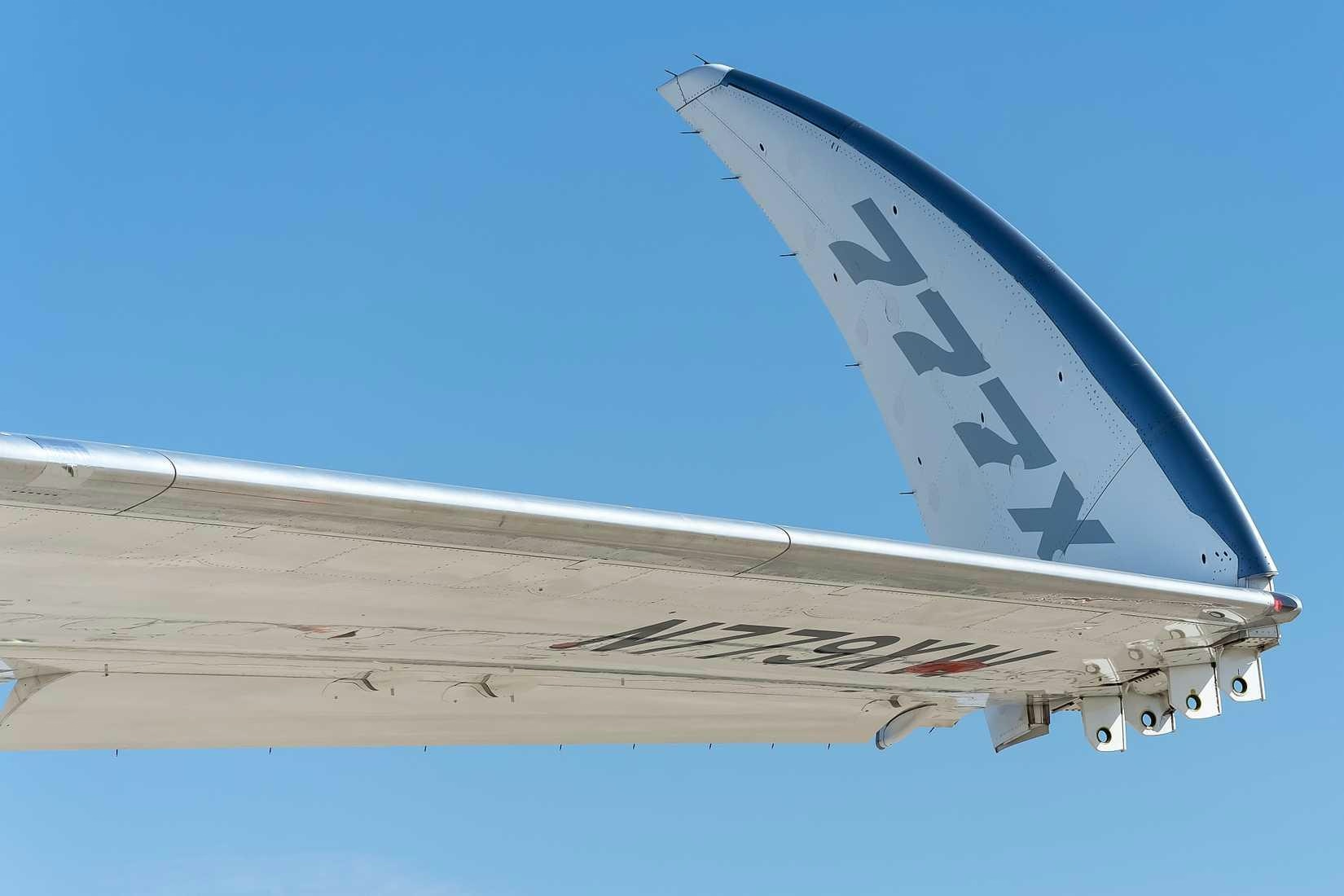
Airbus chose a cost-effective approach with the A330neo, targeting airlines seeking lower acquisition and operating costs while positioning the aircraft to compete with Boeing’s 787. Boeing, by contrast, embarked on a comprehensive redesign with the 777X, incorporating significant technological advancements. Central to this effort was the development of a new carbon fiber reinforced polymer wing, a project that alone has cost approximately $2 billion—an amount roughly equivalent to the entire development budget of the A330neo program.
Technological Innovations and Program Challenges
The 777X, now in its third generation, features a composite wing with a record-breaking span of 235 feet, 5 inches (71.75 meters), the widest ever produced for a Boeing airliner. To comply with airport infrastructure constraints, the aircraft incorporates folding wingtips that reduce the wingspan to 212 feet, 9 inches (64.85 meters) when on the ground. Powered by the General Electric GE9X—the largest commercial turbofan engine ever built—the 777X also boasts an updated Boeing Sky Interior and a cockpit design inspired by the 787. The 777-9 variant, measuring 251 feet, 9 inches (76.7 meters) in length, holds the distinction of being the longest commercial airliner ever produced.
Despite securing over 600 orders, the 777X program has experienced significant delays, with first deliveries now anticipated in 2027, seven years behind the original schedule. These setbacks have driven total development costs beyond $15 billion, and Boeing has yet to realize substantial revenue from the program. The complexity and expense associated with composite manufacturing technology have been major contributing factors to these challenges. Both Boeing and Airbus continue to invest heavily in accelerating composite production to meet evolving market demands.
Airbus has encountered its own difficulties with the A330neo, which, as a lighter refresh of its predecessor, has faced production delays primarily due to quality issues with the horizontal tail plane. Both manufacturers are navigating the challenges posed by advanced materials and the imperative to streamline manufacturing processes in an increasingly competitive environment.
Shifting Market Dynamics and Emerging Competitors
The competitive landscape of long-haul aviation is further evolving with the emergence of new players. China’s COMAC C919 recently completed its first international flight, signaling ambitions to challenge the longstanding Airbus-Boeing duopoly. However, the C919 remains heavily reliant on foreign components and has yet to secure certification from major aviation regulators, limiting its immediate impact on the global market.
Meanwhile, the era of the superjumbo appears to be waning. The Airbus A380, once the world’s largest passenger aircraft, is experiencing declining utilization as airlines grapple with rising maintenance costs and parts shortages. This trend underscores the industry’s shift toward more efficient, next-generation widebodies.
In this rapidly changing environment, both Boeing and Airbus face mounting pressure to deliver innovation while controlling costs, as new entrants and evolving airline requirements continue to reshape the future of long-haul aviation.

Etihad Airways Suspends Airbus A380 Flights on Key Route

Aditya Birla Group Seeks Approval for Aircraft Leasing in GIFT City

Qatar Airways Highlights Innovation and Connectivity at Arabian Travel Market 2026

Hong Kong's Five-Year Plan Includes Andrew Fan's Aircraft Parts Processing Hub Proposal

ACIA Aero Leasing Delivers ATR72-600 to Air Nostrum

RTX Appoints Jill Albertelli as Head of Pratt & Whitney

TAT Technologies Joins Beyond Aero Hydrogen Aircraft Program

AURAK Study Highlights Barriers to Air Taxi Adoption in Emerging Economies

Xiamen Air Selects Altitude for 787 Maintenance at Heathrow

Etihad and Swissport Extend Global Partnership
