Imagem

Desbloqueie 3x a receita em oportunidades de cotação com IA!

Participe de uma demonstração ao vivo de 30 minutos do Quoting Automation.

Tendências

Categories

Bordeaux Airport uses AI to reduce passenger waiting times
March 18, 2026By ePlane AI
Bordeaux Airport uses AI to reduce passenger waiting times
0
0
Bordeaux-Mérignac Airport
Artificial Intelligence
Passenger Flow Management

Bordeaux Airport Implements AI to Reduce Passenger Waiting Times

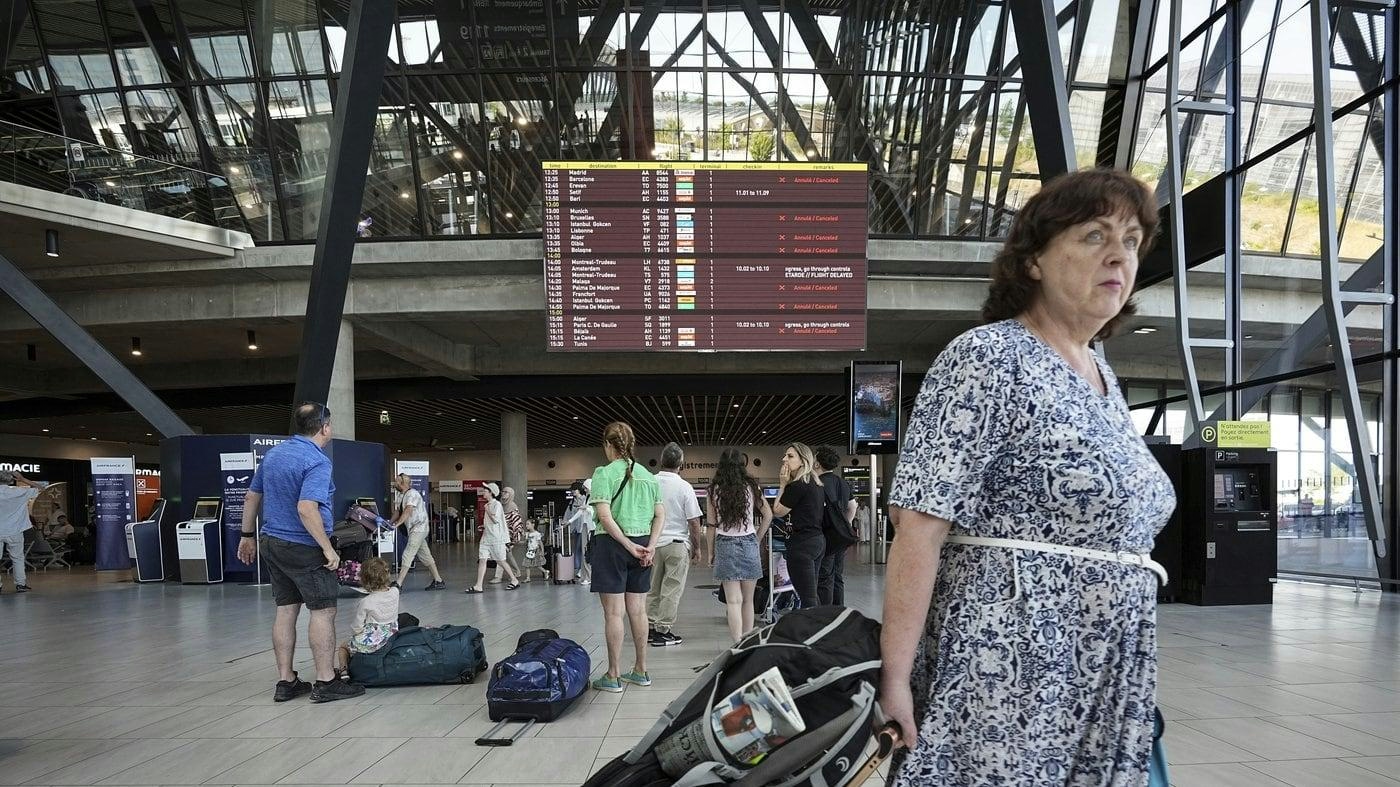
Bordeaux-Mérignac Airport has initiated a trial of advanced artificial intelligence technology aimed at improving passenger flow and minimizing waiting times within its terminal. Collaborating with Outsight, a specialist in real-time data solutions, the airport has deployed a ‘Physical AI’ system—referred to as a “motional digital twin”—to monitor and manage crowd movements more effectively.

Enhancing Operational Efficiency Through Real-Time Data

Since March 16, the AI system has been operational at strategic locations in Hall A, including security checkpoints. Utilizing 3D LiDAR sensors, the technology captures three-dimensional data on passenger movements, providing real-time insights into crowd density, queue lengths, and spatial utilization. This continuous stream of information allows airport personnel to dynamically adjust resource allocation, such as deploying additional security staff or opening extra service counters when necessary.

The system also generates alerts in instances of overcrowding or capacity breaches, enabling swift operational responses. This capability is particularly pertinent given the recent introduction of the Entry/Exit System (EES), which has increased security checks and contributed to longer wait times. Talel Jaouad, head of airport process operations at Bordeaux Airport, emphasized that the trial aims to deepen understanding of passenger flows to optimize resource deployment and enhance overall passenger satisfaction. The airport’s official statement highlighted that data-driven management of passenger movement is becoming a critical factor in operational performance.

Importantly, the AI technology ensures passenger privacy by providing only anonymized visualizations, with no personal identification recorded. This confidential data offers a comprehensive, real-time overview of terminal capacity, supporting efforts to prevent bottlenecks and reduce queue lengths at key points.

Broader Implications for the Aviation and Travel Industries

Bordeaux’s adoption of AI reflects a growing trend across the aviation sector, where airports increasingly rely on anonymized AI tools to optimize passenger throughput and improve operational efficiency. Raul Bravo, president and co-founder of Outsight, noted that airports like Bordeaux are integrating technologies that seamlessly fit into existing operations while delivering immediate, measurable benefits.

Handling approximately six million passengers annually, Bordeaux Airport plans to expand its capacity to 7.8 million by 2027. Serving over 80 destinations through 24 airlines, including planned growth from major carriers such as EasyJet, the airport is prioritizing the optimization of its current infrastructure. Passenger volumes currently stand at about 85 percent of pre-pandemic levels, underscoring the importance of efficient terminal management.

Beyond airport operations, the integration of AI is reshaping the wider travel industry. As AI-driven agents increasingly automate planning, booking, and operational tasks, traditional business models—particularly those of intermediaries like online travel agencies—may encounter mounting challenges. Recent volatility in sectors such as logistics and software has been linked to rapid AI advancements, and Bordeaux’s initiative may encourage competitors to adopt similar technologies to maintain their competitive edge. This evolution raises important questions about the future role of intermediaries and the overall landscape of travel services.

By leveraging AI, Bordeaux Airport seeks not only to improve passenger experience but also to position itself at the forefront of an industry undergoing rapid technological transformation, where innovation is essential for maintaining competitiveness and operational excellence.
More news
Aviation Connectors Market in Latin America and the Caribbean: Trends and Outlook

Aviation Connectors Market in Latin America and the Caribbean: Trends and Outlook

Aviation Connectors Market in Latin America and the Caribbean: Trends and Outlook The aviation connectors market in Latin America and the Caribbean is anticipated to reach a valuation between USD 180 million and USD 220 million by 2026, with a compound annual growth rate (CAGR) estimated at 5.5 to 7.0 percent through 2035. This expansion is primarily driven by ongoing fleet modernization initiatives and military upgrade programs throughout the region. Market Structure and Supply Chain Dynamics A significant majority—over 85 percent—of high-specification connectors, including MIL-DTL-38999, ARINC 600, and high-speed data types, are imported into the region. The United States and the European Union collectively supply more than 70 percent of this demand. This heavy reliance on imports exposes the market to considerable supply chain vulnerabilities, particularly amid export controls and extended lead times. Recent geopolitical tensions, notably conflicts in the Middle East, have compelled airlines to adopt enhanced fuel hedging strategies as a means to mitigate operational risks. Key Market Segments and Emerging Trends Within the aviation connectors market, commercial aviation maintenance, repair, and overhaul (MRO) activities account for approximately 45 to 50 percent of demand. Military and defense aviation represent 25 to 30 percent, while business and general aviation, alongside emerging sectors such as electric vertical takeoff and landing (eVTOL) aircraft and unmanned aerial vehicles (UAVs), constitute the fastest-growing segments. Demand for high-speed data connectors, including Category 6a avionics Ethernet and fiber optic termini, is increasing at an annual rate of 8 to 10 percent, surpassing growth in traditional circular and rectangular connector types. This surge is driven by the adoption of next-generation avionics and in-flight connectivity systems, particularly among regional carriers. Additionally, lightweight composite connectors and those with electromagnetic interference (EMI) and radio-frequency interference (RFI) shielding are increasingly specified for new aircraft and retrofit programs, reflecting heightened environmental standards and fuel efficiency requirements. Value Chain Challenges and Bottlenecks The regional electronics value chain encompasses specialty alloys, high-performance plastics, precision stamping, plating, and automated assembly processes. Despite this comprehensive infrastructure, several bottlenecks persist. Qualification cycles for new part numbers remain lengthy, often spanning 12 to 24 months. Regional testing capabilities for compliance with DO-160 and MIL-SPEC standards are limited, while sourcing specialized plating and materials continues to pose challenges. Furthermore, shortages of skilled labor—particularly in crimp contact termination and fiber optic polishing—impede the introduction of alternative suppliers and increase dependence on pre-terminated assemblies sourced from North America and Europe. Export controls under the International Traffic in Arms Regulations (ITAR) and Export Administration Regulations (EAR) further restrict access to certain defense-grade connectors. This regulatory environment compels military buyers to rely on U.S.-approved distributors, thereby limiting price competition and supplier diversity. Distribution Developments and Industry Responses Distributor-led design-in channels are expanding notably in Brazil and Mexico, where authorized distributors now hold between 30 and 40 percent of the region’s stocked connector inventory. This development is reducing lead times for MRO centers and smaller integrators that lack direct original equipment manufacturer (OEM) qualification. In response to workforce constraints and pricing pressures, industry players are pursuing strategic partnerships and investing in advanced air mobility technologies. Prominent companies such as Embraer and Bombardier are intensifying their focus on the Business Aviation and Advanced Air Mobility sectors to capitalize on emerging market opportunities. Outlook The aviation connectors market in Latin America and the Caribbean is positioned for steady growth despite ongoing challenges related to supply chain volatility, regulatory barriers, and skilled labor shortages. Market participants are adapting through strategies such as fuel hedging, distributor expansion, and investments in next-generation technologies, aiming to enhance resilience and seize new growth prospects within an evolving aviation landscape.
Spirit Airlines Shutdown Highlights Supply Chain Challenges

Spirit Airlines Shutdown Highlights Supply Chain Challenges

Spirit Airlines Shutdown Highlights Supply Chain Challenges The sudden cessation of Spirit Airlines’ operations on May 2, 2026, starkly illustrates the fragility of highly optimized supply chains when underlying assumptions shift more rapidly than organizations can adapt. Once a disruptive force in U.S. air travel, Spirit Airlines pioneered a low-cost, high-utilization model that expanded demand and pressured larger competitors. However, after failing to secure a crucial $500 million bailout, the airline abruptly halted all flights, leaving thousands of passengers stranded and scrambling for refunds or alternative travel arrangements. Competitors such as American Airlines and United Airlines have since stepped in to assist affected customers and offer employment opportunities to displaced Spirit employees. The Vulnerabilities of Lean Supply Chains Spirit’s business model was grounded in principles familiar to supply chain leaders across industries: high asset utilization, low unit costs, dense scheduling, and price-sensitive demand. These strategies, while effective in stable environments, rely heavily on lean inventories, consolidated supplier networks, and minimal slack. Such optimization drives efficiency but also exposes organizations to significant risk when variability or disruptions increase. The airline industry vividly exposes these vulnerabilities. Each aircraft, crew, and flight operates within a tightly sequenced network where a single delay, maintenance issue, or missed rotation can cascade into widespread disruptions. When multiple constraints accumulate, isolated problems escalate into systemic failures. This dynamic mirrors broader supply chain challenges, where a delay from a single supplier can halt production lines, shift allocations, and disrupt transportation and service delivery. What may begin as a minor disruption can quickly propagate, causing extensive network-wide consequences. Many organizations mistakenly interpret these challenges as issues of visibility, investing heavily in dashboards, alerts, and tracking systems. Spirit Airlines, for instance, maintained real-time awareness of aircraft locations and operational pressures. The core difficulty, however, lies in decision-making under constraint—when every available option involves trade-offs among cost, service quality, regulatory compliance, labor considerations, or customer impact. Supply chain leaders face similar dilemmas daily: whether to expedite freight at higher cost or accept delays, reallocate scarce inventory at the risk of disappointing key customers, or shift production and potentially create new bottlenecks elsewhere. These challenges are not merely data gaps but complex decision problems constrained by competing priorities. The future of supply chain performance will depend less on additional data visualization tools and more on improved decision architecture—systems and processes capable of rapidly evaluating trade-offs, understanding cross-functional impacts, and coordinating actions across planning, procurement, production, transportation, and customer service. Resilience Beyond Efficiency Spirit’s collapse also highlights the critical distinction between buffer and optionality. Buffer refers to extra capacity, inventory, or time built into a system, while optionality is the ability to reconfigure the network dynamically when plans falter. In supply chains, optionality might manifest as alternate suppliers, flexible routing, dynamic inventory positioning, or the capacity to shift production before disruptions escalate. The broader repercussions of Spirit’s liquidation will be felt across the travel industry and among consumers. The airline’s exit is likely to lead to higher fares and reduced travel options, particularly on routes where Spirit had historically offered lower prices. Additionally, uncertainty looms for holders of Spirit’s co-branded credit cards issued by Bank of America, as the future of these programs remains unclear. Ultimately, the downfall of Spirit Airlines serves as a cautionary example for supply chain leaders. Achieving resilience requires more than pursuing efficiency; it demands the capacity to adapt, reconfigure operations, and make difficult decisions in the face of unforeseen challenges.
Dangote Refinery Starts Supplying Jet Fuel to Ethiopian Airlines

Dangote Refinery Starts Supplying Jet Fuel to Ethiopian Airlines

Dangote Refinery Begins Direct Jet Fuel Supply to Ethiopian Airlines The Dangote Petroleum Refinery has commenced direct deliveries of aviation fuel to Ethiopian Airlines, marking a significant milestone in Nigeria’s emergence as a key player in the international jet fuel market. This development, initially reported by BusinessInsider, underscores the refinery’s expanding capacity to export refined petroleum products beyond Nigeria’s borders amid tightening global energy supplies and evolving geopolitical dynamics. Expanding Influence in Global Aviation Fuel Markets Industry analysts emphasize that Dangote Refinery’s entry into the international aviation fuel supply chain comes at a time of heightened global energy constraints, with ongoing geopolitical tensions affecting fuel availability and pricing worldwide. As one of the largest single-train refining facilities globally, Dangote is now exporting aviation fuel directly to Ethiopian Airlines, Africa’s largest carrier, demonstrating its competitiveness in the global petroleum products market. Recent figures reveal a remarkable 770% increase in Dangote Refinery’s exports, driven by rising global demand for aviation fuel and a strategic realignment of supply routes. This surge highlights the growing influence of African refining capacity in international markets, with the refinery operating at full capacity to meet both domestic requirements and the needs of multiple African and international customers. Implications for Regional Energy Security and Market Dynamics Experts suggest that direct supply agreements with major airlines such as Ethiopian Airlines could bolster regional energy security and potentially reduce operational costs for African carriers, many of which have historically depended on imported jet fuel. This initiative aligns with broader efforts to enhance intra-African trade and economic integration, aiming to decrease reliance on external fuel markets. Nevertheless, while the refinery enjoys record profit margins and expanded export opportunities, the concurrent rise in fuel prices has created challenges for Nigerian domestic airlines, threatening their operational sustainability. This disparity illustrates the complex market dynamics triggered by Dangote’s growing export capacity, as local carriers face increased costs even as the refinery solidifies its position as a key supplier in the global aviation fuel sector. The Dangote Refinery’s direct supply to Ethiopian Airlines not only establishes Nigeria as a net exporter of petroleum derivatives but also signals a notable shift in the global aviation fuel supply chain. African refining capacity is assuming an increasingly prominent role amid ongoing volatility in global energy markets.
Visa’s AI-Driven Commerce to Impact Tourism Spending in Brazil, Mexico, and Major Airlines

Visa’s AI-Driven Commerce to Impact Tourism Spending in Brazil, Mexico, and Major Airlines

Visa’s AI-Driven Commerce Set to Transform Tourism Spending in Brazil, Mexico, and Major Airlines Visa is advancing its position in the digital payments landscape with the introduction of AI-powered “Agentic Commerce,” a technology designed to revolutionize how travelers manage payments for flights, accommodations, and experiences. This innovation is particularly significant for key tourism markets such as Brazil and Mexico, as well as for major airlines including Delta, United, and Air France. The company’s recent financial results underscore its growing influence, with a record $11.2 billion in net revenue reported for the second quarter of 2026, marking a 17% increase year-over-year. Enhancing Travel Payments Through AI Agentic Commerce utilizes artificial intelligence to autonomously handle transactions, aiming to reduce friction for both travelers and service providers. By simplifying the booking process, enhancing security measures, and streamlining payments, this technology promises to improve the overall travel experience. For countries like Brazil and Mexico, which have experienced significant growth in inbound tourism, Visa’s AI-driven solutions could further boost their appeal by facilitating smoother and more efficient spending for international visitors. Airlines are also integrating these advancements to meet evolving customer expectations. Delta, United, and Air France have begun adopting Visa’s AI systems to optimize booking processes and enhance passenger experiences, reflecting a broader industry trend toward leveraging technology to improve service delivery. Challenges Amidst Opportunities Despite the promising potential of AI-driven commerce, several challenges persist that may influence tourism spending in these regions. Economic uncertainties, including a recent decline in consumer spending and fluctuations in oil prices, are contributing to an unpredictable environment for travelers and the tourism sector alike. Additionally, restrictive immigration policies, as noted in recent industry reports, could further constrain international travel flows. Brazil is actively seeking to increase long-haul flight connections from Europe and Asia but faces intense competition from other regions. The Asia-Pacific market, for instance, recorded stronger tourism growth in 2025, supported by relaxed visa regulations and aggressive promotional efforts. Meanwhile, Mexico’s tourism industry is navigating security concerns in the lead-up to the FIFA World Cup, factors that may affect visitor numbers and spending behavior. These complexities highlight the necessity for Visa’s AI initiatives to remain adaptable in the face of shifting consumer preferences, geopolitical risks, and competitive pressures from other global tourism hubs. While Agentic Commerce holds considerable promise for enhancing tourism spending and the travel experience, its success will depend on how effectively these external challenges are managed. As the global tourism sector continues to evolve, Visa’s AI-driven innovations are setting new benchmarks for digital payment systems. The coming years will be critical in determining how autonomous commerce reshapes not only payment methods but also the broader dynamics of international travel and tourism.
Spirit Airlines Begins Winding Down Operations, Cancels All Flights

Spirit Airlines Begins Winding Down Operations, Cancels All Flights

Spirit Airlines Halts Operations, Cancels All Flights Amid Failed Rescue Negotiations Spirit Airlines has commenced an immediate and orderly wind-down of its operations, canceling all flights as negotiations with the federal government over a potential $500 million rescue package remain unresolved. The airline’s final flight, number 1833 from Detroit to Dallas, landed shortly after midnight on Saturday, bringing an end to Spirit’s 34-year tenure as a prominent ultra-low-cost carrier. Impact on Passengers and Employees In a statement posted on its website, Spirit informed customers that all flights had been canceled and that customer service was no longer available. The airline reported having transported more than 50,000 passengers in the preceding 24 hours and is now focused on returning over 1,300 crew members to their home bases. The sudden shutdown has left thousands of travelers scrambling to find alternative arrangements. With the broader airline industry operating near full capacity, many passengers are expected to face difficulties securing refunds or available seats on other carriers. Competitors such as American Airlines, Southwest Airlines, and Frontier Airlines have announced discounted “rescue fares” to assist stranded Spirit customers. However, the high demand for these limited seats may restrict their ability to accommodate all affected travelers. A Spirit spokesperson acknowledged that most employees learned of the closure through media reports, as the company moved swiftly to cease operations. According to Airline Data Inc., Spirit had been scheduled to operate 277 flights on Saturday, all of which were canceled. Background and Industry Implications The Wall Street Journal first reported Spirit’s plans to cease operations early Saturday. On the previous day, former President Donald Trump indicated that an announcement regarding a possible bailout was imminent but stressed that any deal would need to be favorable. “I’d like to save the jobs,” Trump said, noting that a final proposal had been offered to the airline. Spirit Airlines declined to comment on the ongoing negotiations, maintaining on Friday that it was “operating as usual.” However, sources familiar with the situation told ABC News that the airline was at risk of exhausting its cash reserves within days. Spirit, widely recognized for pioneering the ultra-low-cost carrier model in the United States, leaves a significant void in the market. Larger legacy carriers have increasingly adopted similar pricing strategies, intensifying competition. Industry analysts warn that Spirit’s exit could reduce competition, potentially leading to higher fares and fewer options for budget-conscious travelers. As the airline industry contends with the fallout, other carriers have pledged support for affected passengers. American Airlines has committed to capping fares on overlapping routes, while United and Frontier have also promised assistance to Spirit customers seeking to continue their travel plans. Spirit’s closure marks a pivotal moment in the U.S. airline landscape, introducing uncertainty for both employees and travelers as the industry adjusts to the loss of a major low-cost competitor.
Airbus Addresses Delivery Delays of A320neo Aircraft

Airbus Addresses Delivery Delays of A320neo Aircraft

Airbus Addresses Delivery Delays of A320neo Aircraft Production Challenges and Quality Setbacks Airbus is intensifying efforts to realign its aircraft delivery schedule with production rates by mid-2026, following a series of disruptions affecting its flagship A320neo program. The European aerospace manufacturer has encountered a growing disparity between aircraft output and customer handovers, driven by a combination of manufacturing defects, administrative delays, and persistent engine supply constraints. A significant factor contributing to the delivery shortfall has been a quality issue involving forward fuselage panels on A320neo-family jets. Deviations in panel thickness necessitated extensive inspections and rework, compelling Airbus to temporarily withhold several aircraft that were otherwise ready for delivery. This measure slowed the pace of handovers and created a backlog. Administrative complications further exacerbated the situation, particularly for nearly 20 aircraft destined for China. Regulatory hurdles delayed deliveries to Chinese operators through key hubs such as Shanghai Pudong International Airport. Although deliveries to China have since resumed, the earlier hold-up had a notable impact on Airbus’s quarterly performance. Financial Impact and Inventory Buildup The imbalance between production and deliveries has led to a sharp increase in Airbus’s finished aircraft inventory. In the first quarter of 2026, inventory levels surged by €5.2 billion, reaching €46.9 billion. This rise largely reflects undelivered aircraft awaiting rework or regulatory clearance. The inventory buildup contributed to an 11% decline in commercial aircraft revenues for the quarter, highlighting the financial repercussions of the delivery delays. Despite these challenges, Airbus leadership interprets the inventory increase as an indication that production ramp-up efforts are advancing, even as delivery bottlenecks persist. The company is actively addressing the fuselage panel issue and working to clear the backlog, with the goal of delivering most affected aircraft in the coming months. Market Reactions and Outlook The delivery disruptions have had ripple effects across the aviation industry. Airlines such as Volaris have paused fleet expansion plans until Pratt & Whitney engine supplies stabilize, underscoring the broader impact of supply chain constraints. Meanwhile, competitor Boeing reported a nine-year high in deliveries this February, intensifying competitive pressure on Airbus to recover. Looking forward, Airbus’s ability to meet its 2026 target of approximately 870 aircraft deliveries hinges on resolving technical issues and securing reliable engine supplies. The company aims to restore alignment between production and deliveries by the end of June but acknowledges that the dynamic operating environment—including potential geopolitical risks in the Middle East—could influence future handovers. As Airbus strives to close the gap between output and deliveries, the coming quarters will be pivotal in determining whether the manufacturer can regain delivery momentum and stabilize its financial performance.
Qantas Reflects on Its $20 Billion Boeing Order

Qantas Reflects on Its $20 Billion Boeing Order

Qantas Reflects on Its $20 Billion Boeing Order Historical Context: The 777 Decision Qantas, the Australian flag carrier, played a significant role in the development of the Boeing 777, collaborating with Boeing alongside seven other major airlines. Despite this involvement, Qantas notably never placed an order for the 777 or its successor, the 777X. This decision has been a subject of considerable debate within the aviation industry and has even drawn reflection from former Qantas CEO Alan Joyce. Instead, in 2000, under then-CEO James Strong, Qantas opted for a mixed fleet strategy that favored Airbus widebodies alongside enhanced Boeing 747 variants. The airline placed a landmark order comprising seven Airbus A330-200s, six A330-300s, twelve Airbus A380-800s (then known as the A3XX), and six Boeing 747-400ERs. This move marked a strategic pivot from Qantas’s traditionally Boeing-dominated fleet, which included 737s, 747s, and 767s, and shaped its long-haul operations for decades. Market and Operational Considerations At the time of Qantas’s 2000 order, the Boeing 777 family was still emerging, with the highly successful 777-300ER only recently introduced and yet to prove its operational and economic advantages. The aircraft’s later acclaim, largely driven by the fuel-efficient GE90-115B engine, was not fully apparent when Qantas made its fleet decisions. Concurrently, the collapse of Ansett Australia created an opportunity for Qantas to expand its domestic network, necessitating aircraft that could serve both domestic and regional Asian routes effectively. The Airbus A330-200 and A330-300 models offered the right balance of capacity and fuel efficiency for medium-haul routes, outperforming the 777-200ER in these respects and providing greater operational flexibility across Qantas’s network. For high-capacity, long-haul trunk routes such as Sydney to London, Hong Kong, Singapore, and Los Angeles, Qantas continued to rely on Boeing 747s, which remained the backbone of its ultra-long-haul fleet. Regulatory and Economic Factors Regulatory challenges also influenced Qantas’s fleet choices. Although the Boeing 777 entered service with ETOPS 180 approval from the U.S. Federal Aviation Administration, Australia’s Civil Aviation Safety Authority imposed more stringent requirements, including case-by-case certification and higher compliance costs. These regulatory hurdles diminished the attractiveness of twin-engine aircraft like the 777 for ultra-long-haul operations at that time. Economic considerations, including fuel efficiency and operational flexibility, further reinforced Qantas’s preference for a mixed fleet approach. Current Challenges and Future Outlook Qantas’s recent $20 billion order with Boeing is now under renewed scrutiny amid evolving geopolitical and economic pressures. Heightened U.S.-China tensions have disrupted Boeing’s delivery schedules and order book in the Asia-Pacific region, potentially complicating Qantas’s fleet renewal plans. Additionally, rising jet fuel prices, exacerbated by ongoing conflicts in the Middle East, are placing further strain on airline profitability and may influence market dynamics and competitor strategies. Despite these headwinds, Boeing’s improving financial position, with forecasts indicating positive free cash flow by 2026, may provide some reassurance to Qantas and its stakeholders as the airline navigates a complex global environment and reflects on its pivotal fleet decisions.
China’s Y-20B Cargo Aircraft Now Powered by WS-20 Engines, Enhancing Long-Range Airlift

China’s Y-20B Cargo Aircraft Now Powered by WS-20 Engines, Enhancing Long-Range Airlift

China’s Y-20B Cargo Aircraft Upgraded with WS-20 Engines, Boosting Strategic Airlift Capabilities China has achieved a significant milestone in its military aviation sector with the full integration of domestically developed WS-20 high-bypass turbofan engines into the Y-20B strategic transport aircraft. According to China Central Television (CCTV) News, this upgrade marks a decisive move away from reliance on imported engines, enhancing the aircraft’s long-range airlift capabilities. The Y-20B recently completed a mission repatriating the remains of Chinese People’s Volunteers martyrs from South Korea, demonstrating its operational readiness with the new powerplant. Enhanced Performance and Technical Advancements The WS-20 engines, characterized by their larger diameter and higher bypass ratio, deliver improved fuel efficiency, extended operational range, and increased payload capacity. These enhancements address previous performance limitations, enabling the Y-20B to achieve a maximum takeoff weight of approximately 220 tons and carry payloads up to 66 tons—sufficient to transport a domestically produced main battle tank. The WS-20 also offers greater thrust compared to the earlier WS-18 engines, contributing to improved flight safety, reliability, and overall mission effectiveness. In addition to the engine upgrade, the Y-20B has undergone significant improvements in its flight control and avionics systems. These combined advancements have elevated the aircraft’s technical standards to a world-class level, according to military affairs commentator Fu Qianshao, who described the Y-20B as China’s most advanced strategic transport aircraft. The visible hallmark of the larger WS-20 engines distinguishes the Y-20B from earlier, slimmer variants. Versatility and Operational Deployment Beyond its primary role as a cargo transporter, the Y-20B is designed for versatility, with potential applications in special mission roles such as electronic warfare, airborne command, psychological operations, and early warning. Since its public debut during the military parade in Beijing on September 3, 2025, commemorating the 80th anniversary of the end of World War II, the aircraft has rapidly progressed through certification, operational training, and combat readiness phases. It has become a core component of China’s strategic airlift fleet within less than a year. The Y-20 series has demonstrated operational capability across diverse environments, including Southeast Asia, the Middle East, and Europe. It has been employed in high-altitude emergency transport and material delivery missions, proving adequate for China’s intercontinental strategic projection, emergency support, and border defense requirements. Geopolitical and Market Context The Y-20B’s advancements occur amid a complex global aerospace landscape shaped by ongoing U.S.-China tensions. These geopolitical dynamics have introduced challenges that may impact Boeing’s delivery schedules and order volumes in the Asia-Pacific region. The market for long-range airlift aircraft remains highly competitive, with manufacturers such as Bombardier and Gulfstream Aerospace reporting strong demand and deliveries. In response, U.S. and European aerospace firms are anticipated to accelerate technological innovation to sustain their positions in the global defense and business aviation markets. As the Y-20B enters full operational service, its enhanced capabilities are poised to influence both the regional military balance and the broader international aerospace industry.
American Airlines Considers Larger Aircraft and More Frequent Flights on Key Routes

American Airlines Considers Larger Aircraft and More Frequent Flights on Key Routes

American Airlines Considers Larger Aircraft and Increased Flight Frequency on Key Routes American Airlines is undertaking a strategic review of its fleet composition and route network to better align with the recovering demand in the aviation sector and to enhance its competitive positioning. The airline is focusing on addressing capacity shortfalls on high-traffic routes by optimizing fleet deployment and improving operational efficiency. Central to this effort is the potential replacement of smaller regional jets with larger narrow-body aircraft such as the Airbus A321neo, alongside the introduction of wide-body planes like the Boeing 787 Dreamliner on transcontinental flights to increase passenger capacity. Competitive Pressures and Fleet Expansion This strategic reassessment comes amid intensifying competition from Delta Air Lines and United Airlines, both of which have been expanding their wide-body fleets aggressively to secure a larger share of profitable international markets. American’s comparatively slower acquisition of new wide-body aircraft has raised concerns about its ability to sustain growth abroad and maintain market share on key international routes. In an effort to bolster its European presence, American recently announced new services from Philadelphia to Budapest and Prague. Nonetheless, industry analysts remain skeptical about whether these route additions will sufficiently counterbalance the advances made by its rivals. The competitive environment has been further complicated by reports suggesting that United’s CEO has proposed a potential merger with American Airlines. Such a consolidation would likely encounter rigorous regulatory scrutiny due to fears of diminished competition, increased fares, and reduced consumer choice. Operational Optimization and Strategic Planning Internally, American Airlines is closely monitoring the allocation of takeoff and landing slots at its hub airports to maximize asset utilization. The airline aims to enhance daily aircraft deployment and streamline transfer connections to improve overall efficiency. This capacity evaluation involves coordinated efforts across network planning, fleet management, and revenue optimization divisions. Final decisions will be informed by a thorough analysis of market trends and financial performance metrics. As American Airlines deliberates its next strategic moves, industry observers and travelers alike are watching closely. The airline’s ability to adapt effectively will be pivotal in maintaining its standing within an increasingly competitive global aviation market.
NTSB Finds Engine Failure on United Flight 1382 Led to Emergency Evacuation in Houston

NTSB Finds Engine Failure on United Flight 1382 Led to Emergency Evacuation in Houston

NTSB Identifies Engine Failure and Communication Breakdown in United Flight 1382 Emergency Evacuation A routine departure from Houston’s Bush Intercontinental Airport on February 2, 2025, was abruptly disrupted when United Airlines Flight 1382 experienced a critical engine failure, forcing an emergency evacuation. The National Transportation Safety Board (NTSB) has released a detailed report attributing the incident to undetected corrosion in the aircraft’s right engine, compounded by communication failures that escalated passenger panic and complicated the evacuation process. Engine Failure and Maintenance Concerns As Flight 1382 accelerated for takeoff, a loud bang signaled a catastrophic failure in the right engine. The NTSB investigation revealed that extensive corrosion, which had gone unnoticed during prior maintenance inspections, was the root cause of the engine malfunction. This discovery has raised significant concerns regarding the adequacy of current maintenance oversight and inspection protocols. The findings may have far-reaching implications for airline operational standards and insurance policies, prompting calls within the industry for more rigorous preventive maintenance measures. Breakdown in Communication and Evacuation Challenges Inside the cabin, the situation rapidly deteriorated as a passenger’s mistaken shout of “fire” incited widespread panic. Despite crew instructions to remain seated, many passengers stood, retrieved carry-on luggage, and crowded the aisles in a rush toward the exits. This noncompliance severely hindered the evacuation efforts. Compounding the chaos, a flight attendant initiated the evacuation without activating the evacuation alarm, leaving the cockpit crew unaware that passengers were already disembarking. Notably, one engine remained operational during the evacuation, creating additional hazards. When the rear door was opened, the evacuation slide deployed directly into the exhaust of the running engine. The force of the exhaust caused the slide to whip violently and fail after three passengers had used it. Consequently, the crew was forced to block that exit and direct passengers to alternative doors. Firefighters arrived promptly and the remaining engine was eventually shut down. Despite the challenges, all 112 individuals on board evacuated safely without injury. Broader Industry Implications The NTSB’s findings highlight critical vulnerabilities not only in aircraft maintenance but also in emergency communication and passenger management during crises. The presence of undetected corrosion has intensified scrutiny of maintenance practices across the aviation sector. Industry analysts anticipate that United Airlines and other carriers may face increased regulatory oversight and potential insurance repercussions. In response, competitors are expected to implement enhanced safety protocols and reinforce public confidence through transparent communication. This incident underscores the urgent need for improved coordination between cabin crew and flight deck during emergencies, as well as a renewed emphasis on preventive maintenance strategies, particularly in detecting corrosion, to safeguard passenger safety industry-wide. The full NTSB report is available for those seeking comprehensive details on the investigation.
line