
Orquestre insights de IA em ações

Tendências
Categories
Business Aviation Draws Investors as Aerospace M&A Deals Surge
Business Aviation Draws Investors as Aerospace M&A Deals Surge
The aerospace and defense industry is witnessing an unprecedented surge in mergers and acquisitions (M&A), marking its most active capital markets cycle in decades. According to a recent report by Jefferies, global aerospace and defense M&A transactions increased by 41% in 2025, reaching a record total of 532 deals. This momentum is largely driven by heightened defense priorities in the United States and internationally, which have intensified demand for next-generation technologies and specialized capabilities. Alongside this, the initial public offering (IPO) market has reopened for aerospace and defense companies, while private equity investment continues to gain traction across the sector.
The defense market, as tracked by the ITA ETF, has delivered returns exceeding 38% this year, significantly outperforming the broader S&P 500 index. Although growth within aerospace and defense has been uneven in recent years, certain segments such as maintenance, repair, and overhaul (MRO) firms, fixed base operators (FBOs), and aftermarket suppliers have demonstrated strong performance during the post-pandemic recovery. Industry leaders like Signature Aviation and Atlantic Aviation now boast enterprise valuations approaching or surpassing $10 billion.
Business Aviation’s Growing Investment Appeal
Once regarded as a niche segment, business aviation has emerged as a compelling area of interest for private equity funds, family offices, and growth equity investors seeking enhanced risk-adjusted returns. Historically overshadowed by commercial airlines and large defense contractors in institutional finance, the sector’s profile has shifted markedly over the past five years.
A principal factor behind this transformation is the expansion of business aviation’s addressable market. The COVID-19 pandemic prompted many travelers to shift toward private aviation, a trend that has largely persisted as a significant portion of these customers have not returned to commercial flights. The inherent advantages of private travel—namely productivity, privacy, and flexibility—have cultivated a larger and more resilient customer base for operators and infrastructure providers alike.
Data indicates that fractional ownership remains the only major business aviation category exhibiting consistent growth since the pandemic, while traditional charter services and whole-aircraft ownership have experienced modest declines. For investors, fractional operators are particularly attractive due to their recurring revenue streams, multi-year contracts, and predictable aircraft utilization. These characteristics contribute to a more stable financial profile and reduce valuation uncertainties.
Infrastructure and Technology Attract Sustained Capital
Investors seeking stable returns are increasingly focusing on infrastructure-like businesses within the aerospace ecosystem. Entities such as FBOs, MRO providers, avionics shops, parts distributors, and aviation software platforms generate revenue independent of which aviation brand dominates market share. Their ability to serve aircraft across diverse ownership structures and usage models makes them appealing targets for long-term investment.
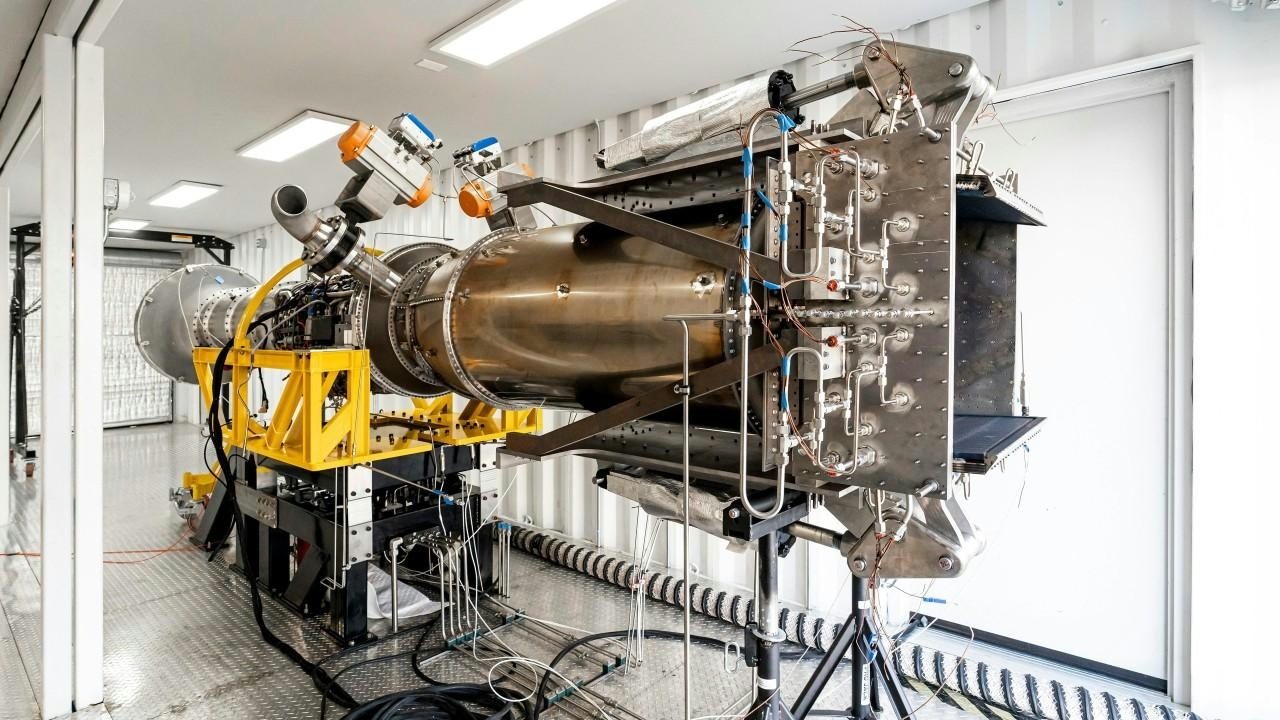
Recent M&A transactions, including Arcline Investment Management’s acquisition of Continental Aerospace Technologies, highlight the growing investor appetite in these segments. The industry is also adapting to technological advancements, such as the development of solid-state batteries for electric flight, exemplified by Helios Horizon’s demonstrator aircraft. The shift toward smaller, more adaptable, and cost-efficient aerospace and defense systems presents both opportunities and challenges for investors navigating this evolving landscape.
Challenges and Market Outlook
Despite the sector’s robust growth, business aviation faces operational challenges in managing surges in demand, particularly during major global events. The upcoming 2026 FIFA World Cup, hosted across 16 U.S. cities, is expected to significantly increase aviation activity, testing the capacity and responsiveness of operators and infrastructure providers. Competitors are responding by adopting new technologies and innovative business models to maintain a competitive edge in this rapidly changing market.
As nearly every major segment of aerospace and defense participates in the current upturn, business aviation stands out as a dynamic sector where institutional capital is uncovering fresh opportunities. What was once a niche market is now becoming a central focus for aerospace investment, reflecting broader shifts in industry priorities and investor strategies.
Linking Ireland’s Aircraft Leasing Industry to Elite Football
Airbus A380 at Tarbes Yields Over 90% of Parts for Active Fleets Through Careful Dismantling
BBN Airlines Becomes IATA Member

FAA Orders Breeze Airways and Delta to Inspect Airbus A220 Fuel Hoses

Philippine Aviation Navigates Expansion and Costs Amid Fuel Price Volatility
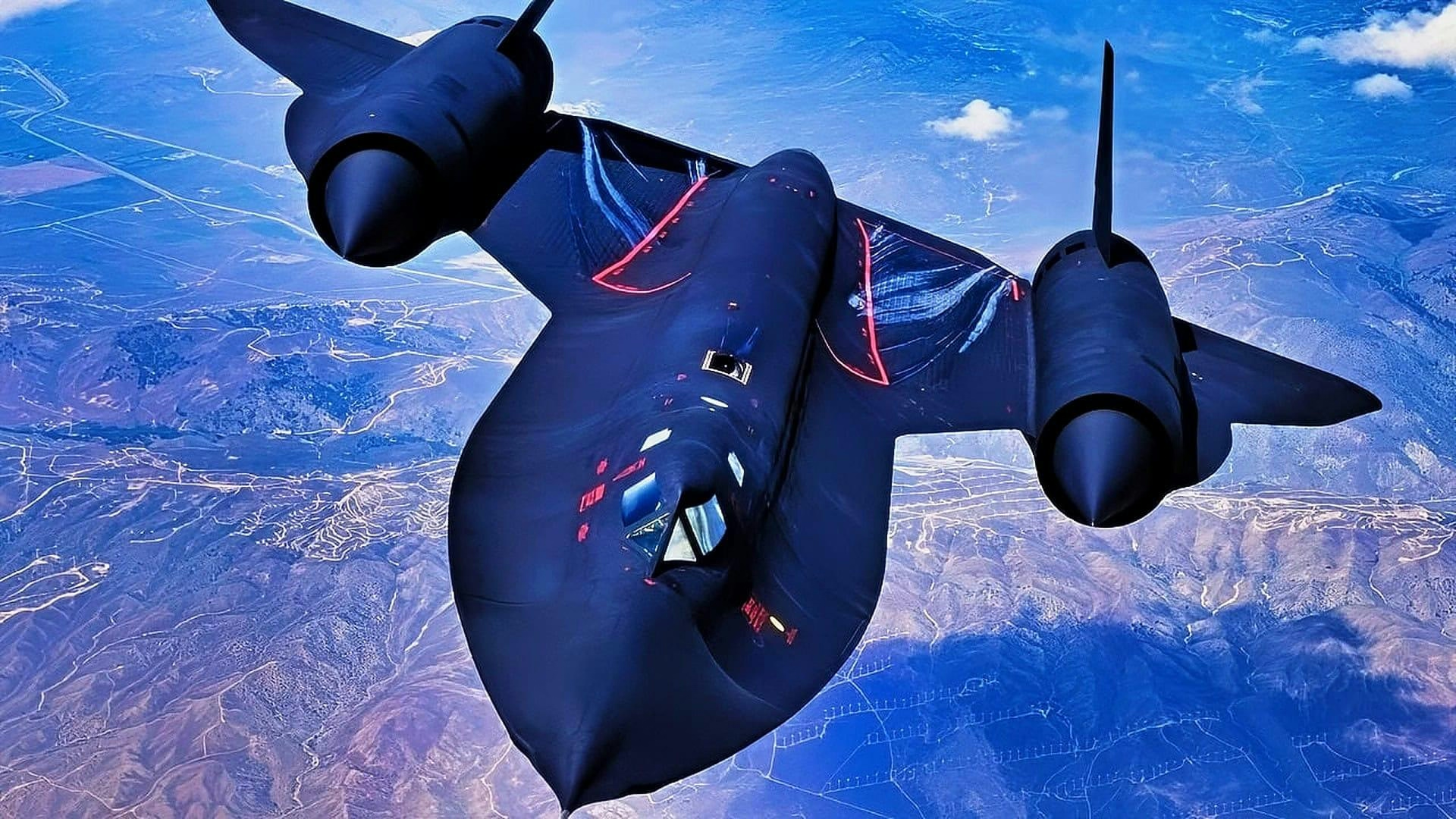
On April 26, 1971, an SR-71 Blackbird Flew Over 15,000 Miles in 10.5 Hours, Limited by Liquid Nitrogen Supply

Boeing 747 Airframe Valued Less Than One Landing Gear Component

The Rear-Fan Engine Behind the Crash of the World's Fastest Airliner

Morphing Aircraft Skin Improves Safety and Fuel Efficiency

BRICS Nations Commit to Enhanced Cooperation on Sustainable Transport and Green Aviation
