Imagem

Orquestre insights de IA em ações

Entre na lista de espera da AeroGenie hoje mesmo!

Tendências

Categories

Chapman Freeborn Delivers Engine Stand to Johannesburg
May 18, 2026By ePlane AI
Chapman Freeborn Delivers Engine Stand to Johannesburg
0
0
Chapman Freeborn
Engine Stand Transport
Sustainable Logistics

Chapman Freeborn Delivers Engine Stand to Johannesburg Amid Rising Emphasis on Sustainable Logistics

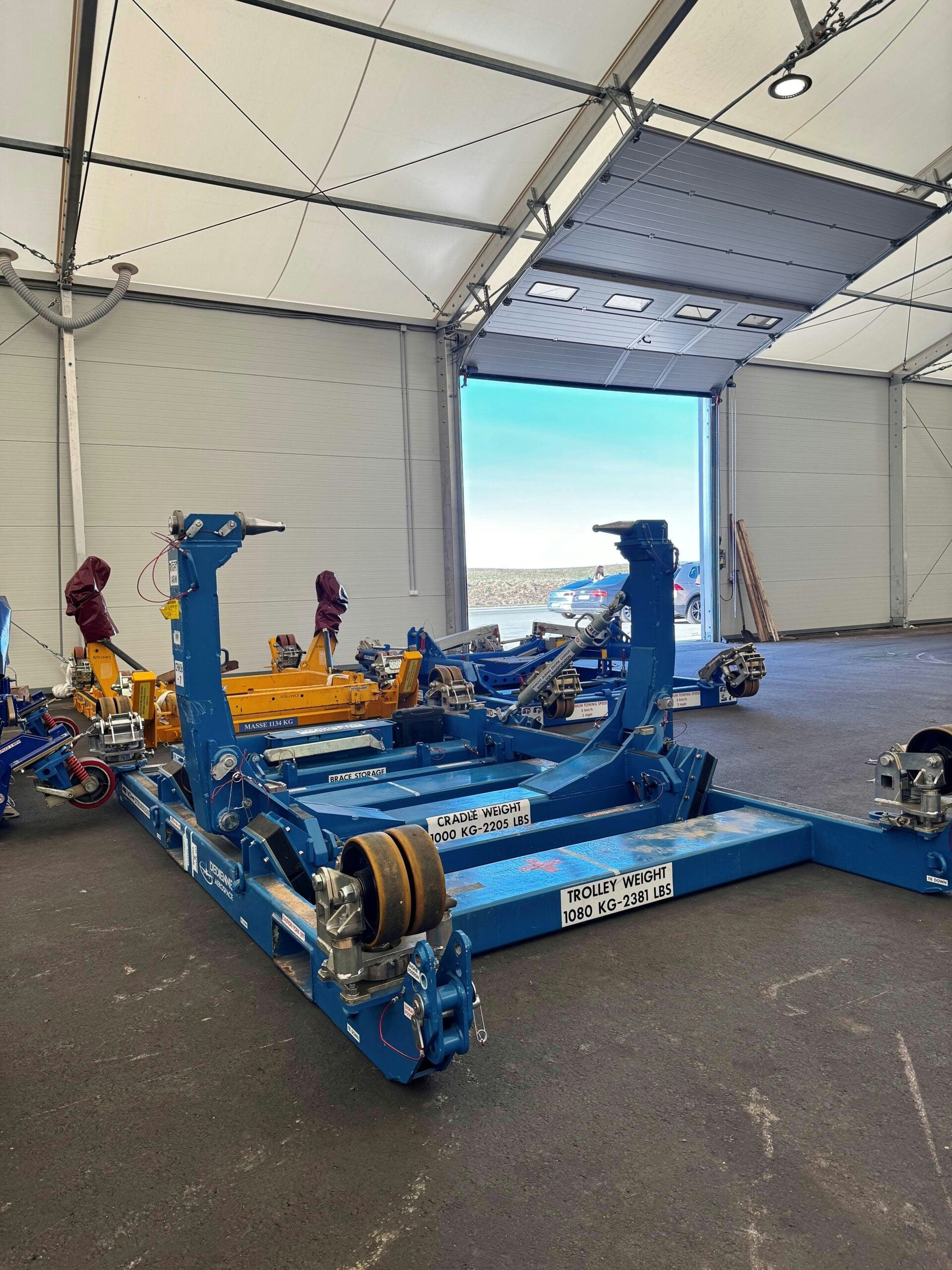
Chapman Freeborn, a global air charter specialist operating under Avia Solutions Group, has successfully completed the urgent delivery of a CFM56-7B engine stand to Johannesburg. This operation, conducted in partnership with EngineStands.com—a leading provider of engine stand leasing—was finalized at the end of April. The mission involved transporting the engine stand from storage directly to a customer site in Johannesburg within a stringent deadline, highlighting the increasing demand for rapid and reliable logistics solutions within the aviation sector.

Coordinated Effort to Meet Tight Deadlines

To adhere to the tight timeframe, Chapman Freeborn meticulously coordinated the shipment by securing the necessary cargo capacity and managing the entire air cargo operation. EngineStands.com supplied the specialized equipment, while Chapman Freeborn ensured its timely arrival. This collaboration underscores the capacity of companies within Avia Solutions Group to leverage their combined aviation assets and cargo expertise, delivering tailored solutions for clients facing time-sensitive logistical challenges.

Sustainability at the Forefront of Logistics Operations

This project also reflects broader industry trends where efficiency and sustainability have become central priorities. As global scrutiny intensifies regarding the environmental impact of air cargo operations, logistics providers face mounting pressure to adopt greener practices. Chapman Freeborn has demonstrated its commitment to sustainability through initiatives such as its partnership with CleanHub, which focuses on reducing emissions and enhancing operational efficiency.

Competitors within the sector are similarly advancing their sustainability efforts and refining logistics strategies to maintain competitiveness in a market increasingly driven by environmental responsibility. Market responses indicate that customers and stakeholders are paying close attention to the environmental footprints of logistics companies, prompting a shift toward more sustainable and transparent operations.

By successfully delivering the engine stand to Johannesburg while navigating these evolving industry expectations, Chapman Freeborn and EngineStands.com exemplify how logistics providers can effectively balance operational demands with the growing imperative for sustainability.

More news
New EDM Tool Enhances Fastener Removal in Aerospace Maintenance

New EDM Tool Enhances Fastener Removal in Aerospace Maintenance

New EDM Tool Enhances Fastener Removal in Aerospace Maintenance Removing fasteners from aircraft has long been a routine yet demanding aspect of aerospace maintenance. The process is often complicated by corroded bolts and flush rivets that resist conventional removal techniques. Traditionally, technicians have relied on drills, sometimes spending up to five minutes on a single stubborn fastener—a time-consuming inefficiency that multiplies across components containing hundreds of rivets. Perfect Point seeks to transform this process with its E-Drill system, a handheld electrical discharge machining (EDM) device specifically designed for aerospace fastener removal. Unlike traditional drills that physically bore through metal, the E-Drill employs electrical discharge technology to cut a precise circle in the center of the fastener. This method produces no shavings, heat, or debris and typically completes the task in mere seconds per fastener. Precision and Efficiency in Operation The E-Drill operates with remarkable simplicity and precision. A technician aligns the tool over the fastener, where a vacuum system secures it firmly in place. A built-in magnifying glass assists with accurate alignment, and the device is pre-programmed for specific fastener types to ensure precise cutting depth. Once positioned, the operator initiates the cut via a trigger. A green light signals completion, and the resulting cut creates a weak point that allows an air punch to remove the fastener cleanly in two pieces. Nils Besvold, Perfect Point’s Marketing Manager, highlighted the advantages of the E-Drill at MRO Americas in April, stating, “If you’re using a drill, the bit can walk off-center, elongate the hole, or damage the surrounding structure. [The E-Drill] is quick, clean, and there’s much less damage because it’s so accurate and controllable.” Integration and Industry Adoption The E-Drill is compatible with a variety of fastener types, including aluminum, titanium, Hi-Loks, and standard rivets commonly found on both commercial and military aircraft. Several major industry players and maintenance training institutions, such as Tulsa Tech, have already incorporated the system into their operations and curricula. Introducing new technology into established maintenance routines, however, presents challenges. Integrating the E-Drill with existing workflows, training personnel to adapt to the new tool, and ensuring consistent performance across diverse fastener types and conditions remain critical hurdles. Some maintenance crews, accustomed to traditional drilling methods, may initially approach the device with skepticism. Nonetheless, the promise of increased efficiency and reduced aircraft downtime is expected to encourage broader adoption. Market Context and Industry Response Perfect Point’s innovation emerges amid an aviation industry grappling with rising fuel prices, which exert pressure on maintenance budgets and demand. The potential for faster, cleaner fastener removal offers operators a means to mitigate these pressures by reducing labor hours and turnaround times. Competitors are anticipated to respond by developing their own advanced removal tools or enhancing existing products to maintain market share. Meanwhile, Perfect Point continues to expand its product line, including the S-Blaster for spot coating removal, alongside comprehensive training programs through its E-Drill Academy. For an industry long reliant on traditional drilling, the E-Drill represents a significant advancement—transforming a five-minute task into a seven-second operation and establishing a new benchmark for efficiency in aerospace maintenance.
First Macao Forum on Low-Altitude Economy and Unmanned Systems Held in 2026

First Macao Forum on Low-Altitude Economy and Unmanned Systems Held in 2026

First Macao Forum on Low-Altitude Economy and Unmanned Systems Held in 2026 Strategic Vision and Government Initiatives The inaugural "2026 Macao Forum on Low-Altitude Economy and Innovation Development of Full-Space Unmanned Systems" took place on May 15 at the Grand Hyatt Macau, attracting nearly 300 participants including government officials, industry leaders, and academic experts from mainland China, Macao, and abroad. Organized under the guidance of the Economic and Technological Development Bureau of the Macao SAR Government and the Statistics Bureau of the Guangdong-Macao In-Depth Cooperation Zone in Hengqin, the forum underscored Macao’s ambition to become a pivotal hub for unmanned systems and low-altitude economic innovation. Central to the discussions was the positioning of the low-altitude economy as a strategic pillar within China’s "15th Five-Year Plan" and a key driver for Macao’s "1+4" economic diversification strategy alongside Hengqin-Macao integration efforts. Officials outlined plans to develop a city-level, full-space unmanned system in Hengqin, emphasizing cross-border logistics and regulatory harmonization to establish a scalable "Hengqin Model." The Macao SAR Government has established a dedicated working group tasked with streamlining regulations, expediting approval processes, and advancing pilot projects in drone transportation. Aviation industry leaders committed to addressing core technical challenges and enhancing safety standards, thereby supporting the broader industrial growth of the Greater Bay Area. Global Perspectives and Industry Insights The forum featured over 80 experts from the Greater Bay Area and international representatives from countries including Italy, Germany, Spain, Syria, and Colombia. Fourteen keynote speeches explored a range of topics such as unmanned system industry standards, European drone applications in emergency medical services, aviation equipment management policies, and the globalization of the low-altitude economy. These presentations highlighted the rapidly evolving global landscape of unmanned systems. Particular attention was given to the integration of advanced unmanned technologies, including unmanned ground vehicles and mine countermeasures, with Textron Systems’ recent developments cited as illustrative of trends in defense modernization and logistics innovation. The discussions reflected a growing recognition of the strategic importance of these technologies across multiple sectors. Thematic Panels and Market Dynamics Two principal panel discussions delved into critical aspects of the sector’s development. The first focused on cross-border logistics between Hengqin and Macao, addressing challenges related to customs procedures, airspace coordination, and operational implementation. The second panel examined scenario design, with industry representatives discussing innovation in use cases, standard formulation, and regulatory compliance for full-space unmanned systems. The forum also acknowledged the competitive pressures shaping the unmanned systems industry. Strategic partnerships, such as the alliance between BlueBird Aero Systems and BlueAero Group in Poland, were highlighted as increasingly vital in expanding regional expertise and defense applications. Additionally, the shift toward artificial intelligence-driven innovations in adjacent sectors, including Bitcoin mining and data centers—as exemplified by companies like Bitdeer and MARA—was noted as indicative of broader market dynamics that may influence the future trajectory of unmanned systems. Future Outlook Positioning itself as a professional and international platform, the Macao forum leveraged the unique advantages of the Hengqin-Macao region to foster collaboration and address regulatory, technical, and market challenges. The event aimed to establish the area as a world-class innovation hub within the low-altitude economy and unmanned systems sector, navigating a competitive global environment characterized by rapid technological advancement and strategic partnerships.
Aircraft Filter Demand Expected to Rise Through 2035 Amid Fleet Modernization and Air Quality Regulations

Aircraft Filter Demand Expected to Rise Through 2035 Amid Fleet Modernization and Air Quality Regulations

Aircraft Filter Demand Expected to Rise Through 2035 Amid Fleet Modernization and Air Quality Regulations Market Growth Driven by Fleet Expansion and Regulatory Pressure The global aircraft filters market is anticipated to experience steady growth through 2035, propelled by ongoing fleet modernization, increasing passenger traffic, and tightening air quality and emissions regulations. As airlines and operators worldwide expand and upgrade their fleets, the demand for high-performance filtration systems—essential for operational reliability and regulatory compliance—is set to intensify, according to the latest IndexBox report. Aircraft filters constitute a highly specification-driven market, where procurement decisions hinge on technical reliability, regulatory approvals, and long-term service agreements rather than consumer preference. Key buyers include airline technical operations, maintenance, repair, and overhaul (MRO) facilities, as well as military logistics commands. The distribution network remains tightly controlled, dominated by OEM-authorized distributors, specialized aerospace suppliers, and direct fleet support contracts, which collectively create significant barriers to entry for new market participants. Market Outlook and Regional Dynamics Between 2026 and 2035, the aircraft filters market is projected to grow at a compound annual growth rate (CAGR) of approximately 4.8%, with the market index expected to reach 156 by 2035 (2025=100). This growth is underpinned by the sustained expansion of the global commercial aircraft fleet, rising aircraft utilization rates, and intensified regulatory oversight concerning cabin air quality and engine emissions. Scheduled filter replacements during MRO cycles will continue to represent the majority of market volume, while original equipment (OE) fitment on new aircraft deliveries will further support demand. The aftermarket segment is expected to remain the dominant revenue contributor, driven by an aging fleet profile and mandatory maintenance intervals. Although commercial aviation will maintain its position as the largest end-use segment, military aviation and unmanned aerial vehicles (UAVs) are forecasted to experience faster growth rates. Regionally, the Asia-Pacific and Middle East markets are projected to gain significant share due to rapid fleet expansion and the development of new MRO hubs. Meanwhile, North America and Europe will continue to leverage their extensive installed bases to sustain market activity. Challenges and Competitive Landscape Despite the positive growth outlook, the aircraft filters market faces several challenges. Potential supply chain disruptions for specialized filter media, volatility in raw material prices, and the imperative to keep pace with technological advancements in filter design could impact manufacturers. In response, companies are expected to increase investments in production capacity and innovation, focusing on extending service intervals, enhancing filtration efficiency, and integrating IoT-enabled condition monitoring systems. Competitive pressures are likely to drive strategic partnerships, mergers, and acquisitions as firms seek to strengthen their filter production capabilities and expand market share. With the aftermarket segment’s growing importance, companies are anticipated to enhance their aftermarket services to better support operators’ maintenance requirements. Additionally, private-label competition through Parts Manufacturer Approval (PMA) filters continues to offer certified alternatives at lower price points, appealing particularly to cost-sensitive operators in the aftermarket. Conclusion Overall, the aircraft filters market is poised for resilient and consistent growth through 2035, supported by non-discretionary replacement needs and regulatory momentum. While uncertainties remain—especially regarding supply chain stability and raw material costs—the sector’s fundamentals indicate sustained demand as airlines and operators prioritize air quality, operational uptime, and compliance within an evolving regulatory environment.
Emirates Starts Construction of New Engineering Facility at DWC

Emirates Starts Construction of New Engineering Facility at DWC

Emirates Launches Construction of Landmark Engineering Facility at Dubai World Central Emirates has initiated construction on a monumental new engineering complex at Al Maktoum International Airport (DWC), also known as Dubai World Central, marking a pivotal advancement in the airline’s long-term expansion plans. Valued at $5.1 billion and undertaken by China Railway Construction Corporation, the facility will span an impressive 1.1 million square meters (11.8 million square feet). This scale positions it among the largest buildings worldwide by volume and establishes it as the largest steel structure in the Gulf region. A Strategic Milestone in Aviation Engineering The groundbreaking ceremony, held on May 18, 2026, was attended by Emirates Group Chairman and CEO Ahmed bin Saeed Al Maktoum. He described the project as a strategic leap forward for Dubai’s aviation ambitions, emphasizing the facility’s role in enhancing Emirates Engineering’s vertical integration. By consolidating skills, infrastructure, parts production, and specialist capabilities within a single complex, the airline aims to solidify its position as a strategic engineering partner for both regional and global aviation sectors. At the heart of the complex will be a free-span hangar measuring 285 meters (935 feet) in length, which Emirates asserts will be the largest of its kind globally, capable of accommodating 28 widebody aircraft simultaneously. The facility will also include two painting hangars, 77,000 square meters (829,000 square feet) of dedicated workshop space for repairs and maintenance, and 380,000 square meters (4.1 million square feet) allocated for storage and logistics. The maintenance, repair, and overhaul (MRO) center is slated for completion by mid-2030, with initial operations focusing on heavy maintenance tasks and overflow projects from the existing Emirates Engineering Centre at Dubai International Airport (DXB). Implications for the Regional and Global MRO Industry As Emirates embarks on this ambitious development, it faces the challenge of managing increased operational complexity while ensuring the facility adheres to the stringent standards of the global MRO industry. The scale and advanced capabilities of the new complex are expected to draw significant attention from international MRO providers and competitors. This may prompt rival airlines and maintenance firms to enhance their own facilities or services in order to maintain competitiveness. Industry analysts anticipate that the expansion of Emirates’ MRO capacity will stimulate strategic partnerships and investments in cutting-edge technologies across the Middle East’s aviation maintenance sector. The new engineering facility not only reinforces Dubai’s commitment to becoming a premier global aviation hub but also intensifies competition and innovation within the region’s maintenance and overhaul landscape.
Tanzania Allocates $109 Million to Support Air Tanzania

Tanzania Allocates $109 Million to Support Air Tanzania

Tanzania Allocates $109 Million to Support Air Tanzania Amid Ongoing Challenges The Tanzanian government has committed TZS283.05 billion (approximately USD 109 million) in its 2025/26 transport budget to support the expansion and operational enhancement of Air Tanzania. This allocation, announced by Transport Minister Makame Mbarawa on May 13, aims to accelerate the national carrier’s fleet growth and infrastructure development despite persistent financial and market difficulties. Budget Allocation and Strategic Priorities According to official budget documents, Air Tanzania Company Limited (ATCL) will receive TZS185.32 billion (USD 71.5 million) specifically for the acquisition of new aircraft, spare engines, and the rehabilitation of maintenance facilities. An additional TZS97.73 billion (USD 37.5 million) has been earmarked for operational projects, including the construction of a new maintenance hangar, cargo handling facilities, and pilot training simulators. These investments reflect the government’s commitment to strengthening the airline’s operational capacity and service quality. Looking ahead to the 2026/27 fiscal year, the Ministry of Transport has outlined plans for further aircraft acquisitions, operational improvements, and the construction of a new passenger terminal at Dar es Salaam. This terminal is projected to handle up to 2.5 million passengers annually, underscoring the government’s ambition to expand the airline’s infrastructure in line with growing demand. Minister Mbarawa acknowledged ongoing financial challenges, citing low capital reserves and a complex aircraft ownership structure that strains the airline’s balance sheet. He noted that restructuring efforts are nearing completion to enhance financial efficiency. Growth Trajectory and Operational Performance The government’s renewed investment follows a decade-long turnaround since Air Tanzania’s revival in 2015. Minister Mbarawa highlighted that the airline’s fleet has expanded from a single aircraft in 2016 to 16 by 2026. Passenger numbers have surged from 107,166 in 2016/17 to 1.18 million in 2024/25, while annual revenue increased from TZS23 billion (USD 880,000) to TZS595.7 billion (USD 229.5 million). Foreign exchange earnings also rose significantly, from USD 9.85 million to USD 157.7 million over the same period. Between July 2025 and March 2026, Air Tanzania transported more than 1.07 million passengers, marking a 22.4% year-on-year increase, and carried 4,129.7 tonnes of cargo. The airline’s network expanded from 23 service centres in 2020/21 to 33 by March 2026, covering 16 domestic, 14 regional, and three intercontinental destinations. Challenges and Market Environment Despite these gains, Air Tanzania continues to face substantial challenges. The recent postelection violence in Tanzania, which resulted in loss of life and economic disruption, has introduced uncertainty into the broader economic environment. Market analysts remain cautious about the airline’s ability to sustain profitability and growth amid intense competition from regional carriers such as Kenya Airways and Ethiopian Airlines, which may respond with enhanced marketing and operational strategies. The significant government funding is also expected to attract regulatory scrutiny, with authorities likely to monitor closely the airline’s compliance with aviation safety and financial transparency standards. Operational data from ch-aviation indicates that of ATCL’s 16 aircraft, all are active except for one stored A220-300 and its sole freighter, a B767-300F. This represents a recovery from the 2023/24 financial year, when engine problems, unpaid lease charges, and high operational costs contributed to a net loss of TZS534 billion (USD 199 million at the time). The current fleet comprises four A220-300s, two B737-9s, one B767-300F, three B787-8s, five DHC-8-Q400s, and one Dash-8 Q300. Expansion of International Services In a further sign of its growth ambitions, Air Tanzania plans to launch thrice-weekly flights between Moscow Vnukovo and Dar es Salaam via Zanzibar starting May 28, according to Russian airport schedules. Although tickets are not yet available for purchase, the airline has secured slots for this new service, indicating ongoing efforts to broaden its international reach.
Avio Network Acquires Jat Tehnika

Avio Network Acquires Jat Tehnika

Avio Network Completes Acquisition of Jat Tehnika Belgrade-based maintenance, repair, and overhaul (MRO) provider Avio Network has finalized the acquisition of a 99.38% stake in Jat Tehnika, following approval from Serbia’s competition authority. The transaction, initially announced in December of the previous year, represents a strategic move by Avio Network to strengthen its position as a leading regional maintenance platform. Strategic Expansion and Future Plans Aleš Luci, founder of Avio Network, characterized the acquisition as a pivotal investment. He highlighted Jat Tehnika’s well-established certifications, infrastructure, and loyal customer base as fundamental assets that will underpin the company’s future growth. Jat Tehnika, based at Belgrade Nikola Tesla Airport, was previously owned by Czech firm Avia Prime since its privatization in 2019. Under the new ownership, Avio Network intends to invest significantly in modernizing facilities, advancing digitalization efforts, and enhancing operational efficiency. The company has assured that Jat Tehnika will maintain uninterrupted service to its existing airline customers throughout the transition period. Challenges and Market Implications The integration of Jat Tehnika into Avio Network’s operations presents several challenges. Ensuring regulatory compliance across multiple jurisdictions will be critical, as will the complex task of aligning Jat Tehnika’s technological systems with Avio Network’s infrastructure. Additionally, the company may encounter resistance from both customers and employees as it implements operational changes. Industry analysts suggest that this acquisition could alter competitive dynamics within the regional MRO market. Competitors may respond by upgrading their service offerings or seeking strategic alliances to preserve market share. The integration process itself carries risks related to technological compatibility and cultural alignment, which could affect operational performance and customer satisfaction if not carefully managed. Despite these hurdles, Avio Network remains committed to leveraging Jat Tehnika’s capabilities to establish a robust regional MRO platform, positioning itself for sustained growth in an increasingly competitive environment.
IATA's Walsh Discusses Current Trends in Maintenance and Engineering

IATA's Walsh Discusses Current Trends in Maintenance and Engineering

IATA’s Walsh Addresses Pressures and Emerging Trends in Aviation Maintenance and Engineering The global aviation maintenance and engineering sector is confronting a complex array of challenges that are intensifying operational pressures on airlines and maintenance, repair, and overhaul (MRO) providers. In a recent video message ahead of the World Maintenance & Engineering Symposium (WMES) scheduled for June 24-25 in Madrid, Willie Walsh, director general of the International Air Transport Association (IATA), outlined the critical issues currently shaping the industry’s landscape. Key Challenges Facing the Sector Walsh identified five principal pressures impacting the maintenance and engineering domain. Persistent supply chain disruptions continue to hinder the timely availability of parts and materials, while bottlenecks in engine maintenance are creating operational constraints. Delays in aircraft deliveries are forcing airlines to extend the service life of ageing fleets, which in turn drives up maintenance demand and associated costs. Additionally, geopolitical tensions are complicating access to essential materials and affecting overall operational capacity. These challenges are further exacerbated by the approaching tenth anniversary of the CFM Leap engine, a milestone that is expected to trigger increased maintenance requirements. This development may strain existing resources and contribute to an oversupply of spare engines in the market, adding another layer of complexity for operators and MRO providers. Broader Industry Trends and Market Dynamics Beyond immediate operational pressures, broader industry trends are influencing the maintenance and engineering sector. The global energy transition is reshaping demand patterns within the manufacturing sector, while competitive forces are compelling firms in architectural, engineering consulting, and related services to adopt more aggressive pricing strategies. This segment is projected to grow at an annual rate of 7%, reaching an estimated USD 500 million by 2033. To remain competitive, companies are increasingly leveraging data-driven insights to optimize pricing and availability amid intensifying market competition. WMES: A Forum for Collaboration and Innovation The upcoming World Maintenance & Engineering Symposium will convene airlines, original equipment manufacturers (OEMs), MRO providers, and suppliers to explore practical strategies aimed at enhancing resilience, reliability, and operational performance. The event will emphasize collaborative approaches to overcoming persistent maintenance and supply chain challenges, supporting sustainable fleet growth, and adapting to evolving market conditions. Walsh is expected to participate alongside senior representatives from across the global aviation maintenance sector. For industry leaders facing escalating costs, reliability pressures, and capacity constraints, WMES presents a timely opportunity for dialogue and shared problem-solving. MRO Management is serving as a media partner for the symposium, with editor Craig Waters attending the event in Madrid. Those interested in editorial partnership opportunities with MRO Management or ABN are encouraged to contact Waters directly.
Etihad Converts First Airbus A380 Into 380 Luxury Watches

Etihad Converts First Airbus A380 Into 380 Luxury Watches

Etihad Transforms First Airbus A380 Into Limited-Edition Luxury Watches Despite the Airbus A380’s mixed commercial performance, the superjumbo remains an icon among aviation enthusiasts due to its impressive size, extended range, and pioneering cabin innovations. As airlines worldwide begin retiring and dismantling these aircraft, a novel trend has emerged: repurposing aircraft components into collectible memorabilia. Etihad Airways has embraced this movement by converting parts of its inaugural A380 into a series of luxury watches, offering aficionados a tangible connection to aviation history. The Alpha Series: Crafting Timepieces from Aviation Heritage The limited-edition collection, named the Alpha Series (A380) AUH Edition, is produced by AIM Watches—short for Aviator Inspired Movement. This series comprises 380 individually numbered watches, each crafted from components of Etihad’s first A380, registered as A6-APA. This particular aircraft holds significance as the airline’s initial A380 delivery and the 150th A380 constructed globally. Each watch is equipped with a Swiss-made movement, boasting a power reserve between 38 and 41 hours and an accuracy margin within four seconds per day. The mechanism supports both automatic and manual winding. The design incorporates a premium leather strap with a quick-release feature for convenience. Distinctive elements pay homage to the aircraft’s engineering: the crown is inspired by the A380’s unique engine fan, while the second hand features a red and black striped “barber’s pole” motif capped with a white arrowhead, subtle references to the jet’s technical heritage. Assembled in Switzerland and meticulously inspected in La Chaux-de-Fonds, the watches proudly carry the tagline “designed in the UAE.” Greg Browne, an airline pilot and founder of AIM Watches, underscores the significance of this designation, stating, “The UAE has become my home. It’s given me opportunities, friendships, and a life I’m grateful for every day. The ‘Designed in the UAE’ marking is my way of paying tribute.” Reflecting the luxury synonymous with Etihad’s A380 fleet—renowned for extravagant onboard offerings such as the exclusive ‘Residence’ three-room suites—each timepiece incorporates 26 jewels and exemplifies meticulous craftsmanship. The next shipment of ten watches is scheduled for release at the end of June, each serving as a tribute to the UAE’s rich aviation legacy. Navigating Challenges in the Luxury Market Etihad’s entry into the luxury watch sector presents notable challenges. The luxury goods market is highly competitive, and there may be skepticism regarding whether this venture aligns with the airline’s core brand identity. Furthermore, the initiative could prompt rival carriers to introduce their own high-end products, intensifying competition for affluent travelers and collectors. This potential surge in luxury aviation-related offerings may raise the stakes for maintaining a premium brand image across both aviation and lifestyle domains. As the aviation industry continues to evolve, Etihad’s innovative transformation of its first A380 into exclusive timepieces underscores the enduring fascination with the superjumbo. It also exemplifies the creative strategies airlines are adopting to preserve their heritage while navigating the complexities of the luxury marketplace.
Travel Industry Adapts to AI While Preserving Unique Experiences

Travel Industry Adapts to AI While Preserving Unique Experiences

Travel Industry Adapts to AI While Preserving Unique Experiences The global travel and tourism sector is experiencing a significant transformation as artificial intelligence (AI) increasingly influences how travelers search for, book, and engage with their journeys. Industry strategist Jacqueline Nunley highlights a shifting competitive landscape, where the contest extends beyond traditional rivalries among airlines and hotels to a broader challenge between the efficiency of machine logic and the irreplaceable value of human experience. Across prominent destinations such as London, Paris, Dubai, and Sydney, AI-powered tools are playing a growing role in travel decision-making. Recent data indicates that up to 40% of travelers now utilize AI platforms for planning, with 25% comfortable entrusting AI to manage their bookings entirely. While these systems excel at optimizing price and efficiency, there is mounting concern that travel risks becoming a purely transactional process, devoid of the unique moments that render journeys memorable. The Pricing Arms Race Hospitality revenue managers in key cities have observed a new dynamic emerging from AI integration: agents powered by AI are exploiting dynamic pricing models by booking discounted rates during off-peak hours, often between 2:00 AM and 4:00 AM. This behavior has sparked a pricing arms race, where providers compete primarily on algorithmic speed rather than the quality or distinctiveness of their offerings. Consequently, even unique experiences—such as cultural tours or boutique accommodations—face the danger of being overlooked if they do not fit neatly into the structured data frameworks that AI systems depend upon. The Risk of Losing the Human Touch A fundamental challenge arises as AI optimizes for measurable factors like price, amenities, and ratings but struggles to capture the emotional resonance and contextual nuances that define meaningful travel experiences. For instance, a boutique guesthouse renowned for its live music or local expertise may be bypassed in favor of a large hotel chain that better aligns with AI search parameters. This trend threatens the industry’s most valuable asset: the ability to create memorable, authentic experiences that foster customer loyalty and generate word-of-mouth recommendations. Industry Responses and Strategic Shifts The potential over-reliance on automation has elicited varied responses within the travel sector. Some market observers express skepticism toward AI-driven services that fail to deliver the authenticity travelers desire. In response, certain competitors are enhancing AI capabilities to provide more tailored and immersive experiences, while others emphasize human-led services to distinguish themselves from fully automated platforms. Recent developments illustrate this strategic balancing act. Indian online travel companies are expanding beyond simple ticket sales by integrating AI to offer comprehensive, personalized travel experiences that cater to diverse consumer preferences. Trip.com Group’s international expansion strategy focuses on leveraging AI alongside hyperlocalization to establish itself as the leading local player in each market, combining innovative technology with regional insights. Similarly, HBX Group’s acquisition of AI startup Bridgify aims to automate operations and improve cross-selling of travel experiences, signaling a commitment to operational efficiency without compromising customer engagement. Navigating the AI Era As AI continues to reshape the travel industry, the central challenge remains how airlines, hotels, and destinations can maintain visibility, relevance, and appeal in an AI-mediated environment. The solution may lie in striking an appropriate balance—employing AI to streamline logistics and personalize offerings while preserving the human touch and unique experiences that make travel truly unforgettable.
Emirates to Open $5.1 Billion Engineering Hub in Dubai South, Creating Thousands of Jobs

Emirates to Open $5.1 Billion Engineering Hub in Dubai South, Creating Thousands of Jobs

Emirates to Invest $5.1 Billion in Advanced Engineering Hub in Dubai South Emirates has unveiled plans to develop a cutting-edge engineering hub in Dubai South, with an investment valued at $5.1 billion. This ambitious project aims to establish one of the world’s largest and most sophisticated aircraft maintenance facilities, reinforcing Dubai’s status as a premier global aviation center. The recent groundbreaking ceremony marked the commencement of construction, signaling a significant milestone in the airline’s expansion strategy. Employment Opportunities and Economic Impact The new engineering hub is expected to generate thousands of jobs across various sectors, including engineering, technical maintenance, and administrative roles. An Emirates spokesperson highlighted the broad range of employment opportunities the facility will create, emphasizing the demand for professionals with diverse skills such as engineers, mechanics, and administrative staff. This development is poised to attract both local and international talent, contributing substantially to the region’s economic growth. Challenges and Market Response While the project promises considerable benefits, it also presents challenges. Emirates must secure extensive funding and manage risks associated with regional geopolitical tensions that could affect operational continuity and supply chains. Nevertheless, the announcement has been met with positive market reactions. The airline’s recent record profits and consistent financial stability, despite regional disruptions, have reinforced confidence in its capacity to successfully execute this large-scale initiative. Strategic Implications for the Aviation Sector The establishment of this engineering hub is expected to alter the competitive dynamics within the Middle East’s aviation industry. As Emirates enhances its maintenance and engineering capabilities, rival airlines may be prompted to invest in similar infrastructure, potentially intensifying competition. The facility will be developed in phases, with the initial stage anticipated to be completed within the coming years. Beyond servicing Emirates’ expanding fleet, the hub is also projected to support other carriers, further solidifying Dubai’s role as a central aviation hub on the global stage.
line









