
Orquestre insights de IA em ações

Tendências
Categories
Civil Aviation Networks and Russia’s Efforts to Evade Sanctions

Civil Aviation Networks and Russia’s Efforts to Evade Sanctions
Despite comprehensive Western sanctions aimed at isolating Russia’s aviation sector, Western-built aircraft and components continue to reach Russia, Belarus, and Iran. This flow persists through a complex system involving temporary registrations, intermediary companies, and aviation hubs primarily located in the Gulf region. Detailed analysis of aircraft histories, sanctions records, and testimony from aviation-market insiders reveals an international network deliberately designed to obscure the true destination of aircraft and parts. Sanctions imposed following Russia’s full-scale invasion of Ukraine sought to sever Russian airlines from Western aircraft, components, maintenance, and technical support. Yet, four years on, jets and replacement parts continue to find their way into Russian hands.
The Mechanics of Evasion
Many aircraft destined for Russia pass through intermediary buyers or undergo multiple changes in registration, often spending extended periods at airports in the United Arab Emirates or Oman. After these transitions, they reappear under Russian, Belarusian, or Iranian identities. Spare parts follow similar convoluted routes, frequently moving through trading companies located far from the sanctioned states themselves. This is no longer a series of isolated incidents but rather an established alternative aviation supply network. Its operational methods closely resemble those employed by the maritime “shadow fleet” used to transport sanctioned Russian oil. These include divided ownership structures, offshore companies, permissive jurisdictions, and assets whose legal identities shift just before reaching their final operators. By the time an aircraft arrives in Minsk, Moscow, or Tehran, previous owners can credibly claim they no longer control the asset or only engaged with legitimate intermediaries, rendering the system highly resistant to disruption.
International Responses and Enforcement Challenges
Global efforts to counter these evasive networks have intensified in recent months. British Royal Marine commandos, working alongside French authorities, recently detained the sanctioned oil tanker Smyrtos, suspected of being part of Russia’s shadow fleet. Canada has introduced new sanctions targeting Russia’s shadow fleet, energy revenues, and disinformation campaigns, thereby tightening economic pressure. In the United Kingdom, Labour leader Keir Starmer has pledged to expand sanctions on Russia’s financial networks and extend targeting of the shadow fleet to over 600 vessels. These coordinated actions underscore a broad international commitment to curtailing Russia’s war funding and supporting Ukraine. The impact of sanctions is particularly pronounced in sectors such as drone production, where shorter production cycles increase vulnerability, according to Vladislav Vlasyuk, the Ukrainian President’s Representative on Sanctions Policy.
The Overlap Between Civilian Aviation and Military Logistics
The distinction between Russia’s civilian air network and its military logistics operations is increasingly blurred, complicating enforcement efforts. Visual evidence, including photographs and videos, has documented uniformed Russian servicemen traveling on commercial passenger flights, sometimes alongside civilians. Investigations have revealed that the Russian Defence Ministry regularly charters civilian aircraft to transport military personnel, with airlines such as Ural Airlines, Abakan Air, Volga-Dnepr, and Gelix Airlines identified as participants. Ural Airlines, for instance, has reportedly transported servicemen to southern transit hubs, including Rostov-on-Don and the occupied city of Simferopol.
Allegations persist that civilian airlines, airports, and charter operators facilitate the movement of personnel, equipment, and restricted goods under the guise of ordinary passenger services. While social media posts alone do not constitute definitive proof of a centrally directed military airlift, these claims align with broader investigations into Russia’s use of civilian carriers for military transport. The overlap extends to cargo operations as well: satellite imagery has documented Russian military aircraft at civilian airports, and other probes have examined the use of civilian aviation channels to acquire sanctioned components.
Russia’s civil aviation system thus retains significant strategic value, preserving transport capacity for both civilian and military purposes. As international sanctions tighten and enforcement mechanisms become more sophisticated, the persistence of these alternative networks highlights the ongoing challenge faced by the global community in severing Russia’s access to critical aviation and logistical resources.

Hong Kong's Five-Year Plan Includes Andrew Fan's Aircraft Parts Processing Hub Proposal

ACIA Aero Leasing Delivers ATR72-600 to Air Nostrum

RTX Appoints Jill Albertelli as Head of Pratt & Whitney

TAT Technologies Joins Beyond Aero Hydrogen Aircraft Program

AURAK Study Highlights Barriers to Air Taxi Adoption in Emerging Economies

Xiamen Air Selects Altitude for 787 Maintenance at Heathrow

Etihad and Swissport Extend Global Partnership
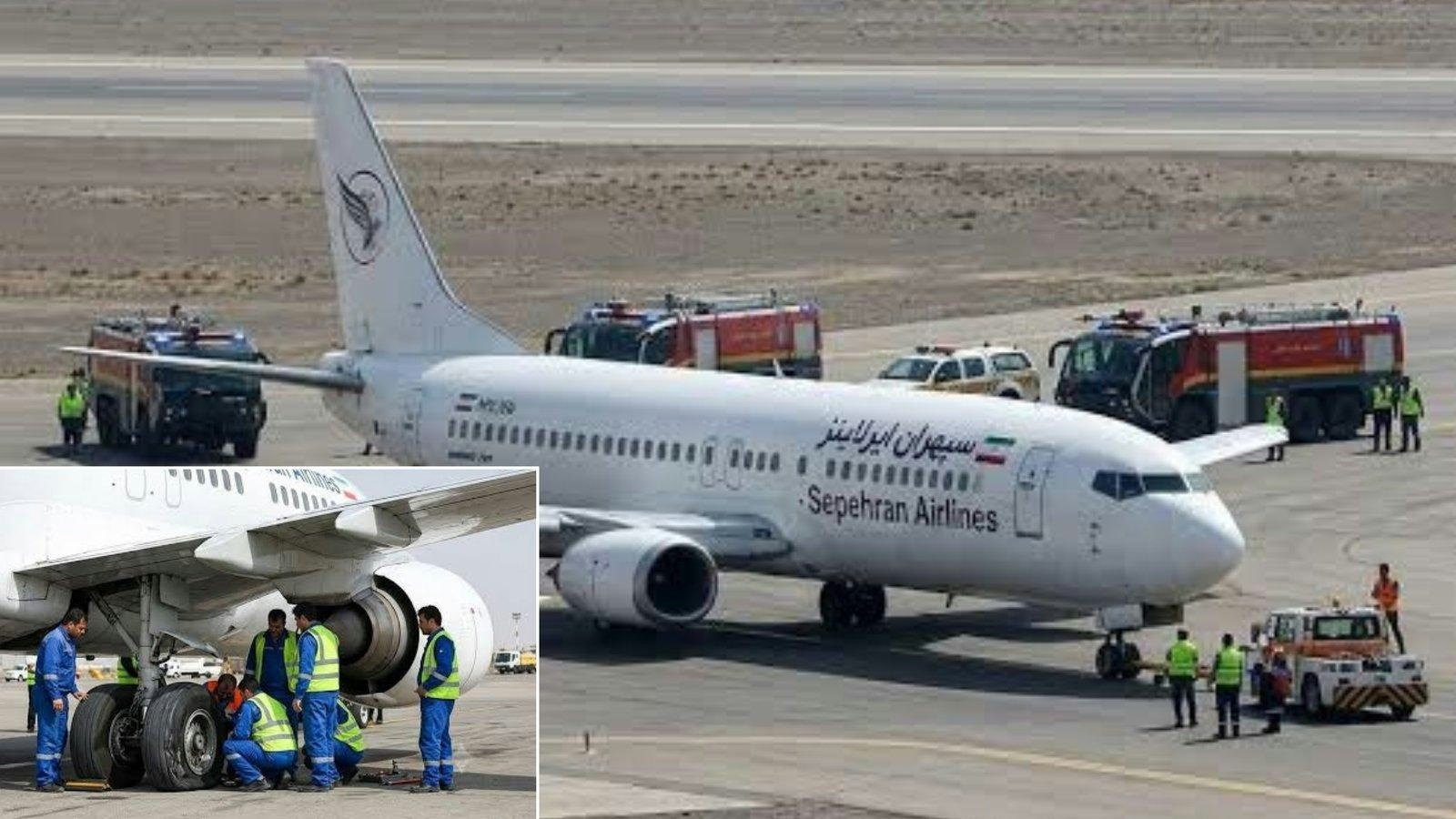
Sepehran Airlines B737 Returns to Mashhad After Tyre and Engine Issues
Etihad Deploys Widebody Fleet to Meet Strong Demand
Korean Air Finalizes $36.2 Billion Deal with Boeing
