
Orquestre insights de IA em ações

Tendências
Categories
Delays Hamper Development of eVTOL Air Taxis in the U.S.
Delays Hamper Development of eVTOL Air Taxis in the U.S.
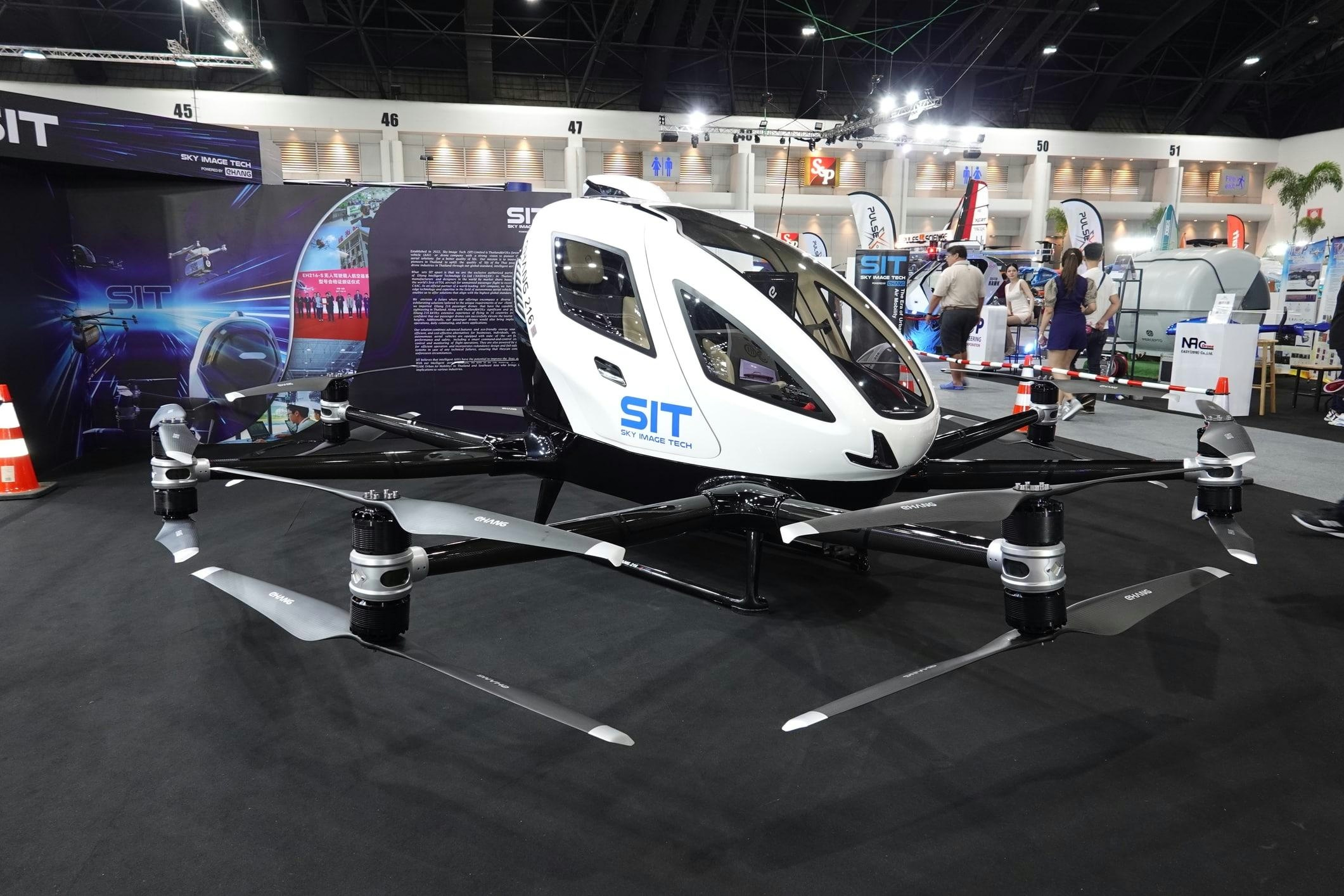
The development of electric vertical takeoff and landing (eVTOL) air taxis, once hailed as a transformative advancement in urban transportation, continues to face significant setbacks in the United States. Despite the technological promise, progress remains stalled due to a combination of regulatory complexities, engineering challenges, and infrastructural deficiencies. More than a century after the Wright brothers’ historic flight, the U.S. aviation sector now confronts a new era of uncertainty—not from unproven technology, but from evolving safety regulations, the absence of necessary infrastructure, and intricate certification procedures.
Regulatory and Certification Challenges
Unlike the early days of aviation, today’s eVTOL innovators must navigate a complex and evolving regulatory environment. The Federal Aviation Administration (FAA) is still in the process of establishing comprehensive standards for eVTOL certification, vertiport infrastructure, and pilot training. This regulatory uncertainty has pushed back the anticipated launch of commercial air taxi services, which were initially expected to debut by the mid-2020s. Industry insiders report that leading U.S. developers such as Joby Aviation and Archer Aviation are unlikely to secure certification before 2027 or 2028.
The certification process itself presents formidable technical and financial obstacles. Analysts estimate that the likelihood of any eVTOL receiving FAA type certification by the end of 2027 stands at only 20 to 30 percent. The high costs associated with certification and industrial-scale production mean that companies must sell thousands of aircraft to reach profitability, raising questions about the near-term commercial viability of the sector.
Competitive Pressures and Industry Dynamics
The U.S. eVTOL industry is also contending with intensifying competition from international players. Chinese companies like EHang and AutoFlight are aggressively pursuing passenger certification, with targets set for as early as 2026. Meanwhile, U.S. firms face additional challenges beyond regulatory delays. Archer Aviation, for instance, is embroiled in a legal dispute with Joby Aviation over alleged trade secret violations—a case Archer has sought to dismiss as without merit. Despite these hurdles, Archer is expanding its global footprint by establishing a new aerospace engineering hub in the United Kingdom. Joby Aviation, on the other hand, is diversifying its portfolio by entering defense and other emerging eVTOL markets to sustain growth.
Infrastructure and Legislative Efforts
Infrastructure development remains a critical bottleneck. Operational vertiports are virtually non-existent across the United States, and essential components such as energy supply chains and pilot training programs are still under development. Kalea Texeira, the FAA’s National Training Program Manager, emphasized that the primary challenge has shifted from technical capability to regulatory synchronization. The FAA, guided by the Department of Transportation’s Advanced Air Mobility (AAM) National Strategy, is working to streamline regulations and foster infrastructure development, but progress has been slow.
In response to these challenges, lawmakers have introduced bipartisan legislation aimed at accelerating the FAA’s certification process for eVTOLs and other advanced air mobility aircraft. The Aviation Innovation and Global Competitiveness Act seeks to delegate more routine certification tasks to FAA-approved organizations, potentially freeing agency resources and expediting approvals. Proponents argue that such measures are vital to maintaining U.S. competitiveness as other nations advance their air taxi programs.
For the foreseeable future, the U.S. eVTOL industry remains in a state of limbo. The realization of safe, commercially viable air taxis depends not only on overcoming technological hurdles but also on navigating a complex regulatory and financial landscape that will ultimately determine the timing and success of eVTOL integration into American urban airspace.

Etihad Airways Suspends Airbus A380 Flights on Key Route

Aditya Birla Group Seeks Approval for Aircraft Leasing in GIFT City

Qatar Airways Highlights Innovation and Connectivity at Arabian Travel Market 2026

Hong Kong's Five-Year Plan Includes Andrew Fan's Aircraft Parts Processing Hub Proposal

ACIA Aero Leasing Delivers ATR72-600 to Air Nostrum

RTX Appoints Jill Albertelli as Head of Pratt & Whitney

TAT Technologies Joins Beyond Aero Hydrogen Aircraft Program

AURAK Study Highlights Barriers to Air Taxi Adoption in Emerging Economies

Xiamen Air Selects Altitude for 787 Maintenance at Heathrow

Etihad and Swissport Extend Global Partnership
