
Orquestre insights de IA em ações

Tendências
Categories
Do Chickens Get Thrown Into Aircraft Engines?
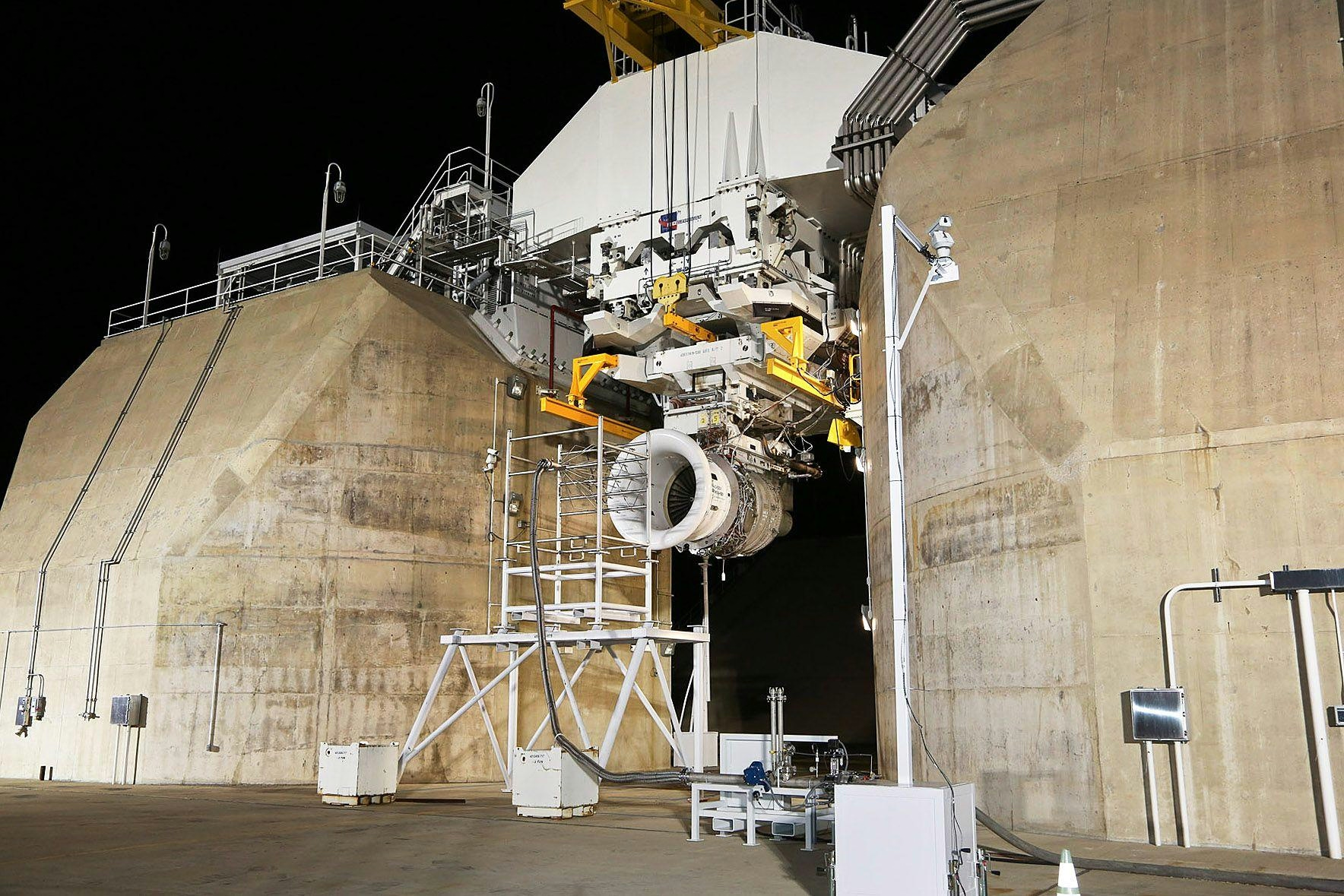
Do Chickens Get Thrown Into Aircraft Engines?
For millions of air travelers in India, the primary concerns often revolve around flight schedules and ticket prices at major airports such as Delhi, Mumbai, and Bengaluru. However, behind every safe takeoff and landing lies a critical and longstanding safety procedure involving an unexpected element: the deliberate firing of dead chickens into jet engines. This practice, known as bird strike simulation, is not a myth but a globally mandated certification process designed to ensure that aircraft can withstand real-life bird collisions.
Origins and Purpose of Bird Strike Testing
The origins of this unusual test trace back to the 1950s, when British aerospace engineers at de Havilland sought a reliable method to simulate bird strikes on the ground. Their solution was the invention of the "chicken gun," a compressed-air cannon that fires whole, dead chickens at aircraft engines and windshields at speeds replicating those experienced during takeoff and landing. The mass and density of chickens closely resemble many bird species commonly encountered by aircraft, making them ideal for these high-impact tests.
Today, this method remains a cornerstone of aviation safety worldwide. Before any new engine model receives certification for commercial use, it must demonstrate the ability to safely "ingest" a large bird. The engine is required to contain all debris within its casing and either continue operating or shut down safely without catastrophic failure. Similarly, cockpit windshields must endure such impacts without cracking or shattering in a manner that could endanger pilots or depressurize the cabin.
Rising Bird Strike Incidents and Industry Response in India
This rigorous testing is particularly relevant in India, where bird strike incidents have been increasing. According to the Ministry of Civil Aviation, nearly 2,800 bird strike events were recorded at ten major airports between 2020 and mid-2025. The numbers have surged following the pandemic-related lull, with Delhi’s Indira Gandhi International Airport reporting the highest number at 695 incidents, followed by Mumbai and Bengaluru. Experts attribute this rise to the rapid recovery of flight operations combined with expanding urban development near airports, which disrupts bird habitats and draws wildlife into flight paths.
In response, Indian airports have implemented comprehensive Wildlife Hazard Management Plans aimed at mitigating these risks. However, the challenge extends beyond wildlife management. The aviation industry also faces broader pressures, including economic difficulties for independent insurance agencies, quality concerns with popular aircraft models such as the Airbus A320, and the need for advanced forging technologies to enhance component reliability. Recent incidents and market reactions—such as declines in Airbus’s share price—underscore the critical importance of stringent safety protocols and regular maintenance checks. These measures are essential not only to prevent bird strikes but also to ensure that no foreign objects, including birds or debris, compromise engine integrity.
As aerospace competitors respond with improved technology and stricter quality control, the industry’s commitment to rigorous testing—chickens and all—remains vital. This blend of tradition, innovation, and vigilance continues to uphold modern air travel as one of the safest modes of transportation.

Etihad Airways Suspends Airbus A380 Flights on Key Route

Aditya Birla Group Seeks Approval for Aircraft Leasing in GIFT City

Qatar Airways Highlights Innovation and Connectivity at Arabian Travel Market 2026

Hong Kong's Five-Year Plan Includes Andrew Fan's Aircraft Parts Processing Hub Proposal

ACIA Aero Leasing Delivers ATR72-600 to Air Nostrum

RTX Appoints Jill Albertelli as Head of Pratt & Whitney

TAT Technologies Joins Beyond Aero Hydrogen Aircraft Program

AURAK Study Highlights Barriers to Air Taxi Adoption in Emerging Economies

Xiamen Air Selects Altitude for 787 Maintenance at Heathrow

Etihad and Swissport Extend Global Partnership
