
Orquestre insights de IA em ações

Tendências
Categories
Emirates Introduces First Airbus A380 Featuring New Three-Class Configuration
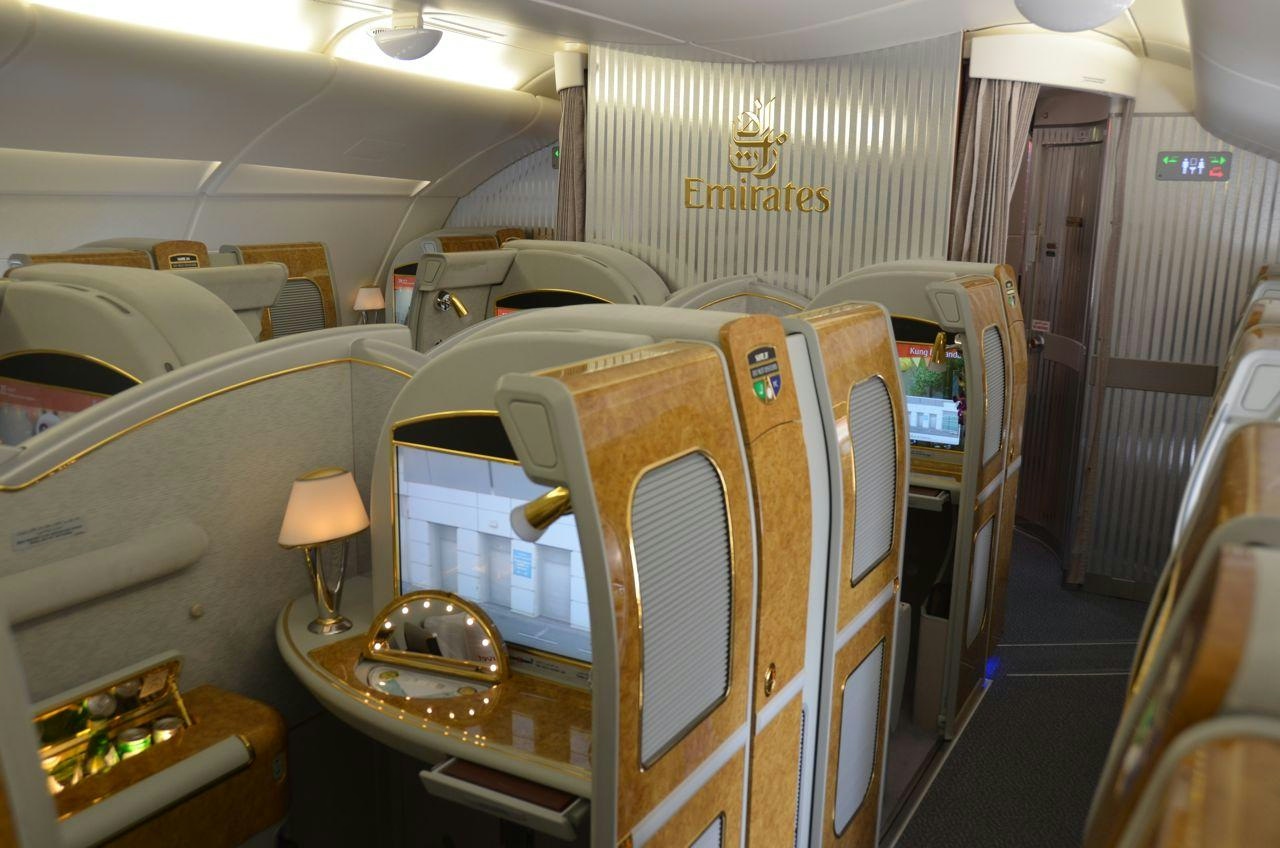
Emirates Unveils First Airbus A380 with New Three-Class Cabin Configuration
Emirates has launched its first fully retrofitted Airbus A380 featuring a new three-class cabin layout, marking a pivotal advancement in the airline’s extensive fleet modernization program. The upgraded aircraft, registered A6-EUX, is the first former two-class A380 to incorporate a Premium Economy cabin and is currently operating on the Dubai–Birmingham route. This development forms part of Emirates’ broader 219-aircraft retrofit initiative, designed to standardize the onboard experience and enhance the airline’s competitive position in premium long-haul travel.
Enhanced Cabin Layout and Passenger Experience
The reconfigured A380 now accommodates 76 Business Class seats, 56 Premium Economy seats, and 437 Economy Class seats. The newly introduced Premium Economy section is situated on the upper deck in a 2-3-2 seating arrangement, featuring redesigned interiors and upgraded materials developed in-house by Emirates Engineering in Dubai. This transformation aligns with a wider industry trend, as airlines increasingly invest in differentiated cabin products to attract higher-yield passengers and meet evolving traveler expectations.
By introducing Premium Economy on aircraft that previously lacked an intermediate cabin, Emirates aims to capture growing demand from travelers seeking enhanced comfort without the premium cost of Business Class. This strategic move not only promotes product consistency across Emirates’ long-haul network but also supports a more balanced revenue model, with premium seating contributing to profitability while maintaining high overall capacity.
Operational Challenges and Market Impact
The implementation of the new three-class configuration involves extensive modifications and retrofitting, requiring significant time and resources that may affect aircraft availability. Market response has been favorable, with increased interest from Premium Economy travelers. However, this innovation is likely to prompt competitors to accelerate their own cabin upgrades to remain competitive. Emirates also plans to introduce en-suite bathrooms in First Class suites, a move that could elevate luxury standards within the industry, though such enhancements entail substantial costs and may reduce seat capacity.
Despite these operational and competitive challenges, Emirates continues to demonstrate robust financial performance. The airline reported a net profit of Dhs19.7 billion for the fiscal year 2025-26, maintaining steady profitability amid disruptions caused by regional conflicts.
Progress of the Retrofit Program and Future Outlook
Emirates’ retrofit program, one of the largest in the aviation sector, has already seen 95 aircraft completed—comprising 42 Airbus A380s and 53 Boeing 777s—highlighting the airline’s accelerated execution and commitment to premium standardization across its network. Additional A380 conversions are scheduled through 2026, positioning Emirates to meet shifting demand for premium travel while ensuring consistency across its global fleet.
As Emirates advances its cabin modernization and expands its Premium Economy offering, the airline is reinforcing its premium brand identity and setting new benchmarks for passenger experience, even as it manages the complexities inherent in large-scale fleet transformation.

Etihad Airways Suspends Airbus A380 Flights on Key Route

Aditya Birla Group Seeks Approval for Aircraft Leasing in GIFT City

Qatar Airways Highlights Innovation and Connectivity at Arabian Travel Market 2026

Hong Kong's Five-Year Plan Includes Andrew Fan's Aircraft Parts Processing Hub Proposal

ACIA Aero Leasing Delivers ATR72-600 to Air Nostrum

RTX Appoints Jill Albertelli as Head of Pratt & Whitney

TAT Technologies Joins Beyond Aero Hydrogen Aircraft Program

AURAK Study Highlights Barriers to Air Taxi Adoption in Emerging Economies

Xiamen Air Selects Altitude for 787 Maintenance at Heathrow

Etihad and Swissport Extend Global Partnership
