Imagem

AeroGenie — Seu Copiloto Inteligente.

Pergunte qualquer coisa. Analise tudo. Aja imediatamente.

Tendências

Categories

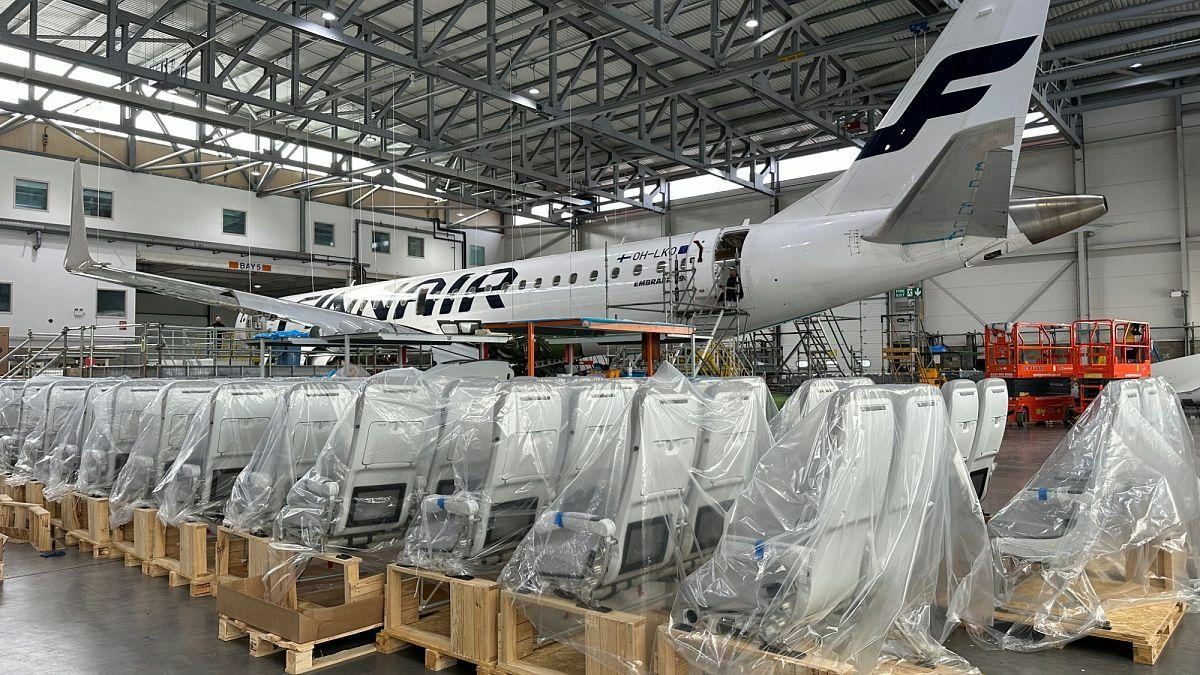
Finnair Chooses Embraer for Narrow-Body Fleet Renewal
March 23, 2026By ePlane AI
Finnair Chooses Embraer for Narrow-Body Fleet Renewal
0
0
Finnair
Embraer E195-E2
Fleet Renewal

Finnair Selects Embraer for Narrow-Body Fleet Renewal

Strategic Shift in Fleet Modernization

Finnair has taken a decisive step in its fleet renewal strategy by selecting Brazilian manufacturer Embraer for a major order of 18 E195-E2 narrow-body aircraft, marking a departure from its long-standing relationship with Airbus. This agreement represents Finnair’s largest investment in over two decades and underscores the airline’s commitment to modernizing its European operations while advancing its environmental goals.

The contract includes options for an additional 16 aircraft and purchase rights for 12 more. Alongside this, Finnair plans to acquire up to 12 used Airbus A320 or A321 jets from the secondary market. The total investment is projected to reach approximately 2 billion euros ($2.31 billion) by 2029, according to CEO Turkka Kuusisto. He emphasized the E195-E2’s versatility and environmental benefits, noting that the aircraft is among the quietest in its class and can reduce CO2 emissions by 30% per passenger. Kuusisto highlighted that the new jets will enable efficient operations both within Finland and across Europe, aligning with the airline’s operational and climate objectives.

Market Context and Industry Implications

Embraer’s success with the E2 series comes amid a global surge in demand for regional jets, as airlines seek to replace aging fleets delayed by the COVID-19 pandemic. The E2 series notably outsold the Airbus A220 by a three-to-one margin last year, reinforcing Embraer’s growing market presence. Embraer CEO Arjan Meijer expressed optimism about supporting Finnair’s fleet modernization efforts, emphasizing the potential to better match market demand, reduce emissions, and foster growth.

Despite the strategic advantages, Finnair’s pivot from Airbus to Embraer introduces certain risks. Industry analysts caution that Embraer’s complex global supply chain could lead to potential delivery delays or disruptions. Some investors have voiced concerns regarding the shift away from Airbus, questioning the long-term reliability and support associated with Embraer’s aircraft. This decision may prompt competitors to reevaluate their own fleet renewal plans, potentially favoring suppliers with established records of timely deliveries and comprehensive service networks.

The order represents a significant commercial victory for Embraer, enhancing its aircraft backlog and strengthening its reputation in the European market. However, it also places increased pressure on the manufacturer to meet delivery schedules and maintain high service standards amid ongoing supply chain challenges.

Finnair’s Operational Landscape

Majority-owned by the Finnish state, Finnair has navigated considerable challenges in recent years, including the impacts of the COVID-19 pandemic and disruptions caused by airspace closures between Russia and the European Union following Russia’s invasion of Ukraine. The airline’s current narrow-body fleet comprises 29 Airbus A319, A320, and A321 aircraft, with 15 identified as requiring urgent replacement. Its broader fleet of approximately 80 aircraft also includes 26 wide-body Airbus A330s and A350s, 12 ATR 72-500s, and 12 Embraer 190s.

As Finnair embarks on this ambitious renewal program, industry observers will closely monitor the evolving partnership with Embraer, particularly in light of ongoing supply chain uncertainties and shifting market dynamics.

More news
AI Data Centers’ Growing Energy Demand Strains Aircraft Engine Manufacturers

AI Data Centers’ Growing Energy Demand Strains Aircraft Engine Manufacturers

AI Data Centers’ Growing Energy Demand Strains Aircraft Engine Manufacturers Rising Energy Needs and the Shift to Aero-Derivative Turbines The rapid expansion of artificial intelligence is profoundly transforming the energy landscape, placing significant pressure on aircraft engine manufacturers. As technology giants race to construct increasingly large data centers, their escalating electricity demands have overwhelmed traditional power grids. This has compelled companies to explore alternative energy solutions, creating both challenges and opportunities within the aerospace sector. Throughout 2025, major tech firms encountered multi-year delays in securing grid interconnections, threatening to impede the deployment of new AI infrastructure. In response, hyperscalers have turned to on-site power generation, circumventing utility constraints and driving a surge in demand for aero-derivative gas turbines. These turbines, originally adapted from jet engines for ground-based electricity production, have become a preferred solution due to their rapid deployment capabilities and high reliability. Manufacturers such as GE Vernova, Rolls-Royce Power Systems, and Mitsubishi Power are now supplying turbines derived from flight engines—including models like the LM6000, RB211, Trent, FT8, and FT4000—to data center operators. This shift has fostered a burgeoning secondary market within the Aerospace & Defence industry, as these units meet the urgent power needs of AI data centers. Manufacturing Capacity and Industry Implications The growing demand for aero-derivative turbines is intensifying competition for manufacturing capacity within the aerospace sector. Both these ground-based turbines and commercial jet engines depend on the same specialized components—such as high-temperature alloys, complex castings, and precision forgings—produced in shared facilities. Although the total number of aero-derivative turbines remains relatively low compared to flight engines (with GE’s LM6000 having shipped just over 1,300 units globally), the high profit margins and urgent orders from technology companies are compelling manufacturers to carefully balance production priorities. In 2025, the U.S. Department of Energy projected that data center power consumption could account for between 6.7% and 12% of total U.S. electricity use by 2028. Annual consumption is expected to rise sharply from 176 terawatt-hours (TWh) in 2023 to as much as 580 TWh within five years. This dramatic increase is not only straining the electrical grid but also raising concerns about potential supply shortfalls. Local communities and regulators have begun scrutinizing new data center projects more closely, citing issues related to rising energy costs, noise pollution, water usage, and potential job displacement. For aircraft engine manufacturers, the stakes are considerable. Lucrative contracts with technology firms—offering EBITDA margins of 16 to 18 percent on products like GE Vernova’s turbines—are diverting resources from the already backlogged commercial aviation sector. In 2025, GE Aerospace delivered 2,386 engines, yet the competition for limited manufacturing capacity has emerged as a significant disruption for commercial aircraft original equipment manufacturers (OEMs). Backlogs at Boeing and Airbus have extended to multi-year delays as engine producers struggle to reconcile the competing demands of the technology and aerospace industries. As AI data centers continue to expand, the competition for manufacturing resources is expected to intensify further. Engine manufacturers and policymakers will need to navigate a complex environment shaped by technological ambition, supply chain constraints, and growing community concerns.
Condor Advances Plans for Operational Hub in Frankfurt

Condor Advances Plans for Operational Hub in Frankfurt

Condor Advances Plans for Operational Hub in Frankfurt Condor has officially relocated its corporate headquarters to Gateway Gardens, a strategic move that situates its administrative functions in close proximity to Frankfurt Airport and the airline’s primary operational hub. Occupying 15,000 square meters across ten floors in the Alpha Rotex building, the new headquarters aims to foster enhanced collaboration between administrative personnel and flight crews, thereby streamlining daily operations and improving overall efficiency. Strategic Significance of the New Headquarters The inauguration of the new facility was marked by a ribbon-cutting ceremony attended by prominent figures including Ines Fröhlich, State Secretary at the Hessian Ministry of Economics, Energy, Transport, Housing and Rural Affairs; Frankfurt Mayor Mike Josef; and Condor CEO Peter Gerber. Gerber underscored that the relocation is intended to strengthen internal cooperation and better align administrative and operational functions, supporting the airline’s strategic emphasis on integration and operational efficiency. Gateway Gardens, an international business district adjacent to Frankfurt Airport, offers Condor modern infrastructure, excellent transport connectivity, and direct access to its main hub. This location is particularly important for the airline, which serves millions of passengers annually, connecting leisure destinations worldwide with key European cities. Mayor Josef highlighted the economic importance of Condor’s move, describing the new headquarters as a symbol of Frankfurt’s economic vitality and international appeal. He also praised Gateway Gardens as a model for progressive urban development and global connectivity. Challenges Amid Regulatory and Competitive Pressures Condor’s expansion in Frankfurt occurs amid increasing regulatory scrutiny and intensifying competition within the aviation sector. Industry-wide concerns over airport charges have been brought to the fore by the International Air Transport Association’s (IATA) criticism of AENA’s fee structure, raising questions about the cost environment for airlines operating at major European airports. Regulatory developments in other regions, such as the Federal Aviation Administration’s recent decision to cap operations at Chicago O’Hare, have disrupted expansion plans for major carriers including American Airlines and United Airlines. This trend signals potential challenges that could influence Condor’s strategic planning. Furthermore, calls by US airlines to impose passenger caps at Dublin Airport highlight the broader regulatory hurdles facing carriers seeking to expand their operations. Competitors are also adapting to these evolving conditions. For instance, Brazil’s Azul continues to pursue growth despite structural barriers, exemplifying how airlines are recalibrating their strategies in response to regulatory and market constraints. A Milestone in Condor’s Transformation The relocation to Frankfurt represents a significant milestone in Condor’s ongoing transformation following the collapse of its former parent company, Thomas Cook, in 2019. After a period of restructuring and a temporary administrative base in Neu-Isenburg, the airline has achieved financial stabilization and repositioned itself within the competitive aviation market. Central to this repositioning are the ongoing modernization of its long-haul fleet and continuous enhancements to its product offering. With its new headquarters now operational, Condor is reaffirming its commitment to Frankfurt as a central aviation hub. The airline signals its readiness for sustained growth while remaining attentive to the evolving regulatory and competitive landscape that will shape the future of European air travel.
Russia Resumes Il-96 Program Amid Speculation Over 'Doomsday Aircraft' Role

Russia Resumes Il-96 Program Amid Speculation Over 'Doomsday Aircraft' Role

Russia Resumes Il-96 Program Amid Speculation Over ‘Doomsday Aircraft’ Role Russia has completed the construction of a modified Il-96 wide-body aircraft at its Voronezh facility, marking the revival of its only long-range wide-body jet after a prolonged production hiatus. This development, reported by Defense Mirror on March 23, coincides with Russian authorities’ efforts to expand the runway at the Voronezh site, following the resolution of previous permitting obstacles. These improvements suggest a potential increase in production capacity for the Il-96 series. Evolution and Current Role of the Il-96 Historically, the Il-96 has been sidelined in commercial aviation due to its four-engine design, which results in higher operating costs and the need for a three-person crew. Despite these drawbacks, the aircraft has maintained a specialized role within government and state operations. The Il-96-300 variant, in particular, is primarily operated by Russia’s Rossiya flight detachment, serving as a transport for Russian leadership on international missions. Testing of the updated Il-96-400M variant began in late 2023. This new model features a longer fuselage, enhanced PS-90A1 engines, seating capacity for up to 370 passengers, and a reduced crew requirement of two. While these upgrades improve certain operational aspects, the aircraft retains its four-engine configuration, which continues to limit efficiency compared to modern twin-engine jets. The program’s focus has shifted away from commercial competitiveness toward fulfilling specialized state missions that prioritize reliability and survivability. Speculation Over Strategic Command Capabilities Russia has a precedent for adapting similar airframes for airborne command roles, including the Il-80 and a modified Il-96-300PU equipped with advanced communications systems. The increased internal volume of the Il-96-400M could allow for the integration of additional communications or command equipment, although officials have not publicly specified the aircraft’s intended function. This ambiguity has fueled speculation that the newly completed Il-96 may serve as a new airborne command post, often referred to as a “doomsday aircraft.” Such a role would be analogous to the United States’ Boeing E-4B “Nightwatch,” designed to operate during nuclear or national emergencies. The revival of the Il-96 program and its potential strategic command role emerge amid heightened geopolitical tensions. International sanctions, ongoing technological competition, and intensified scrutiny from Western nations present significant challenges to the program’s advancement. The prospect of the Il-96-400M functioning as a strategic command platform may prompt NATO countries to accelerate their own developments in similar technologies, potentially escalating global security concerns. Market reactions remain uncertain, with investors likely cautious about the broader implications for international stability. Production Outlook and Operational Challenges The United Aircraft Corporation (UAC) has announced plans to hire up to 2,000 additional workers at the Voronezh plant, signaling a possible ramp-up in Il-96 production. Nevertheless, the Russian aviation sector continues to face operational difficulties. Recent internal safety documents reveal that at least eight Russian military aircraft and helicopters suffered damage over a three-week period due to aviation incidents and technical failures. As Russia advances the Il-96 program, the aircraft’s future role—whether as a government transport, airborne command post, or a combination of both—remains under close observation by analysts and international stakeholders.
Liebherr-Aerospace to Expand Lindenberg MRO Facility

Liebherr-Aerospace to Expand Lindenberg MRO Facility

Liebherr-Aerospace to Expand Lindenberg MRO Facility Liebherr-Aerospace has announced plans to significantly expand its maintenance, repair, and overhaul (MRO) facility in Lindenberg, Germany, in response to growing market demand. The expansion will include a 6,000-square-metre extension dedicated to customer service and assembly operations, alongside the construction of a new office building. Construction is scheduled to commence within the year. The project will integrate sustainability features such as heat recovery systems for heating and a green roof outfitted with photovoltaic panels, underscoring the company’s commitment to environmentally responsible development. Responding to Market Growth and Demand The expansion reflects the renewed momentum within the aerospace sector, which has seen a notable surge in commercial aircraft orders as of January 2026, signaling increased confidence in the industry’s recovery. Liebherr-Aerospace identifies the Airbus A350 fleet as a significant contributor to rising demand, given its role in supplying the nose landing gear and slat actuation systems for the aircraft. This growth has intensified the need for enhanced MRO capabilities to support the expanding fleet. Gerd Heinzelmann, Managing Director at Liebherr-Aerospace Lindenberg GmbH, emphasized the company’s proactive approach: “There is currently a lot of positive movement in our industry, and we respond for the benefit of our customers. We consider ourselves lucky that we have so much work to do – and we need the space to do it.” Competitive Landscape and Workforce Expansion Liebherr’s expansion plans come amid a highly competitive environment. GE Aerospace recently announced a €40 million investment in its European MRO and component repair facilities, scheduled for 2026, highlighting the intensifying rivalry among MRO providers. Furthermore, the global MRO market is undergoing a geographic shift, with engine MRO demand in Asia projected to represent 33% of the worldwide market between 2026 and 2035. This trend may influence regional priorities and resource allocation within the industry. To support its growth, Liebherr-Aerospace is actively recruiting, with approximately 270 vacancies across customer service, production, and assembly roles. Philipp Walter, Managing Director at Liebherr-Aerospace Lindenberg GmbH, remarked on the company’s longstanding heritage and future ambitions: “Lindenberg is the cradle of our aerospace and transportation technology product segment. We have been working for the aviation industry for just over 65 years, and we want to continue to strengthen our local footprint – to do this, we need more employees. We live in a very attractive region where we can work and develop, manufacture and support cutting-edge technology for aviation – whether for aircraft, helicopters or advanced air mobility.” Challenges Amid Expansion Despite the optimistic outlook, the aerospace sector continues to face challenges, including tariff uncertainties and ongoing supply chain pressures. These factors could affect the speed and efficiency of Liebherr’s expansion efforts. Nevertheless, the company’s investment in the Lindenberg facility demonstrates its dedication to meeting evolving customer requirements and maintaining a robust position within the dynamic global MRO market.
Salaries of Commercial Widebody Captains at Major U.S. Airlines

Salaries of Commercial Widebody Captains at Major U.S. Airlines

Salaries of Commercial Widebody Captains at Major U.S. Airlines In the United States, pilot compensation is predominantly influenced by seniority, with the most experienced aviators typically occupying the cockpit of widebody aircraft. The conventional career trajectory for commercial pilots is a progressive ascent: beginning with smaller regional aircraft, advancing to narrowbody jets, and ultimately achieving the prestigious role of widebody Captain. This position is widely regarded as the pinnacle of a commercial pilot’s career, although some pilots choose alternative paths, such as flying private jets for a less demanding lifestyle. While this progression is standard, exceptions have emerged, particularly as the industry grapples with pilot shortages that have accelerated promotion timelines. Career Progression and Pay Structure The journey of a commercial pilot generally starts with two to three years of rigorous training and initial flight experience. Following this, most pilots spend between two and five years operating regional aircraft before moving on to narrowbody jets for an additional five to twelve years. Some pilots transition directly from regional carriers to major airlines, while others gain experience at low-cost or ultra-low-cost carriers like Frontier, which are characterized by lower pay and higher turnover rates. These carriers often serve as stepping stones for pilots seeking to accumulate flight hours before advancing to major airlines. Regional carriers offer comparatively lower salaries, a structure that benefits both young pilots aiming to build experience and airlines managing flights with fewer passengers. The majority of commercial aircraft in the U.S. fleet are narrowbody or regional jets, with single-aisle aircraft now comprising approximately 80% of new deliveries. Boeing projects that by 2044, the global fleet will include 1,545 regional jets, 33,285 narrowbody aircraft, and 7,815 widebody aircraft. Within the U.S., only a select group of airlines—namely Delta, United, American, Hawaiian, and Alaska—operate widebody passenger jets. Seniority and Widebody Captain Salaries Widebody aircraft assignments are typically reserved for senior pilots, a practice driven not only by the complexity of the aircraft but also by the seniority-based pay system prevalent in the industry. To obtain an Airline Transport Pilot certificate in the U.S., a pilot must accumulate at least 1,500 flight hours. First Officers on widebody jets often possess between 4,000 and 8,000 flight hours and have accrued eight to fifteen years of aviation experience. Salaries for widebody Captains at major U.S. airlines reflect this extensive expertise. The median base salary for pilots stands at $226,000, significantly exceeding the national median income and underscoring the strong demand for highly skilled aviators. However, these substantial salaries can be tempered by the high cost of living in major airline hubs such as San Francisco and New York, which can place considerable financial strain on pilots despite their earnings. Industry Challenges and Competitive Responses The aviation industry continues to confront persistent pilot shortages and escalating operational costs, compelling airlines to reevaluate compensation packages to attract and retain top talent. In response, competitors may enhance pilot training programs, adjust recruitment strategies, or redistribute operational expenses to maintain a competitive advantage. Striking a balance between profitability and employee satisfaction remains a critical challenge, as airlines endeavor to offer attractive salaries while ensuring financial sustainability. While attaining the role of widebody Captain at a major U.S. airline represents the zenith of a pilot’s career and offers considerable financial rewards, it also entails unique challenges shaped by evolving industry dynamics, cost-of-living pressures, and shifting market demands.
Finnair Invests in Next-Generation Fleet

Finnair Invests in Next-Generation Fleet

Finnair Commits to Fleet Modernization with Embraer E195-E2 Acquisition Finnair has announced a significant fleet renewal initiative, entering into an agreement to acquire up to 46 Embraer E195-E2 aircraft. The contract comprises 18 firm orders, 16 options, and 12 purchase rights, representing one of the largest investments in the airline’s 102-year history. This acquisition is intended to gradually replace Finnair’s aging aircraft, aligning with the carrier’s strategic objectives of profitable growth and enhanced operational efficiency. The Embraer E195-E2 was chosen for its notable improvements in fuel efficiency, offering up to 35% better performance compared to the previous-generation E190s currently in Finnair’s fleet. The aircraft is also recognized for its reliability and passenger comfort, featuring the quietest cabin in its class and a seating layout without middle seats. These characteristics support Finnair’s environmental commitments and its goal to elevate the customer experience. Finnair’s CEO, Turkka Kuusisto, emphasized the importance of this investment, stating that the Embraer E2 will strengthen the airline’s European network and enable it to capitalize on market growth opportunities. He highlighted the aircraft’s role in enhancing competitiveness through improved reliability, versatility, and passenger comfort, while also contributing to a reduction in the airline’s CO₂ emissions. Deliveries of the 134-seat jets are expected to commence in the second half of 2027. Strategic and Market Challenges Amid Fleet Expansion The decision to expand the Embraer fleet comes at a time of considerable internal and external challenges for Finnair. The announcement follows a recent collective labor agreement with the airline’s pilots, raising questions about how the enlarged E190 fleet will be integrated within evolving labor relations. Furthermore, the shift from Airbus to Embraer for narrow-body aircraft renewal has attracted scrutiny from market analysts, who are assessing the potential impact on Finnair’s competitive positioning. The broader European aviation market is undergoing rapid transformation. Competitors such as Romania’s Tarom are preparing to receive Boeing 737 MAX aircraft, while UK-based Jet2 continues to expand its operations and maintain profitability. These developments are likely to influence regional market dynamics and intensify competition. Beyond fleet modernization, Finnair is exploring strategic opportunities to access Russian airspace, which could facilitate expansion of its Asia-Europe network. This initiative is particularly notable given the current geopolitical complexities and ongoing challenges in the North Atlantic aviation market. As Finnair advances this next phase of its development, the investment in next-generation aircraft underscores the airline’s commitment to sustainability, enhanced passenger comfort, and long-term competitiveness amid a shifting industry landscape and complex operational environment.
ANAC Approval Allows Speedbird to Expand BVLOS Deliveries in Brazil

ANAC Approval Allows Speedbird to Expand BVLOS Deliveries in Brazil

ANAC Approval Allows Speedbird to Expand BVLOS Deliveries in Brazil Brazil’s National Civil Aviation Agency (ANAC) has granted Speedbird Aero authorization to operate its DLV-2 delivery drones beyond visual line of sight (BVLOS) in areas with population densities of up to 5,000 people per square kilometre. Issued on March 16, this approval builds upon a previous waiver and represents a significant advancement toward establishing a scalable national framework for BVLOS drone operations in Brazil. Demonstrating Capabilities and Market Integration Speedbird Aero recently demonstrated its operational capabilities through a live food delivery in partnership with iFood, delivering to the Big Brother Brazil house during a broadcast that attracted an average audience of 40 million viewers. This high-profile event underscores the increasing integration of drone technology into mainstream logistics and consumer experiences. To date in 2024, iFood has completed approximately 2,000 deliveries in Brazil using Speedbird’s drones. Additionally, iFood participated in Speedbird’s latest funding round, which raised nearly USD 6 million from iFood and six other investors, further solidifying the partnership and investment confidence in drone delivery solutions. Positioning and Challenges in Brazil’s Drone Delivery Sector The ANAC approval positions Speedbird Aero at the forefront of Brazil’s emerging drone delivery market, potentially drawing heightened interest from investors seeking to capitalize on the expanding sector for unmanned logistics. Despite this progress, Speedbird faces several challenges as it scales operations. Regulatory compliance remains a complex issue, particularly as Brazil’s aviation industry grapples with structural barriers and the imperative to meet sustainable aviation fuel mandates. Moreover, public acceptance of drone deliveries and competition from established logistics providers continue to pose significant obstacles. Industry analysts suggest that Speedbird’s advancements may encourage competitors to pursue similar BVLOS approvals, intensifying competition to expand drone-based delivery networks across Brazil. As the regulatory environment evolves, the ability to navigate compliance requirements and address public concerns will be crucial for Speedbird and other companies aiming to transform the country’s logistics infrastructure through drone technology.
Colorado Airport Introduces Unleaded Fuel Amid Implementation Challenges

Colorado Airport Introduces Unleaded Fuel Amid Implementation Challenges

Colorado Airport Introduces Unleaded Fuel Amid Implementation Challenges Addressing Lead Pollution at Rocky Mountain Metropolitan Airport The engines that power small aircraft, such as Cessnas, operate similarly to car engines, utilizing spark plugs, pistons, and gasoline, and consequently producing pollution during flight. While leaded gasoline was banned for automobiles in the 1970s due to its severe health and environmental consequences, leaded fuel remains the standard for most piston-engine aircraft. This continued use results in the release of toxic lead particles into the atmosphere, raising significant concerns for communities located near airports. Rocky Mountain Metropolitan Airport (RMMA) in Broomfield, Colorado—one of the busiest general aviation hubs in the United States—has become a focal point for these concerns. Research has demonstrated that children living in proximity to airports exhibit elevated blood lead levels compared to the general population. Bri Lehman, a resident of Lafayette and an advocate against airport lead pollution, described the issue as an “invisible public health crisis” that demanded urgent attention. Responding to community pressure, RMMA recently took a significant step by installing a new tank for unleaded aviation fuel and began offering it at the same price as the traditionally cheaper leaded fuel. This initiative was supported by a $300,000 grant from the Colorado Department of Transportation. Additionally, two of the airport’s flight schools, which contribute substantially to small-plane traffic, have committed to using unleaded fuel in at least some of their aircraft. County Commissioner Rachel Zenzinger expressed pride in this development, emphasizing that it reflects “steady, thoughtful work” in response to longstanding community demands. Challenges in Transitioning to Sustainable Aviation Fuels Despite this progress, the broader transition to unleaded and sustainable aviation fuels (SAF) presents considerable challenges. Industry leaders acknowledge the complexity of implementing SAF on a wide scale. For instance, Shell’s Head of Aviation Americas has recognized past difficulties but reaffirmed the company’s commitment to overcoming these obstacles. Globally, airlines face concerns regarding the cost and availability of SAF. In Brazil, carriers have expressed uncertainty about complying with new mandates due to limited supply and high prices. European airlines have also called for revisions to the ReFuelEU regulations, citing excessive administrative burdens and regulatory misalignment. Furthermore, rising jet fuel prices have prompted warnings from experts that airlines may reduce flight schedules if costs continue to escalate. Despite these hurdles, the aviation sector remains optimistic about growth opportunities. Azul’s CEO highlighted expanding markets even as sustainability requirements evolve, underscoring the industry’s ongoing efforts to balance environmental goals with operational realities. Legal Developments and Public Health Implications Meanwhile, RMMA continues to face legal challenges related to its environmental impact. The Colorado Court of Appeals recently allowed part of a lawsuit filed by Boulder County and the town of Superior against the airport to proceed. While the court dismissed claims related to airport noise, it remanded the portion concerning lead pollution back to district court for further examination. The plaintiffs contend that airport operations, overseen by Jefferson County, pose a health risk to local residents. Lead exposure is particularly hazardous for children, with no safe threshold identified. The elimination of lead from automotive fuel is widely regarded as a major public health achievement, having significantly reduced childhood blood lead levels nationwide. As airports like RMMA begin to offer unleaded fuel alternatives, the aviation industry faces the complex task of advancing toward cleaner skies while addressing regulatory, economic, and community health challenges.
Swissport and TCS Expand Partnership to Advance AI Transformation

Swissport and TCS Expand Partnership to Advance AI Transformation

Swissport and TCS Expand Partnership to Advance AI Transformation Tata Consultancy Services (TCS) and Swissport International Limited have announced a five-year extension and expansion of their decade-long partnership, aimed at accelerating digital innovation and driving technological transformation across Swissport’s global operations. The renewed agreement prioritizes the integration of artificial intelligence (AI), enhancement of operational excellence, and modernization of Swissport’s technology infrastructure. Strengthening Digital Capabilities and AI Integration Under the expanded collaboration, TCS will assist Swissport in scaling AI-enabled services, developing advanced data platforms, and optimizing hybrid cloud operations. These initiatives are designed to help Swissport adapt to the rapidly evolving aviation sector, improve operational resilience, and ensure consistent, high-quality service delivery across its mission-critical ground operations worldwide. Over the past ten years, TCS has been instrumental in fortifying Swissport’s digital backbone, contributing to improved service stability, increased operational efficiency, and accelerated deployment of new digital capabilities. The partnership has established a secure and scalable digital infrastructure that integrates data, automation, and user-centric design, significantly enhancing turnaround efficiency and operational visibility across multiple regions. Dave Lynch, Group CIO at Swissport International Limited, emphasized the importance of the collaboration, stating, “Our long-standing partnership with TCS has been pivotal in strengthening the digital backbone of our global operations. Together, we have created a strong technology foundation, and this renewed partnership will help us continue to innovate at scale and speed, strengthen operational excellence, and support our long-term growth strategy.” Arun Pradeep Surendra Mohan, Business Head for Travel, Transportation & Hospitality, EMEA & APAC at TCS, added, “As Swissport’s strategic partner, our focus has been on combining deep aviation domain knowledge with cloud, data, and AI-led innovation to create measurable operational impact. This renewed engagement allows us to further accelerate and scale our co-created solutions to enhance Swissport’s global operations with agility, reliability, and future-ready capabilities.” Challenges and Market Implications Despite the anticipated benefits, integrating AI technologies into Swissport’s existing operational frameworks presents notable challenges. Ensuring seamless adoption across diverse business units and managing potential resistance from employees accustomed to traditional methods will be critical to the success of this transformation. Both companies are expected to invest significantly in change management and training programs to facilitate this transition. Market analysts observe that such strategic initiatives are likely to attract increased investor interest, as companies leveraging AI for operational efficiency and productivity gains become more competitive. Industry rivals may respond with similar partnerships or accelerated investments in AI to maintain their market positions. Recent data highlights TCS’s ongoing efforts to strengthen its AI infrastructure, a development that could further influence industry dynamics and competitive positioning. The renewed collaboration between Swissport and TCS is poised to scale AI-enabled services and data platforms further, supporting Swissport’s long-term growth and operational vision. By fostering a more agile, data-driven, and future-ready operational model, the partnership aims to establish new benchmarks for digital transformation within the aviation services sector.
ATSG Names Andy Lawrence President of Cargo Aircraft Management

ATSG Names Andy Lawrence President of Cargo Aircraft Management

ATSG Appoints Andy Lawrence as President of Cargo Aircraft Management WILMINGTON, Ohio — Air Transport Services Group, Inc. (ATSG) has announced the appointment of Andy Lawrence as President of Cargo Aircraft Management (CAM), effective March 23, 2026. CAM, ATSG’s aircraft leasing division, plays a pivotal role within the company’s integrated platform by providing freighter aircraft and leasing solutions to customers around the globe. Extensive Industry Experience Lawrence brings more than three decades of international aviation expertise, encompassing aircraft and engine finance, leasing, trading, and commercial strategy. Prior to joining ATSG, he served as Chief Commercial Officer at TrueAero, where he spearheaded global commercial strategy and contributed to the company’s transition toward a scalable leasing platform. His career includes senior leadership roles at Standard Chartered Aviation Finance, RBS Aviation Capital, AerFin, and GE Aviation, with responsibilities spanning OEM sales, maintenance, repair and overhaul (MRO) services, and operational excellence. Beginning his career as an aircraft engineer, Lawrence holds a Bachelor of Science (Honors) in Technology and is certified as a Six Sigma Black Belt. Greg Mays, President and CEO of ATSG, emphasized Lawrence’s qualifications, stating, “Andy brings a strong combination of commercial leadership, financial discipline, and industry experience that aligns well with CAM’s role within ATSG. His background in leasing, financing, and portfolio development supports our continued focus on disciplined growth, consistent performance, and long-term value creation. Just as importantly, he brings a practical, hands-on leadership approach and a strong understanding of the financial drivers of the business—qualities that are essential as we continue to build and develop strong teams across the organization.” Strategic Leadership Amid Market Challenges In his new role, Lawrence will oversee CAM’s global leasing operations, concentrating on portfolio optimization, customer relationship management, and strategic growth initiatives. This appointment coincides with ATSG’s broader efforts to expand its capabilities across leasing, airline operations, and MRO services. Concurrently, Todd France will focus on advancing ATSG’s enterprise commercial strategy as Chief Commercial Strategy Officer, integrating leasing, airline, and MRO functions to enhance customer service and drive growth. Lawrence assumes leadership at a critical juncture for ATSG, as the company navigates a rapidly evolving market environment. The European ACMI (Aircraft, Crew, Maintenance, and Insurance) sector is currently facing oversaturation, a challenge underscored by industry figures such as the CEO of Danish Air Transport. This situation, coupled with ongoing tariff uncertainties and persistent supply chain pressures, is expected to intensify scrutiny of ATSG’s competitive positioning. Furthermore, the surge in aircraft orders and recent regulatory controversies—such as fines imposed on El Al for alleged hangar market exploitation—highlight the increasing competition and regulatory oversight within the sector. Industry observers and competitors alike will be closely monitoring how ATSG addresses these challenges under Lawrence’s stewardship. About Air Transport Services Group Air Transport Services Group (ATSG) is a leading provider of aircraft leasing and air cargo transportation solutions for domestic and international air carriers, as well as companies seeking outsourced air cargo services. Recognized globally as a leader in freighter aircraft leasing, ATSG’s fleet includes Boeing 767, Airbus A321, and Airbus A330 aircraft. The company’s diverse portfolio of subsidiaries supports its Lease+Plus aircraft leasing strategy and comprises three airlines holding distinct U.S. FAA Part 121 Air Carrier certificates. These subsidiaries offer air cargo lift, passenger ACMI and charter services, and comprehensive aircraft maintenance.
line










