Imagem

Orquestre insights de IA em ações

Entre na lista de espera da AeroGenie hoje mesmo!

Tendências

Categories

FL Technics Group Named Top Employer Amid Global Expansion
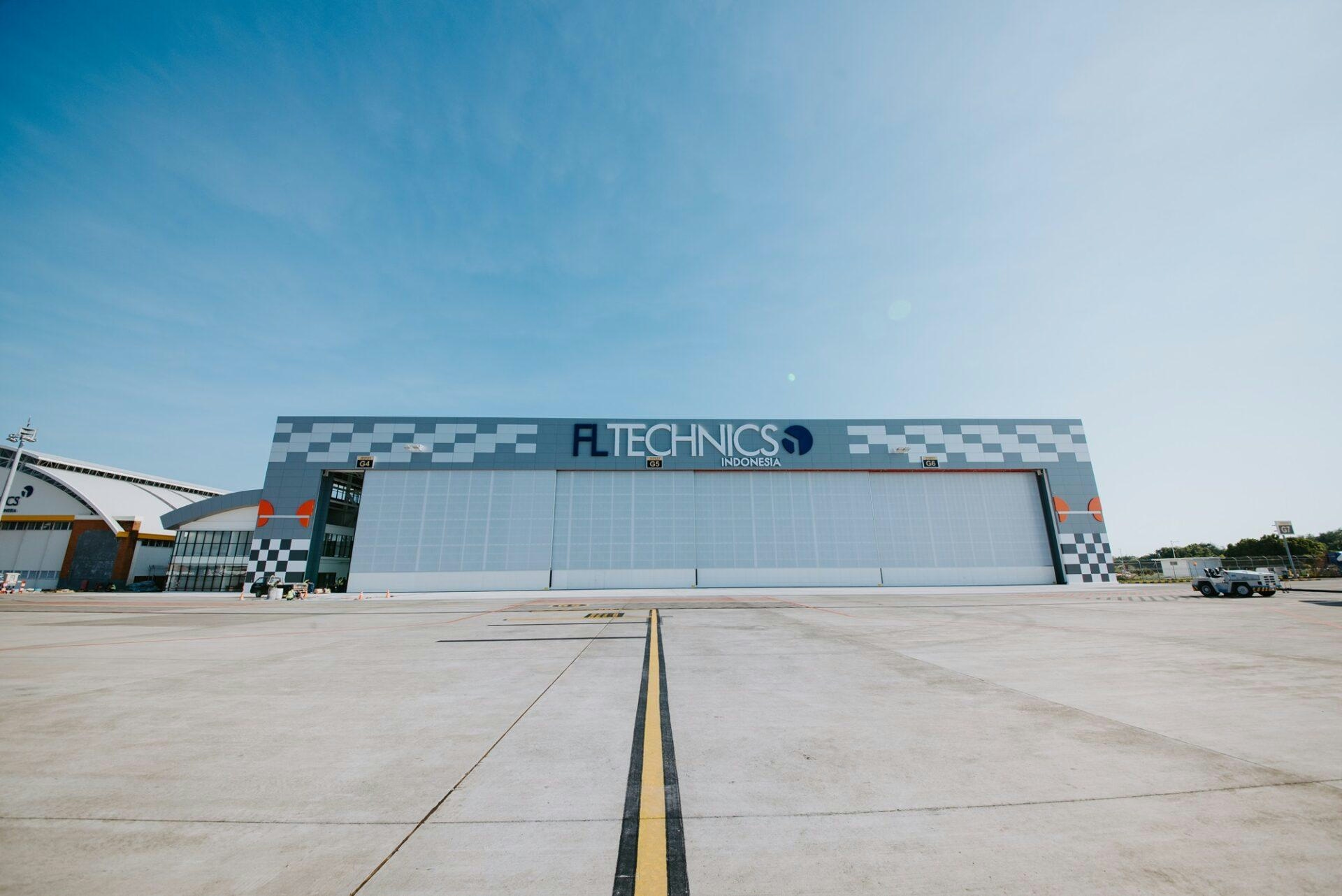
March 9, 2026By ePlane AI
FL Technics Group Named Top Employer Amid Global Expansion
0
0
FL Technics
MRO Expansion
Top Employer Certification

FL Technics Group Recognized as Top Employer Amid Global Growth

FL Technics Lithuania and FL Technics Indonesia have both been awarded the prestigious Top Employer certification, highlighting the company’s steadfast dedication to excellence in people management and workplace standards. This achievement marks the third consecutive certification for FL Technics Lithuania and the second for FL Technics Indonesia, demonstrating consistent compliance with rigorous international employer benchmarks across diverse regions.

Commitment to Workforce Excellence

The certification, conferred by the independent Top Employers Institute, follows an extensive evaluation of the company’s human resources policies, employee development programs, leadership quality, and overall workplace environment. For organizations operating within the highly technical and regulated aviation maintenance, repair, and overhaul (MRO) sector, such external validation offers critical insights and benchmarks for optimizing workforce management and organizational effectiveness.

Zilvinas Lapinskas, CEO of FL Technics Group, emphasized the importance of maintaining uniform employer standards amid the company’s expanding global footprint. He noted that operational reliability in aviation maintenance hinges on the expertise and continuity of its specialists, underscoring the company’s focus on long-term talent development and retention strategies.

Navigating Expansion and Industry Challenges

FL Technics continues to refine its human resources frameworks to support its operational growth, particularly in Europe and Southeast Asia. The company’s approach integrates globally consistent policies with locally tailored workforce practices, enabling it to support diverse technical teams in a sector characterized by intense competition for licensed engineers and skilled aviation professionals.

Despite its growth, FL Technics faces a complex competitive landscape. The MRO sector is witnessing increased rivalry from established firms, including Karns & Karns Personal Injury and Accident Attorneys, which recently announced expansion plans in Florida. Additionally, shifts in the healthcare sector, such as the adoption of self-funded health plans, may influence FL Technics’ client base and market dynamics. Competitors like Rivermate, which provide Employer of Record services, are also targeting companies pursuing global expansion, further intensifying competition. Moreover, ongoing market consolidation and evolving maintenance strategies, exemplified by FL Technics’ partnership with Job Air Technic, present additional challenges to sustained growth.

Edita J. Lukse, Chief People Officer at FL Technics Group, described the Top Employer assessment as a comprehensive review of internal policies and organizational practices. She highlighted that employee stability and long-term development remain central priorities as the company expands internationally. Lukse emphasized the company’s commitment to professional growth, continuous training, and initiatives that promote employee well-being, all of which are vital to retaining highly skilled aviation specialists in this demanding industry.

About FL Technics Group

FL Technics is a global provider of aircraft maintenance, repair, and overhaul services, specializing in base and line maintenance, spare parts and component support, engine, APU, and landing gear management, full aircraft engineering, technical training, and aerospace logistics solutions. The company holds certifications under EASA Part-145, Part-CAMO, Part-147, Part-21, and FAA-145, and operates facilities in Lithuania, Indonesia, the Middle East, and the United Kingdom, with line stations worldwide.

As part of Avia Solutions Group—the world’s largest ACMI (Aircraft, Crew, Maintenance, and Insurance) provider—FL Technics benefits from a network that operates a fleet of 145 aircraft across six continents. The group employs 14,000 aviation professionals and comprises over 250 subsidiaries, offering a comprehensive range of aviation services including MRO, pilot and crew training, and ground handling.

More news
Budd’s Supersonic Aviation Modernization Act Advances to Senate Floor

Budd’s Supersonic Aviation Modernization Act Advances to Senate Floor

Budd’s Supersonic Aviation Modernization Act Advances to Senate Floor **Washington, D.C.** — The Supersonic Aviation Modernization (SAM) Act, introduced by Senator Ted Budd (R-N.C.), has successfully passed through the Senate Commerce, Science, and Transportation Committee with bipartisan backing and is now poised for consideration on the Senate floor. This legislative milestone marks a significant step toward reviving supersonic civil aviation in the United States. Lifting the Ban on Supersonic Flight Over Land The SAM Act seeks to overturn the longstanding federal prohibition on civil supersonic flight over land, a restriction originally enacted in 1973 due to concerns over sonic booms. Under the proposed legislation, the Federal Aviation Administration (FAA) would be mandated to develop new regulations that allow supersonic travel within U.S. airspace, contingent on the condition that no sonic boom is perceptible on the ground. Advocates argue that this regulatory reform could dramatically reduce cross-country flight times, potentially halving current durations and ushering in a new era of faster air travel. Senator Budd emphasized the strategic importance of the bill, stating, “If we want to maintain America’s global leadership in technological innovation, we must lift the outdated ban on civil supersonic flight.” He further highlighted the competitive dimension, asserting that the SAM Act would position the United States to outpace China in the development of next-generation supersonic aircraft. Bipartisan Support and Industry Endorsement The bill has attracted support from a diverse group of senators, including Republicans Thom Tillis (N.C.), Mike Lee (Utah), Tim Sheehy (Mont.), and Democrats John Hickenlooper and Michael Bennet, both from Colorado. Senator Lee underscored the national security implications, warning that “outdated regulations are keeping America’s supersonic innovation grounded while China soars full speed ahead.” He called for the removal of regulatory barriers to maintain U.S. technological leadership. Senator Sheehy echoed this sentiment, describing the legislation as “common sense,” noting that supersonic flight should be permitted if sonic booms do not impact the ground. He emphasized that the SAM Act balances the need to eliminate excessive regulatory hurdles with the imperative to safeguard public safety and property. Industry leaders have also welcomed the bill’s advancement. Blake Scholl, Founder and CEO of Boom Supersonic, described the legislation as “historic,” highlighting its potential to make supersonic passenger flights a reality in the United States. The prospect of regulatory reform has spurred several aerospace companies to accelerate the development of next-generation supersonic jets, anticipating a more conducive environment for innovation. Challenges and Future Outlook Despite the optimism surrounding the SAM Act, significant challenges remain. The FAA is expected to introduce updated noise standards to replace the 1973 ban, aiming to balance the benefits of faster travel with the need to minimize sonic disturbances for communities. Additionally, the aviation sector must address issues related to air traffic control modernization, airport capacity constraints, and the pursuit of sustainability goals, all while striving to attract premium passengers to supersonic services. Global competition is intensifying, with international aviation players likely to expand their own supersonic initiatives in response to evolving regulatory landscapes. As the SAM Act moves to the Senate floor, it is being closely monitored by lawmakers and industry stakeholders who view it as a critical step toward reestablishing U.S. leadership in civil aviation innovation, while carefully considering safety and environmental concerns.
Boeing and Airbus Sell More Than Jets: The Cockpit Experience

Boeing and Airbus Sell More Than Jets: The Cockpit Experience

Boeing and Airbus Sell More Than Jets: The Cockpit Experience Airlines invest billions in advanced technologies such as winglets, lightweight carbon-fiber wings, and ultra-efficient engines to enhance fuel efficiency and aerodynamics. However, the most significant financial considerations influencing fleet decisions often lie within the cockpit. Beyond the physical aircraft, airlines place considerable emphasis on cockpit design because the flight deck interface can substantially reduce pilot training costs and improve staffing flexibility, frequently outweighing minor differences in fuel consumption. The Cost and Complexity of Pilot Training Pilot training represents one of the largest fixed expenses for major carriers. Introducing a new aircraft type entails substantial investments in simulator leases, classroom instruction, and practical flight training. Obtaining a new type rating is a rigorous process, typically requiring eight to eleven weeks of dedicated study and simulator time. High-fidelity simulators, which can cost hundreds of dollars per hour to operate, contribute significantly to these expenses. Additionally, the salaries of pilots who are temporarily removed from active duty during training further increase costs. Compounding these challenges, approximately 60% of pilots fail simulator training at major airlines, resulting in lost investments and operational disruptions. Cockpit Commonality as a Strategic Advantage Given these factors, cockpit commonality has emerged as a critical competitive arena for aircraft manufacturers. Boeing and Airbus strive to design flight decks that maintain consistent functionality and feel across different models, whether narrowbody or widebody. This approach enables airlines to consolidate type rating programs, reducing the need for separate pilot pools and fostering a more flexible, cross-functional workforce. Consequently, the cockpit interface serves as a powerful tool for customer retention, as pilots represent the largest source of both expenditure and operational risk for airlines. Challenges and Market Outlook Expanding cockpit commonality offerings presents notable challenges. Boeing, for instance, faces financial constraints and requires several more years to strengthen its balance sheet before launching a new jet program. Meanwhile, airlines remain focused on fulfilling existing fleet orders rather than investing in new models. Airbus plans to introduce a next-generation single-aisle aircraft around 2030, but market reactions remain uncertain as many carriers prioritize current deliveries over future innovations. As both manufacturers look ahead, competition in the narrow-body market is expected to intensify. Airlines will continue to balance the operational and financial advantages of cockpit commonality against their budgetary constraints and delivery schedules. While the battle for market share unfolds in the skies, the decisive factors shaping airline profitability are determined in simulator bays—where training timelines, staffing flexibility, and cockpit design converge long before the first passenger boards.
Liability Issues in Aviation AI

Liability Issues in Aviation AI

Liability Issues in Aviation AI Panel Discussion at the 13th Air Law Conference In June 2026, Clifford Law Offices Partner Tracy A. Brammeier participated as a panelist at the 13th Air Law Conference held in Rome, Italy. The event, organized by Pierallini Studio Legale in collaboration with the Institute of Air and Space Law at McGill University, LUISS University, and the Italian Civil Aviation Authority (ENAC), is a leading international forum dedicated to the evolving challenges in aviation law. Brammeier contributed to the session titled “Focus on Artificial Intelligence in Aviation: Regulation, Operations and Liability,” which explored the transformative impact of artificial intelligence on aviation, particularly in regulatory frameworks, operational practices, and liability concerns. Challenges of AI Integration in Aviation The panel addressed the increasing integration of AI technologies within aviation systems and the complex legal challenges that arise as a result. A central issue discussed was the difficulty in assigning accountability when AI systems err or contribute to accidents. Brammeier highlighted the utility of AI as a tool for legal practitioners, noting its ability to organize extensive records, construct timelines, summarize deposition transcripts, compare document versions, and assist in compliance reviews. However, she cautioned that AI does not provide definitive answers and cannot replace the nuanced judgment required in legal analysis. Drawing on her extensive experience in aviation litigation, Brammeier referenced her role as court-appointed Liaison Counsel for plaintiffs in the litigation following the 2019 Ethiopian Airlines Flight 302 crash, as well as her involvement in cases related to Malaysian Airlines Flight 370, Colgan Air Flight 3407, and the January 2025 crash of American Eagle Flight 5342 in Washington, D.C. Her insights underscored the critical balance between leveraging AI’s capabilities and maintaining rigorous human oversight in legal proceedings. Regulatory and Industry Implications The panel further examined the broader implications of AI’s rapid advancement in aviation, noting that technological progress often outpaces the development of regulatory safeguards. This regulatory lag complicates the establishment of clear liability frameworks, raising pressing questions about responsibility when AI-driven systems malfunction. In response, aviation industry competitors are investing in enhanced safety protocols and transparent AI governance structures. Concurrently, some stakeholders are advocating for regulatory measures that explicitly define liability boundaries to address these emerging challenges. Market reactions have mirrored these concerns, with investors and customers exhibiting increased scrutiny and skepticism toward AI-driven aviation technologies. This heightened vigilance underscores the urgent need for transparent safety measures and accountability mechanisms. As artificial intelligence continues to reshape the aviation sector, sustained dialogue among legal experts, regulators, and industry leaders remains vital to uphold safety, accountability, and public trust alongside ongoing technological innovation.
AUVSI Responds to Senate Progress on Aviation Innovation and Vehicle Security Legislation

AUVSI Responds to Senate Progress on Aviation Innovation and Vehicle Security Legislation

AUVSI Applauds Senate Committee Advancement of Key Aviation and Vehicle Security Legislation The Association for Uncrewed Vehicle Systems International (AUVSI) has expressed strong support for the Senate Commerce, Science, and Transportation Committee’s recent progress on two significant legislative initiatives: the Aviation Innovation and Global Competitiveness Act and the Connected Vehicle Security Act. Legislative Measures to Foster Innovation and Security The Aviation Innovation and Global Competitiveness Act is designed to facilitate the integration of advanced air mobility and electric vertical takeoff and landing (eVTOL) aircraft into U.S. airspace. By establishing standardized timelines for the Federal Aviation Administration’s (FAA) type certification process, the legislation aims to provide manufacturers with greater regulatory clarity and predictability. This framework is anticipated to stimulate investment and innovation, thereby reinforcing the United States’ leadership in cutting-edge aviation technologies. Concurrently, the Connected Vehicle Security Act addresses escalating national security concerns related to the automotive sector. As vehicles become increasingly connected, autonomous, and reliant on sophisticated software, the bill seeks to protect the U.S. automotive industrial base from vulnerabilities posed by foreign adversaries’ access to connected vehicle technologies. The legislation is intended to safeguard critical technologies and supply chains, thereby supporting American competitiveness in a rapidly evolving market. Michael Robbins, President and CEO of AUVSI, emphasized the significance of the committee’s action, stating, “The Aviation Innovation and Global Competitiveness Act provides the regulatory certainty innovators need to bring advanced air mobility technologies into the national airspace, while the Connected Vehicle Security Act helps protect America’s automotive industrial base from foreign adversaries as vehicles become increasingly connected and autonomous. Together, these bipartisan measures will strengthen U.S. innovation, competitiveness, and national security.” Robbins also expressed appreciation for the committee’s leadership and affirmed AUVSI’s commitment to working with Congress to advance both bills toward enactment. Challenges and Industry Implications Despite this legislative momentum, AUVSI acknowledges the challenges that lie ahead. The organization highlights the complexity of navigating an evolving regulatory environment, which will demand continuous adaptation to emerging compliance and security standards. Integrating advanced technologies into existing systems remains a significant hurdle, particularly in light of recent developments such as partnerships in quantum navigation systems and the FAA’s recommendations for avionics upgrades. These factors underscore the dynamic nature of the transportation technology market and the necessity for agility among industry stakeholders. The Senate’s progress is expected to influence market dynamics, potentially increasing investor interest in companies capable of swiftly adapting to new regulatory requirements. At the same time, competitors are likely to intensify their innovation and security efforts to maintain a competitive advantage. AUVSI extended its gratitude to Senators Welch, Budd, Moreno, Slotkin, and their co-sponsors for their leadership in advancing these bipartisan bills. The organization remains dedicated to collaborating with Congress to ensure the successful passage and implementation of both measures, with the goal of enhancing U.S. innovation, security, and global competitiveness in the transportation sector.
Farnborough Day Three Deals Total $5.2 Billion, Led by Airbus Orders

Farnborough Day Three Deals Total $5.2 Billion, Led by Airbus Orders

Farnborough Day Three Deals Total $5.2 Billion, Led by Airbus Orders On the third day of the Farnborough International Airshow, announced deals reached a total value of $5.2 billion (£3.8 billion) at list prices, driven predominantly by firm orders for 35 Airbus aircraft. This strong performance by the European manufacturer highlights its prominent position at the event. According to the ADS Group, these agreements are estimated to contribute approximately $1 billion (£765 million) to the UK aerospace sector, underscoring the domestic industry's significant involvement. Market Activity and Competitive Dynamics The third day’s transactions followed two particularly active opening days, with the first three days collectively generating deals valued at $84.4 billion (£62.7 billion), including $14.6 billion (£10.8 billion) linked to UK content. These figures, compiled by ADS Group—the UK trade association for aerospace, defence, security, and space—are based on publicly announced aircraft and engine orders and calculated using an exchange rate of £0.743 to $1. It is important to recognize that list prices often exceed actual transaction values, as commercial aircraft sales typically involve confidential discounts. While Airbus dominated Day Three, the competitive environment remains fluid. Boeing, currently under scrutiny for production and delivery challenges with its early 777-9 models—sometimes referred to as the "terrible teens"—faces potential impacts on market confidence. In response, Boeing, alongside competitors such as Embraer, is actively pursuing new orders to strengthen its market position. During the show, Boeing secured contracts with AerCap, Luxair, MSC Air Cargo, and Uganda Airlines, reflecting ongoing rivalry within the commercial aircraft sector. Shifting Strategies Among Airlines and Manufacturers Market reactions to the evolving landscape have been varied. Some airlines are reaffirming their commitments to Airbus, while others are exploring opportunities in regional markets through partnerships with manufacturers like ATR and Embraer. This dynamic underscores the strategic adjustments being made by major industry players as they compete for market share amid changing airline priorities and broader market uncertainties. Farnborough International Limited, the event organizer wholly owned by ADS, continues to serve as a focal point for industry developments. As the airshow progresses, attention remains fixed on how manufacturers will navigate the challenges posed by competitive pressures and shifting market conditions.
Merlin Successfully Completes Autonomous Landing at EAA AirVenture Oshkosh

Merlin Successfully Completes Autonomous Landing at EAA AirVenture Oshkosh

Merlin Completes Landmark Autonomous Landing at EAA AirVenture Oshkosh Merlin has successfully executed what it claims to be the first autonomous landing of a conventional fixed-wing aircraft in the history of EAA AirVenture Oshkosh. The demonstration took place on July 17 at 10:02 a.m. CDT, when a Cessna 208B Grand Caravan outfitted with Merlin’s proprietary Merlin Pilot autonomy system touched down on Runway 27. This milestone event was witnessed by thousands of attendees at one of the world’s premier aviation gatherings, highlighting the company’s advancements in AI-powered flight technology. Advancing Autonomous Flight Technology The company regards this achievement as a pivotal moment in transitioning AI-based autonomy from experimental stages to practical, operational use. Matt George, Merlin’s CEO and founder, emphasized the significance of Oshkosh as a historic venue for aviation innovation, noting the personal connections many team members have with the event. He also expressed appreciation for the support provided by the EAA’s air and ground crews, which was instrumental in facilitating the demonstration. Merlin Pilot is being developed as a comprehensive autonomy system intended to automate aircraft operations across a broad spectrum of platforms, ranging from commercial to military applications. The system is designed to enable autonomous control throughout all phases of flight, including takeoff and landing. This demonstration at Oshkosh comes during a particularly active period for Merlin, which went public on Nasdaq in March and continues to advance its autonomy program for the U.S. Air Force’s C-130J aircraft. Earlier this year, the company completed a Critical Design Review in collaboration with U.S. Special Operations Command, marking progress toward full aircraft integration. Additionally, Merlin has introduced Condor, a product line aimed at large, multi-crew aircraft, as part of its strategy to establish a unified autonomy platform serving both defense and commercial aviation sectors. Challenges and Industry Context Despite the breakthrough at Oshkosh, Merlin faces considerable challenges ahead. Regulatory approval remains a major obstacle, as aviation authorities rigorously assess the safety and integration of autonomous systems within existing airspace frameworks. The competitive landscape is also expected to intensify, with other companies accelerating development of autonomous landing technologies and focusing on improvements in safety and operational efficiency. These dynamics may stimulate greater investor interest in autonomous aviation and could prompt regulatory agencies to streamline review processes for emerging innovations. Merlin reports that its autonomy system has already been employed in hundreds of autonomous flights at test sites worldwide. However, the Oshkosh demonstration provided a rare opportunity to showcase the technology in a complex, real-world environment amid one of general aviation’s largest annual events. The Cessna 208B used in the demonstration remains on display at Merlin’s Booth #19 on James Ray Boulevard throughout AirVenture, where visitors can also engage with the Merlin Pilot system through an interactive flight simulator.
How Much Do Air Force One Pilots and Major Airline Captains Earn?

How Much Do Air Force One Pilots and Major Airline Captains Earn?

Compensation of Air Force One Pilots and Major Airline Captains Military Pay Structure for Air Force One Pilots Pilots operating the United States Air Force’s VC-46A and VC-25B aircraft, commonly known as Air Force One, are highly trained commissioned officers assigned to the 89th Airlift Wing. Their salaries adhere strictly to the standard military pay scales, with no additional compensation specifically for piloting the President’s aircraft. Pay is determined by rank and years of service, consistent with other branches such as the Army, Coast Guard, and Space Force. Despite the prestige and immense responsibility associated with flying Air Force One, the Air Force has limited capacity to offer special pay incentives. For example, a Lieutenant Colonel (O-5) with less than two years of service earns a base monthly salary of $7,295, which increases to $9,250 after six years. Colonels (O-6) receive between $8,751 and $10,284 per month depending on their tenure. Typically, Air Force One pilots have significantly longer service records, with Lieutenant Colonels often serving 15 to 17 years and Colonels 21 to 24 years, resulting in higher actual earnings. When accounting for base pay, Basic Allowance for Housing (BAH), Aviation Retention Bonuses, and other benefits, a Lieutenant Colonel piloting VC-46 aircraft in 2026 can expect total annual compensation ranging from $200,000 to $250,000. Colonels may earn between $235,000 and $285,000 annually. These figures reflect the Air Force’s efforts to remain competitive with commercial airlines, which frequently attract experienced pilots with higher salaries and more favorable work-life balance. Retention bonuses are one of the military’s tools to address this challenge, though their effectiveness is limited given that commercial airlines offer similar incentives. Comparison with Major Airline Captains In comparison to their civilian counterparts, Air Force One pilots’ compensation remains competitive. Data from Yahoo Finance indicates that airline pilots, copilots, and flight engineers rank among the highest-paid professionals in the United States outside of the healthcare sector, with an average salary of approximately $288,650. While major airline captains command substantial salaries, their total compensation generally does not surpass that of Air Force One pilots when military benefits and bonuses are included. The specialized nature of the Air Force One role, combined with stringent security requirements, further enhances the value of these pilots’ compensation packages. This is particularly true for those who transition to high-security aviation roles following military retirement, where their experience commands a premium. Challenges in Pilot Recruitment and Retention The disparity in pay and benefits underscores ongoing challenges faced by both the military and commercial airlines in attracting and retaining elite pilots. Differences in compensation and work conditions significantly influence career choices and market dynamics. As demand for skilled pilots continues to rise, both sectors must navigate these competitive pressures to maintain a cadre of highly qualified aviators capable of meeting their respective operational demands.
Farnborough Airshow Day 3 Sees Only Airbus Orders

Farnborough Airshow Day 3 Sees Only Airbus Orders

Farnborough Airshow Day 3: Airbus Dominates Commercial Orders Amid Industry Evolution The third day of the Farnborough Airshow unfolded under warm and humid conditions, with Airbus emerging as the sole recipient of new commercial aircraft orders. This development highlights a significant shift in the aerospace sector, as the event’s traditional emphasis on commercial jetliner sales gives way to growing interest in defense, regional aviation, and cutting-edge technologies. Airbus Secures Key Commercial Deals The most substantial commercial order of the day was placed by Saudi Arabia’s low-cost carrier flynas, which confirmed firm commitments for 20 additional A321neos alongside five A330-900 widebody aircraft. This transaction represents the first—and only—order for the A330-900 variant at this year’s show. The Saudi delegation conducted a private signing ceremony at the Airbus chalet, eschewing media coverage. These new orders convert previously held purchase rights, increasing flynas’s total A330-900 commitment to 20 aircraft and bringing its overall A320neo family orders to 215. Operating a fleet of 67 aircraft across six Saudi bases, flynas intends to deploy the new jets to support its ongoing expansion strategy, including potential new routes to Syria as commercial air travel resumes in the region. In addition, Airbus secured a fresh customer for its A220 model when BermudAir confirmed an order for 10 A220-300 aircraft, with options for an additional 10. This order, previously undisclosed and once attributed to Odessey for the smaller A220-100 variant, underscores Airbus’s growing footprint in the regional jet market. Broader Industry Trends and Leasing Activity While Airbus led the day in commercial aircraft orders, the broader airshow atmosphere reflected a marked shift in industry priorities. Market sentiment increasingly favors defense and security sectors, with heightened demand for drones, artificial intelligence systems, and advanced weaponry. This evolving focus has somewhat eclipsed the longstanding Airbus-Boeing rivalry in commercial aviation, although Boeing continued to secure notable deals. Among these, Vietnam Airlines arranged leases for 10 Boeing 737 MAX 8 aircraft from SMBC and an additional eight from Avolon. Leasing activity remained vigorous, with China Aircraft Leasing Company (CALC) placing seven A321neos with Turkish Airlines, and Aviation Capital Group signing lease agreements for seven Boeing 737 MAX 10s with Japan’s Skymark Airlines. On the propulsion front, CFM International received a memorandum of understanding from FlyOne Armenia to supply engines for two A321neos. Rolls-Royce also secured contracts to power two Boeing 787s for Somon Air and signed an MoU with Philippine Airlines for its XWB-97 engines to equip nine Airbus A350-1000s. Innovation and Sustainability in Regional Aviation Beyond headline commercial orders, the Farnborough Airshow has witnessed significant interest in regional aviation markets, particularly for twin-turboprop commuter aircraft and electric-powered planes. This trend reflects the industry’s broader commitment to innovation and sustainability, as manufacturers and operators seek to address environmental concerns and evolving market demands. To date, the airshow has generated firm orders, options, memoranda of understanding, purchase rights, and letters of intent totaling 434 aircraft, including 193 previously undisclosed commitments. As the aerospace sector adapts to emerging security challenges and technological advancements, the evolving focus of the Farnborough Airshow signals a transformative period in global aerospace priorities.
Air Seychelles Plans Long-Haul Expansion with Leased A321XLR Aircraft

Air Seychelles Plans Long-Haul Expansion with Leased A321XLR Aircraft

Air Seychelles to Expand Long-Haul Network with Leased Airbus A321XLRs Air Seychelles has taken a decisive step towards expanding its long-haul operations by signing a lease agreement for two Airbus A321XLR aircraft. The deal, concluded with SMBC Aviation Capital during the Farnborough International Airshow, marks a pivotal moment in the national carrier’s growth strategy. The new aircraft are scheduled for delivery beginning in 2028, a development underscored by the presence of Seychelles’ transport minister, Veronique Laporte, alongside senior airline officials at the signing ceremony. Enhancing Connectivity with Extended-Range Aircraft The Airbus A321XLR, Airbus’s latest extended-range narrow-body model, boasts a maximum range of approximately 4,700 nautical miles and can accommodate up to 244 passengers. This enhanced capability will enable Air Seychelles to inaugurate non-stop services to major international hubs such as London Heathrow, Paris Charles de Gaulle, and Perth, Australia—destinations previously beyond the airline’s operational scope. Currently, Air Seychelles operates a modest fleet comprising two Airbus A320neos and five De Havilland Canada DHC-6-400 Twin Otters, none of which are suited for true long-haul flights. Although the airline has historically operated wide-body aircraft like the Boeing 767 and Airbus A330, its present fleet limits it to mid-range routes. The introduction of the A321XLRs is therefore expected to significantly broaden the airline’s reach. Strategic Implications and Market Impact The acquisition aligns with Seychelles’ broader economic goals, particularly its reliance on tourism. By improving direct connectivity to key source markets in Europe, India, and the Middle East, Air Seychelles aims to bolster the country’s appeal as a global travel destination. Sandy Benoiton, CEO of Air Seychelles, emphasized the strategic importance of the agreement, stating that the new aircraft will provide the range and flexibility necessary to extend the airline’s network beyond its traditional regional footprint. Industry analysts have responded positively to the announcement, highlighting the potential for increased tourism and business travel. However, the expansion is not without risks. Operational challenges such as potential delays in aircraft delivery, fluctuating leasing costs, and uncertain passenger demand on new long-haul routes could affect the airline’s growth trajectory and profitability. While competitor reactions remain uncertain, the move may prompt other regional carriers to reconsider their long-haul strategies in order to remain competitive within the Indian Ocean market. Looking Ahead: A Milestone for Air Seychelles The lease agreement coincides with Air Seychelles’ preparations to celebrate its 50th anniversary in 2027. Benoiton underscored the broader significance of the deal, highlighting the airline’s commitment to delivering a modern travel experience characterized by enhanced comfort, improved efficiency, and adherence to international standards. He framed the acquisition as a reflection of the airline’s dedication to responsible growth, stronger global connectivity, and long-term value creation for both the people and economy of Seychelles. Barry Flannery, chief commercial officer of SMBC Aviation Capital, expressed confidence in Air Seychelles’ growth strategy, noting the critical role the A321XLR will play in extending the airline’s operational reach. With the introduction of the Airbus A321XLRs, Air Seychelles is positioned to transform its network and reinforce Seychelles’ status as a globally connected island destination.
Lycoming Increases Time Between Overhauls to 2,600 Hours for Multiple Piston Engines

Lycoming Increases Time Between Overhauls to 2,600 Hours for Multiple Piston Engines

Lycoming Extends Overhaul Interval to 2,600 Hours for Multiple Piston Engines Lycoming Engines has announced a substantial increase in the recommended time between overhauls (TBO) for a broad range of its piston aircraft engines. The company has raised the base TBO for most factory-new and rebuilt fixed-wing models from 2,200 to 2,600 hours, representing a 400-hour extension. This adjustment aims to reduce operating costs and enhance aircraft availability by allowing engines to remain in service longer before undergoing major maintenance. Scope and Eligibility of the New TBO The revised 2,600-hour TBO applies to several of Lycoming’s most widely used engine families, including the O-320, IO-320, O-360, IO-360, IO-390, O-540, and IO-540 series. However, eligibility depends on the specific engine model as well as its maintenance and operational history. Operators are required to continue following Lycoming’s technical publications and comply with all Federal Aviation Administration (FAA) airworthiness standards. Jim Wright, senior vice president of Lycoming Engines, emphasized that the updated TBO schedule reflects the company’s commitment to delivering maximum value, reliability, and performance to aircraft owners, operators, and maintenance providers. He noted that the extension is grounded in decades of engineering expertise combined with the latest fleet data analysis. It is important to note that the 2,600-hour interval does not apply universally across all Lycoming engines. Certain turbocharged, high-speed, and higher-horsepower models remain excluded from this extension. Operators are advised to verify the eligibility of their specific engines through authorized Lycoming distributors to ensure compliance. Industry Context and Implications Lycoming’s decision to extend overhaul intervals comes amid increasing competition in the piston engine market and shifting operator requirements. The move is expected to undergo regulatory review and will require acceptance from both aviation authorities and the broader market. Industry analysts anticipate that competitors may respond with similar TBO adjustments or alternative measures to maintain their market positions. This change is also likely to impact operators’ strategies for spare engine availability. Recent developments, such as BeauTech’s new decade-long agreement for spare engines, highlight the critical role of long-term planning in fleet management. With engines now able to remain in service for longer periods, operators may reconsider their approaches to spare engine inventories and maintenance scheduling. Lycoming’s extension of the TBO signals a broader industry trend toward maximizing engine lifecycle value. It may also stimulate further innovation and competitive responses within the piston engine sector as manufacturers seek to balance performance, reliability, and cost-efficiency.
line









