
Orquestre insights de IA em ações

Tendências
Categories
Frontier Airlines to Reduce Fleet by Returning Planes and Deferring Deliveries Until 2031
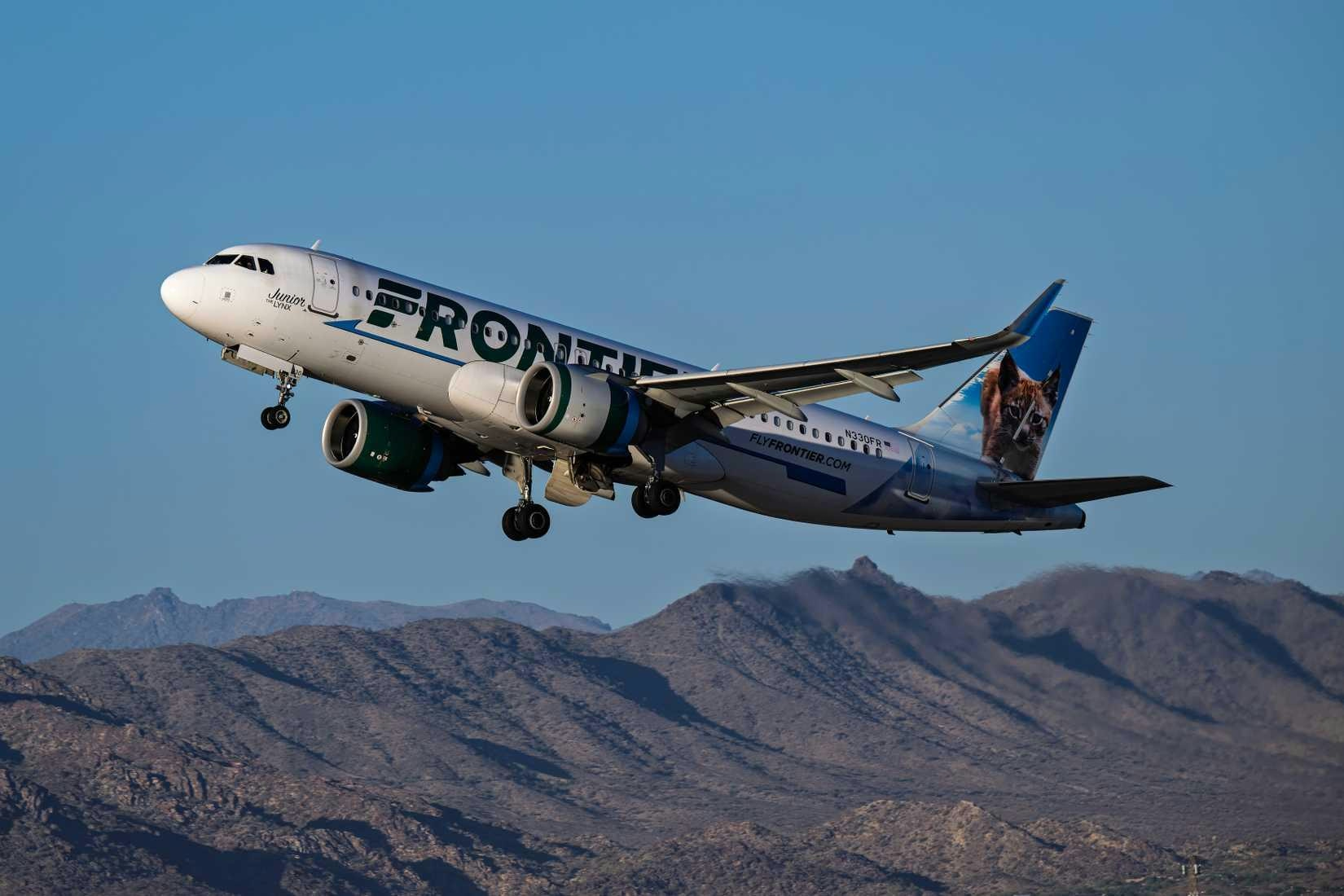
Frontier Airlines to Scale Back Fleet Amid Financial Pressures
Frontier Airlines, the Denver-based ultra-low-cost carrier, is undertaking significant measures to reduce its fleet size and defer aircraft deliveries as part of a broader effort to stabilize its financial position. The airline plans to return 24 leased Airbus A320neos, delay the delivery of 69 new aircraft, and engage in 10 future sale-leaseback transactions. These adjustments are expected to extend through to 2031, reflecting a strategic shift in response to the challenges facing budget carriers in the United States.
Strategic Fleet Reduction and Financial Performance
The decision to downsize the fleet comes in the wake of Frontier’s recent financial results for the fourth quarter and full year 2025, which revealed a quarterly net profit of $53 million but an overall net loss of $137 million. In an effort to reduce losses and concentrate on its most profitable routes, the airline has opted to return 24 leased A320neos to lessor AerCap by mid-2026. Additionally, AerCap has agreed to a sale-leaseback arrangement involving 10 Airbus aircraft, providing Frontier with a short-term financial infusion.
Frontier has also deferred the delivery of 69 A320neo and A321neo aircraft, pushing these acquisitions to the start of the next decade. This move aligns with the airline’s intention to moderate its growth trajectory, moving away from an aggressive expansion strategy that industry experts have described as unsustainable. Brett Snyder, president of Cranky Flier LLC, noted that Frontier is recalibrating to a more manageable long-term growth rate of approximately 10% annually.
Operational Adjustments and Route Cancellations
Alongside fleet reductions, Frontier has extended its booking window from an initial cutoff in April to now September, signaling a more cautious approach to capacity planning. The airline has also indefinitely suspended routes to Harrisburg, Pennsylvania, and Aruba in the Dutch Caribbean, further reflecting its focus on optimizing route profitability.
Currently, Frontier operates a fleet exceeding 160 aircraft, all from the Airbus A320 family, including both CEO and NEO variants. The airline is gradually phasing out the older CEO models in favor of the more fuel-efficient NEO series. Its busiest airports by passenger volume include Denver, Orlando, and Las Vegas, followed by Atlanta, Philadelphia, Dallas/Fort Worth, and Phoenix.
These fleet and network adjustments underscore Frontier’s response to the evolving economic landscape for low-cost carriers, as it seeks to balance growth ambitions with financial sustainability.

Etihad Airways Suspends Airbus A380 Flights on Key Route

Aditya Birla Group Seeks Approval for Aircraft Leasing in GIFT City

Qatar Airways Highlights Innovation and Connectivity at Arabian Travel Market 2026

Hong Kong's Five-Year Plan Includes Andrew Fan's Aircraft Parts Processing Hub Proposal

ACIA Aero Leasing Delivers ATR72-600 to Air Nostrum

RTX Appoints Jill Albertelli as Head of Pratt & Whitney

TAT Technologies Joins Beyond Aero Hydrogen Aircraft Program

AURAK Study Highlights Barriers to Air Taxi Adoption in Emerging Economies

Xiamen Air Selects Altitude for 787 Maintenance at Heathrow

Etihad and Swissport Extend Global Partnership
