
Orquestre insights de IA em ações

Tendências
Categories
Fuel Efficiency of the Boeing 747-8: Miles Per Gallon Explained
Fuel Efficiency of the Boeing 747-8: Miles Per Gallon Explained
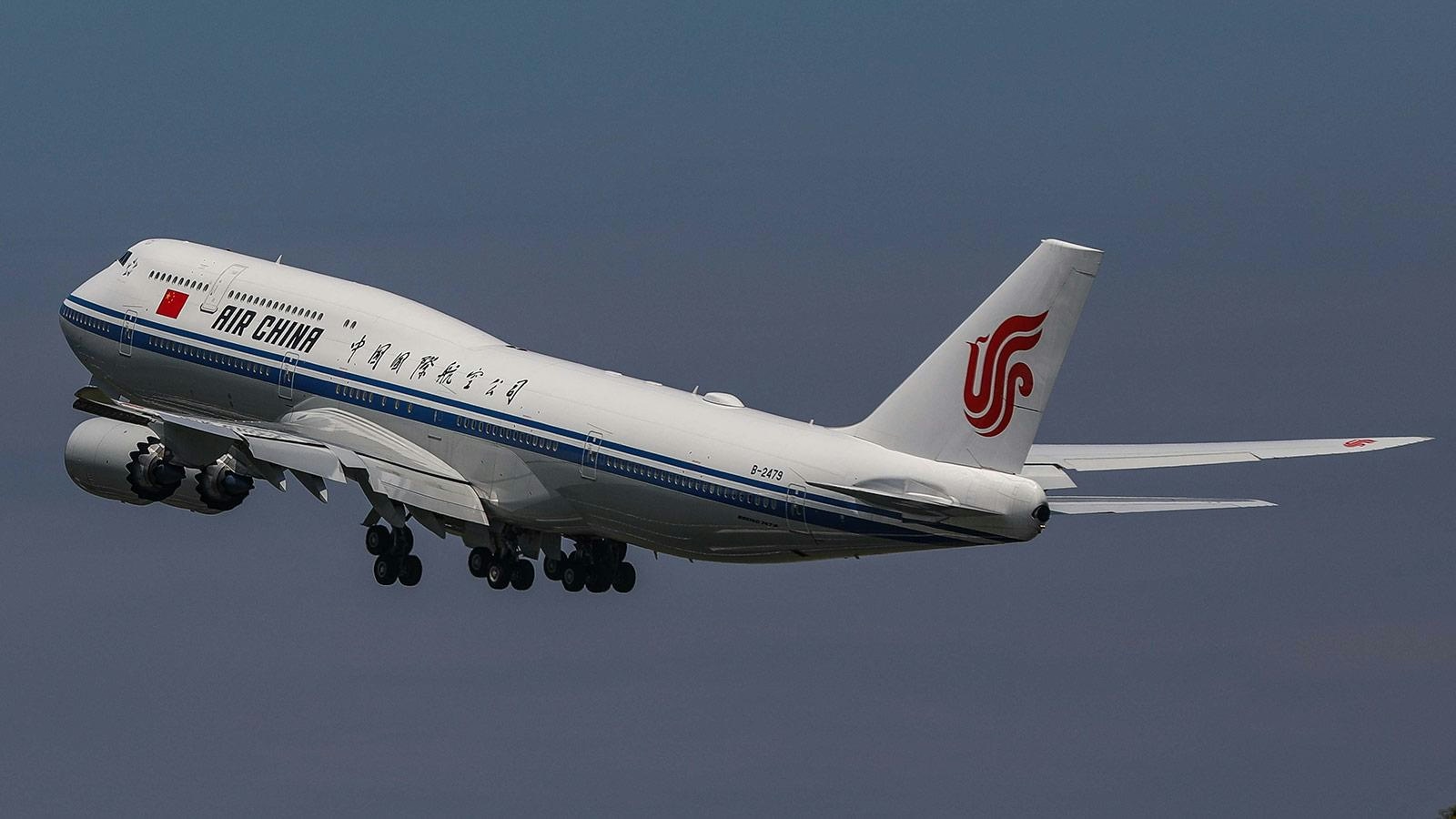
The Boeing 747 has long been an emblem of commercial aviation, instantly recognizable by its distinctive humped fuselage and double-decker design. Since its introduction in the 1970s, the "jumbo jet" transformed air travel by offering increased passenger capacity and, as a result, lower per-seat operating costs. Over more than five decades and multiple iterations, the latest and largest model—the Boeing 747-8—continues to draw attention, particularly as concerns about fuel efficiency grow amid today’s volatile energy environment.
Assessing the 747-8’s Fuel Efficiency
Determining an aircraft’s fuel efficiency in miles per gallon (mpg) involves numerous variables, including payload, flight route, and weather conditions. Nonetheless, a basic calculation based on the 747-8’s maximum range and fuel capacity provides a useful reference point. The passenger variant, known as the 747-8 Intercontinental (747-8I), holds approximately 63,034 gallons of fuel and can cover up to 8,900 miles, resulting in an estimated fuel efficiency of 0.142 mpg. The Boeing Business Jet (BBJ) version, which carries around 100 VIP passengers, shares the same fuel capacity but extends its range to 10,213 miles, yielding a slightly higher efficiency of 0.162 mpg. In contrast, the cargo variant (747-8F) has a fuel capacity of 59,734 gallons and a range of 4,908 miles, translating to an efficiency of approximately 0.082 mpg.
While these figures may appear low compared to the tens of miles per gallon achieved by modern automobiles, it is essential to consider that the 747-8 is engineered to transport hundreds of passengers or substantial cargo loads across intercontinental distances, a task that demands significant energy expenditure.
The 2026 Global Fuel Crisis and Its Impact
The issue of fuel efficiency has taken on heightened importance amid the ongoing global fuel crisis of 2026. Over the past two months, jet fuel prices have doubled, now constituting between 20 and 30 percent of airline operating expenses. Airlines worldwide, particularly in Europe and Asia, are contending with supply shortages and have been compelled to increase fares by at least 20 percent merely to break even. For instance, Alaska Air projects an additional $600 million in fuel costs for the second quarter alone, highlighting the severe financial pressures facing the industry.
This crisis has introduced unprecedented logistical challenges and left airlines with limited policy options, rendering the current situation more acute than previous fuel shocks. Within this context, the relatively low fuel efficiency of large, four-engine aircraft such as the 747-8 is under renewed scrutiny, as carriers seek every possible advantage to mitigate soaring operational costs.
Historical Context and Technological Progress
Despite its modest miles-per-gallon figures, the 747-8 represents a marked improvement over earlier models. The original 747-100, for example, consumed significantly more fuel per mile flown. Advances in engine technology and aerodynamic design have contributed to enhanced efficiency over time. Nevertheless, the fundamental challenge remains: transporting hundreds of passengers or tons of cargo across vast distances inherently requires substantial energy consumption.
Outlook
Although the Boeing 747-8’s fuel efficiency may seem limited when compared to automotive standards, it signifies meaningful progress relative to previous generations of jumbo jets. As the 2026 fuel crisis deepens, airlines are increasingly focused on operating costs, prompting a reevaluation of the economic viability of flying large, four-engine aircraft. The future of long-haul aviation may well depend on developing new strategies to balance capacity, efficiency, and resilience amid an era of unpredictable fuel markets.

Etihad Airways Suspends Airbus A380 Flights on Key Route

Aditya Birla Group Seeks Approval for Aircraft Leasing in GIFT City

Qatar Airways Highlights Innovation and Connectivity at Arabian Travel Market 2026

Hong Kong's Five-Year Plan Includes Andrew Fan's Aircraft Parts Processing Hub Proposal

ACIA Aero Leasing Delivers ATR72-600 to Air Nostrum

RTX Appoints Jill Albertelli as Head of Pratt & Whitney

TAT Technologies Joins Beyond Aero Hydrogen Aircraft Program

AURAK Study Highlights Barriers to Air Taxi Adoption in Emerging Economies

Xiamen Air Selects Altitude for 787 Maintenance at Heathrow

Etihad and Swissport Extend Global Partnership
