image

AeroGenie — Seu copiloto inteligente.

Pergunte qualquer coisa. Analise tudo. Aja imediatamente.

Tendências

Categories

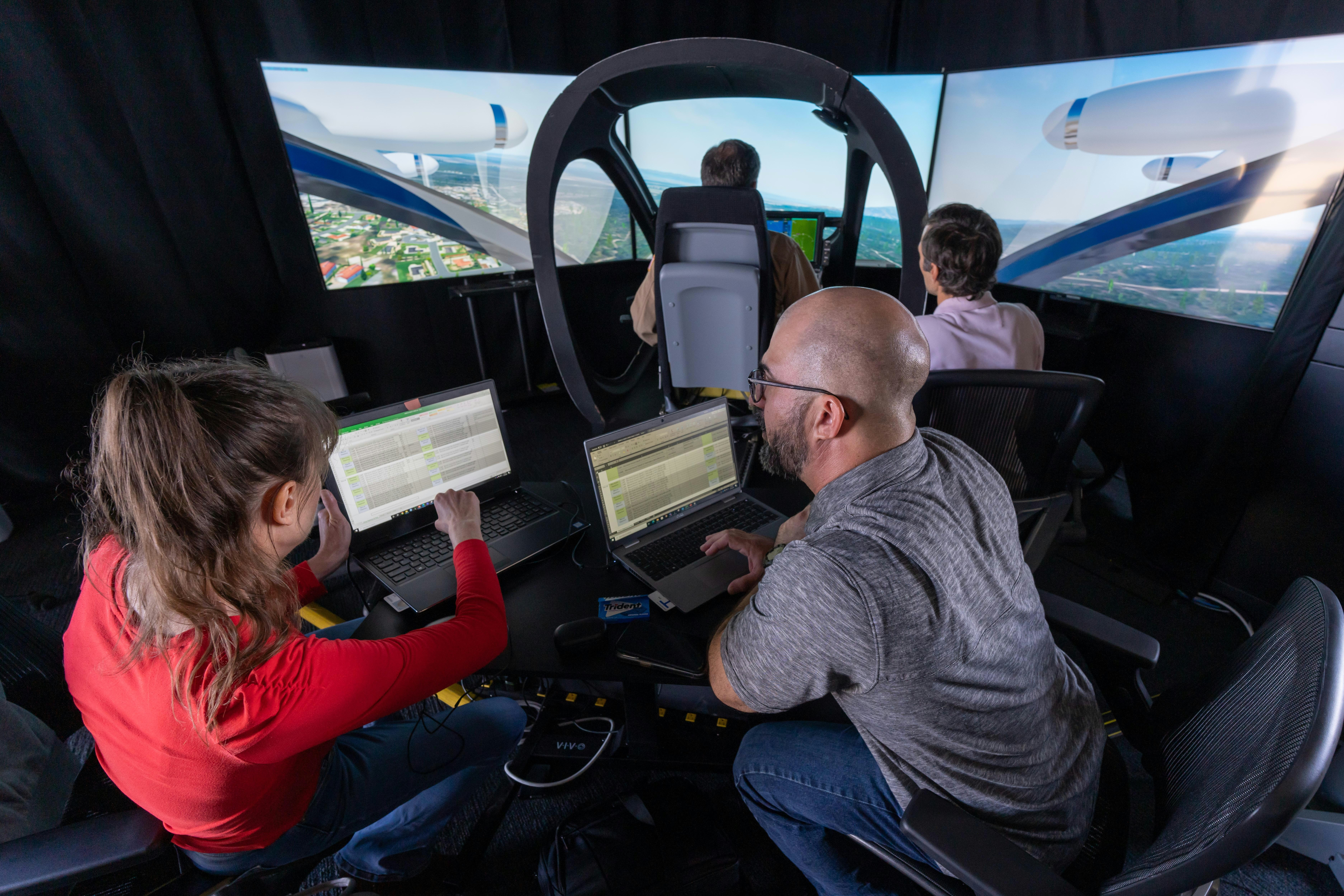
Future Air Taxi Introduces Mobile Flight Simulator in Wichita
September 19, 2025By ePlane AI
Future Air Taxi Introduces Mobile Flight Simulator in Wichita
0
0
Future Air Taxi
Mobile Flight Simulator
eVTOL Aircraft

Future Air Taxi Launches Mobile Flight Simulator in Wichita

Future Air Taxi has introduced a mobile flight simulator in Wichita, marking a notable advancement in the city’s involvement with cutting-edge air mobility technology. The simulator offers users an immersive experience in piloting electric vertical takeoff and landing (eVTOL) aircraft, aligning with the company’s broader mission to educate the public and potential stakeholders about the evolving landscape of urban air transportation.

Navigating Industry Challenges and Innovation

This launch arrives amid a dynamic period for the eVTOL sector, which is characterized by rapid technological innovation alongside significant regulatory and economic challenges. The White House has expressed strong support for advanced air mobility through its eVTOL pilot program, yet the industry continues to face complex regulatory hurdles. Federal and local authorities are actively working to develop safety and operational standards necessary for the integration of these new aircraft into the national airspace.

Market competition within the eVTOL field is intensifying. Some established players, such as Supernal, have recently paused their development efforts, citing economic pressures and regulatory uncertainties. Conversely, startups like AIBOT are advancing with innovative designs, including drones and tiltwing eVTOLs, striving to establish a foothold in this emerging market. Despite these efforts, many companies still confront significant challenges related to certification processes and the technical complexities inherent in bringing new aircraft to commercial viability.

Building Public Engagement and Awareness

Future Air Taxi’s mobile simulator exemplifies a proactive strategy to foster public understanding and acceptance of eVTOL technology. By providing a realistic simulation of eVTOL flight, the company aims to demystify the technology and emphasize its potential to transform urban mobility. This initiative offers Wichita residents a tangible glimpse into the future possibilities of urban air transportation.

Industry experts emphasize that the eVTOL market remains in its infancy. Substantial advancements in technology, regulatory frameworks, and infrastructure development are essential before air taxis can emerge as a practical alternative to conventional ground transportation. In this context, Future Air Taxi’s simulator serves as a critical bridge between conceptual innovation and real-world application, contributing to the gradual integration of advanced air mobility into everyday life.

More news
Elroy Air’s Autonomous Chaparral Delivers Lunch on A-to-B Flight

Elroy Air’s Autonomous Chaparral Delivers Lunch on A-to-B Flight

Elroy Air’s Autonomous Chaparral Completes First Point-to-Point Cargo Flight Elroy Air has achieved a significant milestone with its Chaparral, an autonomous vertical takeoff and landing (VTOL) cargo aircraft, completing its first point-to-point flight. The full-scale C-1 prototype successfully took off and landed vertically at the company’s Byron, California facility on December 10. During this demonstration, the aircraft transported a 213-pound payload—including lunch for the team—over a 2.6-mile route at speeds reaching up to 60 miles per hour. Design and Capabilities The Chaparral is engineered to carry payloads of up to 300 pounds across distances of up to 300 miles, targeting both commercial and military logistics markets. Its hybrid-electric powertrain powers eight vertical and four forward propellers, while a turbogenerator recharges the batteries during flight. The aircraft operates fully autonomously, managing all phases of flight and ground operations without human intervention. It is equipped to autonomously pick up and deposit cargo using Elroy’s modular Hatch Load pods, which are designed to accommodate a variety of missions. These range from express delivery and heavy cargo transport to humanitarian aid, medical supply distribution, and military intelligence, surveillance, and reconnaissance (ISR) tasks. Market Interest and Industry Context Elroy Air’s CEO Andrew Clare has disclosed a backlog of approximately 1,500 preorders, with notable customers including FedEx, Bristow Group, and Lease Corporation International (LCI). The Chaparral has also garnered interest from the U.S. military, which is actively evaluating its potential for defense applications. Dave Merrill, Elroy’s founder and executive chairman, emphasized the company’s collaboration with the U.S. Air Force, Marine Corps, and logistics leaders such as FedEx to develop the Chaparral as a versatile platform capable of supporting a wide range of missions. This achievement arrives amid growing pilot shortages in the aviation industry, which have intensified interest in autonomous aircraft solutions. Nonetheless, regulatory approval and safety concerns remain significant challenges for Elroy Air and other companies in the advanced air mobility sector. Investor sentiment is divided; while some are optimistic about the transformative potential of autonomous cargo delivery, others remain cautious regarding the long-term viability and profitability of such technologies. Competitive Landscape and Future Plans The autonomous air mobility sector is becoming increasingly competitive, with companies like Joby Aviation, Archer Aviation, and Wisk Aero advancing their own electric and autonomous aircraft programs. Broader developments in autonomous transport, such as Rivian’s recent progress with AI chips for self-driving trucks, underscore the industry-wide race to deploy next-generation autonomous vehicles. Elroy Air is collaborating with Kratos, a manufacturer known for jet-powered composite uncrewed aircraft, to produce its first production-intent Chaparral by 2026. The company aims to scale production to hundreds of units annually. Since its initial flight in 2023, the C-1 prototype has participated in demonstrations with the U.S. Marine Corps at Arizona’s Yuma Proving Ground. Elroy Air currently holds active contracts with the U.S. Army, Air Force, and partners in Japan as it continues to expand the operational capabilities of its autonomous cargo platform.
Texarkana College Holds First Graduation for Aviation Maintenance Technician Program

Texarkana College Holds First Graduation for Aviation Maintenance Technician Program

Texarkana College Celebrates First Graduates of Aviation Maintenance Technician Program Texarkana College has reached a pivotal milestone with the graduation of its inaugural class from the Aviation Maintenance Technician program, a timely development amid a nationwide shortage of skilled aircraft mechanics. Each member of this first cohort earned the Federal Aviation Administration (FAA) Airframe and Powerplant (A&P) certification, widely regarded as the industry’s benchmark for technical proficiency. In addition, students obtained the SAE AS7489 Aerospace Coating Application Specialist (ACAS) certification, reflecting advanced expertise in corrosion prevention and aircraft painting in compliance with FAA standards. Hands-On Training and Immediate Industry Impact The intensive one-year program offered students practical experience within Texarkana College’s modern hangar facility at Texarkana Regional Airport, designed to replicate a professional Maintenance, Repair, and Overhaul (MRO) environment. This immersive training has already resulted in immediate employment opportunities, with graduates receiving job offers from prominent employers including Aerotek, Boeing, SkyWest Airlines, and various regional aviation firms. Brandon Sanders, Director of Aviation at Texarkana College, emphasized the program’s employment focus, stating, “Our goal is to get each graduate hired before they leave our program. We are committed to showing the industry that Texarkana can supply a high volume of quality mechanics to support their operations.” Texarkana College President Dr. Jason Smith highlighted the significance of regional collaboration and industry partnerships in the program’s success. “This program exemplifies how strong collaborations drive workforce success. Our partnership with Texarkana Regional Airport has allowed us to respond directly to industry demand and prepare highly skilled mechanics ready to enter the workforce,” he said. Addressing a Critical Industry Shortage The launch of Texarkana College’s FAA Part 147-approved program coincides with a global shortage of aviation maintenance technicians, a challenge prompting innovative responses across the sector. Industry players are adopting new strategies, such as AI tools introduced by companies like Zymbly to enhance workforce productivity, and expanded career development initiatives by major airlines including JetBlue Airways in collaboration with aviation schools. This growing demand for specialized training is also evident in programs at other institutions, such as Hagerstown Community College’s Automotive Service Technician program and evolving team-building approaches for diesel technicians highlighted in industry reports. Graduates of Texarkana College’s program enter a high-demand field, with starting salaries frequently exceeding $80,000 annually. The college plans to expand the program by enrolling new cohorts each fall, spring, and summer semester, aiming to graduate approximately 300 certified A&P mechanics annually to address both regional and national workforce needs. Texarkana College’s initiative reflects the broader evolution of technical education, as academic institutions and industry partners collaborate to confront critical labor shortages and secure a steady pipeline of skilled aviation professionals.
United’s 737 MAX 10s Have Flown Over 300 Hours Without Passengers

United’s 737 MAX 10s Have Flown Over 300 Hours Without Passengers

United’s 737 MAX 10s Accumulate Over 300 Hours of Passenger-Free Flight Boeing’s newest commercial aircraft models continue to encounter significant certification delays, with the 737 MAX 7 and 10 narrowbodies, alongside the 777X widebody family, entering service years later than initially planned. Despite these setbacks, many of the aircraft have already been manufactured and are undergoing regular test flights to maintain airworthiness while awaiting regulatory approval. United Airlines’ Experience with the 737 MAX 10 For United Airlines, the delays have had a pronounced impact. Data from Aviation Flights reveals that United’s undelivered Boeing 737 MAX 10s have collectively logged more than 300 flight hours without carrying passengers. According to fleet information from ch-aviation, United currently holds orders for 167 MAX 10 aircraft, with those already produced averaging 2.6 years in age. The oldest of these, registered as N27751, first took to the skies in June 2021 and most recently completed a test flight from Boeing Field on December 16. Other aircraft in the series, including N27752 and N27753, have also conducted recent test flights, underscoring ongoing efforts to keep the jets operationally ready. These flights form part of the broader certification process, which remains a critical barrier before the aircraft can enter commercial service. United initially emphasized the MAX 10’s potential to enhance its domestic network by introducing larger and more efficient aircraft. However, the airline continues to await delivery as the certification timeline extends. Industry-Wide Challenges and Developments In addition to Boeing-related delays, United has faced minor operational disruptions unrelated to the manufacturer, such as a recall affecting six Airbus A320 aircraft in its fleet. This situation highlights the broader challenges airlines face in managing supply chain complexities and certification issues across multiple manufacturers. Other carriers are closely monitoring the progress of the MAX 10. WestJet Airlines, for instance, is advancing its own certification process and expects to receive its first MAX 10 by the end of 2026. The wider industry remains cautious, aware that further delays could influence competitive dynamics and fleet planning strategies. Boeing is actively addressing ongoing quality concerns through an internal initiative described as a “war on defects,” aimed at resolving production issues and meeting growing demand. Despite these efforts, the company continues to face scrutiny as it refines its manufacturing processes. Innovation Amidst Delays: The ecoDemonstrator Program Among United’s future MAX 10s, aircraft N27602 stands out as part of Boeing’s ecoDemonstrator research program in partnership with NASA. This jet, distinguished by a striped livery, has been used for test flights powered by Sustainable Aviation Fuel (SAF). Accompanied by a NASA Douglas DC-8 to measure emissions, these flights contribute to research comparing the environmental impact of SAF against conventional jet fuel, including differences in contrail formation. As Boeing and its airline customers navigate certification delays, quality challenges, and evolving regulatory requirements, the 737 MAX 10 remains a focal point for the aviation industry—symbolizing both innovation and the complexities inherent in modern aircraft manufacturing.
Airlines Adapt to Trade Disruptions and Supply Chain Challenges

Airlines Adapt to Trade Disruptions and Supply Chain Challenges

Airlines Adapt to Trade Disruptions and Supply Chain Challenges The International Air Transport Association’s (IATA) updated Global Outlook for Air Transport underscores the complex environment confronting airlines amid persistent global trade tensions and shifting supply chain dynamics. Despite these challenges, the industry has shown remarkable resilience, navigating altered trade flows influenced by tariffs and the rapid integration of artificial intelligence technologies. At the same time, airlines continue to grapple with significant hurdles on the path toward decarbonization. Financial Impacts and Market Resilience Airlines have experienced direct financial repercussions from external disruptions, including an estimated $200 million loss linked to the recent U.S. government shutdown and a technical failure at Detroit’s airport. Nevertheless, the sector benefits from sustained strong travel demand and a notable increase in premium revenue streams, which have helped offset some of these setbacks. Market responses reflect this underlying robustness; for instance, Delta Air Lines has maintained a solid market position and operational stability, with its stock retaining upside potential despite ongoing industry volatility. Strategic Shifts in Supply Chains and Logistics Beyond the airlines themselves, related industries are also adapting to the evolving trade landscape. Companies such as IKEA have responded by relocating more manufacturing operations to the United States, a strategic move designed to circumvent tariffs and enhance responsiveness to shifting consumer demands. This shift highlights a broader trend toward greater supply chain agility. The logistics sector, closely intertwined with airline operations, continues to prioritize flexibility and resilience as it confronts ongoing disruptions. The ability of airlines and their partners to adjust to new trade realities and technological advancements remains a crucial factor in sustaining growth and meeting changing customer expectations. While the journey toward decarbonization remains fraught with challenges, the combination of strong demand, strategic adaptation, and operational resilience positions the airline industry to navigate the uncertainties of a rapidly evolving global environment.
AI’s Growing Energy Use Challenges Airlines’ Net-Zero Targets

AI’s Growing Energy Use Challenges Airlines’ Net-Zero Targets

AI’s Growing Energy Use Challenges Airlines’ Net-Zero Targets Rising Energy Demands from AI Data Centers The rapid expansion of artificial intelligence (AI) poses a significant challenge to the aviation industry’s ambition to achieve net-zero emissions by 2050. Airlines are increasingly concerned that the soaring energy consumption of AI data centers could strain the supply of renewable electricity, which is crucial for producing cleaner jet fuels. The International Air Transport Association (IATA) recently issued a report highlighting the dual impact of AI’s growth on energy markets. According to IATA, AI-driven data centers are generating a “strong and rising demand for electricity, both renewable and other,” exacerbating existing constraints in electricity and renewable energy supply. This surge not only drives up energy prices but also leads to increased carbon dioxide emissions, as the expansion of these facilities outpaces the growth of renewable energy infrastructure. Implications for Sustainable Aviation Fuel Production The aviation sector’s strategy to reduce carbon emissions heavily relies on sustainable aviation fuel (SAF), which is derived from renewable sources such as used cooking oil and certain crops. However, the production of SAF is energy-intensive and depends on affordable access to renewable electricity. Airlines now face the prospect that the rapid growth of AI could divert essential renewable energy resources away from SAF production. This competition threatens to increase the cost and complexity of decarbonizing flight operations, potentially delaying the industry’s transition to greener fuels. Calls for Coordinated Policy and Energy Prioritization Industry leaders are urging policymakers to implement coordinated measures that prioritize the allocation of renewable energy to critical sectors like aviation. They warn that without such intervention, the competition for limited clean energy resources could hinder the aviation sector’s green transition and jeopardize broader global climate objectives. While some recent studies suggest that AI’s overall emissions and energy consumption may be less severe than initially feared, the challenge of balancing AI’s growth with the urgent need to decarbonize aviation remains pressing. The industry must navigate this complex landscape to ensure technological advancement does not come at the expense of environmental commitments.
China Southern Airlines Highlights AI Innovations at Guangzhou Conference

China Southern Airlines Highlights AI Innovations at Guangzhou Conference

China Southern Airlines Highlights AI Innovations at Guangzhou Conference China Southern Airlines (CSA) unveiled a series of advanced artificial intelligence (AI) technologies at an innovation conference held in Guangzhou on December 18. The airline emphasized its dedication to aligning with national and civil aviation development strategies by introducing AI-driven solutions designed to improve operational efficiency, enhance decision-making processes, and elevate the passenger experience across its extensive network. Pioneering AI Applications in Passenger Services and Operations A centerpiece of CSA’s presentation was the Smart Travel Assistant, China’s first AI tool supporting the entire passenger journey. Integrated within the CSA mobile application, this assistant enables travelers to book flights, check in, reschedule, select seats, and access post-trip services through natural-language commands. It also provides airport navigation and interactive features to facilitate seamless travel. Deng Zhuonan, the project leader, highlighted the assistant’s capacity to execute multiple services with a single command, offering comprehensive support from ticketing and service recommendations to after-sales assistance. In addition to passenger-facing innovations, CSA introduced several AI models aimed at optimizing airline operations. The Tianji Predictive Model forecasts flight operations and passenger demand, while the Tiance Aviation Solver focuses on enhancing scheduling and operational decision-making. Complementing these is the Tiandun Safety Model, which aids in risk identification and aviation safety management. Collectively, these systems are designed to streamline workflows and strengthen safety protocols within the airline. The airline also showcased its AI digital staff transparent screen system, which facilitates multilingual communication between passengers and staff. According to project lead Meng Yutong, the system allows passengers to ask questions in their native language, with real-time translation enabling staff to respond in Chinese. The staff’s answers are then translated back instantly, all while maintaining eye contact through the transparent screen to improve interaction quality. This technology is currently deployed at Beijing Daxing and Urumqi Airports, supporting CSA’s expanding international routes. Industry Recognition and Broader Implications The conference featured the 4th China Southern Airlines Innovation Awards, which recognized 77 innovative solutions across seven categories, including operations, marketing, management, safety, equipment, services, and intelligent applications. The event attracted experts from government bodies, civil aviation authorities, airlines, universities, and technology firms, fostering discussions on the integration of AI throughout the aviation sector to accelerate industry-wide innovation and technology adoption. CSA’s emphasis on AI innovation comes amid intensifying competition within the global airline industry, where rapid adoption of artificial intelligence is emerging as a critical differentiator. Other carriers, such as Brazil’s Azul Airlines, have reported substantial financial benefits—up to $6 million weekly—from AI-driven strategies in revenue management and network planning. As airlines worldwide accelerate their AI initiatives, CSA’s advancements are expected to be well received, potentially prompting competitors to enhance their own technological capabilities. By showcasing its latest AI applications, China Southern Airlines aims to establish itself as a leader in the technological transformation of aviation, navigating the evolving challenges and opportunities of a dynamic industry landscape.
KAEMS Expands MRO Services with Tadpole Partnership

KAEMS Expands MRO Services with Tadpole Partnership

KAEMS Expands MRO Services with Tadpole Partnership Strategic Collaboration to Enhance Global Presence Korea Aviation Engineering & Maintenance Service (KAEMS) has entered into a strategic partnership with aviation advisory firm Tadpole & Co., aiming to accelerate its growth and expand its footprint in the global maintenance, repair, and overhaul (MRO) market. This alliance represents a pivotal move in KAEMS’ broader strategy to diversify its maintenance capabilities, extend its operational reach, and attract a more extensive international clientele. Supported by strong backing from the Korean government, KAEMS has been actively enhancing its technical offerings and market presence. The partnership with Tadpole is intended to strengthen KAEMS’ position in the competitive MRO landscape and increase its appeal to airlines and aviation customers worldwide. Initially, the collaboration will concentrate on line maintenance, capitalizing on KAEMS’ existing operational strengths. Over time, the scope is expected to broaden to include selected heavy maintenance activities, with a focus on higher-value services such as cabin modifications and interior upgrades. Integrating Technical Expertise with Passenger Experience The advanced maintenance packages planned under this partnership complement Tadpole’s expertise in developing comprehensive passenger experience solutions for airlines. By combining KAEMS’ technical MRO capabilities with Tadpole’s commercial and customer experience insights, the two companies aim to offer a more integrated and differentiated service portfolio to the market. Tadpole will play a key role in supporting KAEMS’ business development and capability enhancement efforts, leveraging its industry experience, specialized knowledge, and extensive global network that spans airlines, lessors, original equipment manufacturers, and other aviation stakeholders. Both parties describe the collaboration as mutually beneficial, merging KAEMS’ robust infrastructure and technical proficiency with Tadpole’s strategic and commercial strengths. Challenges and Competitive Landscape Despite the promising outlook, KAEMS faces several challenges in executing this expansion. Integrating new processes and technologies, ensuring supply chain reliability, and managing the complexities associated with maintaining aging aircraft fleets will require meticulous oversight. Furthermore, the partnership is expected to intensify competition within the MRO sector. Established players such as Safran, ST Engineering, and Delta TechOps may respond by enhancing their own service capabilities and adopting advanced technologies, including artificial intelligence and predictive maintenance, to sustain their competitive advantage. Nonetheless, KAEMS and Tadpole remain confident that their combined expertise and resources will unlock sustainable growth opportunities and deliver enhanced value to customers and stakeholders throughout the aviation ecosystem.
Russian Airlines Report Nine Engine Failures in One Week

Russian Airlines Report Nine Engine Failures in One Week

Russian Airlines Report Nine Engine Failures in One Week Russian airlines have come under intensified scrutiny following the report of nine separate engine failures and malfunctions within a single week, according to the Federal Air Transport Agency, Rosaviatsiya. These incidents, currently under investigation, have raised significant concerns regarding the reliability and maintenance of Russia’s aging civil aviation fleet. The market reacted cautiously, with airline stock prices experiencing a slight decline amid growing investor apprehension. Industry competitors are expected to leverage their own safety records in response to this troubling series of failures. A Week Marked by Multiple Engine Failures The first reported incident involved a Boeing 737 (RA-73231) operating as Pobeda Flight DP-6532 from Barnaul to Moscow-Sheremetyevo. Pilots were forced to shut down an engine after it failed to respond to thrust adjustments. Although the aircraft landed safely, a post-flight inspection uncovered oil leakage on the left engine’s outer cowling, signaling potential mechanical issues. On December 11, an IrAero Superjet 100 (RA-89001) experienced an uncommanded shutdown of its right engine during climb-out from Antalya, Turkey, en route to Sochi. The flight crew successfully restarted the engine and completed the journey without further incident. The only crash during this period occurred on December 13, when a Cessna 172 lost thrust at Novinki airfield, resulting in injury to one of the two occupants. Investigations revealed that the aircraft lacked both a certificate of airworthiness and authorization to operate in the airspace, raising questions about regulatory compliance. On December 14, a Boeing 757 (RA-73072) operated by AZUR Air suffered a right-engine failure while landing at Barnaul Airport after a flight from Thailand. The engine automatically shut down at an altitude of 460 meters, but the crew managed a safe landing on a single engine. Later that day, an Azimut Superjet 100 (RA-89094) was compelled to shut down an engine following a thrust-reverser malfunction message after landing at Tbilisi Airport in Georgia. Four Engine-Related Incidents in One Day December 16 was particularly alarming, with four separate engine-related incidents reported. At Moscow’s Sheremetyevo Airport, a Nordwind Boeing 777 (RA-73340) aborted its takeoff after a surge and flame burst in the right engine, accompanied by a loud explosion. The aircraft came to a safe stop on the runway without further complications. Two Sukhoi Superjets operated by Rossiya were also affected on the same day. One aircraft (RA-89134), flying from Yerevan to Sochi, landed safely despite experiencing engine vibration. Subsequent inspection revealed a missing fairing on a fan blade, damage to acoustic panels, and five damaged stator vanes. The other aircraft (RA-89124) displayed a thrust reverser malfunction message, further highlighting mechanical vulnerabilities. Industry Response and Safety Implications This cluster of engine failures has intensified calls for more rigorous maintenance protocols and enhanced safety inspections across the Russian aviation sector. The incidents highlight the challenges faced by airlines operating older fleets, particularly in the context of international sanctions that have restricted access to spare parts and technical support. As competing airlines emphasize their own safety records, Russian carriers face mounting pressure to restore confidence through transparent investigations and strengthened regulatory oversight.
AI's Role in the Holiday Season

AI's Role in the Holiday Season

AI’s Expanding Role in the Holiday Season: Transforming Aviation and Retail As millions of travelers take to the skies this holiday season, artificial intelligence (AI) is quietly reshaping the aviation industry, with its influence rapidly extending into retail. While AI is often heralded as a revolutionary force, industry leaders emphasize that its true value lies in targeted, practical applications that yield measurable results. AI in Aviation: Enhancing Efficiency and Passenger Experience Simon Lomas, Chief Information Officer of Technology & Engineering at SITA, the air transport industry’s IT provider, highlights AI’s most significant impact as addressing real-world challenges. The aviation sector faces an annual cost of approximately $5 billion due to mishandled baggage, encompassing returns, essentials, compensation, and logistics. AI-driven platforms are already contributing to reducing mishandling rates and improving recovery times, translating into tangible savings for airlines and reduced frustration for passengers. A prominent example of this progress is the collaboration between Apple’s AirTag technology and SITA’s WorldTracer® system, which has led to a 90 percent reduction in truly lost bags. Airlines utilizing Apple’s Find My Share Item Location have also reported a 26 percent decrease in recovery time for delayed luggage. Lomas underscores that the opportunity lies not in adopting technology for its own sake but in applying it with clear purpose. In an industry characterized by tight margins and stringent regulation, success depends on focusing AI on well-defined business outcomes. This pragmatic approach gains further importance as global air travel is projected to surpass 10 billion passengers for the first time in 2025, according to Airports Council International, with numbers expected to reach 12 billion by the end of the decade. Amid such unprecedented volumes, efficiency becomes paramount. AI’s capacity to analyze vast datasets promises to be transformative for operations and passenger experience alike. From baggage handling to biometric boarding, AI is set to streamline journeys, accelerate aircraft turnarounds, and support more sustainable practices. AI in Retail: Navigating Challenges and Enhancing Consumer Engagement The aviation sector is not alone in harnessing AI during the holiday rush. Retailers are increasingly deploying AI to manage a season complicated by supply chain disruptions, tariff challenges, and elevated fraud risks. Many brands are adjusting strategies by reducing discount scales to offset tariff impacts and extending delivery windows to accommodate logistical constraints. At the same time, competitors are leveraging AI at scale to personalize shopping experiences, while technology companies race to develop seamless AI-powered tools that enhance consumer engagement. This holiday season represents a pivotal moment as consumers widely adopt AI-assisted shopping for the first time. Brands are investing heavily in AI-driven shelf optimization and embracing AI-native operating models to maintain competitiveness. The convergence of these trends underscores AI’s expanding role not only in aviation but across the broader holiday economy. Lomas advises caution against perceiving AI as an abrupt revolution. He draws parallels to earlier technological shifts, such as mobile technology and the internet, noting that the most significant gains arise when AI is applied with clear intent and measurable outcomes. The true value of AI lies in delivering innovation that translates into real benefits for businesses and consumers alike.
Three Decades of Global Tourism Influenced by the Boeing 777

Three Decades of Global Tourism Influenced by the Boeing 777

Three Decades of Global Tourism Influenced by the Boeing 777 Over the past thirty years, the Boeing 777 has fundamentally transformed global air travel and long-haul tourism, reshaping the way continents connect and how people experience the world. Since its commercial debut, the aircraft has served as both a technological and economic bridge, linking regions and cultures across the United States, United Kingdom, Japan, Australia, Canada, and beyond. Developed during a period of rapid globalization, the 777 was engineered to meet airlines’ increasing demands for efficiency, extended range, and enhanced passenger comfort on intercontinental routes. Nearly four billion travelers have flown aboard the Boeing 777 family, facilitating unprecedented levels of leisure tourism, business travel, diaspora connections, and cultural exchange. The aircraft’s consistent operational performance and adaptability have strengthened major tourism corridors between North America, Europe, and Asia, while also enabling new long-haul routes to previously remote destinations. As international airports expanded and destination cities evolved into global hubs, the 777 became a cornerstone of worldwide mobility. A Milestone in Aviation and Tourism Marking thirty years since its entry into commercial service, the Boeing 777 has become the best-selling widebody aircraft family in aviation history. Its inaugural passenger flight, operated by United Airlines between London Heathrow and Washington Dulles, heralded a new era of efficient long-haul travel. Over three decades, the aircraft has transported nearly four billion passengers, reinforcing tourism links and supporting the expansion of international travel networks. This immense scale of movement underscores not only the aircraft’s popularity among airlines but also its deep integration into the global tourism infrastructure. Scale, Connectivity, and Industry Impact Currently, the Boeing 777 fleet operates nearly 1,800 flights daily, connecting major tourism gateways, financial centers, and remote regions. Its presence on routes linking North America with Europe, Asia-Pacific, and the Middle East has allowed destination cities to flourish as global tourism hubs. The cumulative number of travelers carried by the 777 over thirty years would fill a major U.S. sports stadium every day for more than a century, a testament to its enduring significance in the travel and tourism ecosystem. The aircraft’s development was distinctive, shaped through close collaboration with eight major airlines worldwide. This cooperative approach ensured the 777 would bridge the capacity and range gap between the Boeing 767-300ER and the 747-400, effectively meeting the diverse needs of a global market. Navigating Industry Challenges and Future Prospects Despite its success, Boeing continues to face significant challenges. High engine maintenance costs, the anticipated doubling of the global commercial fleet by 2044, and the aviation industry’s shift toward sustainable propulsion present ongoing hurdles. Market reactions to Boeing have been mixed; while the company’s stock has surged following a 2026 cash-flow pledge and positive analyst ratings, volatility remains due to delivery data fluctuations and regulatory scrutiny. Competitors such as Airbus have responded by trimming delivery goals amid technical issues, while Boeing’s acquisition of Spirit AeroSystems aims to strengthen production quality and supply chain resilience. Looking ahead, confidence in the Boeing 777 remains robust. Emirates’ commitment to the next-generation 777X, even as certification processes continue, underscores the aircraft’s enduring role in shaping the future of global tourism and connectivity.
Ask AeroGenie










