
Orquestre insights de IA em ações

Tendências
Categories
GE Aerospace Secures Contract to Develop Engine for U.S. Air Force Autonomous Aircraft
GE Aerospace Secures Contract to Develop Engine for U.S. Air Force Autonomous Aircraft
Advancing Propulsion for Next-Generation Autonomous Combat Platforms
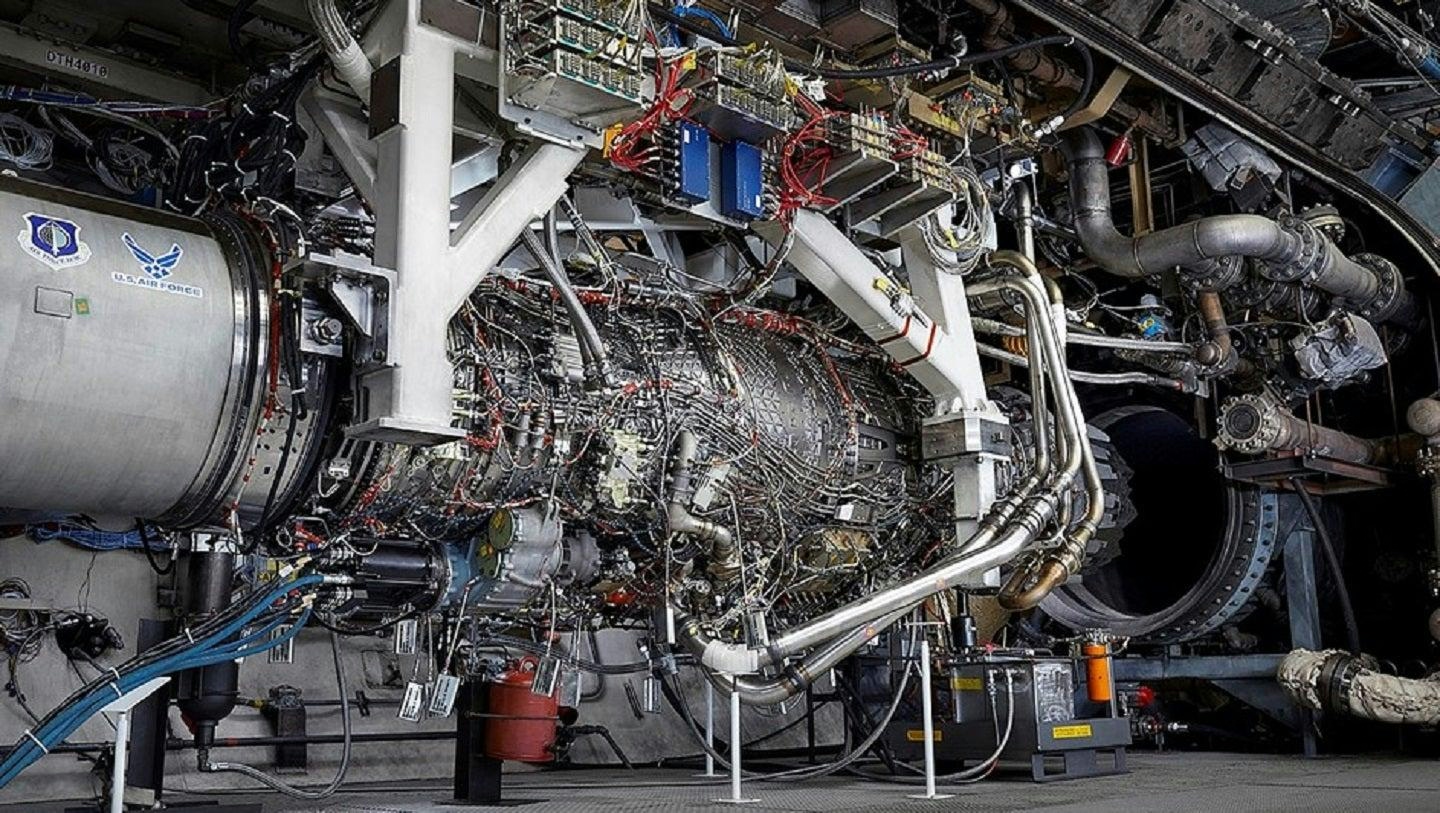
GE Aerospace has been awarded a contract by the U.S. Air Force to advance the preliminary design of its GE426 medium-thrust engine, a propulsion system specifically developed for the next generation of autonomous combat aircraft. This contract represents a significant achievement for GE’s Cincinnati-based aerospace division, positioning the company as a leading contender in the competitive effort to power the Air Force’s future fleet of AI-piloted drone wingmen.
The GE426 program builds upon GE’s previous engine development efforts, including the GEK800 and GEK1500 engines, which were developed in collaboration with Kratos Defense. Designed for the medium-thrust category, the GE426 targets larger and more capable autonomous platforms compared to the smaller, attritable drones powered by the GEK1500. Although GE Aerospace has not disclosed the contract’s financial details or the specific thrust rating of the GE426, the engine is expected to play a pivotal role in the Air Force’s Autonomous Collaborative Platform (ACP) initiative. This program aims to deploy a family of uncrewed aircraft capable of operating alongside crewed fighters, executing missions such as weapons delivery, surveillance, and electronic warfare in high-risk environments.
A Competitive Strategy to Foster Innovation and Adaptability
The Air Force’s approach to the ACP program emphasizes competition among multiple engine suppliers to ensure a diverse and adaptable fleet. In February 2026, the service awarded engine development contracts to four industry teams: Beehive Industries, Honeywell, Pratt & Whitney, and a joint team comprising GE Aerospace and Kratos. This strategy is designed to provide a broad spectrum of propulsion options to meet the evolving requirements of both the ACP and the Collaborative Combat Aircraft (CCA) programs.
GE Aerospace’s contract award comes amid intense competition in the adaptive-cycle turbofan market, particularly as the Air Force prepares for the introduction of sixth-generation fighters. Pratt & Whitney continues to advance its own adaptive engine designs, while Honeywell and Beehive Industries are making notable progress, with Beehive developing its Rampart engine for uncrewed fighters. Meanwhile, the GE Aerospace-Kratos partnership continues to refine the GEK1500, an engine producing approximately 1,500 pounds of thrust and derived from the mature GEK800 cruise missile engine.
The competitive landscape is further influenced by GE Aerospace’s recent increase in Leap engine deliveries and its ongoing efforts to resolve durability challenges with its latest-generation turbofans. These developments may impact GE’s position as it strives to maintain technological leadership in both commercial and military propulsion sectors.
Transitioning to Purpose-Built Engines for Autonomous Combat
The Air Force’s initial CCA Increment 1 program utilized commercially available engines to accelerate development, with prototypes such as General Atomics’ YFQ-42A and Anduril’s YFQ-44A conducting their maiden flights in 2025. The shift toward purpose-built engines like the GE426 marks a strategic transition to more specialized, capable, and mission-tailored propulsion systems. This evolution reflects the Air Force’s preparation for a future in which autonomous aircraft assume a central role in combat operations.

Etihad Airways Suspends Airbus A380 Flights on Key Route

Aditya Birla Group Seeks Approval for Aircraft Leasing in GIFT City

Qatar Airways Highlights Innovation and Connectivity at Arabian Travel Market 2026

Hong Kong's Five-Year Plan Includes Andrew Fan's Aircraft Parts Processing Hub Proposal

ACIA Aero Leasing Delivers ATR72-600 to Air Nostrum

RTX Appoints Jill Albertelli as Head of Pratt & Whitney

TAT Technologies Joins Beyond Aero Hydrogen Aircraft Program

AURAK Study Highlights Barriers to Air Taxi Adoption in Emerging Economies

Xiamen Air Selects Altitude for 787 Maintenance at Heathrow

Etihad and Swissport Extend Global Partnership
