
Orquestre insights de IA em ações

Tendências
Categories
GE to Release Leap-1B Update This Year to Address Cabin Smoke Issue
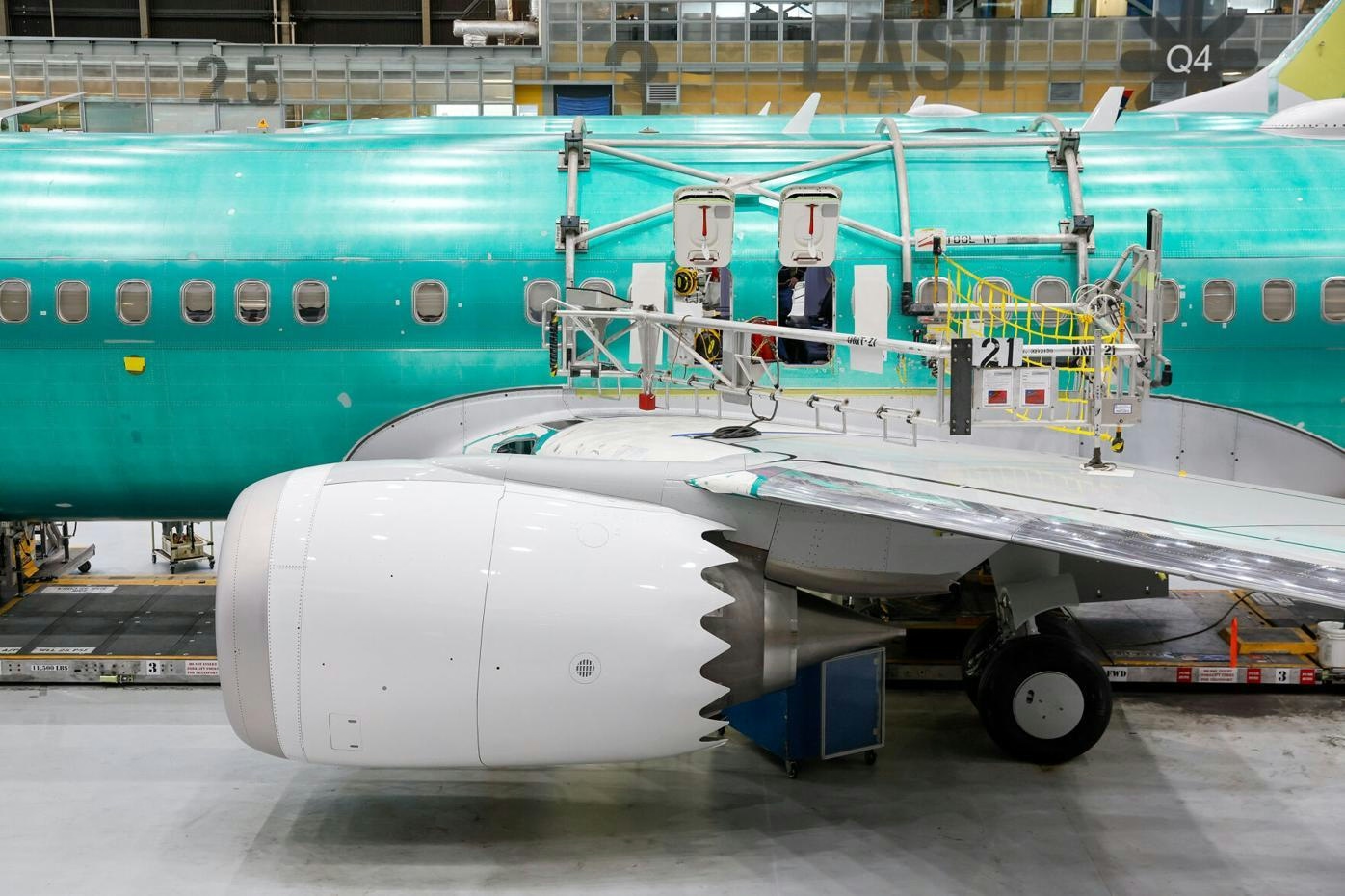
GE to Release Leap-1B Software Update This Year to Address 737 Max Cabin Smoke Issue
Background and Cause of the Issue
GE Aerospace is preparing to introduce a software update for the CFM International Leap-1B engines that power Boeing 737 Max aircraft, targeting a cabin smoke risk identified following two Southwest Airlines flights in 2025. These incidents involved bird strikes, where large birds were ingested into the engines, triggering the activation of the Leap-1B’s load reduction device (LRD). This safety mechanism is designed to prevent further engine damage by causing the engine fan to separate during severe imbalances.
However, the activation of the LRD revealed a critical flaw. It could open a flange connected to an oil sump and dislodge oil supply tubes, allowing oil to enter the compressor section. When exposed to the high temperatures within the engine, this oil generated smoke that the aircraft’s environmental control system could circulate into the cabin or cockpit, depending on which engine was affected.
Development and Certification of the Software Fix
In response, GE, in collaboration with Safran Aircraft Engines through their CFM joint venture, developed a software solution intended to reduce smoke by accelerating the closure of a valve during such events. Carlos Perez, GE’s vice-president of product safety, quality, and engineering, confirmed on May 19 that the software is currently undergoing certification processes involving both the engine and aircraft. He indicated that the update is expected to enter service within the year.
The certification process involves regulatory authorities including the Federal Aviation Administration (FAA), Boeing, and the European Union Aviation Safety Agency (EASA). While GE anticipates a prompt rollout following certification, the timeline for updating the global 737 Max fleet remains uncertain. A report from the U.S. Department of Transportation’s Office of Inspector General in April highlighted that the FAA and Boeing have agreed to complete fleet updates by 2026 but cautioned that this extended timeline could pose additional risks to public safety. GE has not provided a detailed schedule for the software’s in-service implementation, though Perez noted that software updates generally proceed more rapidly than hardware modifications.
Regulatory and Industry Implications
The National Transportation Safety Board (NTSB) has recommended enhanced cockpit smoke training for pilots and updated airline procedures to mitigate risks. The NTSB has also urged regulators—including the FAA, EASA, and China’s civil aviation authority—to evaluate whether similar risks exist in other Leap engine variants, such as the Leap-1A used on Airbus A320neo-family jets and the Leap-1C on the Comac C919, both of which incorporate the LRD system.
This issue arises amid increased scrutiny of engine manufacturers. Market concerns have emerged regarding the safety of Leap-1B engines and the potential reputational impact on GE. Meanwhile, competitors such as Pratt & Whitney are addressing durability challenges with their PW1000G engines, and CFM International is striving to increase Leap engine production despite ongoing supply chain difficulties.
As the certification process advances, industry stakeholders remain attentive to both the technical resolution and regulatory responses, given the significant implications for passenger safety and the broader commercial aviation sector.

Etihad Airways Suspends Airbus A380 Flights on Key Route

Aditya Birla Group Seeks Approval for Aircraft Leasing in GIFT City

Qatar Airways Highlights Innovation and Connectivity at Arabian Travel Market 2026

Hong Kong's Five-Year Plan Includes Andrew Fan's Aircraft Parts Processing Hub Proposal

ACIA Aero Leasing Delivers ATR72-600 to Air Nostrum

RTX Appoints Jill Albertelli as Head of Pratt & Whitney

TAT Technologies Joins Beyond Aero Hydrogen Aircraft Program

AURAK Study Highlights Barriers to Air Taxi Adoption in Emerging Economies

Xiamen Air Selects Altitude for 787 Maintenance at Heathrow

Etihad and Swissport Extend Global Partnership
