Imagem

Orquestre insights de IA em ações

Entre na lista de espera da AeroGenie hoje mesmo!

Tendências

Categories

GetJet Airlines Reports Higher Profits in 2025 Amid Stable Revenue
July 14, 2026By ePlane AI
GetJet Airlines Reports Higher Profits in 2025 Amid Stable Revenue
0
0
GetJet Airlines
Airline Financial Results
Middle East Expansion

GetJet Airlines Reports Higher Profits in 2025 Amid Stable Revenue

Financial Performance and Strategic Growth

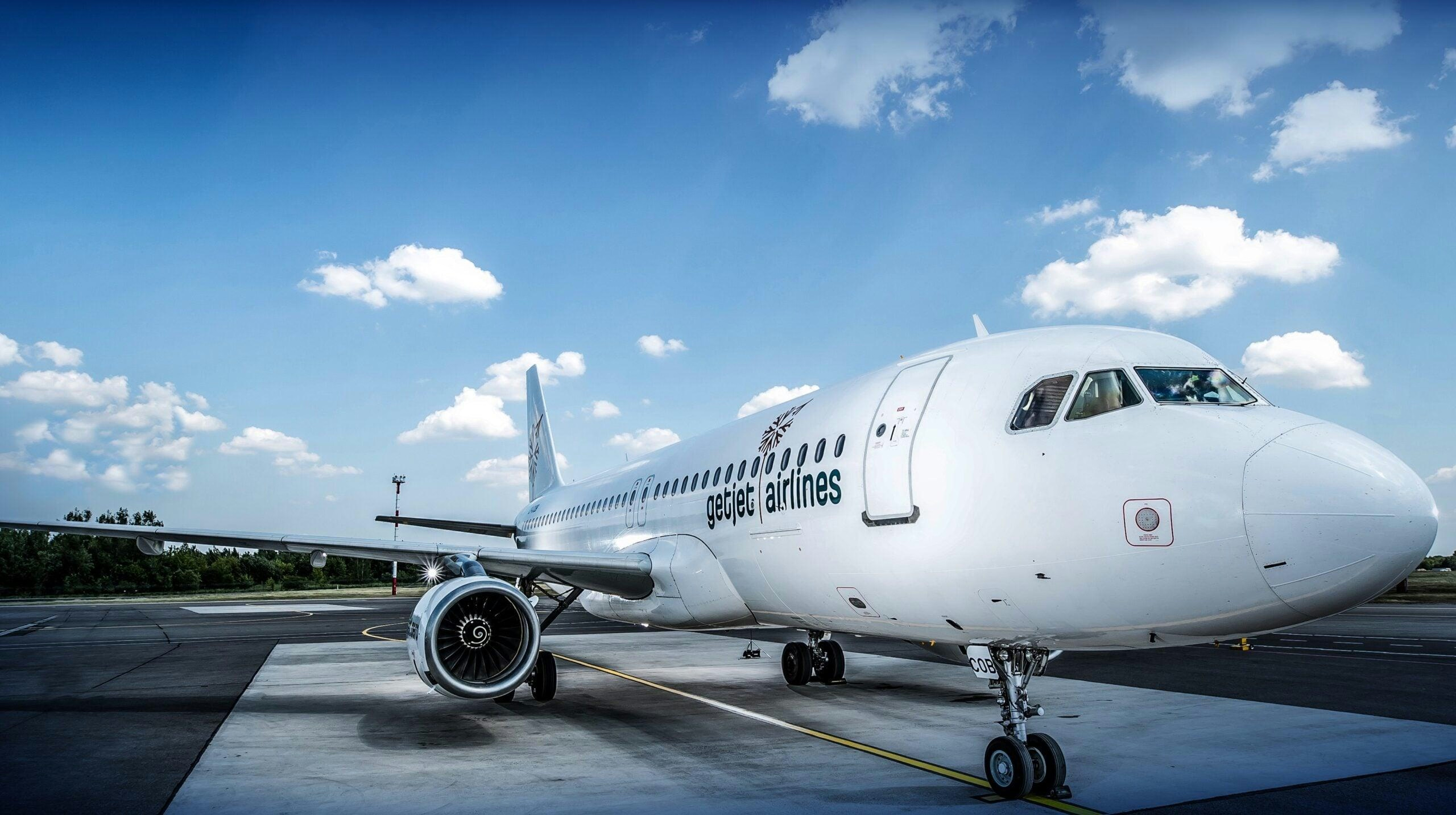
GetJet Airlines announced a robust financial performance for 2025, with net profit reaching €9.4 million, reflecting a nearly 20% increase compared to the previous year’s EBITDA of €10.9 million. The company’s revenue remained steady at €165 million, marginally up from €164 million in 2024. This stability underscores GetJet’s commitment to a disciplined and sustainable growth strategy rather than rapid expansion.

CEO Inga Duglas highlighted that the results validate the airline’s long-term approach focused on measured growth and operational efficiency. She noted that maintaining a fleet size of approximately 20 aircraft enables GetJet to stay agile and responsive to market fluctuations while delivering high service standards. “2025 confirmed the strength of our strategy. We have always focused on building the business responsibly—not by growing fast, but by growing sustainably,” Duglas stated.

Expansion and Market Position

Throughout the year, GetJet broadened its operational footprint beyond the European Union, notably increasing its presence in the Middle East. The airline forged a partnership with Etihad Airways and secured a long-term agreement with Eurowings, a subsidiary of the Lufthansa Group. To accommodate its expanding customer base, GetJet added six aircraft—five Airbus A320-200s and one Boeing 737-800—bringing its total fleet to 20, consistent with its strategy of maintaining an optimal scale.

Despite these gains, GetJet operates in a highly competitive environment. Major competitors are also enhancing their operational resilience and efficiency. Ryanair is expanding its in-house maintenance capabilities to address capacity risks linked to its aging fleet while continuing to outsource work to external maintenance providers. LOT Polish Airlines, although experiencing a profit decline in 2025, is pursuing rapid expansion and significant fleet investments. Jet2 reported record revenues and strong summer demand, further illustrating the sector’s competitive intensity.

Future Outlook and Investment Priorities

In light of these market challenges, GetJet plans to reinvest its 2025 profits to bolster the company’s resilience ahead of expected volatility in 2026. The airline’s investment focus will include enhancing its product offerings and, over the longer term, developing in-house technical capabilities to reduce dependence on third-party maintenance providers. This strategic direction aligns with broader industry trends among competitors seeking greater operational control.

As competition intensifies within the European aviation market, GetJet Airlines’ emphasis on sustainable growth, operational efficiency, and strategic reinvestment will be critical to sustaining its profitability and agility in the coming years.

More news
New Competitors Transforming the Private Aircraft MRO Industry

New Competitors Transforming the Private Aircraft MRO Industry

New Competitors Transforming the Private Aircraft MRO Industry The private aircraft Maintenance, Repair, and Overhaul (MRO) sector is undergoing significant transformation, driven by shifting industry demands, technological progress, and the emergence of new market entrants. A recent report published on ResearchAndMarkets.com highlights that the global private aircraft MRO market, valued at USD 29.44 billion in 2025, is expected to expand to USD 45.47 billion by 2032, reflecting a compound annual growth rate of 6.4%. Market Drivers: Wealth Creation and Rising Demand One of the primary forces behind this expansion is the influx of new wealth generated by technology ventures, particularly AI startups and aerospace companies such as SpaceX. This surge in capital has stimulated increased demand for private jets, fundamentally altering the MRO landscape. Market brokers have observed heightened activity, with firms like Jefferies expressing a more optimistic outlook on the sector’s prospects. The robust demand environment has attracted a wave of new competitors, intensifying rivalry and challenging established industry players. In response, incumbent companies are adopting aggressive strategies to defend and grow their market share. For example, AAR Corp. is pursuing acquisitions and leveraging its supply chain capabilities to capitalize on the momentum within the aerospace aftermarket. This competitive environment is fostering innovation and prompting the evolution of service offerings across the sector. Strategic Evolution and Digital Transformation The private aircraft MRO industry is evolving beyond traditional repair and maintenance services, increasingly emphasizing strategic uptime, regulatory compliance, and operational excellence—standards historically associated with commercial aviation. Digital maintenance solutions have become a core expectation, with providers integrating electronic records, aircraft health monitoring systems, and predictive analytics into their service models. Key developments include the adoption of integrated MRO software platforms and digital task cards, the enhancement of data pipelines to support real-time decision-making, and the modernization of cabin and avionics systems to meet growing connectivity and compliance requirements. These technological advancements enable providers to offer comprehensive maintenance and modification packages, thereby differentiating their services in an increasingly crowded marketplace. Workforce and Supply Chain Challenges The industry is also confronting workforce challenges as experienced technicians retire, leading to labor shortages. In response, companies are investing in training programs and mobile maintenance solutions designed to optimize hangar capacity and operational efficiency. Concurrently, resilient supply chains and strategic sourcing have become critical priorities, particularly as providers navigate ongoing disruptions amid rising demand. Impact of U.S. Tariffs and Contracting Adjustments The introduction of U.S. tariffs in 2025 is further reshaping the private aircraft MRO market. Although these tariffs do not always directly target aviation parts, they have influenced material costs and prompted providers to adopt a more comprehensive approach to total-cost analysis. This has led to a reevaluation of inventory management strategies and the implementation of clearer contract terms, including escalation clauses and surcharge mechanisms, to mitigate potential supply chain disruptions. Outlook With new wealth driving demand, accelerated digital transformation, and intensifying competitive pressures, the private aircraft MRO industry is positioned for sustained growth and innovation. Market participants who effectively leverage these trends and adapt to the evolving environment will be best placed to capitalize on emerging opportunities and enhance value within this dynamic sector.
New Terminal One at JFK partners with TCS to deliver AI-powered airport experience

New Terminal One at JFK partners with TCS to deliver AI-powered airport experience

New Terminal One at JFK Partners with TCS to Deliver AI-Powered Airport Experience The New Terminal One at John F. Kennedy International Airport (JFK) has entered into a strategic partnership with Tata Consultancy Services (TCS) to introduce an AI-driven, digitally enhanced passenger experience alongside more efficient airport operations. This collaboration forms a key component of JFK’s $19 billion transformation project, overseen by the Port Authority of New York and New Jersey, and aims to establish a new benchmark for airport innovation by integrating operational excellence, personalized services, and improved traveler experiences. Advancing Technology and Operational Efficiency TCS will act as the terminal’s strategic technology and innovation partner, spearheading the deployment of intelligent IT operations, advanced passenger processing systems, cybersecurity measures, and robust digital infrastructure. The partnership is designed to enhance operational transparency, streamline the entire travel process, and generate cost efficiencies for airlines operating within the terminal. Jennifer Aument, CEO of The New Terminal One, emphasized the significance of this collaboration, stating, “New York City and global travelers deserve an international airport terminal that offers an extraordinary experience. With TCS as our technology partner, we look forward to the New Terminal One earning its place among the world’s best, delivering a transformational guest experience for our partner airlines and their customers, while setting new standards in airport operations and innovation.” Leveraging its expertise in managing complex systems and crafting personalized guest experiences, TCS will establish the digital backbone of the new terminal. The company will oversee all technology systems, including AI-powered IT operations, infrastructure management, enterprise application support, and cybersecurity services. Utilizing proprietary solutions such as Cognix and ignio, TCS aims to provide comprehensive visibility and proactive management of critical components affecting the passenger journey—from processing and baggage handling to terminal security. Industry Context and Challenges The initiative to create an AI-powered airport experience aligns with broader industry trends, as airports worldwide increasingly adopt artificial intelligence to enhance safety and efficiency. For instance, the Federal Aviation Administration (FAA) recently partnered with Palantir to deploy AI tools aimed at improving runway safety. However, public skepticism toward AI remains a significant challenge. Research from Hotel News Resource reveals that 80% of Americans express wariness toward AI-generated information, highlighting concerns about transparency and control that could affect public trust in the new systems implemented at JFK. Competition within the aviation sector is intensifying as other entities accelerate their AI capabilities. The FAA’s use of AI to prevent runway incidents exemplifies this industry-wide shift, which, while fostering innovation, also underscores the critical need for stringent governance frameworks. Recent legal challenges faced by companies deploying AI, as reported by Bloomberg Law News, illustrate the evolving regulatory environment and the imperative for compliance in the development of AI-powered services. Moreover, cautionary examples such as Air Canada’s chatbot failure and Zillow’s automated home-buying tool demonstrate the importance of strategic oversight and human intervention in AI deployment. These cases serve as reminders that despite AI’s potential to enhance operational efficiency and passenger experience, careful management and transparency are essential to mitigate risks and maintain public confidence. As JFK’s New Terminal One prepares for its opening, the partnership with TCS positions the terminal at the forefront of airport innovation, striving to balance cutting-edge technology with the demands for trust, oversight, and leadership within the industry.
Air Montenegro Begins Wet-Lease of Boeing 737 Classic

Air Montenegro Begins Wet-Lease of Boeing 737 Classic

Air Montenegro Initiates Wet-Lease of Boeing 737 Classic Amid Fleet Delays Air Montenegro has begun operating a Boeing 737-400 on a wet-lease basis from Turkish charter airline Tailwind Airlines, addressing delays in the delivery of its fourth Embraer E195 aircraft. The 31-year-old jet has been in service for Air Montenegro since last week, providing a crucial interim solution to sustain scheduled operations. Under the terms of the wet-lease agreement, Tailwind Airlines supplies not only the aircraft but also the flight crew, maintenance services, and insurance coverage. Operational Challenges and Industry Context This development occurs against a backdrop of significant challenges confronting Air Montenegro and many other regional carriers. Rising operational costs and geopolitical uncertainties continue to exert pressure on European airlines, accelerating consolidation trends among major industry players. The decision to incorporate an older Boeing 737 into the fleet has sparked discussion regarding the financial ramifications of wet-leasing arrangements. These concerns are heightened by ongoing contract negotiations between Boeing and its engineers’ union, which have the potential to affect aircraft availability and operational expenses further. Market analysts suggest that Air Montenegro’s increased dependence on wet-leasing may attract scrutiny from investors and other stakeholders focused on the airline’s cost structure and long-term viability. At the same time, regional competitors are likely to implement strategic measures to protect their market positions amid fluctuating demand and shifting regulatory frameworks. Despite these pressures, Air Montenegro’s prompt deployment of the wet-leased aircraft highlights its determination to ensure uninterrupted service for its passengers while awaiting the expansion of its fleet. The airline’s forthcoming decisions will be closely monitored as it navigates the complex dynamics shaping the European aviation industry.
Regulation Grounds United Airlines’ Boeing 777-200 Fleet

Regulation Grounds United Airlines’ Boeing 777-200 Fleet

Regulation Grounds United Airlines’ Boeing 777-200 Fleet European Carbon Regulations and Industry Impact Europe’s evolving carbon regulations are significantly altering the economics of transatlantic aviation, compelling carriers such as United Airlines to expedite the retirement of older, less fuel-efficient aircraft like its nearly 29-year-old Boeing 777-200s. Although the European Union’s new environmental policies do not explicitly ban aging aircraft or impose direct taxes on jet fuel, 2026 represents a critical juncture as these regulations begin to influence the viability of widebody aircraft on long-haul routes. United Airlines has long intended to phase out its oldest 777-200s, replacing them with more fuel-efficient models such as the Boeing 787 Dreamliner and, eventually, the Airbus A350-900. This transition is driven not by any single regulatory mandate but by broader shifts in industry economics that increasingly favor aircraft with lower fuel consumption and reduced emissions. The Role of the Carbon Border Adjustment Mechanism A central factor in this shift is the European Union’s Carbon Border Adjustment Mechanism (CBAM), which will enter its definitive phase in 2026. While CBAM does not currently apply to aviation fuel, its implications for the aviation sector are substantial. The mechanism targets imports of carbon-intensive materials, including steel and aluminum, which are essential components in aircraft manufacturing, engine parts, and airport infrastructure. As suppliers incorporate the costs of embedded carbon pricing, airlines face increased expenses across their supply chains, affecting everything from new aircraft deliveries to maintenance and infrastructure projects. CBAM also reflects a broader regulatory trajectory in Europe. Industry experts, including those from the Florence School of Regulation and aviation consultancy Ishka, highlight ongoing discussions about extending carbon pricing to aviation and ensuring that non-European carriers adhere to comparable environmental standards. Although CBAM’s direct impact on airlines remains limited at present, it signals the growing acceptance of carbon costs as a permanent element in airline economics. Immediate Pressures from the EU Emissions Trading System and Operational Challenges The most immediate regulatory pressure on airlines arises from the EU Emissions Trading System (EU ETS), which already mandates that carriers operating on covered routes account for their carbon emissions. The gradual phaseout of free aviation allowances, coupled with stricter Sustainable Aviation Fuel (SAF) requirements, is intensifying the financial burden on airlines, rendering older, less efficient aircraft increasingly expensive to operate. In addition to regulatory challenges, United’s 777-200 fleet faces operational constraints. For instance, in Canada, concerns over potential interference from 5G networks have led to restrictions on the deployment of these aircraft in certain regions. These limitations reduce fleet flexibility and raise concerns about reliability and service continuity. Market Implications and Fleet Modernization These regulatory and operational pressures are reshaping market dynamics. Passengers may gravitate toward airlines operating newer, more reliable fleets, while competitors are likely to intensify marketing efforts to attract travelers wary of potential disruptions. For United Airlines, the convergence of regulatory, operational, and market factors is accelerating the transition to a modern, sustainable long-haul fleet, positioning 2026 as a pivotal year in its fleet renewal strategy.
ICBC Moves to Deregister Four 737 MAX Jets Leased to SpiceJet

ICBC Moves to Deregister Four 737 MAX Jets Leased to SpiceJet

ICBC Moves to Deregister Four 737 MAX Jets Leased to SpiceJet Leasing Firms Seek Deregistration Amid Financial Struggles Two Irish leasing companies affiliated with the Industrial and Commercial Bank of China’s (ICBC) leasing division have formally requested India’s aviation regulator to deregister four Boeing 737 MAX aircraft currently leased to SpiceJet. This development, revealed through filings with the Directorate General of Civil Aviation (DGCA), signals a critical step toward repossessing the jets amid the Indian carrier’s ongoing financial difficulties. The applications were submitted by Sky High LXXX Leasing Company Ltd and Sky High LXXVIII Leasing Company Ltd, both owned by ICBC Financial Leasing, a subsidiary of the state-owned ICBC, which is the world’s largest bank by assets. Although the filings did not specify the reasons behind the deregistration requests, the move tests the efficacy of India’s recently enacted aviation legislation designed to facilitate lessors in reclaiming aircraft from financially distressed airlines. The outcome of this case may set a precedent for future repossessions under the new regulatory framework. SpiceJet’s Financial Woes and Operational Impact SpiceJet, India’s fourth-largest airline, has been contending with severe liquidity challenges. The carrier has scaled back its flight operations, grounded multiple aircraft, delayed pilot salaries, and sought financial relief through a government-backed credit scheme. According to sources familiar with the matter, SpiceJet has already received 1.5 billion rupees (approximately $15.6 million) from this scheme and anticipates an additional 3.5 billion rupees in the near term. The airline has not publicly commented on these funding arrangements. This year, at least two lessors have issued payment default notices to SpiceJet, underscoring the airline’s persistent cash flow problems. In response to the deregistration requests, a SpiceJet spokesperson explained that the four Boeing 737 MAX jets have been grounded for an extended period due to manufacturing defects affecting the engines’ high-pressure turbines. The spokesperson emphasized that deregistering these aircraft would relieve the airline of lease rental obligations on assets that have remained non-operational for a significant duration and would not impact current flight operations. Despite these assurances, industry analysts caution that the loss of leased aircraft could further strain SpiceJet’s operational capacity. Currently, only 11 of the airline’s 53 aircraft are active, according to aviation data provider Planespotters.net. The potential reduction in fleet size may compel SpiceJet to seek alternative aircraft sources, while competitors could capitalize on the opportunity to increase their market share should the airline’s difficulties persist. Market Response and Broader Implications Investor sentiment has reflected growing concerns over SpiceJet’s financial health. Since the beginning of the year, SpiceJet’s shares have plummeted nearly 63%, in stark contrast to a modest 1% gain for InterGlobe Aviation, the parent company of IndiGo, India’s largest airline. The deregistration requests by ICBC’s leasing entities highlight the mounting pressures on SpiceJet and underscore the challenges faced by lessors in recovering assets amid the evolving regulatory landscape in India’s aviation sector. ($1 = 96.1475 Indian rupees)
FAA Explores AI Solutions to Mitigate Flight Delays

FAA Explores AI Solutions to Mitigate Flight Delays

FAA Explores AI Solutions to Mitigate Flight Delays Advancing Air Traffic Management with Artificial Intelligence The Federal Aviation Administration (FAA) is turning to artificial intelligence in an ambitious effort to address the persistent problem of flight delays that have long plagued U.S. air travelers. In a significant move, the agency awarded an $875 million contract to Boston-based Air Space Intelligence (ASI) to develop and implement AI-driven air traffic management systems. The initiative aims to substantially reduce delays within the coming years by enhancing the efficiency and predictability of airspace operations. Central to the FAA’s strategy are two innovative platforms designed to transform how air traffic is managed. The first, known as Strategic Management of Airspace, Routes and Trajectories (Smart), will leverage AI to analyze vast amounts of data and forecast congestion in the airspace. This system will provide real-time guidance to air traffic controllers, optimizing routing and departure schedules before flights even leave the gate. The second platform, Flow Management Data and Services (FMDS), is intended to serve as the core of the Air Traffic Control System Command Center. FMDS will integrate airline schedules, historical weather data, airport capacity, and operational constraints such as runway maintenance, enabling the FAA to anticipate and manage traffic flows months in advance. By consolidating these diverse data sources into a unified, cloud-based platform, the FAA seeks to replace the current fragmented approach with a more predictive and proactive system. This shift is expected to move air traffic management away from its traditionally reactive nature, allowing for better planning and fewer disruptions. Challenges and Industry Response Despite the promise of these AI-driven solutions, experts express caution regarding the FAA’s ambitious timeline, which targets full implementation by the end of 2028. Philip Mann, a National Airspace System specialist and former FAA official, acknowledges the potential benefits but remains skeptical about the feasibility of the schedule. He highlights the complexities involved in integrating new AI technologies with existing infrastructure, ensuring data accuracy, and managing the substantial costs associated with such a comprehensive upgrade. The $875 million investment reflects the scale and intricacy of this undertaking. Market reactions have been mixed, with some stakeholders questioning whether AI alone can resolve the deep-rooted infrastructure challenges that contribute to flight delays. Meanwhile, competitors in both the airline and technology sectors are accelerating their own AI initiatives to maintain a competitive edge. For instance, Palantir has recently introduced AI tools aimed at predicting runway incidents, signaling a broader industry trend toward automation and data-driven decision-making. Potential Impact on Air Travel Despite these challenges, industry experts remain cautiously optimistic about the FAA’s approach. Margaret Wallace, a former U.S. Air Force air traffic controller and current academic at the Florida Institute of Technology, anticipates that the ASI systems will automate many manual processes, allowing for more efficient use of available airspace. Mann suggests that, if successful, the new system could reduce widespread delays by localizing disruptions caused by weather or other factors, rather than allowing them to cascade across the network. He notes that the system may result in fewer available flights in certain areas, as scheduling restrictions are imposed to prevent overloading airspace during adverse conditions. Nevertheless, the overarching goal is to improve planning and leverage AI insights to create a smoother and more reliable flying experience for passengers. As the FAA prepares to pilot the Smart platform this fall, the aviation industry will be closely monitoring whether artificial intelligence can fulfill its promise to modernize and streamline the management of America’s increasingly crowded skies.
ALSIM Introduces ALX Software Update at CAFA Conference in Cyprus

ALSIM Introduces ALX Software Update at CAFA Conference in Cyprus

ALSIM Introduces ALX Software Update at CAFA Conference in Cyprus **Larnaca, Cyprus, July 14, 2026** – Flight simulator manufacturer ALSIM has unveiled its latest ALX software update at the CAFA Flying Training Center in Larnaca, Cyprus. The announcement was made during the CAFA Conference, an event that brought together key stakeholders in the aviation training sector to explore recent technological advancements. This update represents a significant milestone in ALSIM’s ongoing efforts to enhance aviation training through innovative solutions. Enhanced Training Capabilities and Industry Impact The updated ALX software expands the simulator’s versatility, supporting a broad spectrum of training configurations. These include single- and multi-engine piston aircraft with both analog and glass cockpit options, as well as light turboprops, light jets, and medium jets. This flexibility enables training centers such as CAFA to deliver comprehensive pilot instruction tailored to a variety of operational requirements. ALSIM’s commitment to lifecycle services—encompassing software updates, upgrades, certification support, maintenance, and technical assistance—ensures that its customers remain at the forefront of flight training technology. The new software release is viewed as a strategic initiative to strengthen ALSIM’s position in a competitive market. While the update is expected to improve training quality and operational readiness for CAFA’s cadets, it may also prompt rival manufacturers to accelerate their own software development efforts, potentially intensifying competition within the sector. Market responses are anticipated to be mixed, with some investors welcoming the innovation as a positive sign, while others may raise concerns regarding integration challenges and associated costs. CAFA’s Commitment to Advanced Training Christos Limnatitis, Accountable Manager of CAFA - FlyIAA, highlighted the importance of continuous technological advancement in pilot training. He stated, “At CAFA - FlyIAA, we are committed to providing an exceptional training environment that combines experienced instructors with the latest aviation technologies. The deployment of the newest ALSIM ALX software update is another important step in that commitment. We are proud to welcome cadets from across the international network and provide them with advanced simulation capabilities that enhance training quality, operational readiness, and the overall learning experience. Continuous investment in innovation ensures our students are equipped with the knowledge, skills, and confidence required for successful careers in today’s aviation industry.” CAFA classifies the ALX as an FNPT II device within its diverse training fleet, which also includes Aquila AT-01, Diamond DA40, and Tecnam P2006T aircraft. This variety reflects the center’s dedication to offering a wide range of training platforms to meet evolving pilot education needs. ALSIM’s Global Presence and Future Outlook Headquartered in France, ALSIM specializes in the manufacture of FAA- and EASA-certified flight training devices, including FNPT II, FNPT II MCC, and AATD simulators. Since its establishment in 1994, the company has installed and certified over 450 simulators in more than 60 countries, serving a global customer base exceeding 400 organizations. As ALSIM’s latest software update enters the market, the company’s ability to sustain its competitive advantage will depend on the successful integration of new features and its responsiveness to shifting industry dynamics.
SimViz Labs and Peak Pacific Group Partner on Advanced Aviation Training Software

SimViz Labs and Peak Pacific Group Partner on Advanced Aviation Training Software

SimViz Labs and Peak Pacific Group Forge Partnership to Advance Aviation Training Software **July 14, 2026 – Global** — SimViz Labs, a developer renowned for its iPad-based Flight Management System (FMS) simulation technology, has entered into a strategic partnership with Peak Pacific Group, a Hong Kong-based specialist in digital aviation training. This collaboration seeks to develop next-generation aviation training software tailored to the needs of airlines and training organizations worldwide. Navigating a Competitive and Evolving Market The partnership emerges amid intense competition and rapid technological progress within the aviation training sector. Established industry leaders, including Cirrus Aircraft, have recently introduced innovations such as the TRAC10 trainer, while the Federal Aviation Administration (FAA) awarded a significant air traffic management software contract to a Boston-based company. These developments highlight the challenges that new entrants like SimViz Labs and Peak Pacific Group face as they strive to establish a foothold in a market dominated by well-resourced incumbents. Reactions from the market have been varied. Some industry stakeholders regard the collaboration as a promising advancement toward more sophisticated and accessible training solutions, especially as airlines and training institutions increasingly prioritize digital and mobile-friendly platforms. Conversely, others remain cautious, questioning whether the partnership can effectively compete against established providers with extensive resources and proven track records. Potential Impact on Aviation Training Innovation Industry analysts suggest that the entry of SimViz Labs and Peak Pacific Group could stimulate further innovation across the sector, potentially prompting competitors to accelerate their research and development initiatives. As the aviation training technology landscape continues to evolve, the partnership’s success will likely hinge on its ability to deliver robust, scalable solutions that address the complex demands of contemporary flight training. Both companies have expressed confidence in their combined expertise and dedication to elevating aviation training standards. Specific product details and rollout timelines are anticipated to be announced in the coming months.
NASA Study Points to Smoother Air Taxi Rides

NASA Study Points to Smoother Air Taxi Rides

NASA Study Points to Smoother Air Taxi Rides As the air taxi industry prepares for commercial deployment, NASA has conducted a comprehensive study to better understand passenger comfort during urban air travel. Air taxis—small, vertical-takeoff-and-landing aircraft intended for short trips within cities—face significant challenges in gaining public acceptance, with ride quality emerging as a critical factor. At NASA’s Armstrong Flight Research Center in Edwards, California, researchers have employed a virtual reality passenger ride quality simulator to investigate how sudden aircraft motions impact traveler experience. Investigating Passenger Comfort Through Simulation Volunteers, including NASA employees, participated in a series of simulated flights designed to replicate the abrupt shifts and tilts that air taxis might encounter in operation. These virtual experiences involved four levels of aircraft motion, encompassing pitching, rolling, tilting, and rapid climbs or dives on routes such as the virtual journey between downtown San Francisco and Alcatraz Island. Participants were asked to rate their comfort and indicate their willingness to fly under similar real-world conditions. The study revealed that sudden and sharp movements—particularly pitching, rolling, and rapid acceleration—can significantly diminish passenger comfort. While some individuals tolerated moderate motion changes, others found even these unsettling. These findings suggest that contemporary travelers may have lower tolerance for rough flight conditions compared to airline passengers of previous decades, underscoring the importance of smooth ride quality for the success of air taxis. Implications for Air Taxi Design and Industry Development Using the data collected, NASA developed models that correlate specific aircraft motions with passenger comfort and willingness to fly. These models are expected to inform future air taxi design and operational strategies, enabling manufacturers and operators to identify and mitigate maneuvers that could be perceived as too jarring. Curtis Hanson, lead researcher at NASA Armstrong, emphasized the significance of these insights, stating that the study helps establish passenger comfort thresholds for aggressive flight motions and supports predictions about how air taxis should operate to ensure a pleasant experience. The research arrives amid ongoing challenges for the air taxi sector, including regulatory approval, safety considerations, and technological constraints. Consumer acceptance, driven largely by comfort and perceived advantages over traditional transportation, will be crucial in shaping market dynamics. In response, industry players may intensify research and development efforts or pursue strategic partnerships to enhance their offerings. NASA’s findings have the potential to influence aircraft design, operational protocols, and industry standards, thereby facilitating the emergence of air taxis as a viable and attractive mode of urban transportation in the near future.
Unifly Joins SESAR JU to Advance the Future of the Digital European Sky

Unifly Joins SESAR JU to Advance the Future of the Digital European Sky

Unifly Joins SESAR JU to Advance the Future of the Digital European Sky Unifly, a prominent provider of Unmanned Aircraft Systems (UAS) Traffic Management solutions, has officially become a member of the SESAR Joint Undertaking (SESAR JU), Europe’s leading partnership dedicated to air traffic management research and innovation. This addition expands SESAR JU’s collaborative network to 59 organizations, joining other recent members such as NAV CANADA, Avinor, and Tern Systems. Strengthening the Digital European Sky Initiative By integrating into SESAR JU, Unifly aligns itself with a pan-European initiative aimed at developing the Digital European Sky—a vision for a safe, digital, and interoperable aviation ecosystem. The company will leverage its operational experience in UTM and regulatory expertise to collaborate with air navigation service providers, airports, regulators, manufacturers, and research institutions. This partnership is expected to accelerate the deployment of U-space and UTM solutions across Europe, facilitating the scalable and secure integration of drones into European airspace. Andres Van Swalm, CEO of Unifly, emphasized the significance of this development, stating, “Joining SESAR JU is an important step for Unifly as we continue to contribute to the safe and scalable integration of drones into the European airspace. SESAR JU plays a central role in shaping the Digital European Sky, and we are proud to bring our operational UTM experience, regulatory expertise, and commitment to autonomous aviation into this collaborative ecosystem.” Industry Implications and Challenges Unifly’s membership comes amid a period of considerable financial pressure on the European aviation sector, driven by the costly modernization of air traffic management infrastructure and the integration of emerging technologies. This development is likely to attract heightened attention from investors and stakeholders who are closely monitoring the financial ramifications of such partnerships. The competitive dynamics within the aviation industry are also evolving. As Unifly deepens its involvement with SESAR JU, major carriers such as Lufthansa and Air France-KLM may intensify their own modernization efforts to preserve market competitiveness. This environment could stimulate innovation but also increase financial risks and competitive pressures across the sector. Sustainability remains a critical focus for SESAR JU, particularly regarding the transition to greener and more efficient aviation fuels. This shift presents both opportunities and challenges for Unifly and its industry counterparts as they strive to balance technological progress with environmental responsibility. Unifly’s Role in European Aviation Innovation Over the past decade, Unifly has played a significant role in numerous European research and innovation projects, contributing to the development of U-space concepts and digital airspace services. Its inclusion in SESAR JU further solidifies its position as a key player in delivering the technologies and operational frameworks necessary to support the expansion of the drone economy within Europe and beyond. About Unifly Unifly is an aviation technology company focused on enabling autonomous aviation through advanced UAS Traffic Management. Its platform connects authorities, drone operators, and stakeholders to digitize and automate airspace management, ensuring the safe integration of next-generation aircraft. Additionally, Unifly Consulting provides regulatory guidance and operational strategy, fostering a comprehensive ecosystem for autonomous aviation. About SESAR JU The SESAR Joint Undertaking is a European public-private partnership established to accelerate the realization of the Digital European Sky. It unites public and private aviation stakeholders to develop and implement technological solutions for the future of air traffic management, encompassing the integration of conventional aircraft, drones, air taxis, and higher-altitude vehicles.
line