
Orquestre insights de IA em ações

Tendências
Categories
Global Airlines Address Critical Software Glitch
Global Airlines Address Critical Airbus A320 Software Glitch
Widespread Disruptions Prompt Urgent Recall
Airlines around the world have been compelled to respond swiftly to a critical software flaw affecting more than 6,000 Airbus A320 family aircraft. The defect, which surfaced during a peak holiday travel season, resulted in extensive flight cancellations and operational disturbances across the United States, Europe, India, and the Asia Pacific region. The recall was triggered after a JetBlue flight experienced an unexpected altitude drop on a route from Mexico to the United States, necessitating an emergency landing. Subsequent investigations identified a malfunction within the ELAC (Elevator Aileron Computer) system, a crucial component responsible for managing key flight controls.
To mitigate the risk, airlines were instructed to implement a software downgrade before returning the affected aircraft to service. This directive, issued as an Emergency Airworthiness Directive (EAD) by the European Union Aviation Safety Agency (EASA) on November 28, underscored the urgency of the situation and the need for immediate corrective action.
Impact on Major Carriers and Industry Response
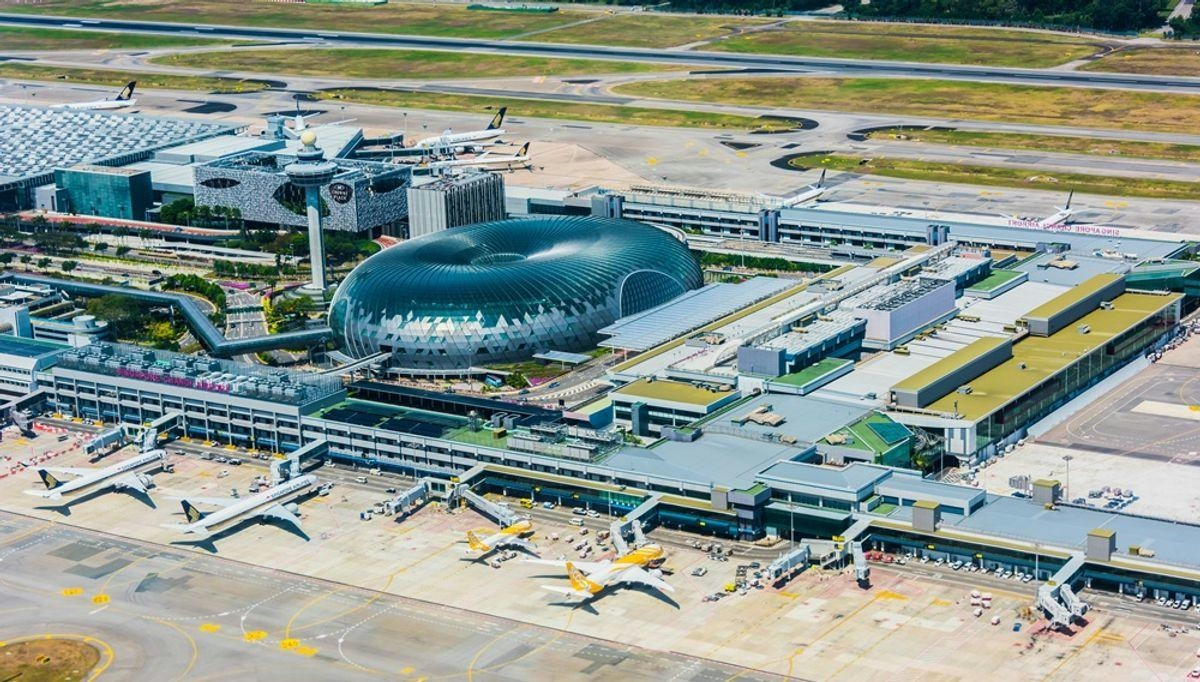
Among the most affected carriers was American Airlines, the largest global operator of A320 aircraft. Out of its fleet of 480 A320 family jets, approximately 209 required immediate software updates. The airline reported that the majority of these modifications were completed by November 29, thereby reducing the potential for further operational disruptions. Similarly, Singapore’s Scoot confirmed that 21 of its aircraft were impacted, with repairs scheduled for completion by the same date. In contrast, Thai Airways International clarified that its A320 fleet was unaffected, as its aircraft do not utilize the compromised ELAC B L104 unit. AirAsia Group also announced a prompt return to normal operations following compliance with the EASA directive.
The recall coincided with a period of heightened solar activity and increased regulatory scrutiny, factors that compounded the challenges faced by airlines in managing complex avionics software. Many operators opted to revert to previous, stable software versions to maintain flight safety, highlighting the critical importance of robust software management protocols in modern aviation.
Ongoing Efforts and Industry Implications
Despite the initial disruption, airlines succeeded in limiting the overall impact on flight schedules, with many completing the necessary software updates ahead of mandated deadlines. Airbus reported on December 1 that fewer than 100 aircraft still required modification and emphasized its active role in supporting airlines to expedite the remediation process.
This incident has drawn renewed attention to the resilience of aviation software systems and the necessity for rapid, coordinated responses to technical failures. While most affected flights have now resumed normal operations, the episode serves as a stark reminder of the vulnerabilities inherent in increasingly digitalized aircraft and the ongoing imperative to safeguard against such risks.

Etihad Airways Suspends Airbus A380 Flights on Key Route

Aditya Birla Group Seeks Approval for Aircraft Leasing in GIFT City

Qatar Airways Highlights Innovation and Connectivity at Arabian Travel Market 2026

Hong Kong's Five-Year Plan Includes Andrew Fan's Aircraft Parts Processing Hub Proposal

ACIA Aero Leasing Delivers ATR72-600 to Air Nostrum

RTX Appoints Jill Albertelli as Head of Pratt & Whitney

TAT Technologies Joins Beyond Aero Hydrogen Aircraft Program

AURAK Study Highlights Barriers to Air Taxi Adoption in Emerging Economies

Xiamen Air Selects Altitude for 787 Maintenance at Heathrow

Etihad and Swissport Extend Global Partnership
