
Orquestre insights de IA em ações

Tendências
Categories
Government Invests Nearly £50 Million to Advance Drone and Flying Taxi Technology and Combat Illegal Drones
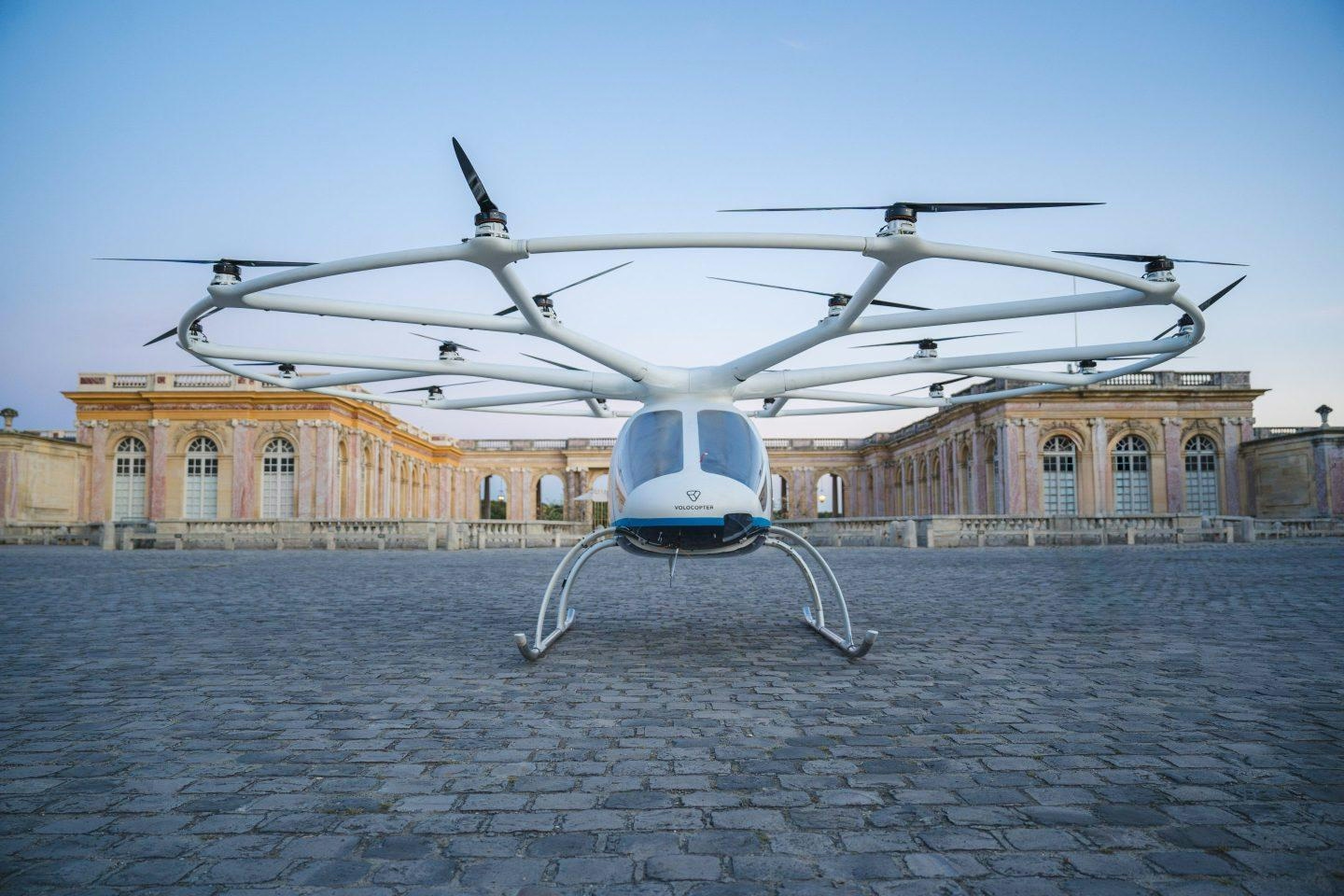
Government Invests Nearly £50 Million to Advance Drone and Flying Taxi Technology and Combat Illegal Drones
The UK government has unveiled a £46.5 million investment package aimed at accelerating the development of drone and flying taxi technologies, alongside introducing robust measures to address illegal drone activity. This initiative is designed to support British employment, stimulate innovation, and contribute to sustained economic growth. Advanced aviation technologies are anticipated to add up to £103 billion to the UK economy over the next 25 years.
Funding Allocation and Technological Advancements
Of the total investment, £26 million will be allocated to expedite the integration of drones and air taxis into UK airspace. The remaining £20.5 million will finance the development of an innovative drone identification system, often described as a “numberplate for the skies.” This system will enable law enforcement agencies to identify and prosecute illegal drone operators by tracking drones in real time, thereby enhancing public safety and fostering confidence in the expanding drone sector.
Aviation, Maritime and Decarbonisation Minister Keir Mather emphasized the government’s commitment to supporting British aviation innovators. He highlighted that the funding will not only drive regulatory reforms but also remove barriers to growth, creating jobs and reducing emissions. Mather underscored the importance of pairing innovation with security, noting that over half of the investment is dedicated to developing the new identification system to assist emergency services and bolster public trust in an industry projected to be worth £103 billion by 2050.
Security Minister Dan Jarvis reinforced this message, stating that the new system will empower law enforcement to take decisive action against unlawful drone use, thereby protecting the public and maintaining order in the skies.
The Hybrid Remote ID System and Regulatory Streamlining
The centerpiece of the government’s security measures is the Hybrid Remote ID system, which will broadcast a drone’s identification and location during flight. This information can be received by nearby devices, while flight data will also be accessible through a secure online platform for authorised personnel, including remote access. The system will maintain historical flight records to support investigations when necessary.
Administered by the Civil Aviation Authority (CAA), the funding will also facilitate the simplification of regulations and digital processes. This will ease the deployment of drones in public services such as emergency response, medical logistics, and infrastructure inspection. The government has set an ambitious target to have flying taxis operational by 2028, supported by a streamlined digital application process designed to reduce regulatory obstacles for drone operators.
International Context and Geopolitical Implications
The UK’s drive to lead in drone technology unfolds amid a complex international environment marked by intense competition and regulatory challenges. Legal disputes between major US companies, including Joby Aviation and Archer Aviation, illustrate the fierce rivalry and intellectual property concerns within the sector. Meanwhile, regulatory tightening in China, a global hub for drone manufacturing, has imposed stricter controls on recreational and civilian drones, potentially disrupting supply chains and market access worldwide. In the United States, the Federal Communications Commission’s measures against foreign-made drones could significantly impact companies such as DJI, which depend heavily on the American market.
Beyond commercial interests, the UK’s investment in drone technology carries strategic and military significance. This is exemplified by the recent commitment to supply Ukraine with 120,000 drones, highlighting the growing importance of unmanned aerial systems in modern conflict and defence.
As the UK navigates the challenges of innovation, security, and international competition, this substantial government investment seeks to position the country at the forefront of next-generation aviation, while addressing the complexities of regulation, safety, and global market dynamics.

Etihad Airways Suspends Airbus A380 Flights on Key Route

Aditya Birla Group Seeks Approval for Aircraft Leasing in GIFT City

Qatar Airways Highlights Innovation and Connectivity at Arabian Travel Market 2026

Hong Kong's Five-Year Plan Includes Andrew Fan's Aircraft Parts Processing Hub Proposal

ACIA Aero Leasing Delivers ATR72-600 to Air Nostrum

RTX Appoints Jill Albertelli as Head of Pratt & Whitney

TAT Technologies Joins Beyond Aero Hydrogen Aircraft Program

AURAK Study Highlights Barriers to Air Taxi Adoption in Emerging Economies

Xiamen Air Selects Altitude for 787 Maintenance at Heathrow

Etihad and Swissport Extend Global Partnership
