
Orquestre insights de IA em ações

Tendências
Categories
Honeywell Launches SkyShot Uncrewed Fighter Engine Targeting Asian Markets
Honeywell Launches SkyShot Uncrewed Fighter Engine Targeting Asian Markets
Expanding Focus on Autonomous Military Aviation
Honeywell Aerospace is intensifying its efforts in the Asian defense sector, driven by growing demand for autonomous aviation platforms and uncrewed tactical jets. The company’s expertise in navigation systems, compact fly-by-wire controls, and propulsion technologies is increasingly critical to the development of next-generation military aircraft designed to operate without pilots. Matt Milas, president of Honeywell Aerospace’s defense and space unit, emphasized that a wide array of autonomous systems rely heavily on Honeywell’s core technologies, including jam-resistant guidance and alternative navigation solutions for GPS-denied environments. Among these, propulsion stands out as the most promising area for growth.
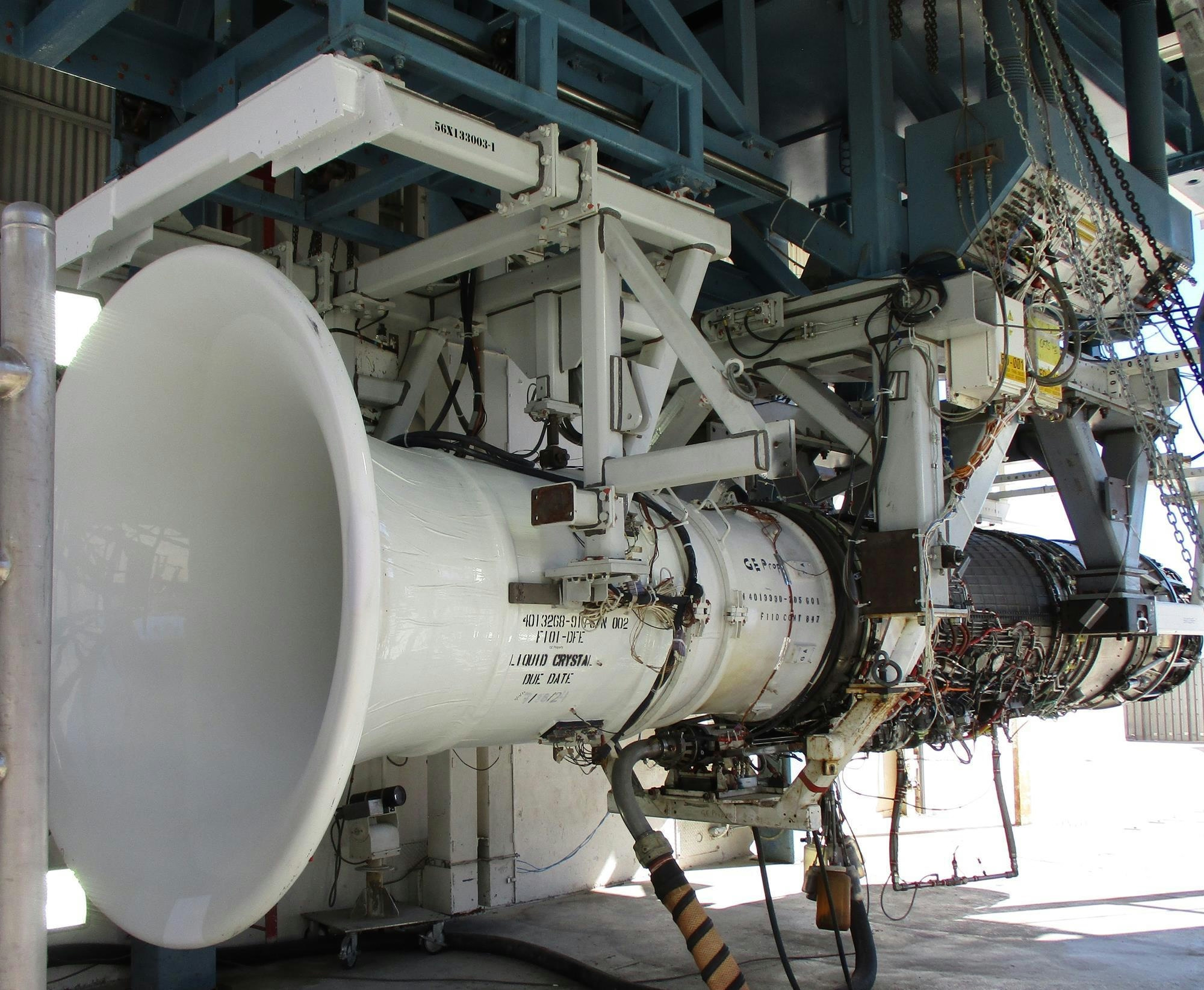
To address this opportunity, Honeywell has introduced the SkyShot 1600 (HON1600), a lightweight and cost-effective turbofan engine specifically engineered for uncrewed fighter aircraft. Leveraging its experience with auxiliary power units, Honeywell has designed the SkyShot to be scalable, delivering thrust ranging from 800 to 2,000 pounds (3.5 to 8.9 kN). Milas described this thrust range as the “sweet spot” for affordable uncrewed jets that military operators are seeking. The SkyShot is notably more compact than Honeywell’s F124 engine, which currently powers several light fighters, including the Leonardo M-346.
Market Context and Competitive Landscape
The SkyShot program was announced in 2025, coinciding with the US Air Force’s flight testing of two prototype Collaborative Combat Aircraft: the General Atomics YFQ-42A and Anduril Industries YFQ-44A. Notably, Anduril’s prototype is powered by the Williams International FJ44 engine, a model experiencing high demand and limited availability. Milas highlighted this shortage, noting that “everybody’s using Williams FJ44 engines, and nobody can get enough of them,” underscoring a significant gap in propulsion options for this class of aircraft.
This gap has prompted not only Honeywell but also competitors such as Rolls-Royce, Pratt & Whitney, and the GE Aerospace-Kratos partnership to develop new small engines tailored to uncrewed fighter requirements. Honeywell has already begun ground testing the SkyShot, having mounted the engine on a test stand earlier this year.
Despite these advances, Honeywell faces stiff competition in the Asian market. Established regional players like ST Engineering are actively developing their own capabilities, exemplified by ST’s unveiling of a new medium-lift uncrewed aircraft system at the Singapore Airshow 2026. With defense budgets subject to fluctuation and regulatory challenges persisting across the region, the reception to new entrants like SkyShot may vary. Competitors are expected to respond by enhancing their uncrewed fighter technologies or forging strategic partnerships to maintain their competitive positions in this rapidly evolving sector.
Strategic Partnerships and Regional Engagement
Beyond propulsion, Honeywell continues to supply navigation and guidance systems for prominent programs such as Boeing’s and the Royal Australian Air Force’s MQ-28 Ghost Bat autonomous jet. The company is also strengthening its collaborations in Japan and South Korea, working closely with major local manufacturers including Mitsubishi Heavy Industries, Subaru, Kawasaki Heavy Industries, and Korea Aerospace Industries. These partnerships support a broad spectrum of projects, ranging from the KF-21 fighter jet to new uncrewed aircraft and guided munitions.
In Australia, Honeywell is actively involved in the “Second Pillar” of the trilateral Australia-UK-US security pact, further solidifying its role in the region’s defense modernization initiatives. As technological advancements accelerate and competition intensifies, Honeywell’s SkyShot engine represents a strategic effort to establish a significant presence in Asia’s expanding market for uncrewed fighter aircraft.

Etihad Airways Suspends Airbus A380 Flights on Key Route

Aditya Birla Group Seeks Approval for Aircraft Leasing in GIFT City

Qatar Airways Highlights Innovation and Connectivity at Arabian Travel Market 2026

Hong Kong's Five-Year Plan Includes Andrew Fan's Aircraft Parts Processing Hub Proposal

ACIA Aero Leasing Delivers ATR72-600 to Air Nostrum

RTX Appoints Jill Albertelli as Head of Pratt & Whitney

TAT Technologies Joins Beyond Aero Hydrogen Aircraft Program

AURAK Study Highlights Barriers to Air Taxi Adoption in Emerging Economies

Xiamen Air Selects Altitude for 787 Maintenance at Heathrow

Etihad and Swissport Extend Global Partnership
