
Orquestre insights de IA em ações

Tendências
Categories
How Collins Aerospace Redesigned the Least Popular Plane Seat
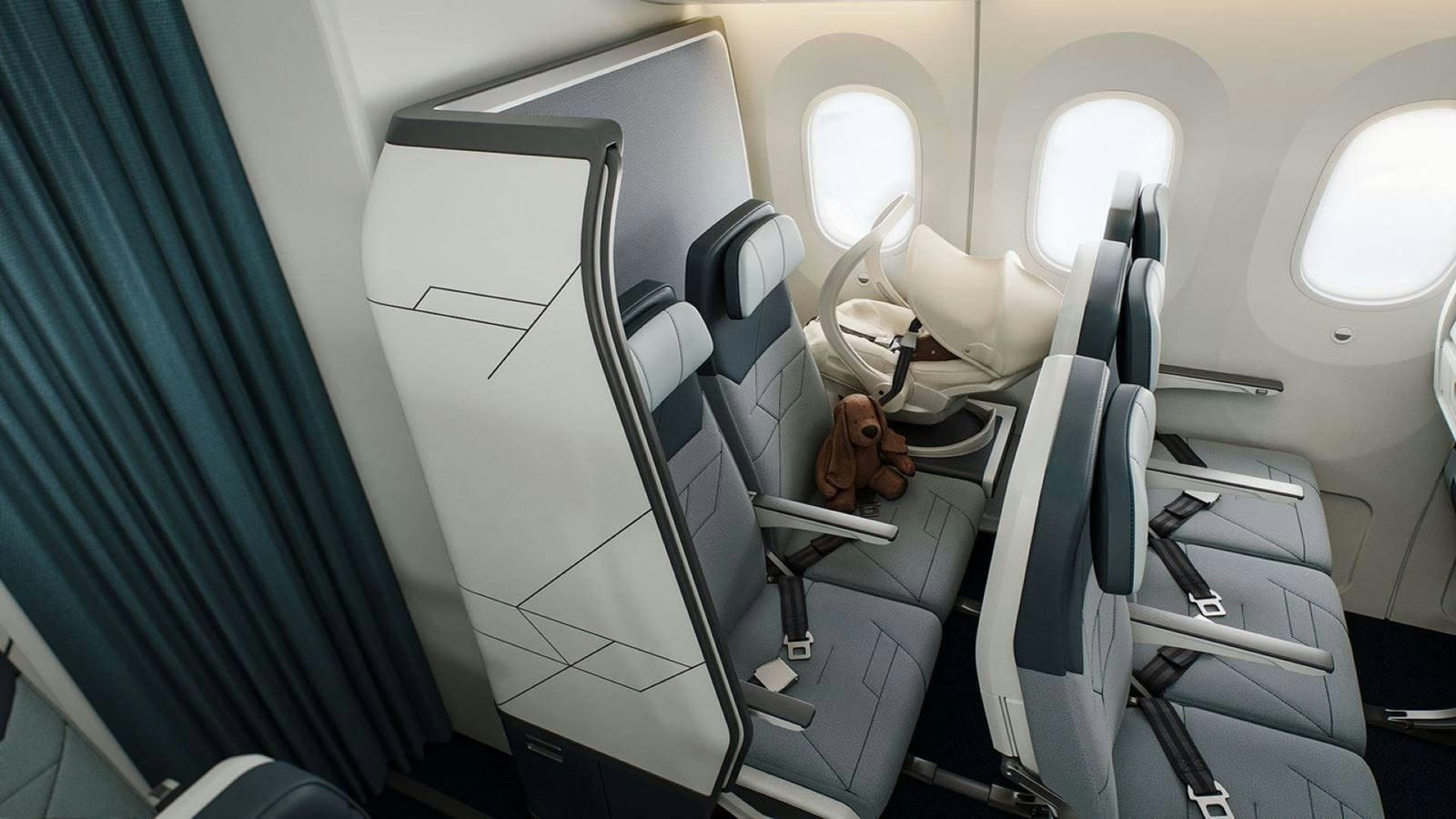
How Collins Aerospace Redesigned the Least Popular Plane Seat
Sitting in the last row of economy class has long been regarded as one of the least desirable experiences on a long-haul flight. Passengers in these seats contend with constant disturbances from nearby toilets and galleys, increased light and noise, and heavy foot traffic. They are often the last to be served and the final group to disembark. At the 2026 Aircraft Interiors Expo in Hamburg, Collins Aerospace, a subsidiary of RTX, introduced an innovative concept designed to transform this traditionally unpopular seating area into a more attractive and functional space.
The SkyNook: A Semi-Private Retreat
The new design, named the SkyNook, capitalizes on the natural tapering of a widebody aircraft’s fuselage to create a semi-private enclave at the rear of the cabin. By incorporating a privacy door and reconfiguring the typically unused space between the window seat and the aircraft sidewall, Collins Aerospace has developed a versatile area that can securely accommodate luggage, baby car seats, service animals, or other bulky items. A custom convertible console ensures these belongings remain safely stowed throughout the flight, enhancing comfort and convenience for families, passengers with special needs, and those traveling with fragile possessions.
The SkyNook is engineered to fit a range of twin-aisle aircraft, adapting to the unique fuselage dimensions of each model. For instance, while the concept is generally installed on the window side of the rear row, its placement varies on aircraft such as the Airbus A330, where the fuselage narrows mid-cabin. This adaptability is crucial as airlines strive to balance passenger comfort with cabin efficiency.
Market Context and Industry Challenges
Collins Aerospace’s initiative to reinvent the rear-row seating comes amid notable shifts in the aircraft seating market. Airlines like United are increasingly focusing on expanding premium cabins while reducing economy seating, responding to heightened demand for first-class accommodations. Meanwhile, EasyJet’s decision to switch seat suppliers to Mirus for its new Airbus fleet reflects intensifying competition and evolving airline preferences.
The retrofit market is also experiencing significant growth. Start-ups such as Expliseat report that over 80% of their business involves retrofitting existing aircraft, highlighting the importance of adaptable seating solutions like SkyNook that can be integrated into both new and current fleets.
Nevertheless, Collins Aerospace faces technical hurdles, particularly as the aviation industry explores hybrid-electric aircraft designs. Battery obsolescence remains a pressing concern, as emphasized by the company’s principal technical fellow for electrification, underscoring the need for future-proof innovations in seating and aircraft systems.
Despite these challenges, the SkyNook concept exemplifies Collins Aerospace’s dedication to reimagining even the most overlooked areas of the cabin. By transforming neglected spaces into functional, semi-private retreats, the company aims to elevate the passenger experience and sustain its competitive position in a rapidly evolving market.

Etihad Airways Suspends Airbus A380 Flights on Key Route

Aditya Birla Group Seeks Approval for Aircraft Leasing in GIFT City

Qatar Airways Highlights Innovation and Connectivity at Arabian Travel Market 2026

Hong Kong's Five-Year Plan Includes Andrew Fan's Aircraft Parts Processing Hub Proposal

ACIA Aero Leasing Delivers ATR72-600 to Air Nostrum

RTX Appoints Jill Albertelli as Head of Pratt & Whitney

TAT Technologies Joins Beyond Aero Hydrogen Aircraft Program

AURAK Study Highlights Barriers to Air Taxi Adoption in Emerging Economies

Xiamen Air Selects Altitude for 787 Maintenance at Heathrow

Etihad and Swissport Extend Global Partnership
