
Orquestre insights de IA em ações

Tendências
Categories
How US military aircraft repair hub could threaten Indonesian neutrality
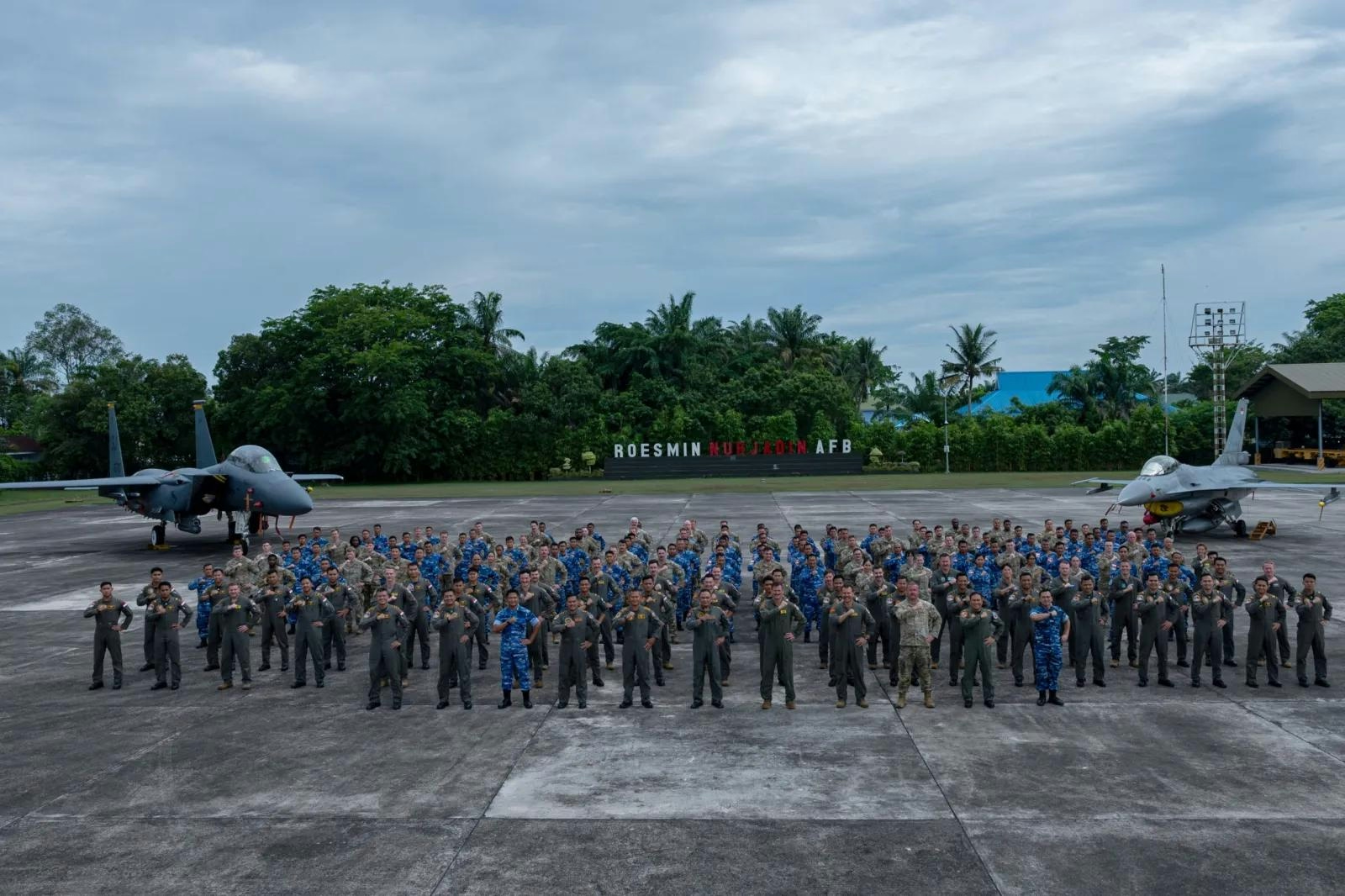
How US Military Aircraft Repair Hub Could Threaten Indonesian Neutrality
Indonesia’s recent acceptance of a US proposal to convert an underutilized airport into a maintenance hub for Lockheed C-130 Hercules military aircraft has reignited debate over the nation’s delicate balancing act between expanding defense ties with Washington and preserving its longstanding non-aligned foreign policy. The initiative, which would establish Southeast Asia’s first such facility, coincides with Jakarta’s consideration of granting US military aircraft access to Indonesian airspace, raising concerns about sovereignty, transparency, and the preservation of Indonesia’s “free and active” foreign policy doctrine.
Strategic Implications of the Maintenance Hub
Defence Minister Sjafrie Sjamsoeddin revealed to parliament on May 19 that US Defense Secretary Pete Hegseth proposed the creation of a maintenance, repair, and overhaul (MRO) hub for C-130 Hercules aircraft in Indonesia. Hegseth emphasized that no such facility currently exists in any ASEAN country and suggested centralizing C-130 maintenance throughout Asia in Indonesia at US expense. Following this proposal, President Prabowo Subianto authorized the use of Kertajati Airport for the project, and preparations are underway.
This development emerges amid Indonesia’s broader military modernization efforts. The country is preparing for the arrival of its first aircraft carrier, the Giuseppe Garibaldi, and has constructed a mirrored deck outline at Juanda Surabaya Air Base, signaling an intent to enhance naval capabilities. These moves may be perceived as a challenge to the existing US military presence in the region and have the potential to heighten regional tensions.
Military Modernization and Regional Dynamics
Indonesia’s acquisition of advanced weaponry, including Rafale combat aircraft and sophisticated missile systems such as the Meteor and AASM Hammer, further illustrates its commitment to strengthening its defense capabilities. These enhancements are likely to shift the regional military balance, compelling neighboring countries to reassess their defense strategies and alliances. Analysts warn that such developments could contribute to a more competitive and militarized environment in Southeast Asia.
While the US-backed MRO hub promises economic and technological advantages, critics caution that it risks drawing Indonesia closer into Washington’s strategic orbit, potentially compromising Jakarta’s neutral stance. There are also concerns about how increased US military activity on Indonesian soil might be viewed by other regional powers, particularly China, and whether it could complicate Indonesia’s efforts to maintain balanced diplomatic relations.
As Indonesia navigates the complexities of deepening defense cooperation with the United States, it faces the ongoing challenge of modernizing its military forces without undermining the principles of neutrality and independence that have long defined its foreign policy.

Etihad Airways Suspends Airbus A380 Flights on Key Route

Aditya Birla Group Seeks Approval for Aircraft Leasing in GIFT City

Qatar Airways Highlights Innovation and Connectivity at Arabian Travel Market 2026

Hong Kong's Five-Year Plan Includes Andrew Fan's Aircraft Parts Processing Hub Proposal

ACIA Aero Leasing Delivers ATR72-600 to Air Nostrum

RTX Appoints Jill Albertelli as Head of Pratt & Whitney

TAT Technologies Joins Beyond Aero Hydrogen Aircraft Program

AURAK Study Highlights Barriers to Air Taxi Adoption in Emerging Economies

Xiamen Air Selects Altitude for 787 Maintenance at Heathrow

Etihad and Swissport Extend Global Partnership
