image

AeroGenie — Seu copiloto inteligente.

Pergunte qualquer coisa. Analise tudo. Aja imediatamente.

Tendências

Categories

Iberia opens hangar doors to promote aviation careers to young women
June 27, 2025By ePlane AI
Iberia opens hangar doors to promote aviation careers to young women
0
0
Iberia
Aviation Careers
Women In Aviation

Iberia Opens Hangar Doors to Promote Aviation Careers Among Young Women

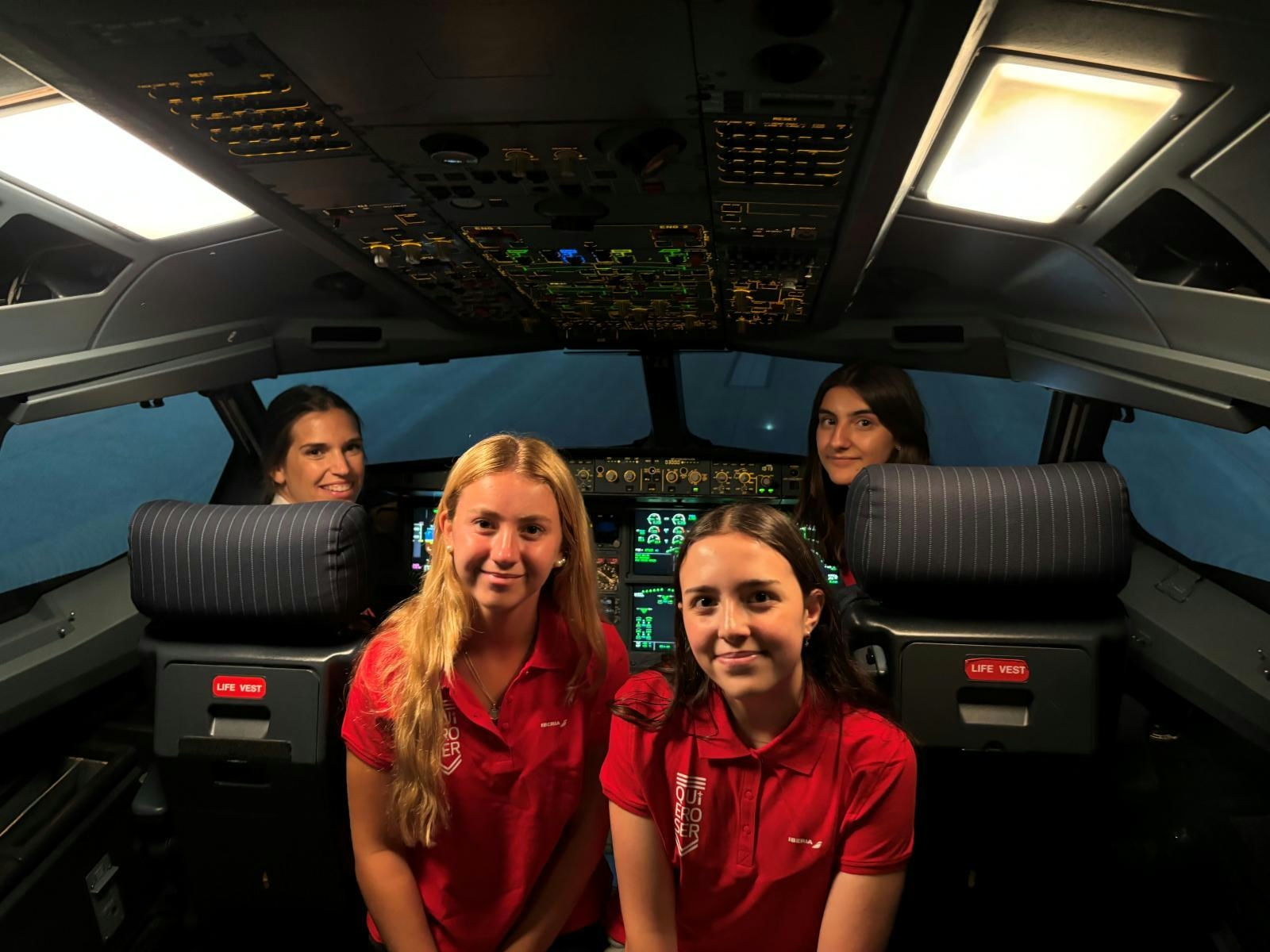
Iberia recently welcomed 35 young women to its hangar as part of its ongoing initiative to encourage greater female participation in the aviation sector. The event, held under the airline’s ‘Quiero Ser’ programme and organized in partnership with CAE and Technovation Girls, invited girls aged 14 to 18 to engage in hands-on experiences related to commercial aviation and aircraft maintenance.

Immersive Experience in Aviation

During the visit, participants toured CAE’s crew training centre, where they explored advanced flight simulators used by professional airline crews. The group also gained access to Iberia Maintenance’s core facilities, including engine and component workshops, test benches, and Hangar 6. This provided the young women with direct insight into the daily responsibilities of pilots, aircraft maintenance technicians, and engineers, offering a rare glimpse into the technical and operational aspects of the industry.

Advancing Diversity and Inclusion

Now in its fourth year, the ‘Quiero Ser’ programme forms a key part of Iberia’s broader diversity, equity, and inclusion strategy. The initiative seeks to promote equal opportunities and elevate female role models within an industry where women remain significantly underrepresented, especially in technical and operational roles. María Bello, Iberia’s director of people and diversity, highlighted the importance of early engagement, stating, “We firmly believe that inspiring vocations from an early age is key to building a more diverse future. It is deeply inspiring to see these young women drawn to professions where female representation has historically been lower. With the ‘Quiero Ser’ programme, we aim to do just that: open doors, spark vocations, and give visibility to lesser-known professions, partly due to the lack of role models.”

Challenges and Industry Context

While the programme has received positive feedback from educational institutions and aviation employers, Iberia faces ongoing challenges in maintaining sustained interest and participation among female students. The airline operates within a competitive environment where other carriers and organizations are launching similar initiatives to attract young talent and address the gender imbalance in aviation. Responses from competitors vary from collaborative efforts to more discreet attempts to recruit from the same pool of aspiring professionals, underscoring the widespread industry imperative to enhance gender diversity.

Despite these challenges, Iberia’s dedication to fostering inclusion and inspiring the next generation of women in aviation remains resolute. By providing direct exposure to aviation careers and showcasing female role models, the airline aims to contribute to closing the gender gap and securing a more diverse future for the sector.

More news
Archer Aviation Shares Rise Premarket Following Nvidia IGX Thor AI Partnership

Archer Aviation Shares Rise Premarket Following Nvidia IGX Thor AI Partnership

Archer Aviation Shares Rise Premarket Following Nvidia IGX Thor AI Partnership **New York, January 9, 2026** — Archer Aviation Inc saw its shares increase by 2.6% to $8.94 in premarket trading on Friday, following the announcement of a strategic partnership with Nvidia. The collaboration, revealed at the CES technology event in Las Vegas, involves integrating Nvidia’s IGX Thor platform—a safety-centric onboard computing system designed for real-time processing in critical environments—into Archer’s next-generation aircraft. Partnership Details and Market Reaction The stock closed Thursday with a 3.4% gain at $8.71, having traded between $8.44 and $9.01 on heavy volume of approximately 50 million shares. This positive market response underscores investor optimism surrounding Nvidia-linked initiatives, particularly those focused on safety and autonomy within emerging sectors such as electric aviation. Archer’s alliance with Nvidia is intended to advance aircraft safety, improve airspace integration, and enable autonomy-ready flight controls. The company plans to demonstrate the integration at its newly acquired Hawthorne airport facility in central Los Angeles. CEO Adam Goldstein emphasized that leveraging Nvidia’s technology will help Archer “accelerate toward safer, smarter aircraft systems,” reinforcing the company’s position as a pioneer in applying advanced AI solutions in aviation. Industry Context and Challenges Ahead Archer is currently developing “Midnight,” an electric vertical takeoff and landing (eVTOL) aircraft designed for short urban routes. The eVTOL market remains highly sensitive to news, with partnerships and regulatory developments often triggering volatile stock movements. Investors are closely monitoring whether advancements in software and computing can help transition prototype aircraft into fully certified, commercially viable operations—a process historically marked by delays and significant costs. Ahead of the market open, competitor responses were mixed: Joby Aviation shares declined by about 2%, Vertical Aerospace rose approximately 4%, and Eve Air Mobility remained largely unchanged. Nvidia’s shares fell roughly 2%. Despite the significance of the Nvidia partnership for Archer, the company continues to face substantial challenges, including regulatory certification, scaling production, and securing adequate funding to achieve revenue generation. Any setbacks in these areas could result in further dilution or extended timelines. The next critical milestone for Archer will be its upcoming quarterly earnings report, with investors seeking updates on certification progress and financial outlook. According to TradingView, Archer’s next earnings release is scheduled for March 4.
Flight Data Monitoring Systems Market Poised for Robust Growth Amid Rising Focus on Aviation Safety and Digital Transformation

Flight Data Monitoring Systems Market Poised for Robust Growth Amid Rising Focus on Aviation Safety and Digital Transformation

Flight Data Monitoring Systems Market Poised for Robust Growth Amid Rising Focus on Aviation Safety and Digital Transformation The global aviation sector is experiencing significant expansion, driven by a surge in both international and domestic air travel. This growth has intensified demand for Flight Data Monitoring (FDM) systems, as airlines and operators place greater emphasis on safety, regulatory adherence, and operational efficiency. FDM systems, which systematically collect and analyze aircraft flight data, have become essential components of contemporary aviation safety management across commercial airlines, business aviation, and military fleets. The ongoing digital transformation within the industry, characterized by a shift toward data-driven decision-making, has further elevated the importance of these systems. By enabling proactive identification of safety risks, monitoring pilot performance, optimizing fuel consumption, and enhancing fleet efficiency, FDM systems are reshaping operational standards. Regulatory Mandates and Technological Innovation Driving Market Expansion A principal factor propelling the FDM systems market is the tightening of regulatory frameworks by global aviation authorities. Institutions such as the International Civil Aviation Organization (ICAO), the Federal Aviation Administration (FAA), and the European Union Aviation Safety Agency (EASA) now require the implementation of FDM programs as integral elements of comprehensive Safety Management Systems (SMS). These mandates compel airlines and operators to invest in advanced FDM software and analytics platforms to ensure compliance and mitigate operational risks. The compulsory adoption of FDM, particularly among commercial airlines and large fleet operators, has accelerated market penetration across both developed and emerging economies. Furthermore, evolving safety regulations are encouraging smaller operators and charter service providers to incorporate FDM solutions into their operations. Technological advancements are simultaneously transforming the FDM landscape. Modern systems increasingly utilize cloud computing, artificial intelligence (AI), and sophisticated analytics to provide real-time insights and predictive risk assessments. AI-driven algorithms can process extensive flight data to detect anomalies, forecast maintenance requirements, and identify unsafe operational behaviors. Cloud-based FDM platforms are gaining prominence due to their scalability, cost-effectiveness, and seamless integration with existing aviation IT infrastructures. These platforms facilitate centralized data management across diverse fleets and geographic locations, enabling faster and more informed decision-making. The integration of FDM with aircraft health monitoring and maintenance systems further amplifies operational benefits. Notably, the incorporation of AI-enabled capabilities within avionics-grade computing systems is anticipated to significantly influence market dynamics as industry players enhance their offerings to meet evolving safety and regulatory demands. Emphasis on Cost Efficiency and Sustainability Amid Market Challenges Beyond safety considerations, airlines are increasingly adopting FDM systems to address cost pressures and sustainability objectives. Fuel expenses constitute one of the largest operational costs, and FDM provides actionable insights to improve fuel efficiency through optimized flight profiles and minimized deviations. By identifying inefficient practices, airlines can reduce fuel consumption and carbon emissions, aligning with the growing strategic emphasis on environmental sustainability within the aviation industry. Despite promising growth prospects, the FDM systems market faces several challenges. The high costs associated with retrofitting existing aircraft, maintaining ongoing regulatory compliance, and implementing continuous technological upgrades present significant barriers to widespread adoption. Nevertheless, these challenges are driving increased investment in safety-critical systems and fostering innovation across the sector. As digital transformation accelerates and safety standards continue to rise, the Flight Data Monitoring Systems Market is positioned for sustained expansion, with technological advancement and regulatory compliance remaining central to its evolution.
Aircraft Avionics MRO Market Forecast and Analysis, 2024–2035

Aircraft Avionics MRO Market Forecast and Analysis, 2024–2035

Aircraft Avionics MRO Market Set for Steady Growth Through 2035 The global aircraft avionics maintenance, repair, and overhaul (MRO) market is anticipated to experience substantial growth over the next decade. Valued at approximately US$7.1 billion in 2024, the market is forecast to expand to US$10.3 billion by 2035, reflecting a compound annual growth rate (CAGR) of 3.8%, according to a recent report by ResearchAndMarkets.com. Market Drivers and Technological Advancements The expansion of the aircraft avionics MRO sector is primarily driven by increasing global passenger traffic and the continuous growth of airline fleets. As airlines modernize their aircraft and accommodate rising passenger volumes, avionics systems are subjected to heightened operational demands, necessitating specialized maintenance and repair services. The complexity of these systems is further amplified by rapid technological advancements, including digital cockpit solutions, automation, and data-driven monitoring tools, which require highly skilled MRO expertise. In addition to operational pressures, stringent safety regulations and the imperative to upgrade avionics systems to comply with evolving standards are reinforcing the critical role of MRO services. This sector is increasingly recognized as essential to sustaining the growth and safety of the aviation industry. Recent innovations are transforming the market landscape. Developments such as artificial intelligence-powered diagnostic systems, predictive maintenance platforms, advanced testing equipment for next-generation avionics, and digital twin technologies for component lifecycle management are enhancing service capabilities. The integration of machine learning algorithms, cloud-based maintenance tracking, and automated repair processes is improving efficiency, reducing aircraft downtime, and lowering operational costs. These technological strides are particularly important as providers contend with the challenges of supporting aging aircraft fleets, managing constrained supply chains, and addressing a shrinking pool of skilled technicians. Regional Outlook and Competitive Dynamics North America is projected to maintain its position as the largest market for aircraft avionics MRO through 2035. This dominance is underpinned by the region’s mature aviation infrastructure, robust commercial and defense sectors, and the presence of leading MRO providers. High passenger volumes, ongoing fleet modernization efforts, and stringent Federal Aviation Administration (FAA) regulations continue to drive demand for advanced avionics maintenance. The established original equipment manufacturers (OEMs) and extensive airline networks in the United States and Canada further consolidate the region’s leadership. Conversely, the Asia-Pacific region is expected to register the fastest growth during the forecast period. Rapid expansion in air travel, aggressive airline fleet growth, and substantial government investments in aviation infrastructure—particularly in China and India—are strengthening the regional MRO ecosystem. The adoption of next-generation aircraft and a focus on cost-effective maintenance solutions position Asia-Pacific as a dynamic hub for avionics MRO development. The competitive landscape remains moderately consolidated, with approximately 50 key players vying for market share through technological innovation, diverse product portfolios, regional expansion, and strategic partnerships. Leading companies are heavily investing in predictive maintenance technologies and retrofitting existing platforms with upgraded avionics to meet evolving safety and performance requirements. Noteworthy strategic alliances include a 2025 partnership between Honeywell Aerospace and Lufthansa Technik aimed at developing advanced avionics MRO solutions for next-generation aircraft, as well as a collaboration between SAMTEL Avionics and ATSC announced in the same year. Industry Challenges and Strategic Responses Despite promising growth prospects, the aircraft avionics MRO market faces several challenges. These include managing the increasing complexity and cost associated with maintaining aging fleets, navigating supply chain disruptions, and addressing workforce shortages. In response, industry leaders are adopting AI-based forecasting tools, modular repair strategies, and enhanced training programs to maintain service quality and operational efficiency. As the aviation sector continues to evolve, the aircraft avionics MRO market is poised to play a vital role in supporting safe, efficient, and technologically advanced air travel on a global scale.
PIA to Lease GE90 Engines for Boeing 777

PIA to Lease GE90 Engines for Boeing 777

PIA to Lease GE90 Engines for Boeing 777 Amid Regulatory and Market Challenges Pakistan International Airlines (PIA) has issued a tender to lease GE90 engines for its Boeing 777 fleet, a strategic move aimed at enhancing engine availability as the airline prepares to expand its long-haul operations. This development coincides with PIA’s plans to relaunch key London routes, confirming the Boeing 777 as the primary aircraft for its flagship services to the United Kingdom. Expansion of London Services with Boeing 777 PIA is scheduled to resume Islamabad–London flights on March 29, operating three times weekly on Wednesdays, Fridays, and Sundays. The Lahore–London route will follow shortly after, commencing on March 30 with a weekly service on Mondays. The Boeing 777, serving as PIA’s main widebody aircraft for long-haul travel, offers increased passenger capacity and aligns with the airline’s broader strategy to deploy larger aircraft as it expands its international network. Navigating Regulatory and Market Pressures The decision to lease GE90 engines comes amid a challenging regulatory environment. Increasing scrutiny over aircraft emissions is particularly significant for the Boeing 777F model, which currently exceeds fuel efficiency limits and requires a waiver from the U.S. Federal Aviation Administration (FAA) to continue operations. This regulatory pressure is driving airlines to explore more fuel-efficient alternatives, such as the Boeing 777-8F, although this newer model is not expected to enter service before 2027. Consequently, demand is rising for more modern, efficient aircraft, which may affect the long-term viability of leasing older engine models like the GE90. Competitors are also adjusting to these industry shifts. Emirates, for instance, has committed to the GE9X engine for its Boeing 777-9 fleet, reinforcing GE Aerospace’s strong market presence despite ongoing concerns regarding engine durability and increased maintenance demands. These dynamics underscore the complex operational and regulatory landscape PIA must navigate to maintain reliability while responding to evolving market and environmental standards. Preparations for Ramadan 2026 and Service Enhancements Beyond fleet and engine considerations, PIA has initiated early preparations for Ramadan 2026. The airline has issued tenders for onboard iftar supplies, including date packets and juice packs, for both domestic and international flights, with bids expected by mid-January. This initiative reflects PIA’s commitment to enhancing passenger experience during a significant travel period. PIA’s recent actions demonstrate its efforts to strengthen service reliability and broaden its international reach, even as it confronts industry-wide challenges related to emissions regulations, competitive pressures, and shifting passenger expectations.
Adani–Embraer deal could bring commercial aircraft assembly to India

Adani–Embraer deal could bring commercial aircraft assembly to India

Adani–Embraer Deal Could Establish Commercial Aircraft Assembly in India India is on the cusp of becoming a significant player in the global commercial aircraft manufacturing landscape through a strategic partnership between the Adani Group and Brazil’s Embraer. Following a memorandum of understanding signed last month between Adani Aerospace and Embraer in Brazil, the collaboration aims to establish a local assembly line for Embraer’s regional passenger jets. This initiative could mark India’s first final assembly line for commercial aircraft, representing a major advancement for the country’s aviation sector. Although the full details of the project remain undisclosed, sources suggest the agreement involves assembling Embraer’s regional jet family, which typically serves short- to medium-haul routes and accommodates between 70 and 146 passengers. An Embraer spokesperson declined to comment on the matter, stating the company was “not commenting on the report at this stage.” Should the project come to fruition, India would join an exclusive group of nations—including the United States, Brazil, Canada, France, and China—that operate commercial aircraft assembly lines. Historically, India’s aerospace industry has concentrated on defense programs, component manufacturing, and systems integration rather than full-scale commercial aircraft assembly. Strategic Implications for Adani and Indian Aviation The proposed assembly line aligns closely with the Adani Group’s expansive aviation ambitions. The conglomerate has committed to investing INR 1 trillion (approximately $11.1 billion) in its airports business over the next five years and has diversified into related sectors such as maintenance, repair and overhaul (MRO), and flight simulation training. Jeet Adani, Director at Adani Airport Holdings Ltd, recently highlighted the group’s strategy of separating airport infrastructure from aircraft-related services, consolidating MRO capabilities through entities like Indamer and Air Works into a unified platform. Integrating an Embraer assembly line would further embed manufacturing within Adani’s aviation ecosystem, potentially creating a comprehensive pipeline that spans assembly, maintenance, training, and lifecycle support. This integrated model is characteristic of more mature aviation markets and could enhance operational efficiencies and service offerings within India’s aviation industry. Market Context, Government Support, and Industry Challenges The timing of the Adani–Embraer partnership is particularly significant given India’s status as the world’s fastest-growing aviation market. With over 1,800 aircraft on order from major carriers such as Air India, IndiGo, and Akasa Air, the demand for new aircraft is substantial. However, delivery slots for single-aisle aircraft from Airbus and Boeing are largely booked well into the next decade. In response, the Indian government has actively encouraged global manufacturers to establish final assembly lines domestically to bolster industrial capabilities and reduce import dependence. Officials have indicated the possibility of fiscal incentives for airlines ordering aircraft assembled in India, with such benefits potentially diminishing as order volumes increase. Investor sentiment toward the deal has been positive, reflecting interest in scalable platforms and consolidation opportunities within the commercial aerospace parts sector. Embraer’s strong delivery performance in 2025, which exceeded its annual forecast, further underscores a favorable market environment for the partnership’s success. Nonetheless, the venture faces several challenges, including regulatory complexities, supply chain management, and competition from established aerospace giants such as Boeing and Airbus. These competitors may respond by increasing investments in local manufacturing and forging new strategic partnerships to protect their market positions. Embraer, which currently operates nearly 50 aircraft in India across commercial, defense, and business aviation segments, views the regional jet market as a significant growth opportunity. The collaboration with Adani could prove transformative for India’s aviation industry, positioning the country as an emerging hub for commercial aircraft assembly.
GE Aerospace Awarded $1.4 Billion Contract for CH-53K Engines

GE Aerospace Awarded $1.4 Billion Contract for CH-53K Engines

GE Aerospace Awarded $1.4 Billion Contract for CH-53K Engines Contract Details and Strategic Importance GE Aerospace has secured a $1.4 billion contract from the U.S. Naval Air Systems Command (NAVAIR) to supply T408 engines for Lots 9 through 13 of the Sikorsky CH-53K® King Stallion heavy-lift helicopter. This multi-year agreement extends GE Aerospace’s ongoing support for the U.S. Marine Corps’ most advanced helicopter platform, which boasts a lifting capacity of up to 36,000 pounds, mid-air refueling capability, and critical ship-to-shore mobility for a variety of assault support missions. This latest contract follows six prior awards for the T408 engine, including a $684 million block-buy for Lots 6 to 8 announced in April 2023. Under the terms of the new deal, GE Aerospace will deliver both new production and spare engines, alongside sustainment services. Final assembly of the engines will be conducted at the company’s facility in Lynn, Massachusetts. Scott Snyder, Heavy Lift Engines Program Director at GE Aerospace, emphasized the significance of the contract, stating, “This latest contract is a testament to the T408’s ability to deliver the power, durability, and efficiency the Marine Corps depends on. We are honored to support the CH-53K and the critical mission it performs for Marines, joint forces, and allies around the world.” Technical Advancements and Operational Impact The CH-53K helicopter, powered by three T408 engines, achieved Initial Operating Capability with the Marine Corps in April 2022. Each T408 engine produces 7,500 shaft horsepower, representing a 57% increase over its predecessor, the GE Aerospace T64. In addition to enhanced power, the engine offers improved fuel efficiency and maintainability. These advancements enable the CH-53K to deliver three times the range and payload capacity of the earlier CH-53E Super Stallion, significantly improving the transport of heavy equipment, troops, and supplies. Industry Challenges and Market Response While the contract represents a substantial win for GE Aerospace, it also introduces operational challenges. The company must scale up production capacity and ensure timely delivery to meet the stringent requirements set by the U.S. Navy. Despite these demands, the market has responded positively; GE Aerospace’s stock price rose following the announcement, buoyed by this contract and other recent engine orders. The competitive environment remains intense, with rival firms increasing efforts to secure comparable defense contracts. Boeing’s recent $2 billion engine replacement order and significant deals awarded to South Korean defense contractors illustrate this trend. Additionally, GE Aerospace’s joint venture with Safran on the LEAP engine continues to attract close investor scrutiny, reflecting the broader industry focus on advanced propulsion technologies. As GE Aerospace advances the CH-53K program, its ability to fulfill contractual obligations will be closely monitored by stakeholders in both the defense sector and financial markets.
Flydubai Introduces Digital Solution to Improve Operational Efficiency and Customer Service

Flydubai Introduces Digital Solution to Improve Operational Efficiency and Customer Service

Flydubai Introduces Digital Solution to Improve Operational Efficiency and Customer Service AI-Powered Turnaround Management Platform Enhances Operational Precision Flydubai has launched an advanced AI-driven Turnaround Management Platform designed to optimize flight departures and elevate customer satisfaction across its extensive global network. Developed in collaboration with technology partner ZestIoT, this initiative addresses the growing complexities of modern aviation by delivering real-time insights and AI-enabled solutions that streamline operational workflows and support more informed decision-making. The platform is currently being deployed at Dubai International Airport (DXB) and throughout Flydubai’s expanding route network. This marks a significant advancement in the digitalization of turnaround operations at one of the world’s busiest aviation hubs. By providing real-time visibility and fostering improved coordination among ground personnel, airport authorities, and airline teams, the system aims to minimize delays, facilitate smoother boarding procedures, and offer passengers more accurate and timely flight information. Meeting Growing Demands Through Technological Innovation As Flydubai continues its rapid expansion—serving over 135 destinations in 58 countries with a fleet of 97 Boeing 737 aircraft and operating an average of 370 daily flights from DXB—the imperative for efficient, customer-focused operations has intensified. The airline faces increasing pressure to uphold punctuality and operational excellence amid rising passenger volumes and heightened service expectations. The integration of AI technology reflects a broader industry trend where digital solutions are becoming indispensable for enhancing operational efficiency and improving the passenger experience. Flydubai’s platform facilitates enhanced collaboration among stakeholders, enabling more reliable on-time departures and a seamless journey from check-in through boarding. Nonetheless, the implementation of such sophisticated digital systems presents challenges. Flydubai must carefully manage the integration of new technology with existing infrastructure, ensure robust data security, and meet elevated customer expectations for service quality. This development occurs against a backdrop of intensifying competition, as airlines worldwide accelerate their digital transformation efforts in response to evolving market dynamics. Industry experts observe that AI is increasingly instrumental in boosting efficiency and customer satisfaction across various sectors. Flydubai’s initiative exemplifies the aviation industry’s broader push toward digital innovation, where optimizing turnaround times is emerging as a key competitive advantage. Flydubai’s partnership with ZestIoT highlights its dedication to maintaining high operational standards while expanding its global reach. By adopting cutting-edge technology, the airline aims to deliver more timely, reliable, and customer-centric services, reinforcing Dubai’s position as a premier international aviation hub and setting a new standard for digital transformation within the sector.
Astral Aviation Expands Charles Ngwalla’s Role in Strategic Partnerships

Astral Aviation Expands Charles Ngwalla’s Role in Strategic Partnerships

Astral Aviation Expands Charles Ngwalla’s Role in Strategic Partnerships Astral Aviation has appointed Charles Ngwalla as Head of Interline, Partnerships & Product Development, significantly broadening his responsibilities in a strategic effort to enhance the airline’s network growth, cargo product innovation, and global collaboration. In his expanded role, Ngwalla will oversee the development and reinforcement of interline and airline partnerships while leading product development across Astral’s cargo portfolio. This move is intended to support the airline’s objectives of network expansion, yield optimisation, and the advancement of its long-term product strategy. Strategic Focus Amid Market Challenges The appointment reflects Astral Aviation’s sharpened commercial focus as it prepares for 2026, aiming to foster greater collaboration and differentiation in an increasingly competitive market environment. Ngwalla’s role is considered crucial in delivering value through customised cargo products and deeper engagement with partners, aligning with the airline’s broader goals of innovation and sustainable growth. However, this expansion of responsibilities occurs against a backdrop of global economic uncertainty. Volatility in the U.S. stock market, influenced by internal divisions within the Federal Reserve and extreme market valuations, presents potential challenges for international carriers such as Astral. Additionally, market instability in Latin America and the Caribbean adds complexity to the operating environment, with possible ripple effects on airline operations and strategic partnerships. Within the African continent, Astral faces intensified competition as rival airlines pursue fleet modernization and develop secondary hubs to capture emerging market opportunities. The current environment of high valuations and sensitivity to policy changes means that any unexpected shifts in strategic partnerships could have significant implications for Astral’s growth trajectory. Commitment to Innovation and Growth Despite these challenges, Astral Aviation’s decision to expand Ngwalla’s remit underscores its commitment to maintaining commercial agility and extending its global reach. By concentrating on innovative cargo solutions and strengthening partner networks, the airline aims to navigate market uncertainties effectively and position itself for sustainable expansion in the coming years.
Daher Reaches Delivery Milestones in 2025

Daher Reaches Delivery Milestones in 2025

Daher Reaches Delivery Milestones in 2025 Delivery Performance and Market Context In 2025, Daher achieved significant milestones with its turboprop-powered TBM and Kodiak aircraft, reinforcing its presence among private owners, operators, and public service agencies. Over the course of the year, Daher delivered a total of 76 aircraft, including 51 TBM 960s manufactured at its Tarbes facility in southwest France, and 25 Kodiaks produced at its Sandpoint, Idaho plant. The Kodiak deliveries encompassed both the flagship Kodiak 100 and the larger Kodiak 900 variants. Despite these accomplishments, Daher experienced a 9% decline in TBM 960 deliveries, shipping 51 units compared to 56 in 2024. This reduction occurred amid intensified competition, as industry rivals Textron Aviation and Airbus reported strong delivery figures. Textron introduced the first Cessna Citation CJ3 Gen2, while Airbus exceeded its 2025 delivery target by delivering over 790 aircraft. These competitor successes are likely to increase market scrutiny and place additional pressure on Daher to address its delivery challenges. “Our teams remained fully mobilised through the final days of 2025 with one clear priority: delivering for our customers,” stated Daher Aircraft CEO Nicolas Chabbert. “Their commitment highlighted our ability to stay focused on execution and customer promises, even as conditions evolved during the year.” Milestones and Operational Highlights A key achievement for Daher was the delivery of the 600th TBM 900-series aircraft, solidifying the series as the most successful in the TBM family since its introduction in 1990. The company also made notable advances in the multi-mission segment. Canada-based Conair Group received its second and third TBM 960s, configured as “birddog” aircraft to support wildfire-fighting operations. These aircraft played a critical role during the 2025 fire season in British Columbia, conducting continuous missions over active fires to monitor conditions, assess risks, and coordinate airtanker drops. Their initial operational deployment demonstrated strong capability and reliability in demanding aerial firefighting missions. Geographically, North and South America remained the strongest markets for TBM deliveries, accounting for more than 75% of the total in 2025. Europe represented 23% of the annual volume, with 12 aircraft delivered. As Daher celebrates these key milestones and expands its market reach, the company faces heightened competition and increased market scrutiny. The coming year will be crucial as Daher seeks to maintain its leadership in the turboprop segment while adapting to evolving industry dynamics.
Flying Taxis May Arrive in Florida by Year’s End

Flying Taxis May Arrive in Florida by Year’s End

Flying Taxis Set to Launch in Florida by Year’s End Florida is poised to become the first state in the United States to introduce commercial flying taxi services, offering a novel solution to its well-known traffic congestion. The Florida Department of Transportation (FDOT) is leading an ambitious initiative to deploy electric vertical take-off and landing aircraft (eVTOL), aiming to revolutionize regional travel by connecting cities through the air. Advancing Air Mobility Infrastructure Central to this effort is the establishment of Florida’s inaugural aerial test site at the SunTrax testing facility in Polk County, strategically situated between Tampa and Orlando along the heavily trafficked Interstate 4 corridor. The site is expected to be operational by early 2026, with FDOT projecting that commercial passenger services will commence by the end of that year. In a recent statement, FDOT emphasized Florida’s leadership role in emerging flight technologies, highlighting the state’s commitment to developing the necessary infrastructure to support Advanced Air Mobility (AAM) and become the nation’s first to offer commercial AAM services. Planned Routes and Service Expansion Archer Aviation, a prominent air taxi operator, has announced plans to initiate flights connecting key airports in South Florida, including Palm Beach, Fort Lauderdale-Hollywood, and Miami International Airports, potentially as early as late 2025. The company envisions expanding its network to include additional airports such as Boca Raton, Witham Field in Stuart, Fort Lauderdale Executive, Miami-Opa Locka Executive, and Miami Executive Airports. The rollout of flying taxi services will proceed in phases. The initial phase focuses on routes along the I-4 corridor, linking Orlando to Tampa, the Space Coast, and SunTrax, as well as connections from Port St. Lucie to Miami, Tampa to Naples, Miami to Key West, and Pensacola to Tallahassee. The second phase plans to extend services to routes including Daytona Beach to Jacksonville, Sebring, Orlando to Lake City, Tampa to Tallahassee, and Jacksonville to Tallahassee. Several airports across the state have expressed interest in supporting commercial air taxi operations, underscoring the broad regional scope of the initiative. Challenges and Industry Dynamics Despite the promising outlook, the introduction of flying taxis faces considerable challenges. Regulatory approvals, the development of supporting infrastructure, and public acceptance remain significant obstacles. The market response has been cautious, with some skepticism from traditional transportation providers and investors concerned about the potential disruption to existing services such as ride-hailing platforms. In response to these developments, companies like Uber are exploring ways to incorporate advanced air mobility into their service offerings, while technology firms are investigating potential military applications for eVTOL technology. FDOT remains steadfast in its commitment to the project timeline, aiming to launch commercial operations by the end of 2026 and to expand the network throughout Florida. If these plans come to fruition, Florida could soon witness a transformative shift in urban and regional transportation, with flying taxis providing a futuristic alternative to the state’s persistent traffic challenges.
Ask AeroGenie










