
Orquestre insights de IA em ações

Tendências
Categories
Iran Air Retires the Last Boeing 747SP, Ending an Era in Aviation
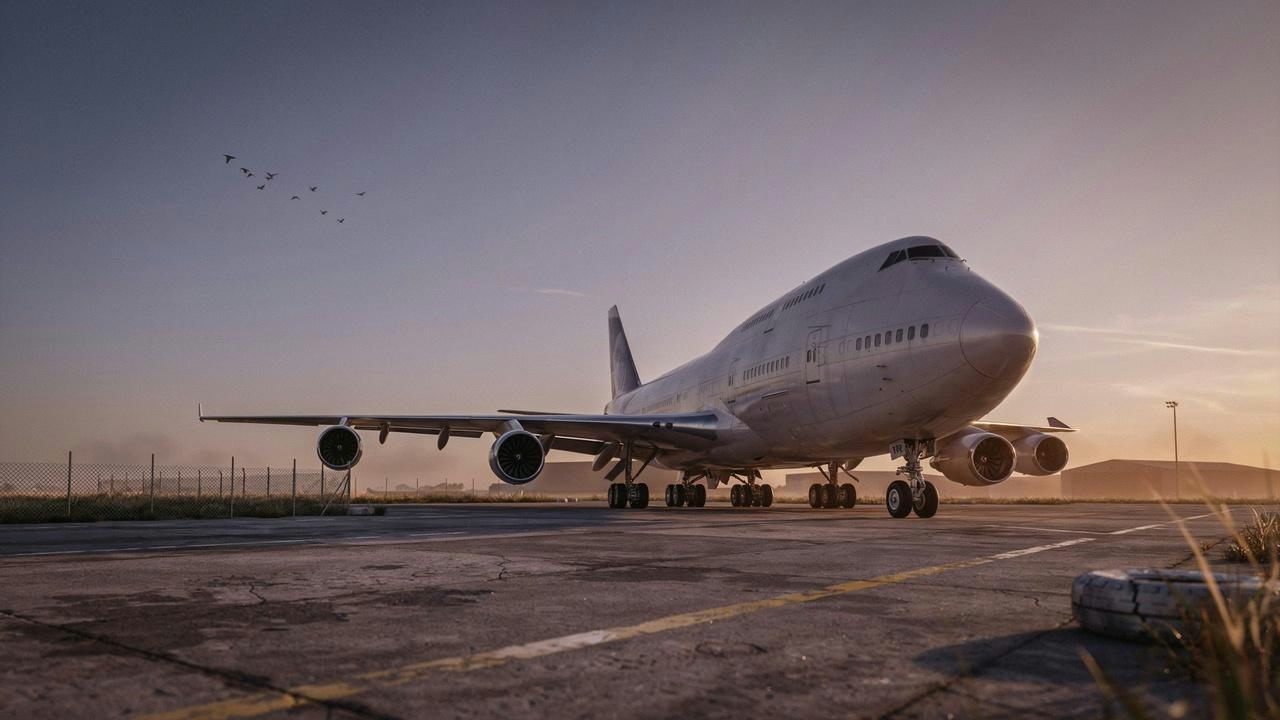
Iran Air Retires the Last Boeing 747SP, Ending an Era in Aviation
The retirement of Iran Air’s final Boeing 747SP marks the conclusion of a significant chapter in aviation history. As the last airline to operate this distinctive jumbo jet, Iran Air’s decision signals not only the end of the 747SP’s operational life but also highlights the evolving priorities and challenges confronting the global airline industry today.
The Boeing 747SP: An Engineering Milestone
Introduced in the 1970s, the Boeing 747SP was developed in response to airlines’ growing demand for ultra-long-haul flights. Unlike the standard 747-200, the 747SP featured a fuselage shortened by approximately 14 meters, which reduced both weight and aerodynamic drag. This design included a taller vertical stabilizer to maintain balance and was optimized for mission-specific fuel efficiency. These engineering adaptations enabled airlines to operate nonstop intercontinental routes, such as Tehran to New York, which had previously been unfeasible without refueling stops. However, the aircraft’s reduced passenger capacity limited its commercial appeal, resulting in only 45 units ever produced, making the 747SP one of the rarest widebody aircraft in aviation history.
Iran Air: The Last Operator
Iran Air’s continued operation of the 747SP was driven more by necessity than preference. The airline initially acquired the aircraft to serve some of the world’s longest commercial routes. However, as international sanctions tightened and access to newer aircraft became increasingly restricted, Iran Air was compelled to maintain its aging fleet well beyond the typical industry lifespan. While most airlines retired the 747SP by the early 2000s, Iran Air persisted in flying the model into the late 2010s, transforming the aircraft into a symbol of resilience and adaptability amid challenging circumstances.
Industry Challenges and the End of an Era
The retirement of the last 747SP coincides with a period of considerable turbulence in the global airline industry. Rising jet fuel prices, exacerbated by ongoing conflict in the Middle East, have forced airlines to reduce their profit forecasts for 2026 by nearly half. In response, many carriers are cutting unprofitable routes and postponing new aircraft acquisitions amid persistent uncertainty and elevated operational costs. Aircraft manufacturer Embraer has reported that some airlines are deferring purchase options due to the war in Iran and broader regional instability. Analysts anticipate that these financial pressures will continue into 2027, prompting airlines worldwide to reassess fleet strategies and operational decisions.
A Lasting Legacy
For aviation enthusiasts and industry observers, the Boeing 747SP stands as a testament to an era when range and engineering innovation were paramount. Its retirement not only signifies the end of a unique aircraft but also reflects the broader transformation of commercial aviation, where efficiency, flexibility, and economic resilience have become essential. As Iran Air’s final 747SP departs from service, it closes a chapter defined by ambition, adaptation, and the relentless progression of the aviation industry.

Etihad and Swissport Extend Global Partnership

Sepehran Airlines B737 Returns to Mashhad After Tyre and Engine Issues

Etihad Deploys Widebody Fleet to Meet Strong Demand

Korean Air Finalizes $36.2 Billion Deal with Boeing

Australia’s RFDS Queensland Section Orders Six King Air 260Cs

Korean Air Finalizes Order for 103 Boeing Jets and Engines

Embraer E195-E2 Features Distinctive Engine Placement Among Regional Jets

What Passengers Can Expect on Boeing’s New 777X Jet

How Ethiopian Airlines Became Africa’s Leading Carrier Amid Gulf Competition

Joby Aviation Extends Autonomous Flight Capabilities with Cross-Country Tour
