
Orquestre insights de IA em ações

Tendências
Categories
Is the Boeing 787-10 a Viable Option for Delta Air Lines?
Is the Boeing 787-10 a Viable Option for Delta Air Lines?
Delta Air Lines has traditionally maintained a cautious and strategic approach to expanding its fleet, with a clear preference for Airbus widebody aircraft. The airline’s existing commitment to 20 Airbus A350-1000s, scheduled for delivery starting in 2026, underscores its focus on acquiring modern, fuel-efficient jets. Despite the Boeing 787 Dreamliner’s reputation as one of the most advanced long-haul aircraft, Delta has thus far excluded it from its fleet plans. However, recent industry analysis indicates that Delta may be reconsidering this stance, showing particular interest in the Boeing 787-10 variant. Such a shift would represent a significant departure from Delta’s Airbus-centric strategy and prompt questions about the airline’s evolving network and fleet priorities.
The Boeing 787-10: Features and Capabilities
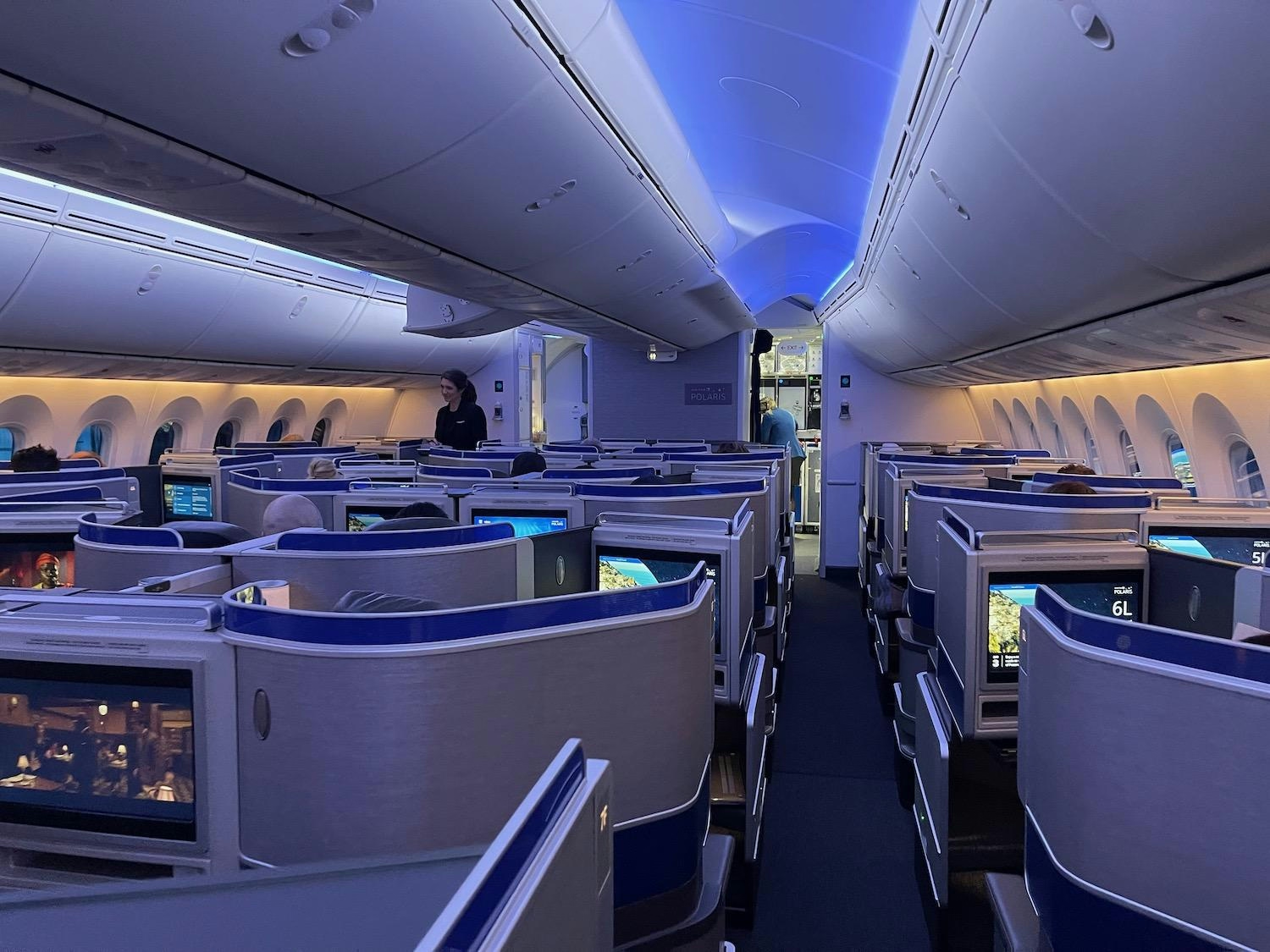
The Boeing 787-10 is the largest model in the Dreamliner family, engineered primarily for high-density, medium-to-long-haul routes. It incorporates a composite fuselage, advanced aerodynamic design, and next-generation engines, resulting in substantial fuel efficiency improvements compared to older widebodies such as the Boeing 767-300ER and early Airbus A330 models. With a typical seating capacity of 320 to 340 passengers, the 787-10 offers highly competitive unit costs, making it particularly attractive for busy routes where maximizing revenue per departure is essential.
Passenger comfort is a notable strength of the 787-10, featuring larger windows, increased cabin humidity, and a lower cabin altitude, all of which contribute to reducing passenger fatigue on long flights. However, the aircraft sacrifices some range in favor of capacity, offering less reach than the 787-9. While this limits its suitability for ultra-long-haul missions, the 787-10 remains well-suited for transatlantic flights, intra-Asia routes, and connections between North America and regions such as northern South America or the Middle East.
Challenges and Market Dynamics
Despite its technical advantages, the 787-10’s potential adoption by Delta faces several challenges. Boeing has recently come under heightened scrutiny from the Federal Aviation Administration (FAA), particularly concerning the 737 MAX 10, and has encountered delays in high-profile programs like Air Force One. These issues have negatively impacted Boeing’s stock performance and may influence Delta’s investment decisions.
Operational reliability also remains a concern. The Dreamliner family has experienced issues, most notably highlighted by the Air India 787 crash linked to electrical faults. Such incidents have led airlines and regulators to closely monitor the aircraft’s performance and safety record.
At the same time, market dynamics continue to evolve. Airbus maintains robust demand for its aircraft, potentially outpacing Boeing in annual orders. Delta itself has faced operational disruptions, including recent computer outages at Detroit Metro Airport, emphasizing the critical importance of reliability in fleet decisions. Additionally, competitors are intensifying the competitive landscape; for example, Air India has recently unveiled a new business class product for its 787 fleet, raising the bar for passenger experience.
Conclusion
While the Boeing 787-10 presents compelling advantages in terms of efficiency and passenger comfort, its integration into Delta Air Lines’ fleet remains uncertain. Ongoing challenges faced by Boeing, concerns over operational reliability, and a competitive market environment all weigh heavily on Delta’s decision-making process. The airline’s ultimate choice will likely depend on balancing the goals of fleet modernization with considerations of reliability, cost, and strategic alignment within its global network.

Etihad Airways Suspends Airbus A380 Flights on Key Route

Aditya Birla Group Seeks Approval for Aircraft Leasing in GIFT City

Qatar Airways Highlights Innovation and Connectivity at Arabian Travel Market 2026

Hong Kong's Five-Year Plan Includes Andrew Fan's Aircraft Parts Processing Hub Proposal

ACIA Aero Leasing Delivers ATR72-600 to Air Nostrum

RTX Appoints Jill Albertelli as Head of Pratt & Whitney

TAT Technologies Joins Beyond Aero Hydrogen Aircraft Program

AURAK Study Highlights Barriers to Air Taxi Adoption in Emerging Economies

Xiamen Air Selects Altitude for 787 Maintenance at Heathrow

Etihad and Swissport Extend Global Partnership
