
Orquestre insights de IA em ações

Tendências
Categories
Jet Diverts After Engine Issue Following Kelowna Departure
Jet Diverts After Engine Issue Following Kelowna Departure
An Avro RJ 85 charter jet operated by Summit Air was compelled to divert after experiencing engine trouble shortly after departing Kelowna International Airport on Thursday morning. The incident triggered a coordinated emergency response and has raised questions regarding aviation safety protocols.
Incident Details and Response
The aircraft, carrying workforce passengers and en route to Terrace, British Columbia, took off from Kelowna at 11:14 a.m. Approximately fifteen minutes into the flight, the pilot reported a loss of power in one of the plane’s four engines, according to Kelowna International Airport director Sam Samaddar. Initially, the crew began turning back toward Kelowna, circling over Vernon for about 30 minutes to burn off excess fuel and reduce the aircraft’s weight in preparation for a potential emergency landing.
After further assessment, the pilots decided to continue to Calgary rather than return to Kelowna. Samaddar explained, “In that process, they decided to, rather than returning back to Kelowna, they decided to carry on to Calgary.” The Avro RJ 85 is engineered to operate safely on three engines, and the aircraft ultimately landed without incident in Alberta.
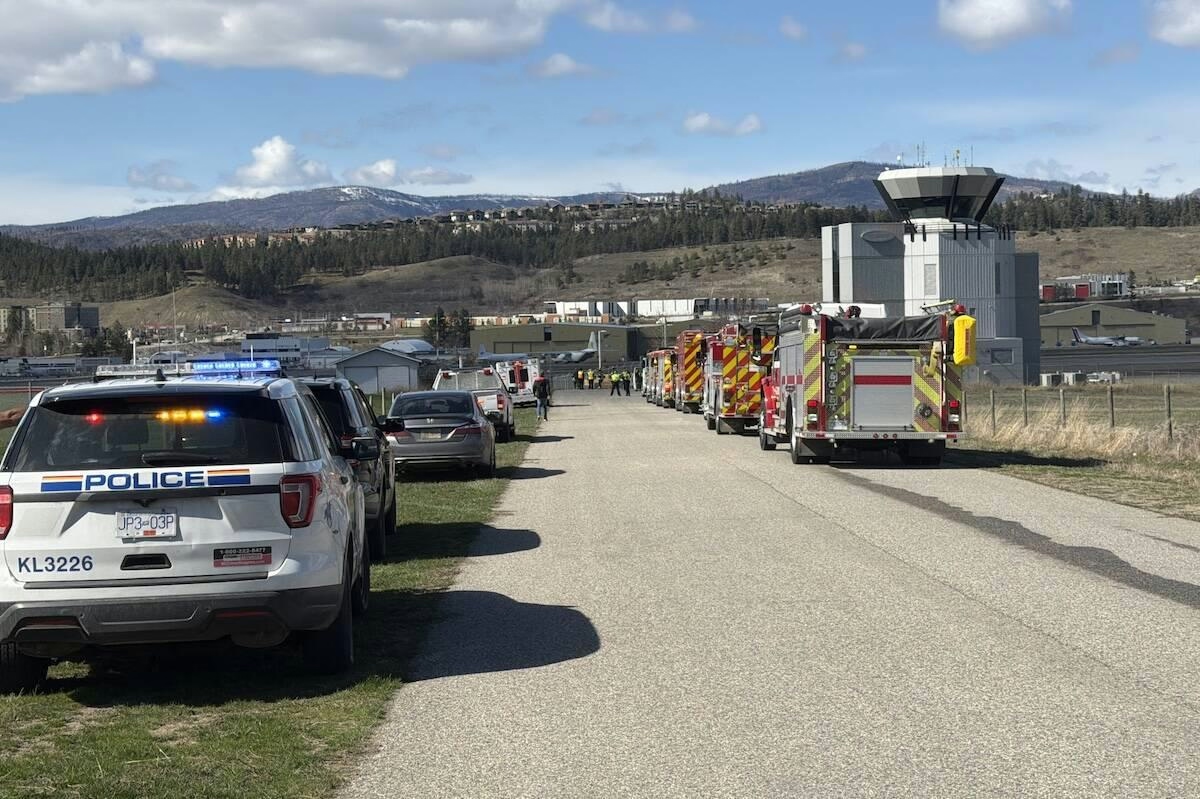
In accordance with standard emergency procedures, Kelowna International Airport activated its response protocols. Emergency crews were placed on standby, and the Kelowna Fire Department, RCMP, and BC Ambulance were alerted as a precaution. Samaddar noted the efficiency of the response, stating, “It’s part of our emergency procedures, and certainly, we got a lot of good support from our mutual aid partners. It’s good practice for everybody as well. So that all went well.”
Broader Implications for Aviation Safety
This incident occurs amid heightened scrutiny of aviation safety by regulators, industry stakeholders, and the public. Events of this nature often prompt regulatory reviews and operational assessments, which can lead to increased oversight, potential operational disruptions, and intensified attention from competitors. Market reactions may include fluctuations in airline stock prices and adjustments to insurance premiums. Additionally, competitors might leverage such incidents to emphasize their own safety records or to recalibrate their market strategies in response to evolving safety concerns.
Summit Air has yet to issue a statement regarding the incident. Investigations and regulatory assessments are anticipated as the aviation industry continues to prioritize rigorous safety standards.

Etihad Airways Suspends Airbus A380 Flights on Key Route

Aditya Birla Group Seeks Approval for Aircraft Leasing in GIFT City

Qatar Airways Highlights Innovation and Connectivity at Arabian Travel Market 2026

Hong Kong's Five-Year Plan Includes Andrew Fan's Aircraft Parts Processing Hub Proposal

ACIA Aero Leasing Delivers ATR72-600 to Air Nostrum

RTX Appoints Jill Albertelli as Head of Pratt & Whitney

TAT Technologies Joins Beyond Aero Hydrogen Aircraft Program

AURAK Study Highlights Barriers to Air Taxi Adoption in Emerging Economies

Xiamen Air Selects Altitude for 787 Maintenance at Heathrow

Etihad and Swissport Extend Global Partnership
