
Orquestre insights de IA em ações

Tendências
Categories
Key Baggage Technology Trends to Watch in 2026
Key Baggage Technology Trends to Watch in 2026
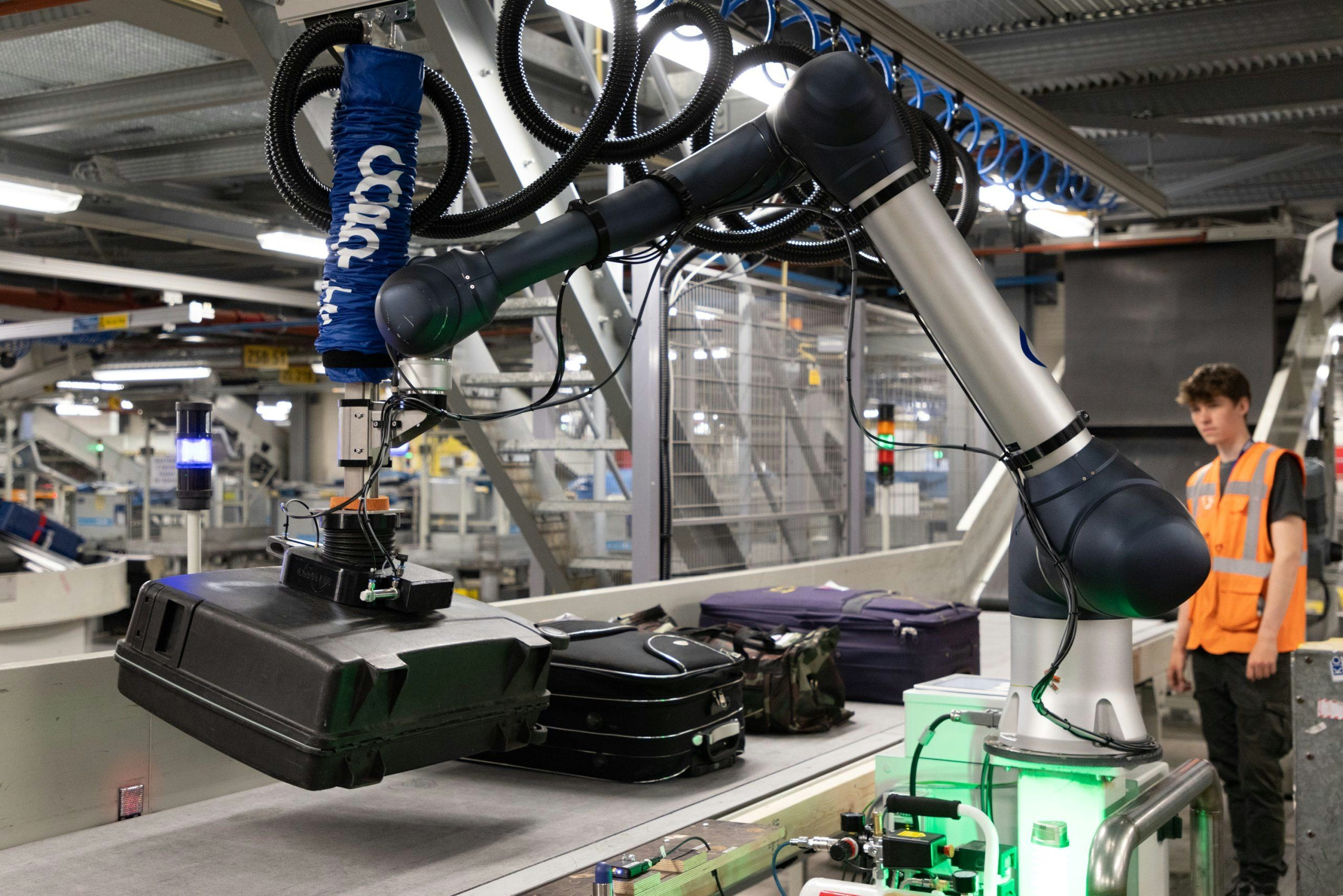
The baggage handling sector is poised for significant transformation as airports and airlines respond to increasing passenger volumes and shifting traveler expectations. Traditional baggage management systems are rapidly being replaced by smarter, more scalable technologies. Innovations such as robotic loading aids, autonomous vehicles, and advanced bag tagging and tracking systems are transitioning from pilot phases to full operational deployment. These advancements are expected to enhance efficiency, improve system resilience, and bolster passenger confidence in baggage handling processes.
Industry leaders including Air Canada, the Greater Orlando Aviation Authority (GOAA), Southwest Airlines, Barich Inc, BNP Associates, Vancouver Airport Authority (YVR), BEUMER Group, Introba, and BAGTAG are spearheading this evolution. Their perspectives, gathered through the Future Travel Experience (FTE) Baggage Innovation Working Group (BIWG), illuminate the key trends that will shape baggage handling in 2026 and beyond.
Automation, Artificial Intelligence, and End-to-End Visibility
Jason Odey, Director of Global Baggage Excellence at Air Canada and BIWG Captain, highlights that 2026 will mark a shift from conceptual innovation to tangible, measurable outcomes within the industry. The primary objectives include reducing mishandled baggage, enhancing turnaround reliability, and modernizing ramp and baggage workflows. This will be achieved by integrating data-driven tools with targeted deployments of robotics and autonomous vehicles. Emphasis will be placed on equipping employees with new digital tools, accelerating bag tracking capabilities, and advancing the digital ecosystem to benefit both customers and frontline staff. Modernized Baggage Handling Systems (BHS) are expected to form the foundation for scaling automation efforts through 2032, with 2026 serving as a critical year for execution.
Real-Time Tracking and Dynamic Baggage Management
Scott Goodwin, Assistant Vice President of Airport Operations at GOAA and BIWG Captain, underscores the growing importance of real-time tracking and dynamic baggage management. BHS will evolve beyond conventional conveyor systems as airports increasingly adopt autonomous technologies, Automated Guided Vehicles (AGVs), robotics, Individual Carrier Systems (ICS), and cross-belt sortation. Enhanced tracking capabilities will facilitate just-in-time bag delivery and more efficient sorting processes, moving the industry beyond the constraints of traditional “first-in, first-out” baggage handling. The expansion of Early Baggage Storage (EBS) and Dynamic Baggage Storage systems will further improve reliability and processing efficiency.
Market Dynamics and Competitive Landscape
The rapid integration of AI-driven baggage solutions is driving a surge in demand for memory and storage technologies, mirroring broader trends in the technology sector. Companies such as Western Digital and Micron have experienced significant growth, a momentum expected to continue as the industry addresses escalating data requirements. Nevertheless, persistent supply chain challenges—including tariffs, trade uncertainties, labor shortages, rising material costs, and freight market volatility—pose risks to technology providers and may influence investment and operational strategies.
In response to these pressures, industry players are accelerating innovation, particularly in the integration of AI and biometric technologies to offer more personalized and secure travel experiences. This dynamic environment is fostering intense competition, with airports and airlines striving to differentiate themselves through advanced baggage handling solutions and passenger-centric technologies.
Looking Ahead
As 2026 approaches, the baggage technology sector is entering a phase of execution and measurable progress. The convergence of automation, artificial intelligence, and real-time data analytics is set to modernize baggage operations and reshape the passenger journey. Despite ongoing market and supply chain challenges, the industry’s capacity for adaptation and innovation will be crucial in delivering the next generation of scalable baggage handling systems.

Etihad Airways Suspends Airbus A380 Flights on Key Route

Aditya Birla Group Seeks Approval for Aircraft Leasing in GIFT City

Qatar Airways Highlights Innovation and Connectivity at Arabian Travel Market 2026

Hong Kong's Five-Year Plan Includes Andrew Fan's Aircraft Parts Processing Hub Proposal

ACIA Aero Leasing Delivers ATR72-600 to Air Nostrum

RTX Appoints Jill Albertelli as Head of Pratt & Whitney

TAT Technologies Joins Beyond Aero Hydrogen Aircraft Program

AURAK Study Highlights Barriers to Air Taxi Adoption in Emerging Economies

Xiamen Air Selects Altitude for 787 Maintenance at Heathrow

Etihad and Swissport Extend Global Partnership
