
Orquestre insights de IA em ações

Tendências
Categories
Korean Air Expands Incheon-New York Cargo Route to Support Semiconductor Supply Chain
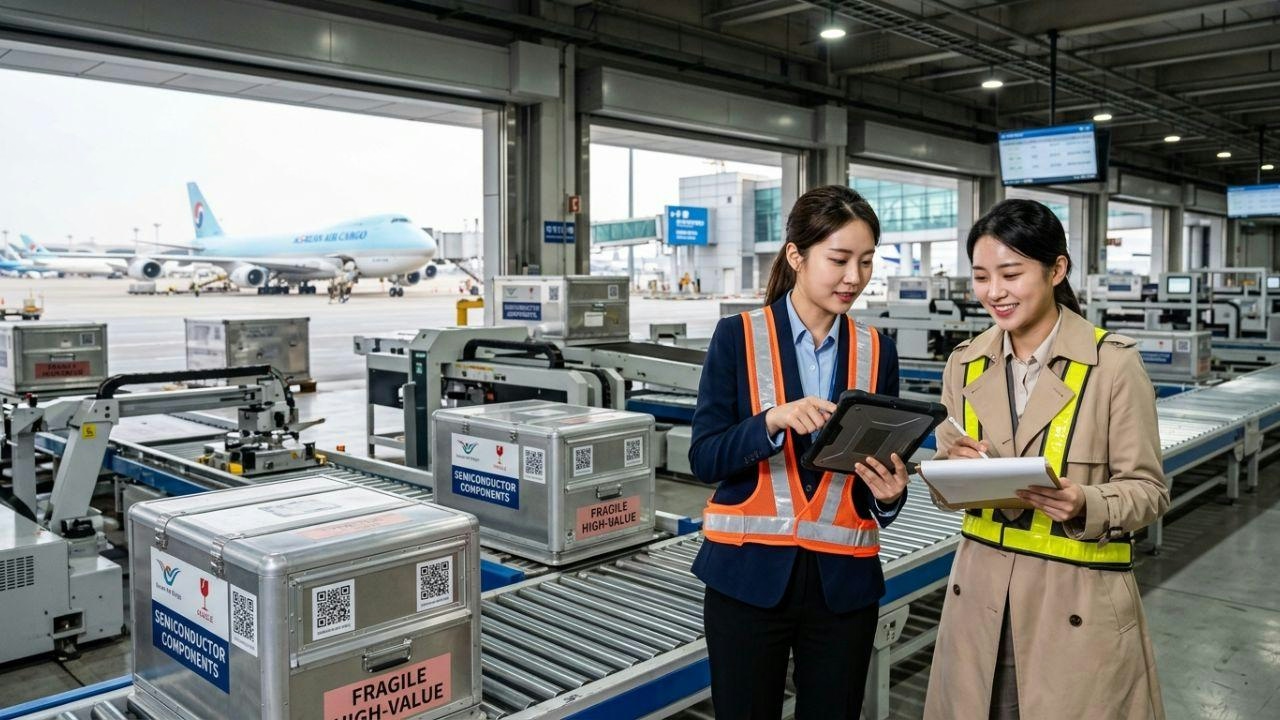
Korean Air Expands Incheon-New York Cargo Route to Strengthen Semiconductor Supply Chain
Korean Air has announced a major expansion of its cargo route between Incheon and New York, aiming to bolster the global semiconductor supply chain amid persistent logistical challenges. The South Korean flag carrier is making substantial investments in cargo infrastructure at both Incheon International Airport and its primary U.S. hub in New York. This initiative seeks to establish a dedicated, high-speed trans-Pacific corridor specifically for semiconductor shipments, ensuring that critical electronic components are shielded from the disruptions currently affecting conventional freight networks.
Enhancing Cargo Infrastructure for Semiconductor Shipments
The expansion arrives at a critical juncture for the semiconductor industry, which continues to navigate supply chain volatility with resilience. Demand for specialized materials and components is rising sharply, driven by growth in sectors such as artificial intelligence, electric vehicles, and cloud computing. Even minor delays in transit can severely disrupt production schedules, particularly for leading U.S. technology companies. By segregating high-value electronics from standard freight and developing highly automated, secure terminals, Korean Air aims to protect these shipments from the operational bottlenecks that have hampered global logistics.
At Incheon International Airport—already one of Asia’s largest and most advanced cargo hubs—Korean Air is undertaking a comprehensive overhaul of its cargo terminals. The upgrades include the integration of advanced automation systems and the construction of specialized, high-security handling zones designed to safeguard sensitive electronic shipments from temperature fluctuations and other risks. These enhancements are expected to reduce potential supply chain disruptions and accommodate the growing demands of the semiconductor sector.
Industry Context and Strategic Implications
This move aligns with broader trends in semiconductor manufacturing, which has seen significant investments such as new facilities in Texas and New York, alongside partnerships like Abbott’s grant to Soulbrain and Micron’s collaboration with Bechtel. These developments highlight the rapid expansion of the industry and the increasing need for robust logistics solutions. Korean Air’s strategy positions the airline at the forefront of this shift, potentially prompting competitors to upgrade their logistics networks to maintain market share. Market responses may include increased cargo traffic and adjustments in air freight pricing as carriers compete to support the burgeoning semiconductor trade.
To further enhance supply chain reliability, Korean Air is implementing direct passenger coordination and dynamic scheduling backups at its regional hubs. By phasing flight departures, the airline aims to optimize gate capacity management and support South Korea’s broader transportation infrastructure.
Logistics managers and freight forwarders are encouraged to consult official aviation directories and digital portals for up-to-date flight schedules, equipment status, and route changes. Real-time tracking services such as FlightAware can assist operators in monitoring ongoing bottlenecks in North American airspace.
Korean Air’s expansion of the Incheon-New York cargo route represents a decisive effort to safeguard the semiconductor supply chain, reinforcing South Korea’s leadership in the sector and establishing a new benchmark for specialized air freight logistics.

Etihad Airways Suspends Airbus A380 Flights on Key Route

Aditya Birla Group Seeks Approval for Aircraft Leasing in GIFT City

Qatar Airways Highlights Innovation and Connectivity at Arabian Travel Market 2026

Hong Kong's Five-Year Plan Includes Andrew Fan's Aircraft Parts Processing Hub Proposal

ACIA Aero Leasing Delivers ATR72-600 to Air Nostrum

RTX Appoints Jill Albertelli as Head of Pratt & Whitney

TAT Technologies Joins Beyond Aero Hydrogen Aircraft Program

AURAK Study Highlights Barriers to Air Taxi Adoption in Emerging Economies

Xiamen Air Selects Altitude for 787 Maintenance at Heathrow

Etihad and Swissport Extend Global Partnership
