
Orquestre insights de IA em ações

Tendências
Categories
NASA Demonstrates Advances to Improve Air Travel Safety
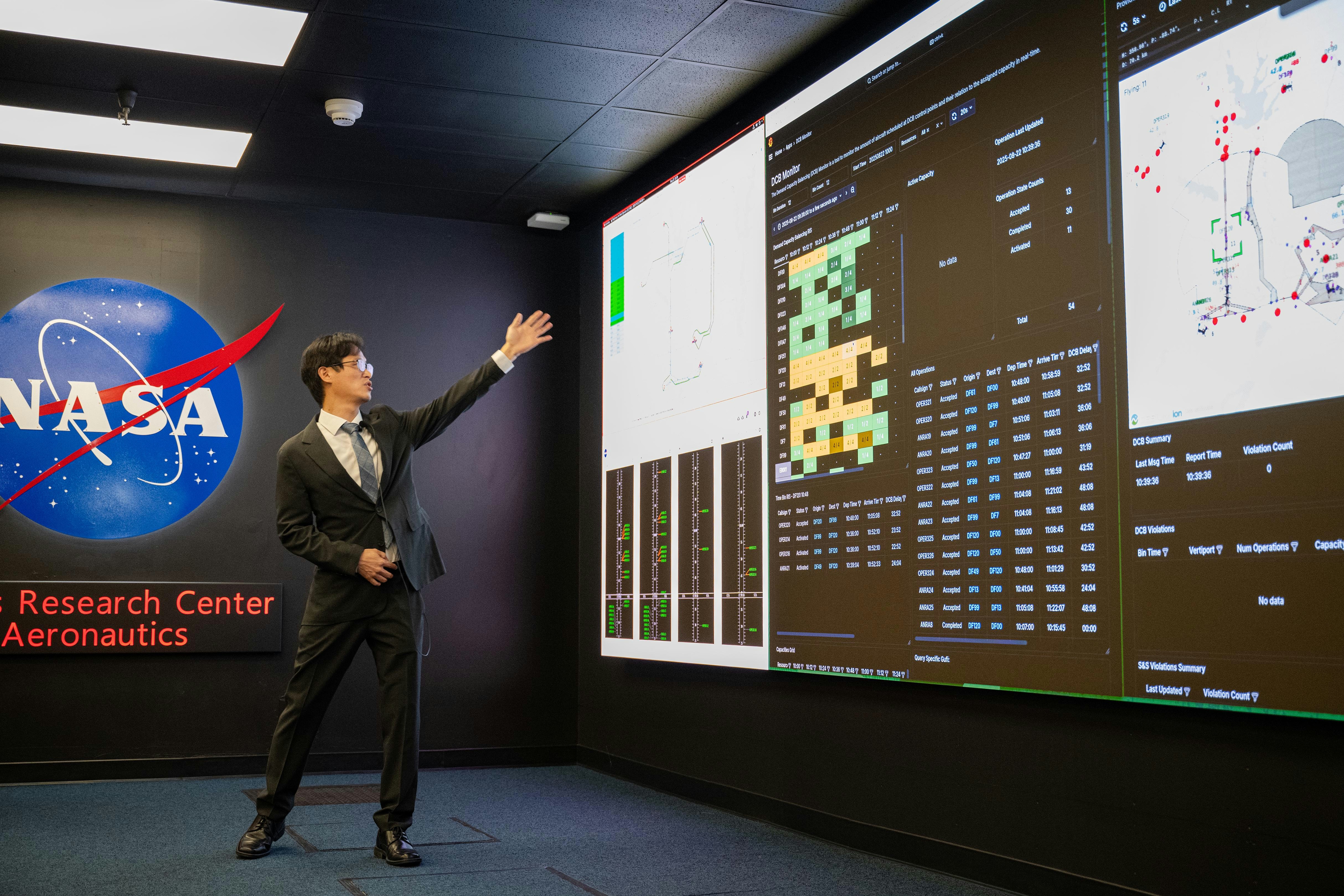
NASA Advances Technologies to Enhance Urban Air Travel Safety
Urban air mobility is rapidly transitioning from a futuristic concept to an imminent reality, as cities worldwide explore faster and more efficient methods to transport people and goods. Electric air taxis and delivery drones are increasingly central to urban planning discussions, with engineers designing compact aircraft capable of circumventing ground traffic to ferry passengers or packages across metropolitan areas within minutes. As these technologies approach widespread adoption, NASA is at the forefront of efforts to maintain safe and orderly skies.
Innovations in Airspace Management
To address the challenges posed by increasingly crowded urban airspace, NASA has developed advanced systems aimed at managing the surge of drones and air taxis. A key development is the Strategic Deconfliction Simulation, a tool designed to prevent mid-air conflicts by coordinating flight plans prior to takeoff. This system ensures that no two aircraft occupy the same airspace simultaneously, even as hundreds of flights traverse a city’s airspace.
NASA recently conducted a comprehensive test of these technologies at its Ames Research Center in California, simulating a high-traffic day over the Dallas-Fort Worth area. The exercise concentrated on optimizing flight paths to reduce delays and maintain safe separation between aircraft from departure through arrival. Two principal technologies were highlighted: the Situational Viewer, which offers real-time visualization of all airborne vehicles and their positions, and the Demand Capacity Balancing Monitor, which dynamically adjusts flight plans to alleviate congestion and sustain smooth traffic flow.
Challenges and Collaborative Efforts
Integrating these innovations into existing urban airspace management frameworks presents considerable challenges. NASA must navigate regulatory compliance, address public concerns regarding safety and noise pollution, and coordinate closely with municipal planners. Additionally, the ongoing government shutdown poses risks to funding and collaborative initiatives, potentially impeding progress.
Recognizing the importance of industry collaboration, NASA partnered with companies such as ANRA Technologies during the recent demonstration. ANRA contributed fleet management and ground operations software, illustrating how NASA’s research can be effectively combined with commercial solutions. This partnership demonstrated interoperability between different systems, enhancing both safety and operational efficiency. Such collaborations are anticipated to stimulate further investment in urban air mobility startups and encourage established aviation firms to develop comparable technologies or expand drone delivery services.
Testing these systems in controlled environments remains essential. Hanbong Lee, an engineer at NASA Ames, underscores that simulations enable researchers and industry stakeholders to understand how emerging aerial vehicles can safely coexist in shared airspace. The data generated not only informs NASA’s ongoing research but also supports regulatory agencies and commercial entities as they prepare for the next phase of urban air travel.
As urban air mobility continues to gain momentum, NASA’s technological advances represent a critical step toward safer and more reliable skies. Nonetheless, the successful integration of drones and air taxis into daily urban life will demand sustained innovation, clear regulatory frameworks, and active public engagement to address the multifaceted challenges ahead.

Etihad Airways Suspends Airbus A380 Flights on Key Route

Aditya Birla Group Seeks Approval for Aircraft Leasing in GIFT City

Qatar Airways Highlights Innovation and Connectivity at Arabian Travel Market 2026

Hong Kong's Five-Year Plan Includes Andrew Fan's Aircraft Parts Processing Hub Proposal

ACIA Aero Leasing Delivers ATR72-600 to Air Nostrum

RTX Appoints Jill Albertelli as Head of Pratt & Whitney

TAT Technologies Joins Beyond Aero Hydrogen Aircraft Program

AURAK Study Highlights Barriers to Air Taxi Adoption in Emerging Economies

Xiamen Air Selects Altitude for 787 Maintenance at Heathrow

Etihad and Swissport Extend Global Partnership
