Imagem

Orquestre insights de IA em ações

Entre na lista de espera da AeroGenie hoje mesmo!

Tendências

Categories

New York Launches First Point-to-Point Electric Air Taxi Flights
April 27, 2026By ePlane AI
New York Launches First Point-to-Point Electric Air Taxi Flights
0
0
Joby Aviation
Electric Air Taxi
eVTOL Integration Pilot Program

New York Launches First Point-to-Point Electric Air Taxi Flights

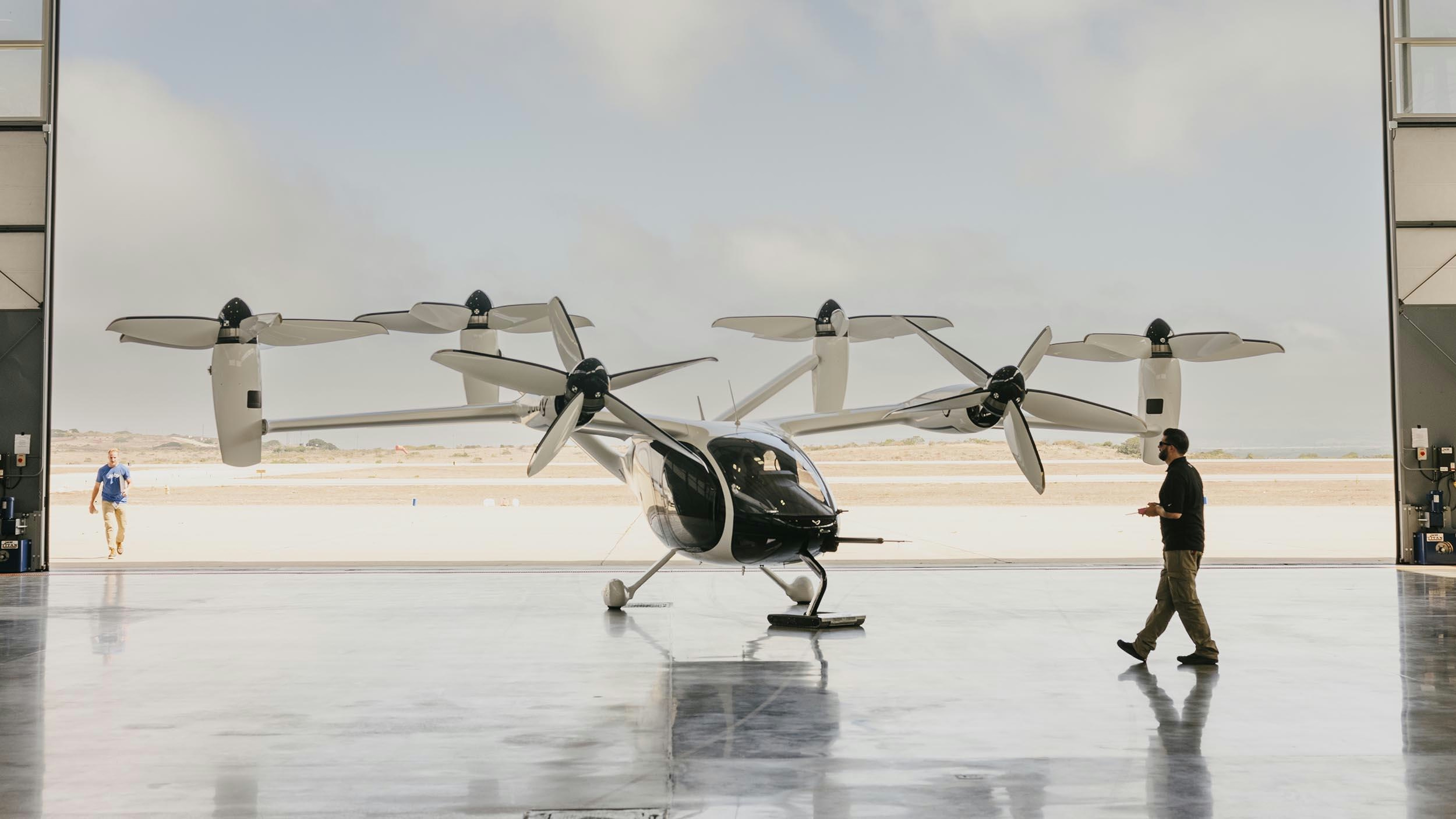
NEW YORK, April 27, 2026 – Joby Aviation has successfully completed New York City’s inaugural point-to-point electric vertical takeoff and landing (eVTOL) air taxi demonstration flights, marking a pivotal advancement in urban transportation. Conducted over the course of a week in collaboration with the Port Authority of New York and New Jersey, the campaign featured Joby’s electric air taxi operating between John F. Kennedy International Airport (JFK) and several key Manhattan heliports, including Downtown Skyport as well as the West 30th and East 34th Street Heliports.

A Glimpse into the Future of Urban Mobility

This demonstration was part of the Federal Aviation Administration’s eVTOL Integration Pilot Program (eIPP), designed to explore the integration of innovative aircraft into existing airspace. Joby’s zero-emission, low-noise aircraft completed flights along potential commercial routes, connecting Lower Manhattan and Midtown to JFK in under ten minutes. The initiative highlights the potential for quiet, environmentally friendly air taxis to transform connectivity between New York’s airports and neighborhoods, significantly reducing travel times.

JoeBen Bevirt, founder and CEO of Joby Aviation, remarked, “New York has always been a city that defines the future by demanding better. This week, flying between JFK and Manhattan, we showed what the White House-backed eIPP initiative makes possible and offered New York a look at what’s coming.” Port Authority Chairman Kevin O’Toole underscored the agency’s dedication to innovation, stating, “This cutting-edge aircraft is exactly the kind of technology we have a responsibility to test, understand, and help shape for the good of the region and the public. These flights advance our work to determine how next-generation aviation technology can serve the people of New York and New Jersey.”

Challenges Ahead for Joby Aviation

Despite the successful demonstration, Joby Aviation faces significant challenges as it moves toward commercial operations. The company is currently under investigation by the U.S. International Trade Commission for potential import violations, introducing regulatory scrutiny at a critical stage. Furthermore, Joby is contending with competitive pressures, notably from Archer Aviation, which has accused Joby of misrepresenting its operations and business relationships, particularly concerning ties to foreign firms. These disputes add complexity to the emerging urban air mobility market.

Market sentiment remains cautious, reflecting uncertainties surrounding the growth of aerial ridesharing services and the broader urban air mobility sector. Joby’s dependence on third-party suppliers and the evolving regulatory framework for eVTOL aircraft could also influence the timing and scale of future deployments.

As New York navigates the integration of electric air taxis into its complex airspace, the city’s experience may serve as a model for other metropolitan areas considering similar innovations. While Joby’s demonstration flights represent a significant step forward, the transition to routine commercial service will require overcoming regulatory, competitive, and operational challenges in the months to come.
More news
Russia Requests Vietnam Lease Airbus and Boeing Aircraft: Implications for MC-21 and Tu-214

Russia Requests Vietnam Lease Airbus and Boeing Aircraft: Implications for MC-21 and Tu-214

Russia Seeks to Lease Vietnamese Airbus and Boeing Jets Amid Domestic Aviation Challenges The Russian Ministry of Transport has initiated formal negotiations with Vietnam to lease aircraft from Vietnamese carriers, including the provision of crew and maintenance services under wet lease agreements. Transport Minister Andrey Nikitin confirmed that official proposals have been submitted and are currently under review by Vietnamese authorities. This development marks a significant step in Russia’s efforts to sustain and expand its international air traffic amid ongoing sanctions and export restrictions affecting its aviation sector. Vietnamese airlines predominantly operate fleets composed of Airbus and Boeing aircraft. The potential transfer of these Western-made jets to Russian carriers raises complex questions regarding the response of Airbus, Boeing, and international regulators. Given the geopolitical tensions and regulatory constraints, the success of such leasing arrangements remains uncertain. This initiative follows Russia’s earlier, unsuccessful attempt to secure a similar wet lease deal with Ethiopian carriers in the summer of 2025. Domestic Aircraft Ambitions and Global Market Dynamics Russia’s pursuit of leasing Western aircraft coincides with its broader ambition to reduce dependence on foreign-made planes by developing domestic alternatives. Vadim Badeha, head of the United Aircraft Corporation (OAK), has emphasized that Russian models such as the MC-21, SJ-100, and Tu-214 could eventually replace Boeing and Airbus aircraft entirely within the country’s passenger fleet. However, this transition faces significant challenges, including intensified international competition and the technical and regulatory hurdles inherent in scaling domestic production. The global commercial aviation landscape is also evolving, with new entrants such as China’s COMAC C919 making strides. The C919 recently completed its first international flight, signaling China’s growing ambitions in the sector. Nevertheless, the aircraft still relies on foreign components and lacks certification from major U.S. and European aviation authorities, limiting its immediate impact on the global market. Meanwhile, Airbus and Boeing maintain their dominance. In July 2026, the two manufacturers delivered a combined total of 100 narrowbody aircraft, a slight decrease from the previous month but an increase compared to July 2025. This continued demand underscores the resilience of these manufacturers despite geopolitical tensions. Russia’s efforts to secure wet lease agreements with Vietnam and to advance its domestic aircraft industry occur against a backdrop of tightening regulatory criteria for airlines seeking to operate international routes. Proposed Russian legislation aims to restrict carriers with unresolved compliance or financial issues from launching new services, potentially complicating efforts to expand international connectivity. The outcome of the negotiations with Vietnam will be a critical indicator of Russia’s capacity to navigate these regulatory and geopolitical challenges while maintaining its presence in global aviation.
AAUB Focuses on AI Integration in Aviation and Aerospace Education

AAUB Focuses on AI Integration in Aviation and Aerospace Education

AAUB Focuses on AI Integration in Aviation and Aerospace Education The Aviation and Aerospace University, Bangladesh (AAUB), is intensifying its efforts to incorporate artificial intelligence (AI) into its aviation and aerospace education programs. This strategic focus aims to advance research, foster innovation, and align higher education with the evolving demands of the industry. The university’s commitment to this initiative was highlighted during its 22nd Academic Council Meeting, held at the Dhaka campus. Strategic Vision and Collaborative Engagement The meeting, chaired by Vice-Chancellor Air Vice Marshal M Mustafizur Rahman, convened council members alongside representatives from prominent institutions including the Bangladesh Air Force, Bangladesh University of Engineering and Technology (BUET), Bangladesh Maritime University (BMU), Bangladesh University of Professionals (BUP), and the Military Institute of Science and Technology (MIST). In his address, the vice-chancellor underscored the rapid advancements in aviation, aerospace, and space technologies, driven largely by AI, autonomous systems, robotics, and data-centric solutions. He emphasized the necessity for higher education to transcend traditional curricula and closely integrate emerging technologies and research to meet the sector’s evolving requirements. AAUB is prioritizing AI integration in critical areas such as aircraft maintenance and operations, data link systems, unmanned aerial vehicles, space systems, and advanced engineering design. The university aims to cultivate advanced research capabilities in these domains, preparing students to navigate and contribute to the technological transformations reshaping the industry. Challenges and Global Context The university’s AI integration efforts are unfolding amid significant challenges. As AI becomes one of the most heavily regulated sectors worldwide, institutions like AAUB must carefully navigate complex regulatory frameworks. The broader AI industry is also contending with operational challenges, including high costs faced by leading companies such as OpenAI and Anthropic, as well as the need to differentiate between market hype and substantive technological progress. These factors influence the pace and effectiveness of AI adoption in both education and industry, with market dynamics occasionally underestimating the impact of token costs on AI deployment, potentially leading to short-term adjustments. On the international stage, increased defense spending on AI capabilities—exemplified by South Korea’s recent investments—is likely to prompt other nations to accelerate their own AI initiatives. This intensifies competition across defense and academic sectors. Within higher education, AI’s expanding role is reshaping teaching methodologies, learning experiences, and enrollment strategies, adding complexity to the competitive environment faced by institutions such as AAUB. Academic Developments and Future Directions During the meeting, members received updates on significant academic and administrative progress since the previous council session. Discussions addressed curriculum development, research strategies, and initiatives aimed at enhancing academic quality. The vice-chancellor reiterated that the mission of a modern university extends beyond the dissemination of existing knowledge. He stressed the importance of generating new knowledge, developing innovative technologies, and delivering solutions tailored to national priorities. Guided by this vision, AAUB is committed to strengthening indigenous capabilities, promoting technological self-reliance, and cultivating professionals equipped to meet international standards in the aviation and aerospace sectors.
Vietnam Airlines places provisional order with Airbus for five Airbus A350-900s

Vietnam Airlines places provisional order with Airbus for five Airbus A350-900s

Vietnam Airlines Signs Provisional Agreement for Five Airbus A350-900 Aircraft Vietnam Airlines has entered into a memorandum of understanding with Airbus to acquire five A350-900 widebody jets, confirming earlier reports. The deliveries are planned for 2033 and 2034, although the financial terms of the agreement have not been disclosed. This provisional order forms part of Vietnam Airlines’ long-term fleet expansion strategy, which envisions the addition of 30 widebody aircraft beyond 2030. Strategic Fleet Expansion and Operational Goals The airline intends to capitalize on the A350-900’s advanced long-haul capabilities and fuel efficiency to broaden its international route network. Benoît de Saint-Exupéry, Airbus executive vice-president of sales for commercial aircraft, emphasized the aircraft’s potential to support Vietnam Airlines’ ambitions for international growth in the coming years. Despite the strategic intent, the extended delivery timeline—nearly a decade away—may present challenges. The delay could intensify competition among Asian carriers, many of which are actively pursuing fleet modernization and technological upgrades to maintain market position. Broader Context of Vietnam-France Aviation Cooperation The agreement was signed during Vietnamese Minister of Public Security To Lam’s visit to Paris for the International Space Summit, a trip that also saw several other aviation-related deals between Vietnam and France. French President Emmanuel Macron highlighted the nearing completion of a contract for three NH90 helicopters from Airbus Helicopters, underscoring the deepening defense and aerospace collaboration between the two nations. Airbus continues to experience robust demand for its A350 series, with the order book for the freighter variant, the A350F, recently reaching 115 firm orders. This reflects sustained market confidence in the aircraft’s performance and versatility. In addition to Vietnam Airlines’ provisional order, Vietravel Airlines signed a letter of intent to purchase 20 A220 aircraft and 30 A321 jets, with deliveries expected to commence in 2029. These agreements collectively signal Vietnam’s growing commitment to modernizing its commercial aviation sector through partnerships with Airbus.
Alaska Airlines Counters Delta’s Widebody Fleet with Seven Boeing 787-9s

Alaska Airlines Counters Delta’s Widebody Fleet with Seven Boeing 787-9s

Alaska Airlines Counters Delta’s Widebody Fleet with Seven Boeing 787-9s Strategic Shift in Seattle’s Aviation Landscape In 2012, Delta Air Lines announced its intention to establish Seattle as a premier West Coast gateway to Asia, leveraging its partnership with Alaska Airlines to bolster its expanding presence. At that time, the two carriers operated as collaborators rather than competitors. However, the dynamics have since shifted considerably. Alaska Airlines is now actively developing its own intercontinental network from Seattle, positioning itself as a direct challenger to Delta’s longstanding dominance and identifying Delta as its primary rival. Tensions between the two airlines have intensified, particularly following Alaska’s acquisition of Hawaiian Airlines and its subsequent decision to build a widebody fleet. For many years, Delta held the unique position of operating the only significant intercontinental network from Seattle. Alaska’s expansion into this arena now poses a direct threat to Delta’s market share, prompting a strategic response from the latter. Alaska’s Widebody Fleet and Network Expansion Historically, Alaska Airlines operated a fleet model akin to Southwest Airlines, relying predominantly on an all-Boeing 737 narrowbody fleet. While it did operate Embraer 175 aircraft through regional partners, the acquisition of Hawaiian Airlines marked a pivotal strategic transformation. Prior to this, only Delta, United, American, and Hawaiian maintained widebody intercontinental flights among U.S. carriers. Hawaiian’s fleet included 24 Airbus A330ceos alongside incoming Boeing 787-9 Dreamliners. Alaska elected to assume the Dreamliner orders, leaving Hawaiian with the A330s, and set its sights on establishing a long-haul network. By mid-2026, Alaska’s widebody ambitions are taking tangible form. The airline currently operates five Boeing 787-9 aircraft, with seven additional 787-9s scheduled for delivery through 2027, followed by five Boeing 787-10s beginning in 2028. Although this fleet remains modest compared to the “Big Three” U.S. carriers, it represents a significant new challenge to Delta’s Seattle hub and signals Alaska’s commitment to expanding its global reach. New Routes and Competitive Market Dynamics In August 2026, Alaska Airlines announced the launch of two new long-haul routes from Seattle: nonstop flights to Athens and Paris. These destinations were highly requested by members of Alaska’s Atmos Rewards program. Scheduled to commence in spring 2027, these services will increase Alaska’s intercontinental destinations to seven. Tickets for Athens International Airport (ATH) and Paris Charles de Gaulle Airport (CDG) are now available, with introductory roundtrip Main Cabin fares starting at $999 through August 26. Alaska’s expansion into Europe intensifies competition in the Seattle market, particularly against Delta and its SkyTeam partner Air France. This development is expected to stimulate greater competition, potentially resulting in lower fares and enhanced service quality for travelers. Nevertheless, Alaska faces considerable challenges as it ventures into the long-haul market, including managing the operational complexities of new routes, maintaining competitive pricing, and ensuring customer satisfaction with its expanded offerings. In response, Delta and Air France are likely to adjust their own route structures, frequencies, or onboard services to defend their market positions. As Alaska Airlines accelerates its intercontinental ambitions, the contest for Seattle’s status as a global gateway is poised to reshape the region’s aviation landscape.
Saudi Arabia Outlines Dual-Track AI Strategy for Aviation, Says GACA President

Saudi Arabia Outlines Dual-Track AI Strategy for Aviation, Says GACA President

Saudi Arabia Advances Dual-Track AI Strategy in Aviation Saudi Arabia is pursuing a dual-track approach to integrating artificial intelligence (AI) and automation within its aviation sector, aiming to balance rapid technological advancement with stringent safety oversight. Abdulaziz Al-Duailej, President of the General Authority of Civil Aviation (GACA), detailed this strategy during the Aerospace Future Technology Symposium held alongside the El Alamein International Airshow 2026 in Egypt. His remarks underscored the kingdom’s commitment to fostering innovation while preserving human expertise and operational integrity. Balancing Innovation with Safety The first component of Saudi Arabia’s strategy focuses on accelerating the deployment of advanced technologies in areas that do not directly impact safety-critical operations. This approach allows for swift modernization and operational efficiency gains without compromising safety standards. The second component involves a cautious, phased introduction of AI and automation into safety-sensitive functions. This measured rollout ensures that new systems are rigorously evaluated and meet or exceed existing safety benchmarks before full implementation. Throughout both tracks, Al-Duailej emphasized that human oversight and expertise will remain central to aviation operations, even as automation expands. The evolving role of AI is also reshaping workforce requirements within the sector. There is growing demand for specialized skills in AI assurance, data science, and human factors to ensure effective collaboration between humans and automated systems. Al-Duailej highlighted the Saudi Data & AI Authority’s One Million Saudis in AI (SAMAI) Initiative, which has successfully trained over one million citizens in AI competencies. This milestone reflects Saudi Arabia’s broader ambition to build an AI-driven digital society and underscores the importance of translating general AI readiness into sector-specific expertise through advanced training and simulation programs. Navigating Challenges and Strategic Partnerships Despite the promising outlook, the dual-track strategy faces significant challenges, particularly in regulatory adaptation. As AI becomes one of the most heavily regulated industries worldwide, Saudi Arabia must carefully navigate complex regulatory frameworks that could influence the pace of AI adoption. Al-Duailej called for regulatory evolution that keeps pace with technological progress while ensuring robust human oversight remains integral to critical safety functions. The competitive landscape within Saudi aviation is also evolving. Local carriers are strengthening their market positions through strategic partnerships. For instance, Flynas recently acquired a stake in Swissport Saudi Arabia to enhance ground-handling capabilities. Additionally, collaborations such as the partnership between Mistral and Humain aim to develop sovereign AI capabilities, potentially positioning Saudi Arabia as a regional leader in AI innovation. However, there remains a strong emphasis on monetizing existing technologies like 5G, with telecom operators such as Mobily prioritizing current revenue streams over long-term AI investments. As automation becomes increasingly prevalent, Al-Duailej reiterated the enduring importance of human judgment, situational awareness, and the capacity to intervene during critical moments. He stressed that while technology will drive progress, safeguarding human skills and adapting regulatory structures are essential to ensuring the safe and effective integration of AI within Saudi Arabia’s aviation sector.
Could AI Replace Human Pilots?

Could AI Replace Human Pilots?

Could AI Replace Human Pilots? Recent developments in aviation technology have brought the question of artificial intelligence (AI) replacing human pilots into sharper focus. Two notable flights illustrate the current capabilities and limitations of AI and automation in the cockpit. On December 20, 2025, a Beechcraft King Air departing Aspen experienced a sudden loss of cabin pressurization at flight level 230. The two pilots donned oxygen masks and allowed the aircraft to land autonomously at Rocky Mountain Metropolitan Airport near Denver, marking the first real-world deployment of Garmin’s Emergency Autoland system since its introduction in 2019. Several months later, in May 2026, CNN reported from the right seat of a Merlin Labs Cessna Caravan, where an AI system managed takeoff, communicated with a simulated air traffic controller, and responded over the radio, all while the test pilot refrained from manual control. These events have intensified ongoing discussions within aviation circles about whether AI will eventually render human pilots obsolete. Despite the technological progress, the consensus remains that AI will not replace pilots on passenger airliners in the near future. Regulatory frameworks, technological constraints, and economic considerations continue to pose significant barriers. While AI is already reshaping pilot roles and enabling pilotless operations in cargo and other non-passenger sectors, fully autonomous passenger flights remain a distant prospect. Automation Versus AI: Clarifying the Distinction Automation has been integral to commercial aviation for decades, with systems such as autopilot, autothrust, autoland, and fly-by-wire managing much of routine flight operations. The critical difference between traditional automation and AI lies in decision-making processes. Conventional automation operates strictly within pre-programmed parameters, executing defined tasks without deviation. In contrast, AI systems learn from data and adapt to novel situations, potentially handling a wider array of unexpected events. Stanford researcher Mykel Kochenderfer highlights that current cockpit automation functions within narrowly defined limits, whereas AI aspires to manage a broader spectrum of contingencies. Garmin’s Autoland system exemplifies advanced conventional automation. During its inaugural real-world emergency, the system activated automatically when cabin altitude reached unsafe levels, successfully completing the landing with pilot consent. However, the system’s automated radio transmissions mistakenly reported pilot incapacitation, underscoring the limitations of scripted responses compared to nuanced human judgment. Airbus has pursued more ambitious AI applications through its ATTOL project, which employed onboard image recognition to enable autonomous taxiing, takeoff, and landing on an A350-1000 aircraft after more than 500 test flights. The objective is to allow pilots to concentrate on strategic decision-making rather than manual control. The subsequent DragonFly demonstrator simulated pilot incapacitation scenarios, with the A350 autonomously diverting and landing safely. Despite these advances, Airbus stresses that such technologies are designed to augment, not replace, the traditional two-pilot flight deck. Regulatory and Economic Challenges The primary focus in recent years has shifted from eliminating pilots entirely to reducing crew numbers. Initiatives like Extended Minimum Crew Operations (eMCO) propose allowing one pilot to rest while the other manages the aircraft during cruise phases. However, regulatory scrutiny has intensified, with fund managers warning that AI could become one of the most heavily regulated sectors, potentially impeding its adoption in aviation. Economists at the European Central Bank have also cautioned that AI-driven economic booms may precipitate market corrections, injecting further uncertainty into investments in autonomous flight technologies. Simultaneously, workforce pressures are mounting as airlines and manufacturers plan for growth amid AI-driven transformation. Many organizations face challenges in adapting to these changes, highlighting the necessity for clear communication, robust governance, and practical support for employees and management navigating this transition. The Future of Piloting in an AI-Driven Era AI is undeniably transforming aviation, yet regulatory, economic, and workforce considerations ensure that human pilots will remain indispensable, particularly in passenger operations, for the foreseeable future. While automation technologies will continue to evolve and assume greater responsibilities, the prospect of an empty cockpit remains unlikely in the near term.
Concerns Grow Over Spirit’s Pending Data Sale to Google Amid Bankruptcy

Concerns Grow Over Spirit’s Pending Data Sale to Google Amid Bankruptcy

Concerns Grow Over Spirit’s Pending Data Sale to Google Amid Bankruptcy Dispute Over Ownership of Proprietary Data Doug Kreuzkamp, founder of the startup Springshot, expressed shock following reports that Google had secured an auction victory to acquire a substantial collection of operational data from Spirit Airlines as part of the carrier’s ongoing bankruptcy process. Springshot’s proprietary platform, which has been integral to Spirit’s technology infrastructure for the past three years and is utilized by hundreds of airports globally to optimize airline logistics and efficiency, is at the center of the dispute. Kreuzkamp asserts that Springshot was not notified when Spirit moved to auction off a dataset that, in his view, improperly includes significant data and intellectual property (IP) owned by Springshot rather than Spirit. In a limited objection filed last month, Springshot challenged the clarity of Spirit’s sale agreement, which broadly references categories such as “productivity and collaboration data,” “core business systems and business application data,” and “workflow and process data.” According to Springshot, these vague terms risk encompassing its proprietary information without distinction. The company’s court filing emphasized that the agreement fails to differentiate between Springshot’s intellectual property embedded within Spirit’s data repositories and the data actually owned and sellable by Spirit. Calls for Judicial Oversight and Industry Implications Springshot has petitioned the bankruptcy court to suspend the sale pending a transparent forensic review to ensure that no third-party-owned data is transferred to Google. The company warns that proceeding without such safeguards could facilitate the unauthorized acquisition and use of trade secrets, potentially inflicting harm on startups and establishing a troubling precedent. Springshot highlighted concerns about a scenario in which vast amounts of intellectual property are transferred to some of the world’s wealthiest and most monopolistic corporations through bankruptcy proceedings. The proposed transaction has also ignited broader industry and regulatory apprehensions. Reports indicate that the sale encompasses not only business data but also software code and extensive operational information. This has raised questions about how Google might exploit the data to enhance its artificial intelligence models and consolidate its competitive edge in the technology sector. Competitors are closely monitoring the deal, viewing it as a potential strategic advantage for Google in the intensifying race to dominate AI and data-driven services. Regulatory and Employee Concerns Regulatory scrutiny is mounting as privacy advocates and industry stakeholders voice concerns regarding the ethical ramifications of transferring sensitive operational data to a major technology conglomerate. Objections have also emerged from Spirit’s flight attendants, who have expressed unease about privacy issues and the handling of employee information. The sale’s approval by the bankruptcy court and its evaluation by federal regulators are anticipated to be closely observed, given the potential to influence future data sales in bankruptcy contexts and reshape competitive dynamics within the market. As the court deliberates on the objections and the industry awaits a final ruling, the Spirit-Google data sale is poised to become a pivotal case in determining how proprietary data and intellectual property are managed in high-stakes bankruptcy proceedings. The outcome will raise critical questions about data ownership, privacy protections, and the shifting balance of power in the digital economy.
Flair Airlines Signs 15-Year Engine Maintenance Deal with Lufthansa in Calgary

Flair Airlines Signs 15-Year Engine Maintenance Deal with Lufthansa in Calgary

Flair Airlines Secures 15-Year Engine Maintenance Partnership with Lufthansa Technik in Calgary Edmonton-based Flair Airlines has entered into a 15-year agreement with Lufthansa Technik to provide maintenance services for its aircraft engines at the Calgary facility. This strategic partnership marks a significant shift, bringing engine maintenance jobs back to Canada from the United States and other international locations. Under the deal, Lufthansa Technik, a subsidiary of Germany’s Lufthansa Group, will service Flair’s fleet of 18 Boeing 737 aircraft powered by CFM International Leap engines. Enhancing Canadian Aerospace Capabilities Currently, much of Flair’s engine maintenance is conducted outside Canada, including at Lufthansa Technik’s facility in Tulsa, Oklahoma. While Flair has not disclosed all existing maintenance locations, spokeswoman Kim Bowie emphasized that the new agreement supports the retention and growth of skilled jobs within Canada. The partnership is expected to enhance maintenance capabilities domestically, allowing more work to be performed closer to Flair’s operational base. Lufthansa Technik’s Calgary facility, which opened in 2025 and currently employs 80 people, is undergoing a substantial $120-million expansion. The upgraded 14,000-square-metre site will feature Canada’s first test cell for advanced jet engines and is projected to increase its workforce to approximately 160 employees by 2030. This expansion, partially funded by an $18 million contribution from federal, Alberta, and Calgary governments, will also accommodate other clients, including WestJet Airlines. Market Context and Industry Implications The agreement arrives amid growing capacity constraints in the market for Leap engine maintenance. Industry analysts note that the anticipated entry of IAG Engine Tech into this sector in 2027 could alter competitive dynamics, as airlines worldwide face mounting pressure to manage maintenance costs while ensuring operational reliability. Recent engine-related disruptions at carriers such as Air New Zealand have intensified scrutiny on maintenance practices, prompting regional competitors to consider similar long-term contracts to secure cost-effective and dependable services. Georgios Ouzounidis, Lufthansa Technik’s vice-president of sales for the Americas, highlighted that Flair’s decision reflects confidence in the expanding capabilities of the Calgary facility. The maintenance package includes advanced analytics that integrate aircraft data, engineering insights, digital records, and asset management systems, which Flair anticipates will streamline maintenance planning and operational efficiency. In a joint statement, Flair Airlines and Lufthansa Technik underscored that the partnership “advances Lufthansa Technik’s commitment to build aviation capability in Canada while connecting that capability to a global aerospace network.” Financial details of the agreement were not disclosed. Alberta’s Minister of Jobs, Economy, Trade and Immigration, Joseph Schow, praised the deal as “a strong example of how investment in Canada’s aerospace sector is strengthening our supply chains, developing a skilled workforce and building the expertise and capacity our industry will need for years to come.” Technical Background on Leap Engines The Leap engines serviced under this agreement are manufactured by CFM International, a joint venture between GE Aerospace and Safran Aircraft Engines. These engines power both the Boeing 737 Max and Airbus A320 Neo families, making them a critical component in modern commercial aviation fleets.
Texas and Joby Launch FAA-Supported Air Taxi Demonstrations

Texas and Joby Launch FAA-Supported Air Taxi Demonstrations

Texas and Joby Launch FAA-Supported Air Taxi Demonstrations Integration of Electric Air Taxis into Controlled Airspace Precertified electric air taxis have commenced a weeklong demonstration campaign in Texas, operating alongside conventional air traffic under a Federal Aviation Administration (FAA) contract. Joby Aviation, a prominent developer of electric vertical takeoff and landing (eVTOL) aircraft, announced that its preproduction prototype is conducting flights to demonstrate its capability to integrate safely into busy airspace, including the highly controlled environment of Dallas/Fort Worth International Airport (DFW). Although Joby’s air taxi has not yet received certification to carry passengers, the company is using this campaign to showcase real-world routes across North Texas, connecting major urban centers as it advances toward FAA certification expected in the coming months. The initiative began with a flight at Perot Field Fort Worth Alliance Airport and has included joint demonstrations with other manufacturers. These activities are scheduled to continue through Monday, subject to weather and operational conditions. Partnership and Regulatory Framework This campaign represents a significant milestone for Joby, conducted in collaboration with the Texas Department of Transportation (TxDOT) and forming part of the FAA’s eVTOL Integration Pilot Program (eIPP). The eIPP is a three-year initiative spanning 26 states, designed to assist the FAA in identifying regulatory gaps, refining operational procedures, and supporting the safe integration of eVTOL aircraft into the National Airspace System. FAA Administrator Bryan Bedford emphasized the importance of these efforts, stating that the agency is leveraging data from test flights in Texas and across the country to ensure the safe incorporation of these new aircraft into the national airspace. Joby’s prototype, adorned with Texas’ Lone Star Flag, operates under a signed other transaction agreement (OTA) with the FAA. This agreement outlines the planned activities and data reporting requirements essential for regulatory oversight. The eIPP program anticipates a phased progression from flights with only a pilot on board to those carrying non-paying passengers, and eventually, paying customers, contingent upon rigorous FAA evaluation. Challenges and Industry Context Despite these advancements, Joby faces considerable challenges on the path to commercial air taxi service. Regulatory hurdles remain substantial as the FAA adapts existing frameworks to accommodate this emerging class of aircraft. The competitive landscape is intensifying, with companies such as Archer Aviation recently acquiring Boeing’s automated air taxi initiative, signaling a broader industry momentum toward commercialization. Joby’s strategic approach encompasses both commercial and military markets. The company’s acquisition of a defense contractor, alongside partnerships with entities like Blade’s aviation network and Toyota-backed manufacturing, reflects a multifaceted effort to address financial and strategic challenges. While increased defense spending may open new avenues, it also diverts some focus from immediate commercial deployment. As Joby and its competitors continue to navigate technological integration and regulatory approval, the Texas demonstrations stand as a critical milestone in the development of urban air mobility. The results of these trials will play a pivotal role in shaping the future of air taxi services both within Texas and across the United States.
Electric Air Taxis Approved for Flight Tests in Texas

Electric Air Taxis Approved for Flight Tests in Texas

Electric Air Taxis Begin Flight Tests in Texas A significant milestone in urban aviation has been reached in Texas as federal regulators have authorized the first flight tests of electric air taxis. The Federal Aviation Administration’s (FAA) Advanced Air Mobility and Electric Vertical Takeoff and Landing (eVTOL) Integration Pilot Program (eIPP) has initiated its inaugural public demonstration flights this week in the Dallas-Fort Worth area. Leading eVTOL manufacturers, including Joby Aviation, Beta Technologies, and Wisk Aero, are participating in these tests, which represent a critical step toward integrating electric air taxis into the national airspace. Demonstration Flights and Collaborative Efforts Over the course of the coming week, these companies will conduct demonstration flights along prospective routes connecting urban centers and regional airports, such as Dallas Fort Worth International Airport. Although these initial flights will not carry passengers, they are designed to gather essential data on how Texas’s air traffic control systems handle the increased activity generated by these novel aircraft. This initiative is part of TxDOT’s Project Nexus, a collaborative effort involving federal, state, and local agencies aimed at exploring the integration of electric air taxis into U.S. airspace. Joby Aviation’s involvement highlights both the potential and the challenges facing the emerging sector. JoeBen Bevirt, Founder and CEO of Joby Aviation, expressed optimism about the opportunity, stating, “I’m incredibly excited by the potential for vertical lift in Texas, a state with the infrastructure, expertise, and partnerships to help lead the next era of American aviation.” The company’s week-long campaign in the Dallas-Fort Worth region seeks to demonstrate practical routes and connections to major urban hubs, emphasizing the prospects for reduced travel times and environmental benefits. Regulatory Framework and Industry Dynamics The eIPP program, established by the White House, aims to accelerate the commercialization of electric and autonomous aircraft even as regulatory frameworks remain under development. By permitting companies to collect operational data prior to full certification, the program intends to inform the creation of new regulations that will safely enable widespread adoption of this technology. Given that type certification—a mandatory step for commercial passenger service—can take several years, these early tests are vital for manufacturers to advance their aircraft toward market readiness. The electric air mobility sector is rapidly evolving, with competitors responding to Joby Aviation’s progress. Archer Aviation, which recently acquired Wisk Aero from Boeing, is positioning itself with a focus on defense applications and autonomous flight capabilities. Meanwhile, Zoox, a company known for its autonomous ground vehicles, is expanding its robotaxi testing in Houston, signaling intensifying competition across both air and ground mobility sectors. Market responses to these developments are anticipated to be favorable, driven by the promise of faster and cleaner transportation options. Nonetheless, significant challenges remain, including regulatory approval, infrastructure development, and public acceptance. Legal disputes, such as the ongoing litigation between Joby and Archer over alleged trade secret theft, as well as technical obstacles like battery limitations and sensor integration, could influence the pace of adoption. Additional eVTOL test flights are scheduled in states including New York, Utah, Pennsylvania, Louisiana, Florida, North Carolina, and New Mexico, as industry stakeholders and regulators collaborate to shape the future of electric and autonomous flight in the United States.
line