
Orquestre insights de IA em ações

Tendências
Categories
Oman Air Grounds Aircraft and Revises Flight Schedules Due to Supply Chain Delays
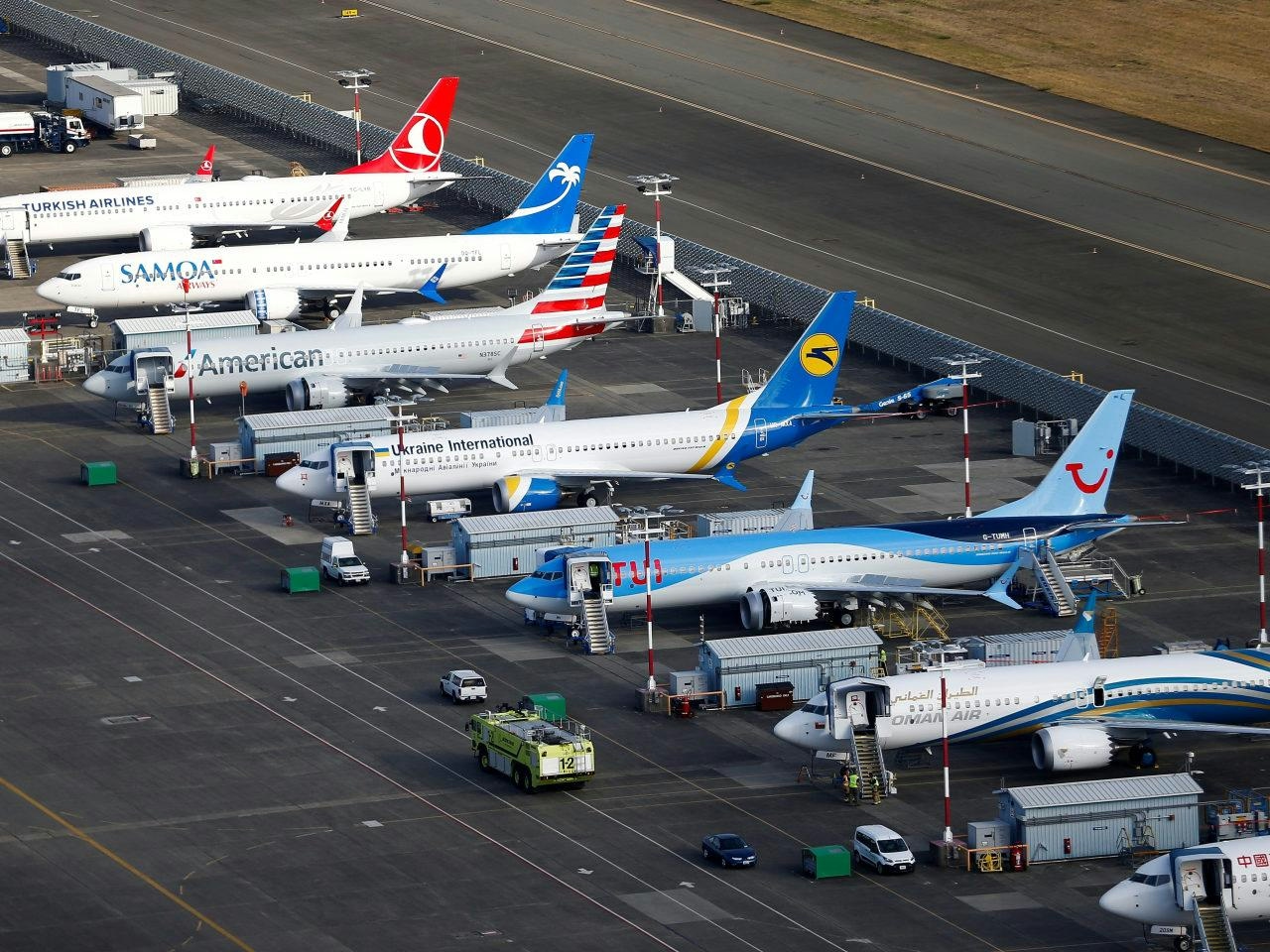
Oman Air Grounds Aircraft and Revises Flight Schedules Amid Supply Chain Disruptions
Oman Air has temporarily grounded several aircraft and adjusted its flight schedules in response to persistent global supply chain disruptions, the state-owned airline announced on Thursday. The carrier is working closely with manufacturers to expedite the return of affected planes to service and to minimize inconvenience for passengers. The airline is also reorganizing bookings, transferring travelers to alternative flights as part of its standard operational procedures.
Impact of Global Supply Chain Challenges on Aviation
The aviation sector continues to face severe supply chain pressures that originated during the Covid-19 pandemic and have since intensified. According to the International Air Transport Association (IATA), these disruptions are projected to cost airlines more than $11 billion in 2025. The industry is currently contending with a record backlog of over 17,000 aircraft in 2024, a significant increase from the average annual backlog of approximately 13,000 aircraft between 2010 and 2019. Aircraft deliveries have also declined sharply, with only 1,254 expected this year—roughly 30 percent below pre-pandemic levels.
These challenges have compelled airlines to operate older aircraft, resulting in higher fuel consumption and increased maintenance expenses. Many carriers have resorted to leasing additional engines and spare parts to sustain operations. Engine-related issues alone have grounded hundreds of planes worldwide, further constraining capacity. While some manufacturers, such as Embraer, have managed to meet production targets despite these difficulties, most airlines are adjusting flight schedules and fleet management strategies to navigate the ongoing crisis.
Oman Air’s Response and Industry Outlook
Oman Air expressed regret for any inconvenience caused by the schedule changes and reaffirmed its commitment to ensuring the safety and comfort of its passengers and crew. Speaking at the Skift Global East Forum last month, Oman Air’s Chief Executive, Con Korfiatis, highlighted the financial pressures facing the industry. He noted that although airfares have historically declined in real terms, post-pandemic cost bases have surged dramatically. Maintenance costs for engines have doubled or nearly tripled for certain aircraft types, while delivery delays and rising airport fees have further increased expenses. Korfiatis warned that the persistent demand for lower airfares amid rising costs could reach a breaking point, posing significant challenges for the sector.
In response, Oman Air is implementing a comprehensive turnaround plan that includes cutting unprofitable routes, simplifying its fleet, reducing operational costs, and resizing its workforce. The airline aims to achieve break-even financial performance by 2027 as part of a restructuring initiative launched at the end of 2023.
Despite the difficulties posed by the global supply chain crisis, Oman Air emphasized its ongoing efforts to restore normal operations and support passengers affected by the disruptions.

Etihad Airways Suspends Airbus A380 Flights on Key Route

Aditya Birla Group Seeks Approval for Aircraft Leasing in GIFT City

Qatar Airways Highlights Innovation and Connectivity at Arabian Travel Market 2026

Hong Kong's Five-Year Plan Includes Andrew Fan's Aircraft Parts Processing Hub Proposal

ACIA Aero Leasing Delivers ATR72-600 to Air Nostrum

RTX Appoints Jill Albertelli as Head of Pratt & Whitney

TAT Technologies Joins Beyond Aero Hydrogen Aircraft Program

AURAK Study Highlights Barriers to Air Taxi Adoption in Emerging Economies

Xiamen Air Selects Altitude for 787 Maintenance at Heathrow

Etihad and Swissport Extend Global Partnership
