
Orquestre insights de IA em ações

Tendências
Categories
Outlook on the Aerospace Fasteners Market
Outlook on the Aerospace Fasteners Market
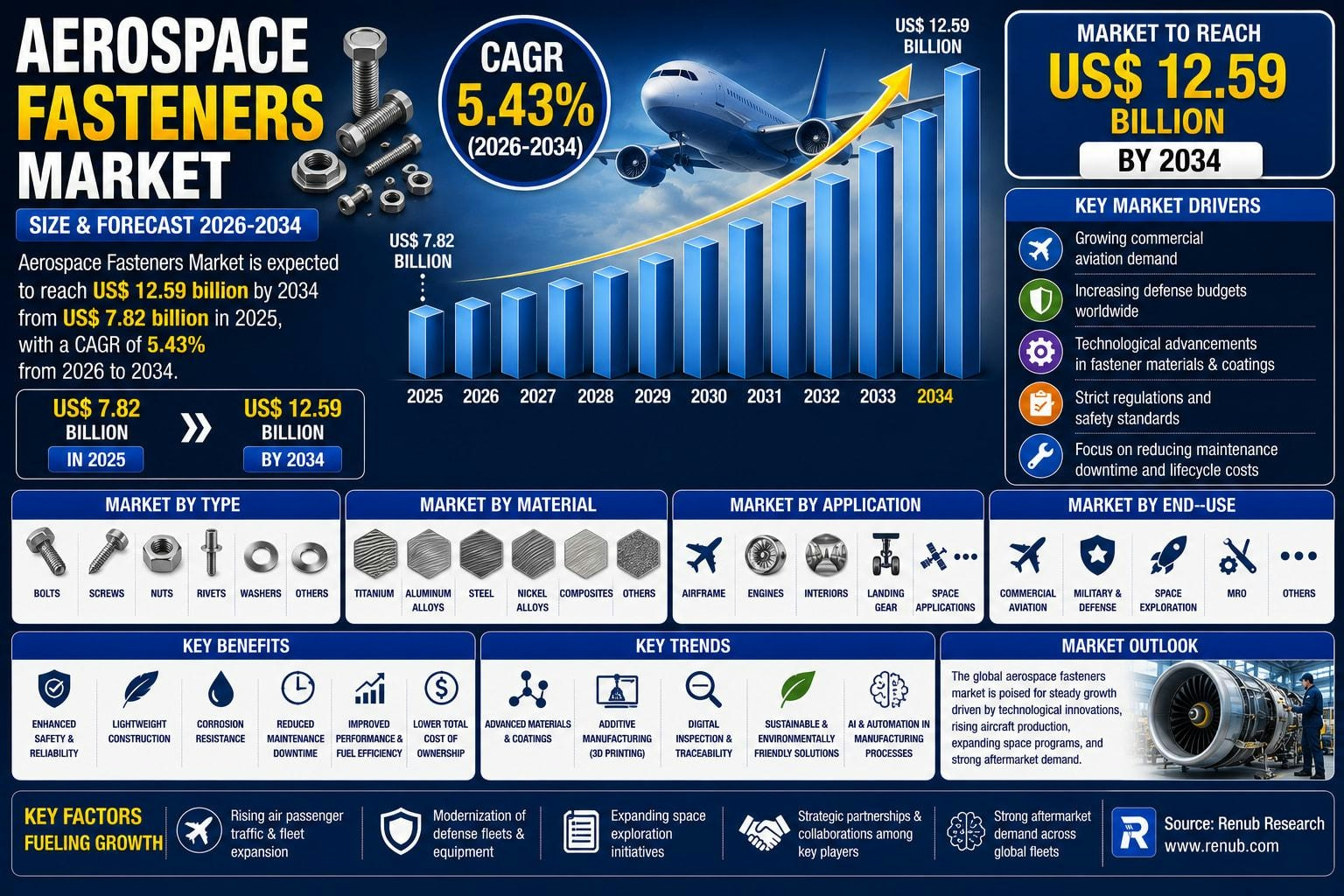
The aerospace fasteners market constitutes a critical segment within the global aviation and defense industries, ensuring the structural integrity and safety of aircraft, spacecraft, and advanced defense systems. Fasteners—including bolts, nuts, screws, rivets, and locking mechanisms—are indispensable components that secure complex aerospace structures designed to withstand extreme operational stresses.
According to Renub Research, the market is projected to expand from US$7.82 billion in 2025 to US$12.59 billion by 2034, reflecting a compound annual growth rate (CAGR) of 5.43%. This growth is driven by increasing global air travel, heightened defense expenditures, expanding space exploration initiatives, and continuous advancements in materials and manufacturing technologies.
Market Overview
Aerospace fasteners find application across commercial aviation, military aircraft, space exploration, and unmanned aerial vehicles (UAVs). These components must reliably endure high stress, vibration, temperature fluctuations, and corrosive environments. Modern aerospace engineering demands fasteners with exceptional strength-to-weight ratios, durability, and corrosion resistance. To meet these stringent requirements, materials such as titanium, nickel alloys, aluminum, and composite-compatible fasteners are widely employed.
Technological progress in precision manufacturing, additive manufacturing, and automation has enhanced product quality, minimized defects, and improved supply chain efficiency. Additionally, the development of smart fasteners embedded with sensors for structural health monitoring is facilitating predictive maintenance and elevating safety standards.
Growth Drivers
The expansion of commercial aviation remains a primary catalyst for market growth. As airlines increase fleet sizes and replace aging aircraft to accommodate rising passenger volumes, the demand for lightweight, durable fasteners made from advanced materials grows correspondingly. The rise of low-cost carriers and improved air connectivity in emerging markets further stimulate aircraft production and fastener consumption.
Rising defense investments also play a significant role. Increasing global defense budgets and military modernization programs sustain demand for aerospace fasteners that meet rigorous safety and performance standards. Military aircraft—including fighter jets, transport planes, and UAVs—require specialized fasteners, and government investments in next-generation aircraft and defense technologies continue to underpin market expansion.
Technological advancements contribute substantially to market dynamics. The adoption of high-performance materials such as titanium and nickel alloys enhances fastener strength while reducing weight. Advanced manufacturing techniques—including CNC machining, 3D printing, and automated inspection—enable greater precision and operational efficiency. Emerging developments in self-healing materials, intersecting with aerospace applications, are gaining traction, driven by demand in renewable energy and related sectors.
Market Challenges
Despite promising growth prospects, the aerospace fasteners market faces notable challenges. High manufacturing costs and material constraints, particularly concerning aerospace-grade titanium and nickel, present significant obstacles. The market is also vulnerable to fluctuations in U.S. government funding, shifting defense budgets, and broader global economic volatility.
Industry participants are addressing these challenges through cost control initiatives, strategic investments in research and development, and efforts to navigate evolving legislative and regulatory frameworks. For instance, Unimech Aerospace and Manufacturing Ltd has encountered mixed technical signals despite operational improvements, while Textron’s industrial division is planning a corporate split following a 12% revenue increase.
Outlook
As the aerospace sector continues to evolve, the fasteners market is poised to benefit from ongoing technological innovation, growth in commercial and defense aviation, and the integration of advanced materials. Nevertheless, economic and regulatory uncertainties will require industry stakeholders to maintain agility and adaptability in the coming years.

Etihad Airways Suspends Airbus A380 Flights on Key Route

Aditya Birla Group Seeks Approval for Aircraft Leasing in GIFT City

Qatar Airways Highlights Innovation and Connectivity at Arabian Travel Market 2026

Hong Kong's Five-Year Plan Includes Andrew Fan's Aircraft Parts Processing Hub Proposal

ACIA Aero Leasing Delivers ATR72-600 to Air Nostrum

RTX Appoints Jill Albertelli as Head of Pratt & Whitney

TAT Technologies Joins Beyond Aero Hydrogen Aircraft Program

AURAK Study Highlights Barriers to Air Taxi Adoption in Emerging Economies

Xiamen Air Selects Altitude for 787 Maintenance at Heathrow

Etihad and Swissport Extend Global Partnership
