
Orquestre insights de IA em ações

Tendências
Categories
Russia Aims to Double Superjet Service Life Amid Sanctions
Russia Aims to Double Superjet Service Life Amid Sanctions
Extending the Yakovlev SJ-100’s Operational Lifespan
In response to the mounting pressures of Western sanctions, Russia is undertaking efforts to significantly extend the operational lifespan of its regional jet, the Sukhoi Superjet 100, now rebranded as the Yakovlev SJ-100. The Ministry of Industry and Trade has set an ambitious target to increase the aircraft’s service life to between 25,000 and 40,000 flight hours, or 15,000 to 20,000 flight cycles. This extension would enable the Superjet to remain in active service for up to 20 years, nearly doubling its current operational duration.
Originally introduced into serial production in 2011, the Superjet was designed with a much longer lifespan in mind—70,000 flight hours, 54,000 cycles, and 25 years of service. However, the imposition of sanctions in 2022 has severely disrupted the supply chain, particularly halting production of the Franco-Russian SaM146 engines and severing ties with key Western partners such as Safran. Consequently, the aircraft’s current service life has been curtailed to approximately 15,000 to 25,000 flight hours, or 10,000 to 15,000 cycles, representing roughly a quarter of its intended durability. Notably, about 20% of the existing fleet has already surpassed the 15,000-hour threshold.
Operational Challenges and Fleet Status
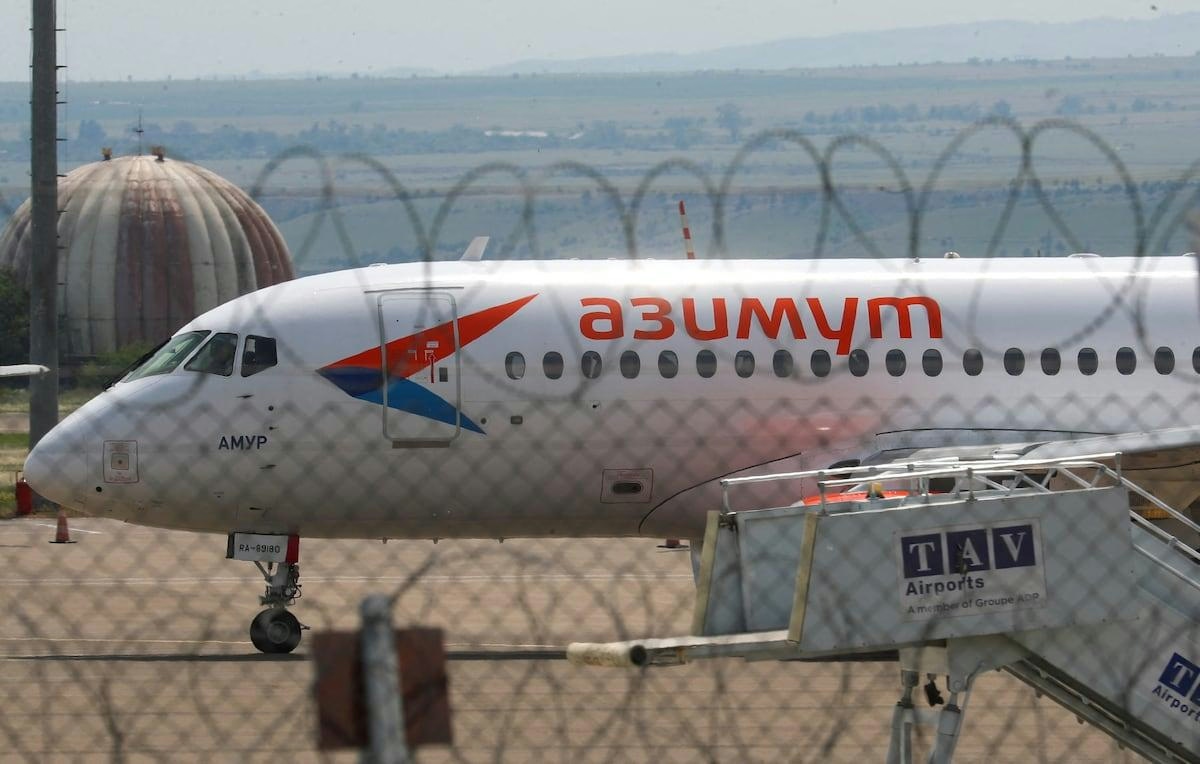
As of November 2025, out of 219 Superjets produced, only 159 remain in operation. Rossiya Airlines, part of the Aeroflot Group, is the largest operator with 78 aircraft, followed by Red Wings with 22, Azimuth with 19, and Yamal with 15. Despite the operational difficulties, Yakovlev reports a dispatch reliability rate of approximately 97%, underscoring the aircraft’s continued viability amid challenging conditions.
The drive to extend the Superjet’s service life is part of a broader struggle to maintain and develop Russia’s civil aviation sector under the constraints of international sanctions. The Russian transport minister has emphasized the importance of platform standardization, the adoption of new technologies, and the implementation of energy-efficient solutions to preserve the competitiveness of domestic aircraft both domestically and internationally. However, the sanctions environment complicates these objectives. Recent incidents, including Deutsche Bank’s self-reporting of potential EU sanctions violations involving Russian clients and an investigation into Danish supplier FLSmidth over possible breaches related to Russian contracts, highlight the persistent obstacles confronting Russian industry.
Economic Impact and Domestic Aviation Strategy
Sanctions have also had a pronounced impact on the operational costs of the Superjet. Severstal Aviation, which operates four SSJs, reported to Vedomosti that the aircraft are now 1.5 to 2 times more expensive to operate per flight hour compared to comparable Western models, with costs having increased by 20 to 30 percent since sanctions were imposed. The restricted access to imported components has compelled Russia to consider reactivating older aircraft such as the Tu-204, Il-96, and Boeing 747-400, as well as restoring hundreds of Antonov An-2 biplanes as interim solutions.
Simultaneously, Russia is accelerating efforts to boost production of domestically manufactured, import-substituted aircraft, including the SSJ, Tu-214, MC-21, and Il-114. These programs, however, have encountered delays and reductions. Extending the Superjet’s service life is viewed as a critical measure to sustain the country’s regional aviation network amid ongoing international isolation and supply chain disruptions.

Hong Kong's Five-Year Plan Includes Andrew Fan's Aircraft Parts Processing Hub Proposal

ACIA Aero Leasing Delivers ATR72-600 to Air Nostrum

RTX Appoints Jill Albertelli as Head of Pratt & Whitney

TAT Technologies Joins Beyond Aero Hydrogen Aircraft Program

AURAK Study Highlights Barriers to Air Taxi Adoption in Emerging Economies

Xiamen Air Selects Altitude for 787 Maintenance at Heathrow

Etihad and Swissport Extend Global Partnership

Sepehran Airlines B737 Returns to Mashhad After Tyre and Engine Issues

Etihad Deploys Widebody Fleet to Meet Strong Demand

Korean Air Finalizes $36.2 Billion Deal with Boeing
