
Orquestre insights de IA em ações

Tendências
Categories
Taja Hillier on Data, Oversight, and the Future of AI in Aviation

Taja Hillier on Data, Oversight, and the Future of AI in Aviation
In an insightful interview at EATS 2025, Taja Hillier, Chief Data & AI Officer and co-founder of Mission Decisions, shared her perspectives on the evolving role of artificial intelligence in the aviation sector. With a background spanning IT, statistical methods, and economics, Hillier brings extensive experience from safety-critical environments, positioning her as a leading voice on the integration of AI in aviation.
The Foundation of Trust: Data and Transparency
Hillier emphasizes that trust in AI is fundamentally rooted in the quality of data and transparency of processes. She asserts that a successful AI strategy cannot exist without well-prepared data, cautioning against simplistic “plug-and-play” solutions. According to Hillier, the effective adoption of AI demands the expertise of skilled data scientists and engineers who can meticulously prepare both structured and unstructured data. Without this foundation, AI models are prone to failure.
The discussion also highlights common misconceptions within the industry, particularly regarding retrieval-augmented generation (RAG) and the opaque nature of some AI vendor offerings. Hillier warns against accepting AI as an inscrutable “black box,” insisting that organizations must understand the mechanisms behind AI outputs. She stresses the indispensable role of human oversight, noting that while initial AI results may appear plausible, ultimate responsibility must remain with human operators.
Navigating Challenges and Market Dynamics
As aviation accelerates its AI adoption, Hillier identifies several pressing challenges. The establishment of robust data governance frameworks is critical to ensure ethical AI use and to comply with increasing regulatory demands. Moreover, integrating AI systems into existing aviation infrastructure requires careful coordination and cross-disciplinary expertise, underscoring the complexity of this technological transition.
Market conditions are also evolving. Investors are becoming more cautious, scrutinizing returns amid the substantial capital investments fueling the AI boom. At the same time, competitors are intensifying their AI initiatives to secure market leadership. Many organizations are leveraging AI to enhance operational efficiency, optimize staffing, and reduce overhead costs, thereby intensifying the competitive drive for innovation.
Looking Ahead: Preparing for Enterprise-Ready AI
Hillier forecasts that AI will become enterprise-ready within the next two years, contingent on companies prioritizing accuracy, scalability, and regulatory compliance. She advises organizations to employ skilled data professionals, ensure transparency and traceability in AI systems, and maintain human-in-the-loop accountability throughout AI deployment.
Ultimately, Hillier underscores that disciplined data management and rigorous oversight are essential to harnessing AI’s potential in aviation. As the industry confronts technological, regulatory, and market pressures, building trust through transparency and responsible stewardship will be crucial to the successful integration of AI.

PD-8 Engine Encounters Corrosion Issues from Saltwater Exposure

Weekly Summary: August Deliveries, Year-to-Date Orders, and 4.1 Million Share Buyback
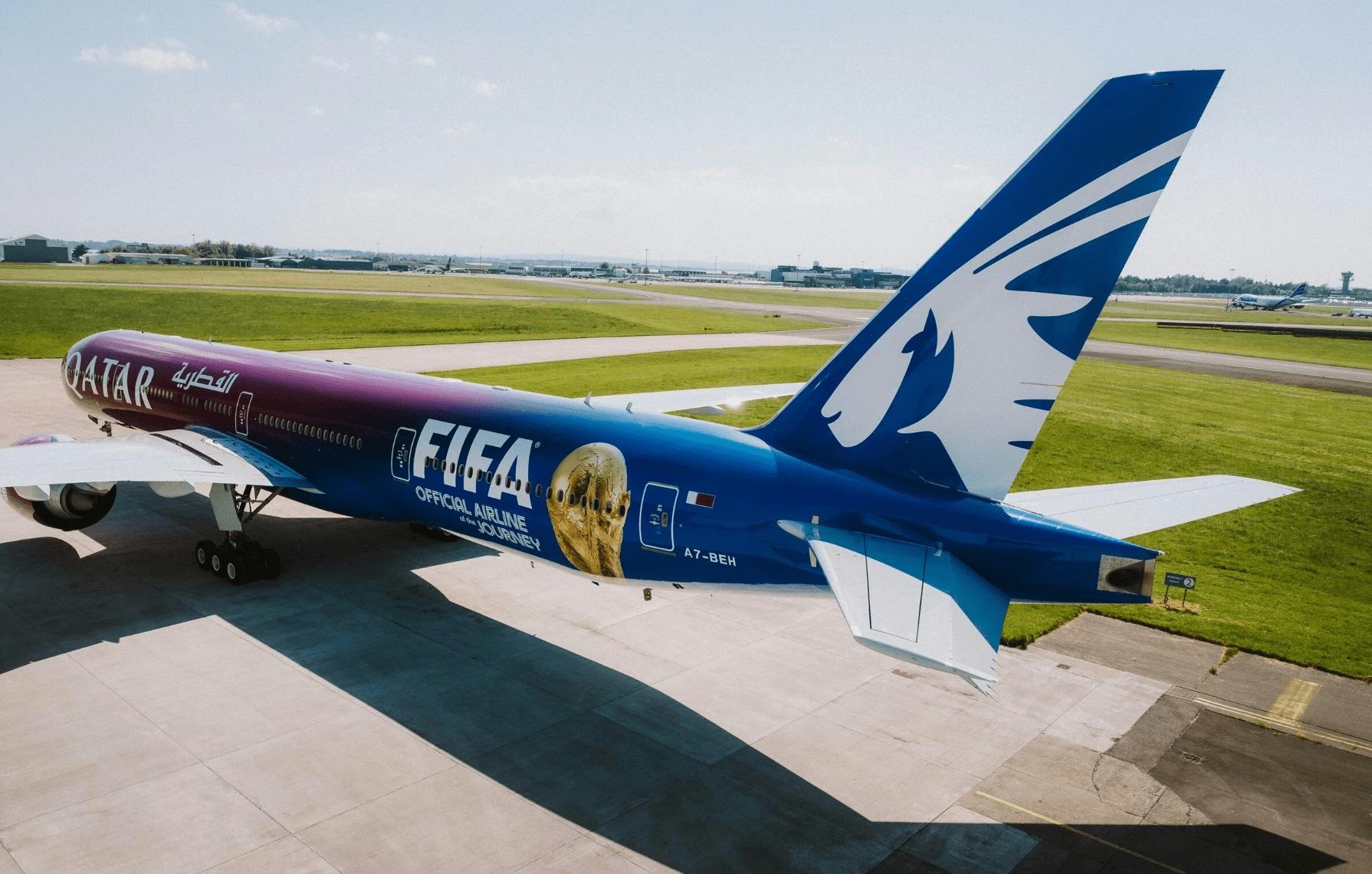
Linking Ireland’s Aircraft Leasing Industry to Elite Football
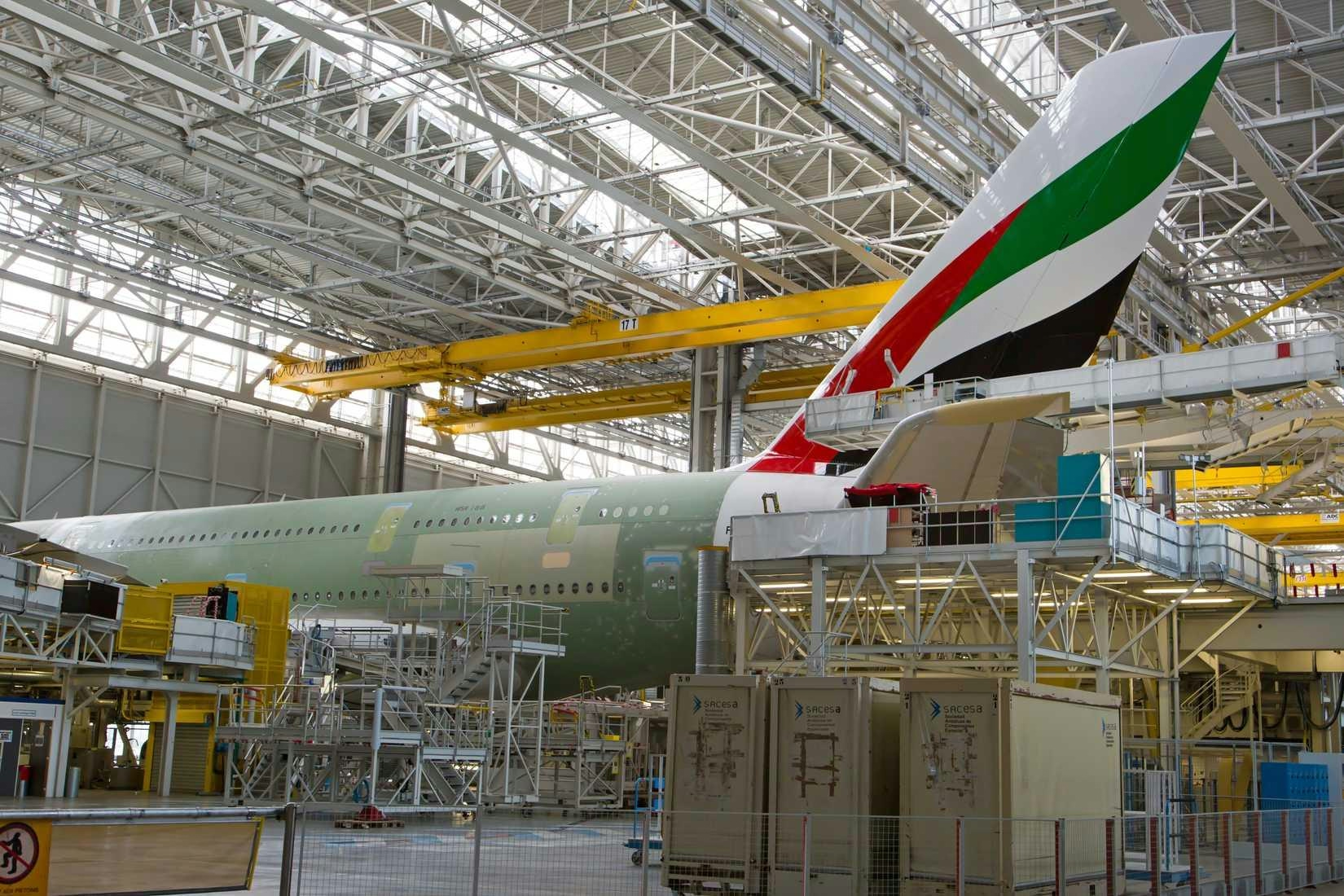
Airbus A380 at Tarbes Yields Over 90% of Parts for Active Fleets Through Careful Dismantling

flydubai Begins Dedicated Freighter Operations with Three Leased 737-800s

BBN Airlines Becomes IATA Member

FAA Orders Breeze Airways and Delta to Inspect Airbus A220 Fuel Hoses

Philippine Aviation Navigates Expansion and Costs Amid Fuel Price Volatility

On April 26, 1971, an SR-71 Blackbird Flew Over 15,000 Miles in 10.5 Hours, Limited by Liquid Nitrogen Supply

Boeing 747 Airframe Valued Less Than One Landing Gear Component
