
Orquestre insights de IA em ações

Tendências
Categories
The Airbus A350-1000’s Fuel Efficiency Advantage Explained
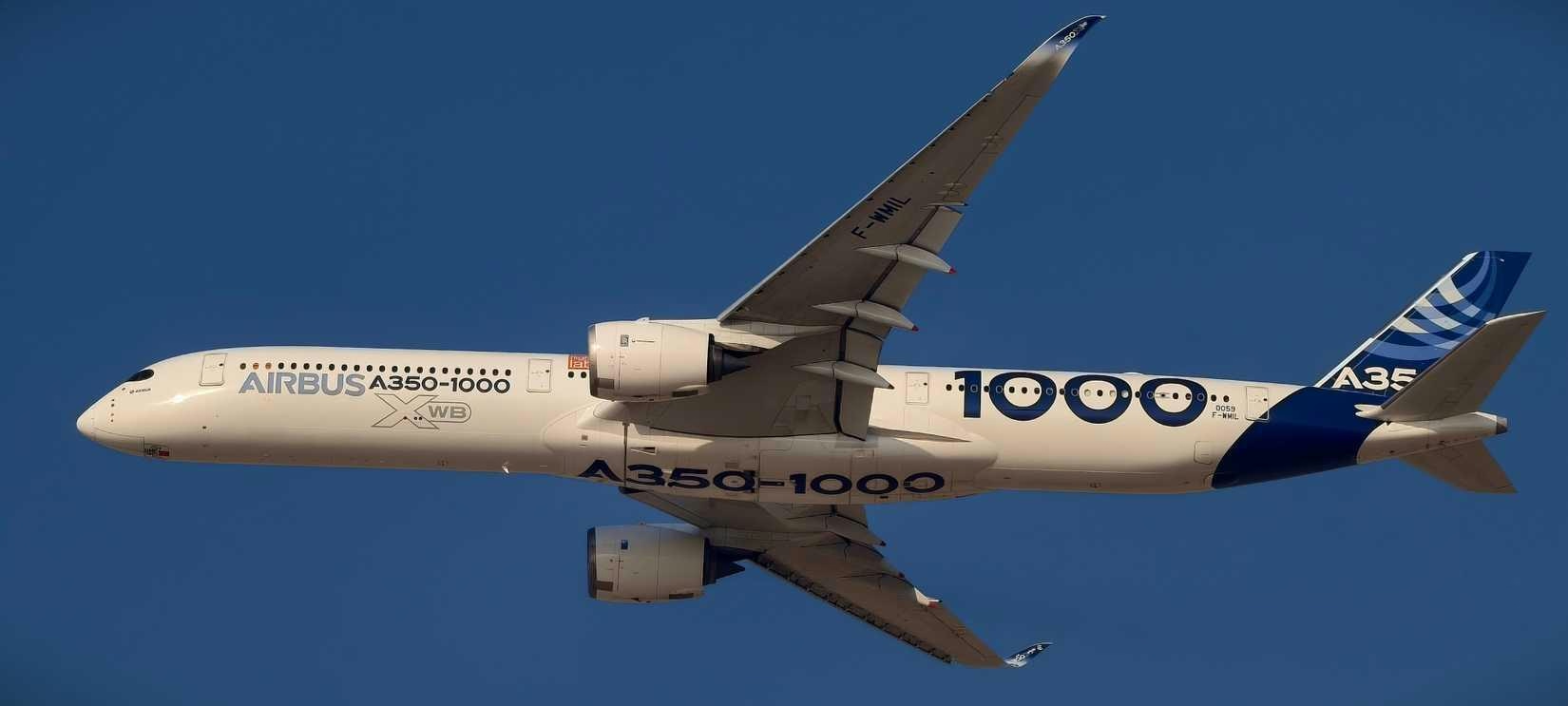
The Airbus A350-1000’s Fuel Efficiency Advantage Explained
The Airbus A350-1000 is widely recognized as one of the most fuel-efficient large twin-aisle airliners currently in operation. Airlines utilizing this aircraft consistently report operating costs that are lower than anticipated, alongside significant fuel savings even on the longest routes. This level of efficiency is the result of a meticulously integrated design strategy encompassing aerodynamics, structural engineering, propulsion, and advanced onboard systems. Given that fuel represents the largest and most unpredictable expense for long-haul flights, these savings directly enhance route economics, increase payload capacity, and reduce CO₂ emissions per passenger-kilometer.
Six Pillars of Efficiency
The A350-1000’s superior fuel economy is founded on six key areas, each contributing to its exceptional performance. The aircraft’s aerodynamic architecture benefits from a clean-sheet design approach, employing advanced computational fluid dynamics and wing optimization techniques. Although the -1000 shares its 212-foot (64.75 m) wing with the smaller -900 variant, the wing was engineered with growth in mind, enabling the -1000 to accommodate more passengers without increasing aerodynamic drag. Innovations such as morphing wings and optimized winglets further reduce drag during climb and cruise phases, enhancing lift-to-drag ratios and lowering hourly fuel consumption.
Central to the aircraft’s efficiency is the Rolls-Royce Trent XWB-97 engine, one of the most fuel-efficient large turbofans in commercial aviation. Specifically designed for the -1000, this engine delivers high thrust with excellent specific fuel consumption. Its high bypass ratio and advanced core aerodynamics generate greater thrust for less fuel, while the use of cutting-edge materials and improvements in thermal efficiency contribute to further reductions in fuel burn. Feedback from operators and independent analyses consistently affirm the engine’s superior real-world performance.
The A350-1000’s airframe incorporates over 50% advanced composite materials, significantly reducing weight while maintaining strength and durability. This lightweight structure plays a crucial role in enhancing fuel efficiency. Complementing this is a suite of modern flight systems and avionics that optimize aircraft performance throughout all phases of flight, from takeoff to landing, ensuring operations at peak efficiency.
The spacious cabin design allows airlines to maximize seat count and payload, which further decreases fuel consumption per passenger. Underpinning all these features is an integrated design philosophy that ensures aerodynamic, structural, and propulsion efficiencies are harmonized and fully realized in everyday operations.
Market Impact and Competitive Landscape
The fuel efficiency of the A350-1000 has garnered considerable attention in the aviation market. Airlines such as China Airlines have expanded their orders, reflecting strong confidence in the aircraft’s operational performance and economic benefits, despite Airbus facing unrelated quality challenges with its A320 family. Qantas’s Project Sunrise, which plans to deploy the A350-1000 for ultra-long-haul flights, further highlights the aircraft’s appeal and its potential to dominate the market segment.
Nevertheless, competition remains intense. Boeing’s forthcoming 777-9 targets the same high-capacity, long-range market and promises its own advancements in fuel efficiency. Despite this, the A350-1000’s established track record and expanding customer base position it as a leading contender in the next generation of efficient long-haul air travel.

Etihad Airways Suspends Airbus A380 Flights on Key Route

Aditya Birla Group Seeks Approval for Aircraft Leasing in GIFT City

Qatar Airways Highlights Innovation and Connectivity at Arabian Travel Market 2026

Hong Kong's Five-Year Plan Includes Andrew Fan's Aircraft Parts Processing Hub Proposal

ACIA Aero Leasing Delivers ATR72-600 to Air Nostrum

RTX Appoints Jill Albertelli as Head of Pratt & Whitney

TAT Technologies Joins Beyond Aero Hydrogen Aircraft Program

AURAK Study Highlights Barriers to Air Taxi Adoption in Emerging Economies

Xiamen Air Selects Altitude for 787 Maintenance at Heathrow

Etihad and Swissport Extend Global Partnership
