
Orquestre insights de IA em ações

Tendências
Categories
The Cost of a Lufthansa First-Class Ticket on the Boeing 747-8 in 2026
The Cost of a Lufthansa First-Class Ticket on the Boeing 747-8 in 2026
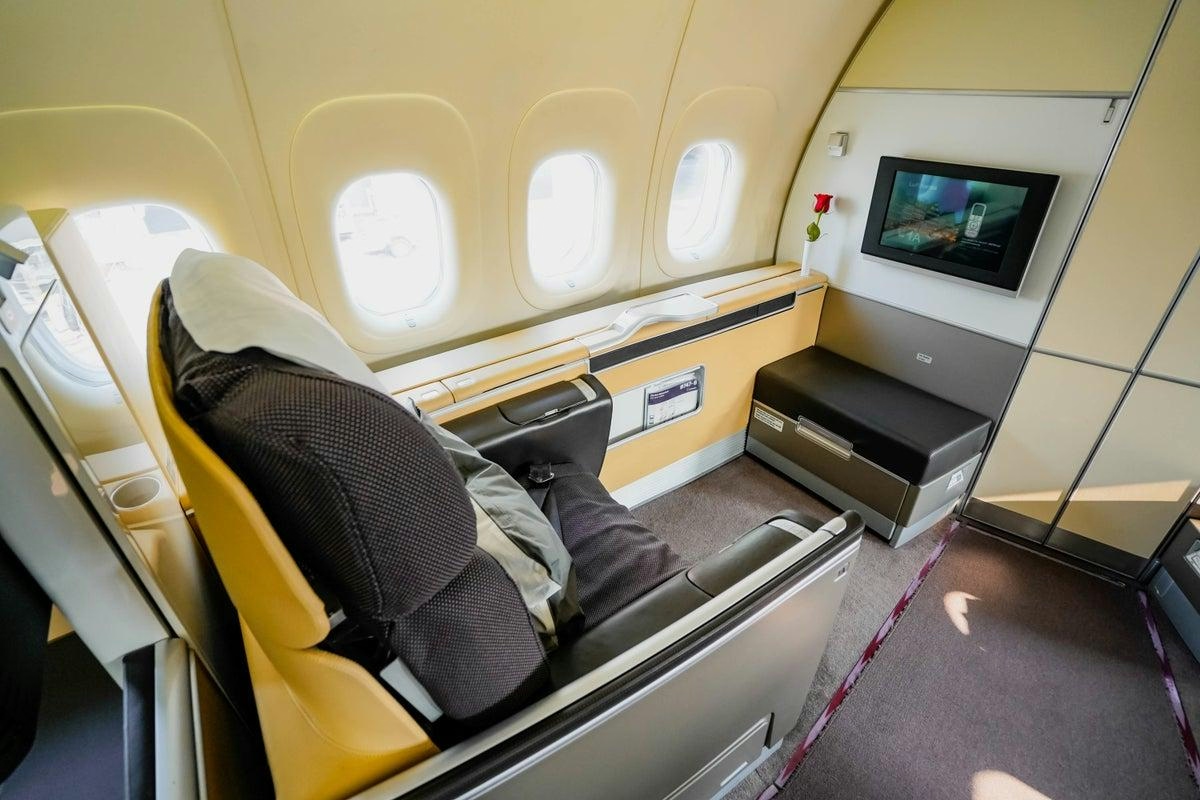
Lufthansa continues to be one of the few global carriers operating the Boeing 747-8, deploying this iconic aircraft exclusively from its Frankfurt hub. The airline serves 11 long-haul routes to destinations across North America, South America, Africa, and Asia with the 747-8. The first-class experience aboard this aircraft is distinguished by an intimate eight-seat cabin located in the nose of the plane, just below the cockpit—a signature feature that epitomizes luxury travel and commands a premium price.
First-Class Pricing Across Lufthansa’s 747-8 Network
The cost of a round-trip first-class ticket on Lufthansa’s 747-8 varies significantly depending on the destination. For June 2026, fares listed on Lufthansa’s official website reveal a price range exceeding $4,600 between the most and least expensive routes. The highest fares are found on the longest flights to the US West Coast and Asia, with tickets to Los Angeles priced at $14,842, San Francisco at $14,749, and Tokyo at $14,831.
Other major North American destinations include Chicago at $14,091, Mexico City at $13,962, Newark at $13,900, Miami at $13,789, and Washington Dulles, which offers the lowest US fare at $13,382. South American and African routes tend to be less costly, with Johannesburg priced at $12,820, São Paulo at $12,728, and Buenos Aires, despite being one of the longest flights, offering the lowest overall fare at $10,100.
Overall, first-class fares on the 747-8 range from approximately $10,090 to $14,842, with most US routes clustered between $12,819 and $14,112. These prices include not only a seat in the exclusive nose cabin but also chauffeur transfers and access to Lufthansa’s standalone First Class Terminal in Frankfurt—a comprehensive package that often undercuts comparable offerings from Gulf and Asian carriers.
Factors Influencing Pricing
Contrary to expectations that distance would be the primary determinant of ticket prices, Lufthansa’s fare structure reveals a more complex dynamic. For instance, Buenos Aires, one of the longest routes, is the cheapest, while Tokyo and Los Angeles command the highest fares despite shorter distances. Pricing is therefore influenced more by factors such as demand, competition, and the strength of the premium travel market on each route rather than purely by flight length.
Market Challenges and Future Outlook
Looking ahead to 2026, Lufthansa faces considerable challenges that may affect first-class pricing. The airline anticipates a €1.7 billion increase in fuel costs, largely driven by ongoing conflict in the Middle East. This significant rise in operational expenses could compel Lufthansa to revise its pricing strategy, potentially resulting in higher first-class fares. Industry observers and travelers alike will be closely monitoring how the airline manages these rising costs while striving to maintain competitive pricing.
Competition is also intensifying, with carriers such as Condor positioning themselves as network airlines to challenge Lufthansa’s market dominance. This evolving competitive landscape is likely to influence fare structures and market dynamics further. Additionally, Lufthansa’s continued investment in both Airbus and Boeing widebody aircraft reflects a strategic effort to diversify its fleet, a move that may impact operational flexibility and ticket pricing in the coming years.
While Lufthansa’s 747-8 first-class fares in 2026 are shaped by a complex interplay of market forces, operational costs, and competitive pressures, the airline’s commitment to delivering a premium service experience remains evident amid an uncertain industry environment.

Etihad Airways Suspends Airbus A380 Flights on Key Route

Aditya Birla Group Seeks Approval for Aircraft Leasing in GIFT City

Qatar Airways Highlights Innovation and Connectivity at Arabian Travel Market 2026

Hong Kong's Five-Year Plan Includes Andrew Fan's Aircraft Parts Processing Hub Proposal

ACIA Aero Leasing Delivers ATR72-600 to Air Nostrum

RTX Appoints Jill Albertelli as Head of Pratt & Whitney

TAT Technologies Joins Beyond Aero Hydrogen Aircraft Program

AURAK Study Highlights Barriers to Air Taxi Adoption in Emerging Economies

Xiamen Air Selects Altitude for 787 Maintenance at Heathrow

Etihad and Swissport Extend Global Partnership
