
Orquestre insights de IA em ações

Tendências
Categories
The Private Equity Firms Buying Into Automotive and Aviation Supply Chains Simultaneously — and Why the Timing Is Deliberate

Private Equity’s Strategic Entry into Automotive and Aviation Supply Chains
On the outskirts of industrial hubs such as Stuttgart, south of Wichita, and along England’s M6 corridor, a subtle transformation is underway within the manufacturing landscape. Behind the unassuming facades of cream-painted industrial parks, machinists produce critical components—brackets, fasteners, and precision housings—that serve dual purposes in both automotive and aerospace sectors. These parts may find their way into a Ford F-150 transmission or a Boeing 737 landing gear. Historically, these businesses were family-owned or acquired by larger family groups and occasional strategic buyers. Today, however, private equity firms have become the predominant suitors, signaling a significant shift in ownership and strategy.
A distinct pattern has emerged as private equity funds that once focused on consolidating automotive Tier 2 suppliers are now actively pursuing aerospace machine shops, often targeting companies that serve both industries. According to data from K&L Gates, U.S. supply chain private equity transactions recently peaked at 53 deals totaling $20 billion, a substantial increase from $7.9 billion in 2020. This surge reflects not only growth but a deliberate blurring of traditional boundaries between automotive and aerospace sectors, with deal structures increasingly designed to capitalize on crossover opportunities.
Market Dynamics Driving the Dual-Sector Focus
The timing of this private equity push is far from coincidental. Original equipment manufacturers (OEMs) in both automotive and aerospace—such as Ford, Stellantis, Boeing, and Airbus—are under mounting pressure to divest non-core assets. Automotive companies face profit warnings amid the disruptive transition to electric vehicles, while aircraft manufacturers continue to recover from prolonged supply chain disruptions and quality control issues. As chief financial officers seek to streamline operations, the mid-sized, cash-generating suppliers with entrenched long-term contracts that are difficult to unwind have become prime candidates for sale, perfectly aligning with private equity investment criteria.
Broader market forces also shape this trend. The exit environment for investors has become more challenging due to AI-driven market volatility and geopolitical tensions, which have increased buyer caution and seller resistance to discounted valuations. Consequently, private equity firms are retaining more underperforming or challenged businesses for extended periods, navigating longer holding cycles amid uncertainty. While many firms demonstrate strength in deal-making, operational management of these complex acquisitions remains a significant challenge.
Strategic Advantages of Cross-Industry Consolidation
The rationale behind this dual-sector investment strategy is compelling. Many supplier companies share not only machinery and skilled labor but also customer bases and certifications. Facilities capable of producing turbocharger housings for diesel engines can often manufacture parts for jet auxiliary power units with minimal adjustments. Consolidating these capabilities under a single ownership platform enhances negotiating leverage with clients and provides a hedge against the cyclical nature of each industry. Since automotive and aviation demand rarely fluctuate in tandem, this diversification smooths cash flows and increases appeal to investors.
The automotive metal forming market alone is projected to reach $95 billion by fiscal year 2030, driven by cost competitiveness and a shift toward process-led manufacturing. This growth trajectory attracts both private equity and strategic acquirers, accelerating a trend toward capability-driven consolidation. Meanwhile, persistent challenges such as underinvested enterprise resource planning (ERP) systems, succession issues in family-owned firms, and industry fragmentation continue to present attractive opportunities for investors.
What distinguishes the current moment is the deliberate and simultaneous approach private equity firms are taking across these two traditionally separate industries. Armed with patient capital and strategic intent, these investors are betting that the convergence of automotive and aviation supply chains will generate resilience and returns, even as market headwinds complicate the path forward.

Bangladesh Launches Initiative to Become Regional Aviation Hub
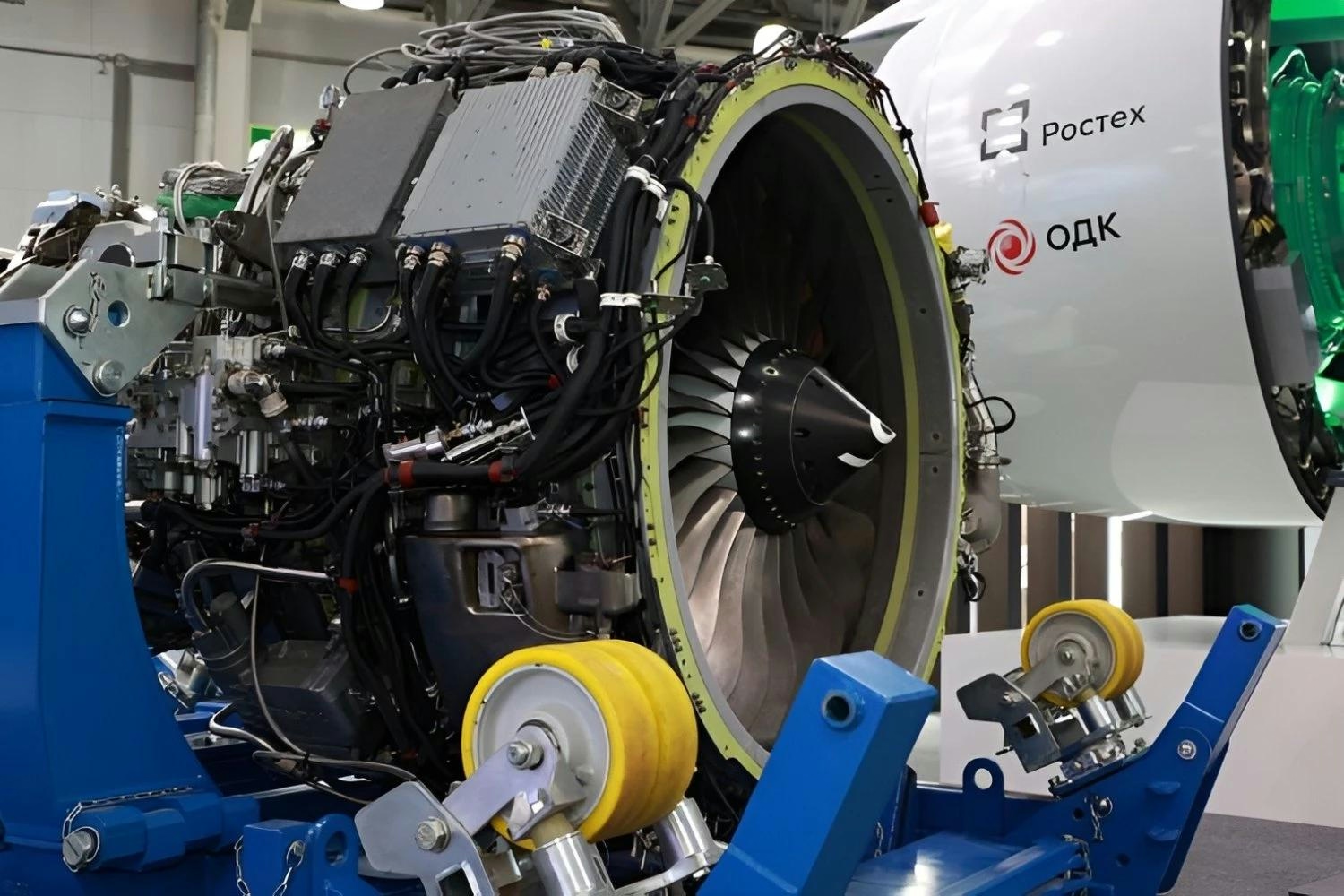
Russia Transports PD-8 Engine to India for International Certification

Kyrgyzstan to Adopt EMPIC GmbH Software for Flight Safety Oversight

Why Hawaiian Airlines Is Waiting Until 2028 To Add A Premium Economy Cabin To Its Airbus A330 Fleet

Engine Fault Causes Royal Navy Helicopter Crash Fatality

Joby Aviation Begins Texas Air Taxi Test Flights Amid Stock Decline

Iberia Receives Full Approval for Airbus A350 Heavy Maintenance

NetJets to Construct Terminal and Hangar at Dallas Love Field

Using AI in Aircraft Purchases

CIAM Unveils RPD-150T Engine to Replace Rotax 150 hp Model
