Imagem

Orquestre insights de IA em ações

Entre na lista de espera da AeroGenie hoje mesmo!

Tendências

Categories

Thompson Aero Seating Launches Campaign Highlighting People, Heritage, and Innovation
September 8, 2026By ePlane AI
Thompson Aero Seating Launches Campaign Highlighting People, Heritage, and Innovation
0
0
Thompson Aero Seating
Premium Aircraft Seating
Aircraft Cabin Innovation

Thompson Aero Seating Launches Campaign Highlighting People, Heritage, and Innovation

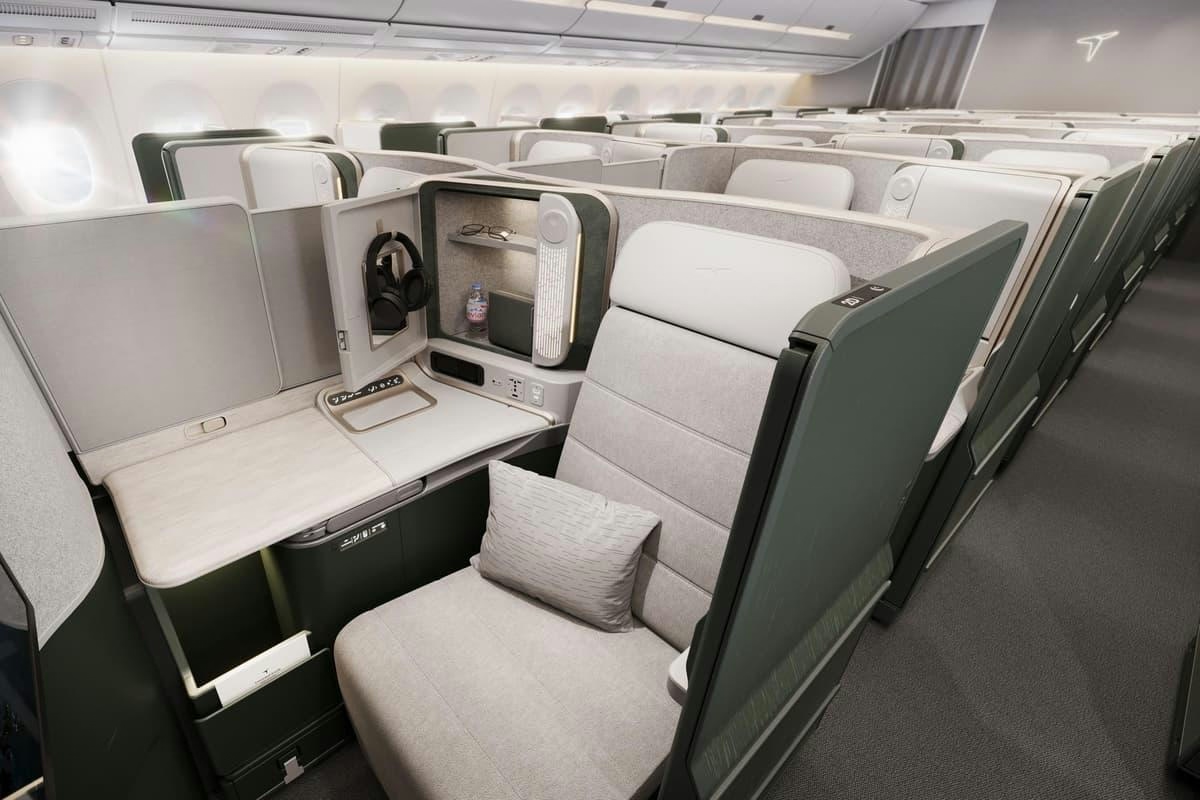
Thompson Aero Seating (TAS) has introduced a new film campaign that artfully links the serene landscapes of Northern Ireland with the comfort experienced by passengers in premium aircraft seating. The film offers an intimate look at the meticulous craftsmanship involved in creating each business-class seat, emphasizing detailed stitching, upholstery, and precision engineering. Central to the narrative is the expertise and dedication of TAS’s workforce, underscoring the human element behind the company’s products.

Navigating Industry Challenges Amid Growing Demand

This campaign emerges at a critical juncture for the premium seating sector, as airlines worldwide grapple with prolonged approval processes for new cabin products. The development and certification of innovative premium offerings often extend over several years, a challenge recently faced by major carriers including American Airlines, Lufthansa, Riyadh Air, and Singapore Airlines. These delays have intensified scrutiny on suppliers like TAS, as airlines strive to satisfy increasing passenger expectations for privacy, advanced connectivity, and enhanced inflight entertainment.

Industry analysts observe that TAS’s focus on heritage and innovation is both timely and demanding. With air travel rebounding, passengers are placing greater emphasis on comfort and technological sophistication, compelling seating manufacturers to balance aesthetic appeal with cutting-edge functionality. By highlighting the skills and commitment of its staff, TAS aims to reassure clients of its unwavering dedication to quality and innovation.

Evolving Competitive Landscape and Strategic Positioning

The competitive environment within aerospace is also shifting, with companies such as DroneShield directing attention toward advanced security technologies, including drone detection and counter-drone systems. This emerging focus has the potential to divert industry resources and attention away from traditional seating innovations, presenting an additional challenge for firms like TAS to maintain their relevance.

By intertwining its Northern Irish heritage with a forward-looking design philosophy, Thompson Aero Seating endeavors to solidify its position as a leader in the premium seating market. This approach seeks to navigate the complex regulatory, technological, and competitive pressures that currently shape the aviation industry.

More news
Experts Convene at oneworld Loyalty Summit to Discuss Industry Trends

Experts Convene at oneworld Loyalty Summit to Discuss Industry Trends

Experts Convene at oneworld Loyalty Summit to Discuss Industry Trends Industry Leaders Gather to Explore the Future of Customer Loyalty FORT WORTH, Texas, Sept. 8, 2026 – The oneworld® Alliance, comprising 15 member airlines, convened the inaugural oneworld Loyalty Summit today, marking a significant milestone as the first event of its kind hosted by an airline alliance. The summit brought together prominent figures and innovators from the airline, travel, hospitality, financial services, and technology sectors to engage in dialogue on the rapidly evolving landscape of customer loyalty. Ole Orvér, CEO of oneworld, highlighted the growing strategic importance of loyalty programs within the travel industry. He noted that loyalty is increasingly driven by technological advancements, enhanced personalization, and new partnerships designed to meet shifting customer expectations. “Our member airlines are already leading globally, and this summit provides a forum for experts to share ideas, discuss trends, and drive conversations about the future of loyalty,” Orvér stated. Insights from Industry Experts and Innovative Start-ups The one-day summit featured contributions from a distinguished panel of industry leaders, including Nat Pieper, Chief Commercial Officer of American Airlines; Brian Kelly, Founder and CEO of The Points Guy; Sarah Moore, Senior Vice President and Head of Travel at Capital One; and executives from major airlines and hospitality groups such as The Indian Hotels Company Limited, International Airlines Group (IAG), Qantas, and Qatar Airways. Gilbert Ott, Director of Loyalty at oneworld, emphasized the alliance’s commitment to enhancing the loyalty experience through personalization and value creation. He explained that oneworld aims to integrate loyalty across customers’ daily interactions, spanning shopping, accommodation, and banking. Ott described the summit as an opportunity to explore cross-sector technological innovations, engage with start-ups, and envision a future where loyalty maximizes every customer interaction within the oneworld network and its partners. A distinctive feature of the summit was the live business investment pitches, where emerging start-ups presented innovative solutions directly to industry decision-makers. These “speed sessions” showcased technologies addressing critical challenges and opportunities in loyalty programs. Among the presenting companies were Reclaim Protocol, focusing on loyalty fraud prevention and digital verification; FrequentFan, which aims to broaden redemption options; WeatherPromise, offering trip assurance for ancillary services; SmartMedia Technologies, enhancing loyalty engagement; Rove, unlocking new loyalty revenue streams; and Bonafide, leveraging artificial intelligence to strengthen brand loyalty identity. Navigating a Transformative Era for Loyalty Programs The summit arrives at a pivotal moment for the travel and hospitality industries. According to Amadeus’ Travel Dreams 2026 Report, the rapid advancement of artificial intelligence presents both opportunities and challenges for loyalty programs. Key discussion points included the integration of AI technologies and the adaptation to evolving traveler preferences, particularly the increasing impact of guest-generated content on social media platforms. As competition intensifies, airlines and their partners are seeking to differentiate their loyalty offerings through unique features and strategic collaborations. The oneworld Loyalty Summit provided a timely platform for industry leaders to address these trends and collaboratively shape future strategies. About oneworld oneworld unites 15 world-class airlines—including Alaska Airlines/Hawaiian Airlines, American Airlines, British Airways, Cathay Pacific, Fiji Airways, Finnair, Iberia, Japan Airlines, Malaysia Airlines, Oman Air, Qantas, Qatar Airways, Royal Air Maroc, Royal Jordanian, and SriLankan Airlines—serving nearly 1,000 destinations worldwide. The alliance is dedicated to delivering a superior and consistent travel experience across its extensive network.
QantasLink’s First E190 Aircraft Arrives in Perth

QantasLink’s First E190 Aircraft Arrives in Perth

QantasLink’s First Embraer E190 Arrives in Perth, Marking Fleet Renewal Milestone QantasLink has welcomed its first Embraer E190 aircraft, registered VH-E9A, to Perth, signifying a pivotal step in the airline’s fleet renewal program for its Western Australian resources charter operations. The 100-seat jet completed an extensive 20-hour journey from Norwich, UK, with stopovers in Bulgaria, Tajikistan, India, Malaysia, and Broome before arriving on September 7. This E190 is the initial delivery in a planned series of up to 14 mid-life aircraft intended to gradually replace QantasLink’s aging Fokker 100 fleet. The introduction of the E190 is anticipated to enhance operational reliability, improve fuel efficiency, and elevate passenger comfort across the airline’s regional services. Nonetheless, the transition to this new aircraft type presents operational challenges, including potential service disruptions during the changeover and the necessity for comprehensive training of local personnel. Fleet Upgrades and Operational Preparations Prior to entering service, each E190 will undergo an extensive cabin refurbishment. Upgrades will include the installation of Wi-Fi, allowing passengers to stream content through the enhanced Qantas Entertainment App. The aircraft will also feature redesigned, more spacious seating with adjustable headrests, USB-A and USB-C charging ports, and holders for personal devices. Additionally, QantasLink will introduce Economy Plus seating on the E190, offering passengers extra legroom, priority boarding, and priority access to overhead baggage compartments. The first E190 is slated to commence commercial operations in January 2027. In preparation, approximately 70 pilots, crew members, and engineers are undertaking a combined 18,000 hours of training to ensure proficient operation and maintenance of the new fleet. As the number of E190s increases, the training program is expected to expand, potentially involving over 600 staff members. Market observers anticipate that the E190’s enhanced fuel efficiency and quieter performance will improve customer satisfaction on regional charter routes. Its extended range may also enable QantasLink to explore new operational opportunities within Western Australia and beyond. This fleet renewal is likely to prompt competitors in the regional aviation sector to reassess their own strategies to maintain competitiveness as QantasLink consolidates its market position. In parallel with the E190 introduction, QantasLink is investing in upgrades to its Western Australian fleet of nineteen Perth-based Airbus A320s. These aircraft are being fitted with Wi-Fi and refreshed cabins, with the first enhancements expected to be completed by the end of October. As QantasLink undertakes this significant transformation, the airline is focused on delivering a modern, comfortable, and efficient travel experience while managing the complexities associated with integrating a new aircraft type into its network.
Trinity Receives First Boeing 737-8 in New Livery

Trinity Receives First Boeing 737-8 in New Livery

Trinity Airways Unveils New Boeing 737-8 in Distinctive Livery, Signaling Strategic Growth Aviation Capital Group (ACG), a prominent global aircraft asset manager, has delivered a Boeing 737-8 to Trinity Airways, formerly known as T’way Air. This aircraft is the first to feature Trinity’s refreshed brand identity, distinguished by a sleek gray and rose gold livery. The delivery, sourced from ACG’s orderbook, is a critical component of Trinity’s expansion strategy, aimed at enhancing connectivity between South Korea and the wider Asia-Pacific region through its hubs at Incheon and Gimpo International Airports in Seoul. Chris Kong, Senior Vice President and Procurement Director of Trinity Airways, emphasized the significance of this milestone, stating that the aircraft represents more than a fleet addition. It embodies the airline’s new brand mission, “Relaxed and Reliable,” and marks the beginning of a new chapter for the carrier. Trinity’s collaboration with ACG remains strong, with this being the third aircraft delivered under a seven-aircraft Boeing 737-8 agreement, with the remaining four scheduled for delivery by the end of 2026. Strategic Implications of Fleet Modernization and Rebranding The integration of the Boeing 737-8 into Trinity’s fleet presents both operational and branding challenges. The introduction of the new livery is central to the airline’s rebranding efforts, designed to reinforce its updated market positioning and corporate identity. Industry analysts are closely monitoring how the new aircraft will perform relative to competitors, particularly in terms of fuel efficiency, passenger comfort, and the incorporation of advanced onboard technologies. Market response will likely depend on the aircraft’s operational performance and the quality of the passenger experience. Should Trinity’s Boeing 737-8 demonstrate superior economics or innovative features, it may prompt rival airlines to reevaluate their fleet strategies or intensify marketing efforts to maintain competitiveness. Through this delivery, Trinity Airways underscores its commitment to modernization and growth, navigating the complexities of fleet integration and brand evolution within a highly competitive regional aviation landscape.
Willis Lease Finance CEO Introduces Willis Platform at Deutsche Bank Aviation Forum

Willis Lease Finance CEO Introduces Willis Platform at Deutsche Bank Aviation Forum

Willis Lease Finance CEO Introduces Integrated Aviation Platform at Deutsche Bank Aviation Forum Willis Lease Finance Corp. unveiled its new integrated aviation platform during a presentation at Deutsche Bank’s Aviation Forum, emphasizing the company’s management of $4.4 billion in assets. The platform represents a strategic effort to streamline operations and broaden service offerings within the aviation leasing industry, as outlined by the company’s CEO. Strategic Vision and Market Challenges The newly introduced platform aims to enhance operational efficiency and diversify revenue by combining engine leasing with maintenance, repair, and overhaul (MRO) services. This integrated approach is intended to position Willis Lease Finance more competitively in a sector marked by established players and evolving market demands. However, the company faces significant challenges, including intense competition from well-entrenched firms and regulatory complexities, particularly in emerging markets such as China. The successful adoption of advanced technologies will be essential to achieving the platform’s goals of operational streamlining and service enhancement. Furthermore, the company’s ability to adapt to shifting industry standards and regulatory frameworks will be a critical factor in the platform’s long-term viability. Market and Industry Response Reactions from investors have been varied. While some view the platform as a progressive step that could unlock new revenue streams and reinforce Willis Lease Finance’s market standing, others remain cautious about its immediate financial impact. Competitors are expected to monitor the platform’s rollout closely, potentially responding with strategic alliances or intensified marketing efforts to protect or grow their market share. The degree to which Willis Lease Finance can deliver unique advantages or cost efficiencies will likely influence the competitive landscape and the platform’s reception. Outlook As Willis Lease Finance moves forward with its integrated aviation platform, it must navigate a complex environment of industry competition, regulatory challenges, and technological integration. The platform’s performance in the upcoming quarters will be a focal point for investors and industry analysts. Additional information, including forward-looking statements and non-GAAP financial metrics referenced during the presentation, is available in the company’s recent SEC filing, which provides further context and disclosures.
Air Cairo Plans to Acquire Up to 30 New Airbus Narrowbody Jets

Air Cairo Plans to Acquire Up to 30 New Airbus Narrowbody Jets

Air Cairo Plans Major Expansion with New Airbus Narrowbody Jets Egyptian low-cost carrier Air Cairo is poised to significantly expand its fleet with the acquisition of up to 30 new Airbus A320 family aircraft, according to sources close to the negotiations. The agreement, which could be finalized imminently, is expected to include a firm order for approximately 15 jets, alongside options for an additional 15 units. This move marks a substantial investment in the airline’s growth strategy amid intensifying competition in the narrowbody aircraft market. Fleet Growth and Market Position Established over a decade ago, Air Cairo currently operates a fleet of around 30 Airbus A320s, complemented by a limited number of Embraer regional jets and ATR turboprops. The airline serves more than 60 destinations across the Middle East and Europe, positioning itself as a significant player in the region’s budget travel sector. The planned fleet expansion aims to strengthen Air Cairo’s market presence and capacity, enabling it to better meet rising passenger demand and enhance route offerings. The acquisition aligns with broader trends in the global narrowbody aircraft sector, which remains dominated by Airbus and Boeing. China’s COMAC is also emerging as a competitor, while other manufacturers such as Embraer are exploring new narrowbody designs but face considerable financial and competitive challenges in this crowded market. Regional and Industry Context Air Cairo’s expansion reflects wider developments among African carriers. Ethiopian Airlines, the continent’s largest airline, is reportedly nearing an agreement to acquire up to ten Boeing long-haul freighters, including both current 777 models and the forthcoming 777-8F. Although no official confirmation has been made by either party, the deal would reinforce Boeing’s longstanding partnership with Ethiopian Airlines and support the transition to next-generation cargo aircraft. Ethiopian Airlines has also engaged in discussions with Airbus regarding the A350F freighter, underscoring the ongoing rivalry between the two aerospace giants. Industry analysts observe that airlines worldwide are adapting to evolving market pressures through diverse strategies. For instance, American Airlines is investing in premium services and retrofitting existing aircraft to attract higher-yield passengers by expanding first-class and extra-legroom seating. These approaches highlight the increasing importance of fleet modernization and enhanced passenger experience in maintaining competitive advantage. The Airbus A320 Family and Market Dynamics The Airbus A320 family—including the A319, A320, A321, and their neo and XLR variants—continues to be a cornerstone of short- and medium-haul operations globally. These aircraft are prized for their fuel efficiency, passenger capacity, and low operating costs. As Air Cairo pursues its fleet expansion, it must navigate a complex environment shaped by shifting passenger preferences, aggressive manufacturer competition, and the potential entry of new players into the narrowbody segment. Boeing projects that Africa’s commercial aircraft fleet will more than double over the next two decades, driving demand for approximately 1,165 new planes and creating 75,000 additional aviation jobs. This growth is expected to generate a $140 billion market for aviation services, including maintenance, repairs, and digital solutions. As Air Cairo advances its Airbus acquisition plans, the airline stands at a critical juncture, balancing significant growth opportunities with the challenges of a rapidly evolving and highly competitive aviation landscape.
Willis Lease Details $4.4 Billion Global Jet Platform

Willis Lease Details $4.4 Billion Global Jet Platform

Willis Lease Details $4.4 Billion Global Jet Platform Amid Market Challenges Willis Lease Financial Corporation (WLFC) has announced a major expansion of its operations through the launch of a $4.4 billion global jet platform. This initiative encompasses the acquisition of 12 commercial aircraft and 13 aircraft engines, reflecting the company’s strategic intent to enhance its integrated leasing, asset management, and aftermarket services within the aviation sector. By broadening its asset base, WLFC aims to solidify its position in the competitive global aviation market. Navigating Economic and Industry Risks The announcement arrives against a backdrop of considerable economic uncertainty. WLFC faces multiple challenges, including fluctuating oil prices, rising inflation, and global market volatility, all of which contribute to an unpredictable operating environment. These macroeconomic factors, coupled with the inherent risks associated with owning and leasing commercial aircraft and engines, introduce significant complexity to the company’s growth trajectory. Investor response to the expansion has been measured, with WLFC’s stock declining by 0.96% on August 25, 2026, following the announcement. This reaction underscores market apprehension regarding the broader economic conditions and the risks tied to large-scale acquisitions. Although competitor reactions have not been publicly disclosed, WLFC’s comprehensive platform development could enhance its competitive edge by leveraging integrated capabilities to address evolving customer needs. Forward-Looking Considerations and Risk Factors In its forward-looking statements, WLFC outlines its business strategy and anticipated capital expenditures while acknowledging the uncertainties that may affect future performance. The company identifies several risk factors that could materially impact its results. These include geopolitical events such as war or terrorism, fluctuations in fuel prices, and operational disruptions stemming from weather, cybersecurity threats, or humanitarian crises. Additionally, shifts in airline industry trends, regulatory changes affecting operators and maintenance standards, and evolving accounting or tax policies present ongoing challenges. WLFC also highlights operational risks related to negotiating equipment transactions, managing costs, collecting payments, and repossessing assets under defaulted leases. The company cautions investors against placing undue reliance on forward-looking statements, noting that actual outcomes may differ significantly from projections. Further details on these risks and financial disclosures are available in WLFC’s most recent filings with the U.S. Securities and Exchange Commission. Despite these challenges, WLFC’s expansion signals a strong commitment to growth and innovation within a rapidly changing industry. Its integrated approach to leasing and asset management may provide strategic advantages as the company navigates the complexities of the global aviation market.
BCT Extends C Check Interval to 84 Months

BCT Extends C Check Interval to 84 Months

BCT Extends C Check Interval to 84 Months BCT Aviation Maintenance (BCT) has secured approval from the UK Civil Aviation Authority (CAA) to extend the interval for its Part-145 base maintenance C Checks to 84 months. This extension applies to Airbus A320 family aircraft as well as Boeing 737 classic and next-generation models. The regulatory endorsement marks a significant advancement in BCT’s heavy base maintenance capabilities, allowing the company to conduct extended-interval C Checks on two of the most widely operated narrow-body fleets worldwide. Strategic Implications and Operational Context The extension arrives amid sustained demand for maintenance solutions that are both efficient and cost-effective, particularly as Airbus A320 and Boeing 737 aircraft continue to dominate short- and medium-haul routes globally. BCT’s enhanced capability is designed to support operators managing high-cycle aircraft, where optimising maintenance intervals is essential to balancing operational reliability with cost containment. By lengthening the C Check interval, BCT aims to provide greater flexibility and reduce downtime for airline operators, potentially improving fleet availability and operational economics. Regulatory and Market Challenges Extending the C Check interval to 84 months introduces heightened regulatory scrutiny. Aviation authorities and industry stakeholders will require robust assurances that safety and compliance standards remain uncompromised over the longer maintenance cycle. BCT must now ensure the accuracy of its legal-entity data against authoritative public registries and secure direct attestations from clients, steps that may increase compliance costs and administrative complexity. Market responses to the approval have been mixed. While the move positions BCT as a pioneer in maintenance optimisation, it has also raised concerns among investors regarding the strength of the company’s compliance frameworks. The prospect of intensified regulatory oversight could influence BCT’s stock performance as investors weigh the benefits of extended maintenance intervals against potential compliance risks. Industry Impact and Competitive Dynamics Competitors are closely observing BCT’s approach, with some expected to pursue similar extensions to their own C Check intervals or to enhance their compliance measures in response. This development may prompt a broader industry shift toward longer maintenance intervals, provided that safety and regulatory standards are rigorously maintained. Despite these challenges, the CAA’s approval affirms BCT’s adherence to stringent Part-145 regulatory requirements and highlights the company’s expertise in structural maintenance, engineering oversight, and fleet maintenance planning. The extension also reflects BCT’s ongoing investment in skilled personnel, advanced tooling, and comprehensive reliability management processes, underscoring its commitment to supporting airline operators within an evolving regulatory and operational environment.
Paraguay Launches AI-Driven Autonomous Aerial Spraying Program

Paraguay Launches AI-Driven Autonomous Aerial Spraying Program

Paraguay Launches AI-Driven Autonomous Aerial Spraying Program Paraguay has initiated a pioneering project to develop autonomous aerial spraying technology powered by artificial intelligence, aiming to establish itself as a leader in agricultural innovation within South America. The initiative is led by Agro IA in partnership with aeronautics students from the Faculty of Polytechnic Engineering at the National University of Asunción (UNA). Together, they are designing unmanned ultralight aircraft tailored for agricultural applications. Gerardo Monzón Manzoni, CEO of Agro IA, recently articulated the project’s vision during an interview on state television. He highlighted the integration of artificial intelligence, aeronautics, and agricultural production as a means to optimize crop spraying. The initiative promises to enhance efficiency and reduce costs for farmers across the country. Advancing Agricultural Efficiency and Academic Collaboration Central to the program are fully automated aircraft capable of operating without human pilots. These AI-driven drones are designed to manage up to 300,000 litres of spraying solution and cover approximately 1,000 hectares daily. By automating aerial spraying, the project aims to surpass the limitations of conventional methods, introducing greater precision and operational efficiency to Paraguay’s agricultural sector. The development is conducted under a formal agreement between Agro IA and UNA’s Faculty of Polytechnic Engineering, actively involving aeronautics students in the technological process. This collaboration provides students with practical experience in cutting-edge fields while fostering local talent and innovation. Monzón Manzoni emphasized the significance of this partnership, stating that Paraguay’s universities and engineers are capable of producing advanced technology for the productive sector. Market Implications and Future Prospects Paraguay’s entry into AI-driven agricultural aviation is expected to draw considerable attention from investors in the rapidly expanding agriculture drone market. Established companies such as ZenaTech, Draganfly Inc., AeroVironment, AIRO Group Holdings, and Quantum Cyber N.V. may face increased competition as the sector evolves into a multi-billion dollar industry. These firms are likely to enhance their offerings to maintain or grow their market share. Despite its promise, the program must navigate potential challenges, including regulatory barriers, technological integration complexities, and resistance from advocates of traditional farming practices. Successfully addressing these issues will be essential for the widespread adoption and scaling of the technology. The development phase is projected to conclude by mid-2027, after which the autonomous aerial spraying service will be deployed across Paraguay’s principal agricultural regions. The operational model involves transporting ultralight aircraft directly to farms, where they will function autonomously. Following domestic implementation, Agro IA intends to expand the service to other South American countries, positioning Paraguay not only as a user but also as a developer and exporter of advanced agricultural technologies. This initiative represents a significant milestone for Paraguay, underscoring its ambition to become a regional hub for technological innovation in agriculture and to compete on the international stage.
Stefano Villanti Appointed Managing Director of Leonardo Helicopters

Stefano Villanti Appointed Managing Director of Leonardo Helicopters

Stefano Villanti Appointed Managing Director of Leonardo Helicopters Leonardo Helicopters has announced the appointment of Stefano Villanti as its new Managing Director, effective September 1. This leadership change marks a significant moment for the company, with Villanti bringing over ten years of senior management experience within Leonardo’s rotorcraft division. Most recently, he has been responsible for Sales, Marketing, and Contracts, a role he held for the past three years. Navigating Industry Transformation and Growth Villanti assumes his new position at a critical juncture for Leonardo Helicopters, as the company navigates a rapidly evolving aerospace and defense landscape. His leadership will be pivotal in maintaining the company’s growth trajectory while fulfilling existing contractual obligations. This transition follows substantial orders for the AW149 medium helicopter and the M-346 aircraft, which have intensified scrutiny on Leonardo’s capacity to deliver ongoing projects and secure future business. In addressing these challenges, Villanti highlighted the necessity of balancing continuity with innovation. He remarked, “Leonardo is a major global player in the rotorcraft industry — a sector that, like much of the wider Aerospace, Defence and Security landscape, is navigating a period of considerable change. This environment calls for a balanced approach: continuity in execution and performance, combined with a careful assessment of longer-term priorities and the opportunities most valuable to maintaining and strengthening Leonardo’s competitiveness.” He further emphasized the company’s customer-centric approach, stating, “With customers at the centre of everything we do, we will place acceleration in execution and innovation at the core of how we work, while continuing to enhance quality. We are fully committed to delivering on these priorities, drawing on the expertise, dedication and enthusiasm of everyone across the Division.” Strategic Priorities and Sector Challenges Industry analysts observe that Villanti’s expertise in sales, marketing, and contracts will be crucial as Leonardo Helicopters confronts emerging sector priorities, including decarbonization and the pursuit of zero-emission flight technologies. These areas are gaining prominence across the aerospace industry, demanding strategic foresight and operational agility. Villanti’s tenure will be closely monitored by both customers and competitors, with the latter potentially seeking to exploit any transitional vulnerabilities to advance their market positions. As Managing Director, Villanti is charged with ensuring that Leonardo Helicopters remains focused on its core objectives: delivering on customer commitments, advancing its industrial strategy, and achieving sustainable growth amid shifting market dynamics.
United Nigeria Airlines Calls for Tax Relief Amid Rising Costs

United Nigeria Airlines Calls for Tax Relief Amid Rising Costs

United Nigeria Airlines Urges Tax Relief Amid Rising Operational Costs Adedayo Olawuyi, Chief Commercial Officer of United Nigeria Airlines, has appealed to the Nigerian government to reduce aviation taxes and charges, warning that escalating costs are placing domestic carriers under significant financial pressure. Speaking at the AeroWest conference in Lagos on September 2, 2026, Olawuyi outlined the structural challenges facing Nigerian airlines, particularly the currency mismatch that forces them to generate revenue in naira while incurring critical expenses—such as aircraft financing, maintenance, and pilot training—in US dollars. Financial and Operational Challenges Olawuyi highlighted that borrowing costs represent a major obstacle for Nigerian carriers, with interest rates reaching as high as 30%, while profit margins remain below 5%. This disparity severely constrains the airlines’ ability to invest and expand. Additionally, a shortage of qualified pilots has left some operators unable to deploy available aircraft due to insufficient crew, further limiting capacity. The absence of local maintenance, repair, and overhaul (MRO) facilities exacerbates the situation, compelling airlines to send aircraft abroad for heavy maintenance and thereby increasing their exposure to volatile foreign exchange fluctuations. Fuel prices have also surged dramatically, rising from approximately NGN900 (USD 0.60) per litre in December 2025 to NGN3,000 (USD 2.25) per litre in 2026. Olawuyi noted that these soaring fuel costs leave airlines with little option but to pass expenses onto passengers through higher ticket prices, all while maintaining stringent safety standards. Industry Implications and Calls for Collaboration The call for tax relief comes amid broader industry challenges, including heightened regulatory scrutiny and intense competition. Some market observers have expressed skepticism regarding the sustainability and effectiveness of government tax relief measures, suggesting that competitors may respond by maintaining current pricing or pursuing their own cost-cutting strategies to remain viable. Recent trends indicate that fare increases may become more widespread across the sector. United Airlines CEO Scott Kirby has signaled that gradual fare hikes are likely in 2027 due to ongoing fuel cost pressures, a development that could influence pricing strategies throughout the industry as carriers seek to offset rising operational expenses. Olawuyi argued that reducing government-imposed charges and taxes would help lower fares and enhance the long-term sustainability of Nigeria’s aviation sector. He cautioned against viewing airlines primarily as revenue sources for other stakeholders and called for closer collaboration among government authorities, regulators, airlines, and the tourism sector to improve air connectivity across West and Central Africa. He emphasized the importance of deploying appropriately sized aircraft on the region’s numerous low-demand routes, noting that narrowbody jets are often uneconomical where passenger volumes are limited. As Nigerian airlines continue to confront mounting costs and operational constraints, the debate over tax relief and industry support is expected to intensify, carrying significant implications for travelers and the broader aviation market.
line










